Skip to content
Introduction to speciation
What is Speciation?
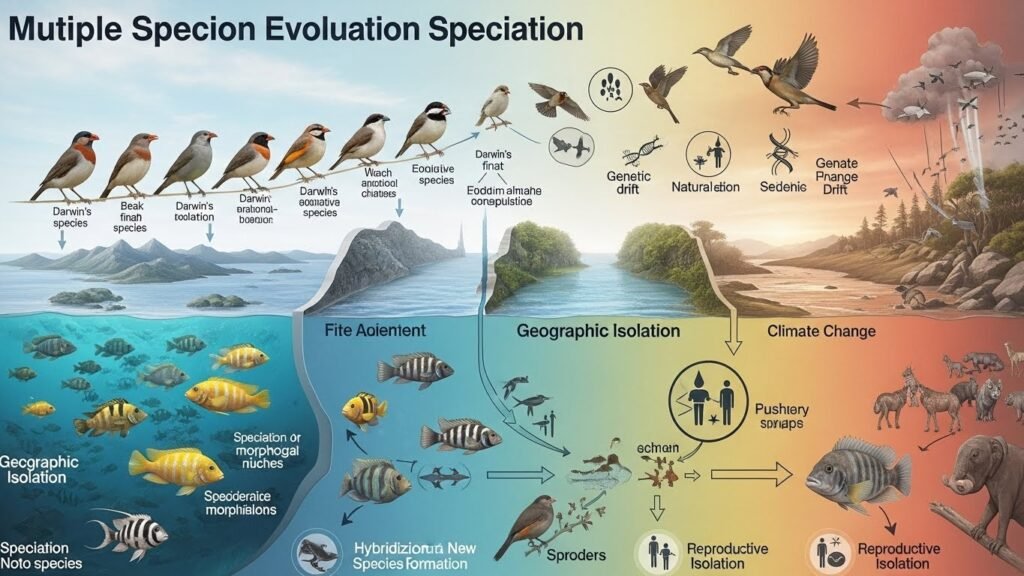
Speciation is the process by which new species emerge over time. It is a fundamental concept in evolutionary biology and explains how life on Earth diversifies into different species. Speciation occurs when populations of the same species become isolated from each other, either geographically or reproductively, and eventually evolve into distinct species.
Importance of Understanding Speciation
Understanding speciation is crucial because it helps us comprehend how biodiversity is created and maintained. It explains the diversity of life forms, from microscopic bacteria to complex animals and plants. The study of speciation also aids in conservation efforts by informing us about the conditions necessary for species to adapt and survive in changing environments.
Overview of Speciation in Evolution
Evolution, the change in species over time, is driven by several mechanisms, one of which is speciation. Speciation allows for the gradual development of new species as populations evolve differently. This process contributes significantly to the overall biodiversity of ecosystems.
The Process of Speciation

How Speciation Occurs
Speciation is not an instantaneous event. It occurs over many generations as populations become isolated and accumulate genetic differences. There are several ways in which speciation can happen, but the key idea is that genetic divergence occurs when gene flow between populations is restricted.
The Key Steps in Speciation
- Isolation: Populations must become isolated from each other. This could happen due to physical barriers like mountains or rivers (geographic isolation) or because of behavioral differences that prevent mating (reproductive isolation).
- Genetic Divergence: Once isolated, the populations begin to accumulate genetic differences. These differences may be due to mutations, natural selection, genetic drift, or other evolutionary forces.
- Reproductive Isolation: Over time, the genetic differences become so significant that the two populations can no longer interbreed, even if they come back into contact. This is known as reproductive isolation, and it marks the formation of a new species.
Genetic Mechanisms Behind Speciation
Speciation involves genetic changes that lead to the development of new species. These changes are driven by several mechanisms:
- Mutations: Random genetic changes that can lead to the development of new traits.
- Natural Selection: The process where organisms better adapted to their environment survive and reproduce more successfully.
- Genetic Drift: Random changes in the gene pool, particularly in small populations, which can lead to speciation.
Types of Speciation
Allopatric Speciation: Geographic Isolation
Allopatric speciation occurs when a population is divided by a physical barrier, like a river or mountain range. The isolated populations evolve independently, and over time, they become genetically distinct from each other. Eventually, they may become separate species, unable to interbreed even if they are reunited.
Sympatric Speciation: Species Formation Without Physical Barriers
Sympatric speciation is different from allopatric speciation because it happens without a physical barrier. Instead, speciation occurs within the same geographical area due to ecological or behavioral factors. For example, different species of fish may evolve in the same lake due to occupying different ecological niches.
Parapatric Speciation: Gradients and Environmental Factors
In parapatric speciation, populations live in adjacent areas but do not fully overlap. They experience different environmental conditions, which leads to evolutionary changes that may eventually result in the formation of distinct species. These species may have limited contact, but reproductive isolation develops over time due to environmental and genetic factors.
Peripatric Speciation: Small Isolated Populations
Peripatric speciation occurs when a small group of individuals from a larger population becomes isolated at the edge of the species’ range. Due to the small size of the population, genetic drift has a strong effect, and over time, the isolated population evolves into a new species. This type of speciation is commonly seen in island populations.
Factors Driving Speciation
Geographic Barriers and Their Role in Isolation
Geographic isolation is one of the primary drivers of speciation. When a population is split by a physical barrier, such as a mountain range or ocean, gene flow between the isolated groups is cut off. Over time, these isolated groups may evolve into distinct species.
Ecological Factors and Their Impact
Ecological factors, such as habitat differences, food availability, and climate conditions, play a significant role in speciation. For example, populations of birds that live in different types of habitats may experience different selection pressures, leading to the development of distinct species.
Genetic Drift and Its Contribution to Speciation
Genetic drift refers to random changes in the gene pool of a population. In small populations, genetic drift can cause the loss of alleles, leading to speciation. Over time, genetic drift can accumulate enough changes to prevent gene flow, contributing to the formation of new species.
Environmental Change and Speciation
Environmental changes, such as climate shifts or natural disasters, can lead to speciation. When populations are exposed to new environmental conditions, they may evolve in different ways, leading to the formation of new species. Climate change, in particular, is an important factor driving speciation, especially in the context of changing ecosystems.
Real-World Examples of Speciation

Case Studies in Speciation
Speciation is not just a theoretical concept but something that happens in the natural world. There are many examples of speciation occurring across different species:
Speciation in Darwin’s Finches
Darwin’s finches in the Galápagos Islands are a classic example of speciation. These birds evolved into several different species, each adapted to a specific ecological niche on the islands. The physical isolation of each island and the availability of different food sources led to the development of distinct species.
Speciation in Cichlid Fish of African Lakes
Cichlid fish in the Great Lakes of Africa have undergone rapid speciation, with hundreds of different species evolving in relatively short time spans. This is an example of adaptive radiation, where different species arise from a common ancestor in response to different ecological niches.
Speciation in Plants and Flowers
Plants also undergo speciation, especially through processes like polyploidy. In plants, speciation can occur when a mutation causes the number of chromosomes to double, leading to a new species that cannot interbreed with the original population. This is particularly common in agricultural crops.
Evidence Supporting Speciation
Fossil Records: Tracing Species Evolution
Fossil records provide important evidence for speciation. By studying fossilized remains, scientists can trace the evolutionary history of species and observe how they changed over time. Fossils help us understand the gradual changes that occur during speciation.
Genetic Studies: How DNA Reveals Evolutionary Relationships
Advances in genetic technology have made it possible to compare the DNA of different species. These genetic studies reveal how species are related and how they have evolved from a common ancestor. Phylogenetic trees, which show the evolutionary relationships between species, are often used to illustrate these connections.
Observational Evidence: Speciation in Action
In addition to fossil records and genetic studies, there is observational evidence of speciation happening in real-time. Scientists have observed speciation in laboratory experiments and in nature. For example, certain species of fruit flies have been observed to evolve into new species due to reproductive isolation.
Speciation and Its Impact on Biodiversity
Speciation’s Contribution to Genetic Diversity
Speciation is a major driver of genetic diversity. As populations evolve into new species, they create a wider variety of genetic material within an ecosystem. This diversity is important for the stability and resilience of ecosystems, as it allows species to adapt to changing environmental conditions.
Role of Speciation in Ecosystem Functioning
Speciation also plays a role in the functioning of ecosystems. New species can fill different ecological niches, allowing ecosystems to function more efficiently. For example, in a forest, different species of trees may evolve to take advantage of different soil types, leading to a more diverse and balanced ecosystem.
Speciation as a Driver of Biodiversity
Biodiversity is the variety of life forms in an ecosystem. Speciation is one of the primary processes that drives biodiversity. Without speciation, ecosystems would be less diverse, and species would struggle to adapt to changing conditions.
Challenges and Controversies in Speciation
The Difficulty of Defining “Species”
One of the biggest challenges in speciation research is defining what constitutes a species. Different definitions of species can lead to disagreements among scientists. The Biological Species Concept, for example, defines species based on their ability to interbreed and produce fertile offspring. However, this definition does not always work well for organisms that reproduce asexually or those that rarely come into contact with each other, such as species in different geographical regions.
Debate Over Sympatric and Allopatric Speciation
Sympatric and allopatric speciation are two key processes that lead to the formation of new species. While allopatric speciation involves geographic isolation, sympatric speciation occurs without physical barriers. There is an ongoing debate among scientists about how frequently sympatric speciation occurs compared to allopatric speciation. Some argue that allopatric speciation is the primary mechanism, while others believe that ecological factors can lead to speciation even without geographic barriers.
Misconceptions in the Speciation Process
Speciation is a complex process, and there are many misconceptions about how it works. One common myth is that speciation happens quickly and dramatically. In reality, speciation is usually a slow process that occurs over many generations. Additionally, not all species undergo speciation in the same way, making it difficult to predict how speciation will happen in any given population.
Advances in Speciation Research
New Technologies and Techniques in Speciation Studies
Advances in technology have made it easier for scientists to study speciation. For example, DNA sequencing and genome analysis have allowed researchers to compare the genetic makeup of different populations and identify genetic changes that occur during speciation. These technologies have revolutionized our understanding of how species evolve and how they become reproductively isolated.
Emerging Theories on Speciation
There are several emerging theories that could reshape our understanding of speciation. For instance, phylogenetic speciation suggests that speciation occurs when a species diverges into two or more lineages that are genetically distinct. Another emerging theory is ecological speciation, which proposes that natural selection in different ecological environments can lead to the development of new species. As research continues, we may discover new mechanisms of speciation that we have not yet considered.
The Role of Climate Change in Speciation
Climate change is a growing factor in speciation. As the climate changes, species may be forced to adapt to new environmental conditions. This can lead to the formation of new species through mechanisms like adaptive radiation or ecological speciation. For example, species that are displaced by climate shifts may evolve into distinct species as they adapt to their new environments. This highlights the need for conservation strategies that take into account the potential for speciation in the face of climate change.
The Future of Speciation Studies
How Understanding Speciation Can Shape Conservation Efforts
Understanding speciation is vital for conservation efforts. Species that are genetically distinct may have different needs in terms of habitat, food, and climate tolerance. By studying speciation, conservationists can better predict how species will respond to environmental changes and how to protect those species from extinction. For instance, if a species is undergoing microbial speciation or adaptive radiation, understanding these processes can help scientists protect genetic diversity.
Speciation in a Changing World: Evolution’s Response to Modern Pressures
Speciation is not a static process; it is ongoing and constantly responding to new challenges. In today’s world, species are facing unprecedented pressures from human activities, such as deforestation, pollution, and climate change. These pressures can alter the natural speciation process, either speeding it up or causing it to stall. As we continue to influence the environment, understanding how species evolve will be crucial for protecting biodiversity.
Speciation and Its Impact on Biodiversity
Speciation’s Contribution to Genetic Diversity
One of the primary ways that speciation contributes to biodiversity is through genetic diversity. Each new species that forms has its own set of genetic traits, which can provide resilience to environmental changes. This genetic diversity is vital for the survival of ecosystems, as it allows species to adapt to changes in their environment over time. For example, a genetically diverse population of plants may have individuals that can tolerate drought, while others can resist disease, ensuring the species’ survival in fluctuating conditions.
Role of Speciation in Ecosystem Functioning
Speciation plays a key role in the functioning of ecosystems by increasing the number of species that can interact within the environment. As new species evolve, they fill different niches, contributing to the stability and complexity of ecosystems. For example, in a forest ecosystem, different species of trees may evolve to grow at different heights or to have different types of roots, which allows them to share resources without competing for the same space.
Speciation as a Driver of Biodiversity
Biodiversity is essential for healthy ecosystems, and speciation is one of the primary drivers of biodiversity. Without speciation, ecosystems would be less diverse and less resilient. Speciation helps to create a variety of species that can interact with each other in complex ways, which strengthens the overall stability of ecosystems. As species evolve to fill different roles, they support the health of the ecosystem and its ability to provide essential services like food, clean water, and air.
Speciation and Conservation
Speciation and Conservation Efforts
Understanding speciation is essential for effective conservation. When a species splits into two distinct species, each may have different needs in terms of habitat, food sources, and climate. This means that the protection of one species may not be sufficient for the conservation of the other. By studying how speciation occurs, conservationists can better predict the needs of different species and create more targeted conservation strategies.
Protecting Speciation in a Changing Climate
As climate change alters ecosystems, some species may find themselves unable to adapt quickly enough to survive. Understanding the mechanisms behind speciation can help scientists predict how species may evolve in response to these changes. For example, species that are being forced into new environments due to rising temperatures may undergo speciation if they are isolated from other populations. Conservation efforts should consider the possibility of speciation when creating strategies for protecting biodiversity.
Genetic Divergence and Reproductive Isolation

Genetic Drift and Its Role in Speciation
Genetic drift is a random process that causes genetic variations to occur in a population. Over time, genetic drift can lead to the accumulation of differences in isolated populations, potentially resulting in speciation. This process is especially important in small populations where random changes in gene frequency can have a larger effect. Genetic drift often works in tandem with natural selection and mutation to drive speciation.
Mutation: The Catalyst for New Traits
Mutations are changes in the genetic material of an organism. They are the source of new genetic variations that can contribute to speciation. While most mutations have little to no effect, some can result in advantageous traits that help individuals survive in their environment. Over time, these advantageous mutations can spread through the population, leading to the development of new species.
Reproductive Isolation: The Barrier to Interbreeding
Reproductive isolation is the process by which two populations of the same species can no longer interbreed. This is a critical step in speciation. Reproductive isolation can occur in several ways:
- Temporal isolation: When populations reproduce at different times of the year.
- Behavioral isolation: When differences in mating behaviors prevent individuals from different populations from mating.
- Mechanical isolation: When physical differences in reproductive organs prevent successful mating.
As reproductive isolation increases, populations accumulate more genetic differences, eventually leading to the formation of new species.
Speciation in Action: Real-World Examples
Speciation in Darwin’s Finches
One of the most famous examples of speciation comes from the Galápagos finches. These birds, observed by Charles Darwin, evolved into multiple species, each adapted to a specific ecological niche. The finches’ beak sizes and shapes varied depending on the types of food available on different islands. Over time, these differences in beak morphology and feeding behaviors led to the emergence of distinct species, illustrating adaptive radiation, a form of speciation where multiple new species arise from a single ancestor species.
Speciation in Cichlid Fish of African Lakes
Cichlid fish in the Great Lakes of Africa have undergone rapid speciation, particularly in Lake Victoria, where hundreds of species have evolved in a relatively short time. This speciation is driven by sexual selection, where female cichlids choose mates based on coloration and other traits. The high level of ecological diversity in the lakes, combined with sexual preferences, has led to the creation of numerous species of cichlids, each adapted to different ecological niches within the lake.
Speciation in Plants: Polyploidy and Chromosomal Changes
In plants, polyploidy is a common mechanism of speciation. Polyploidy occurs when a plant’s chromosomes double, resulting in a new species that cannot interbreed with the parent species. This type of speciation is particularly common in agricultural crops, where polyploid plants often exhibit greater resilience and higher yields. An example is wheat, which evolved from several different grass species through polyploidy.
Ecological and Geographic Isolation
Geographic Isolation and the Role of Physical Barriers
Geographic isolation is one of the most common causes of speciation. When a population is separated by a physical barrier, such as a river or mountain range, gene flow between the separated groups is interrupted. Over time, the isolated populations may evolve independently, leading to the development of new species. Allopatric speciation is the most common form of speciation caused by geographic isolation.
Ecological Isolation and Niche Differentiation
Ecological isolation occurs when populations occupy different ecological niches within the same geographical area. For example, in the case of sympatric speciation, different populations of the same species might evolve to occupy distinct ecological roles, such as different types of food sources or environmental conditions. Over time, these populations become genetically distinct, even though they live in the same area.
The Impact of Environmental Change on Isolation
Environmental changes, such as climate change, can lead to isolation. As habitats change, populations may become separated due to new physical or ecological barriers. This can cause speciation to occur as populations adapt to their new environments. For example, microbial speciation can occur in response to changes in temperature or salinity, causing different microbial populations to evolve distinct traits.
Hybridization and Its Role in Speciation
Hybridization as a Mechanism of Speciation
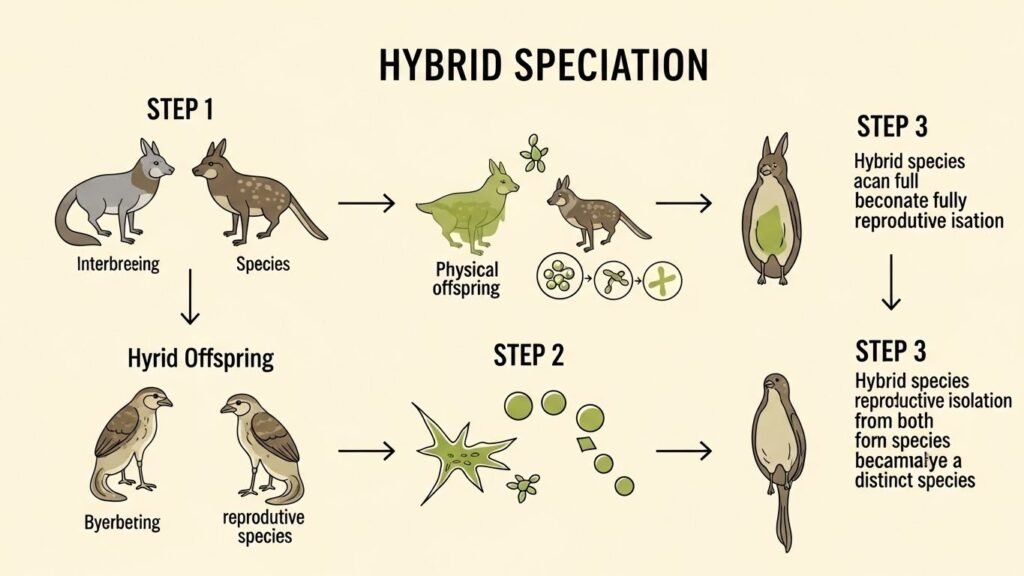
Hybridization occurs when two different species interbreed and produce offspring. While hybrids are often sterile, in some cases, hybridization can lead to the formation of new species. This process is called hybrid speciation and occurs when hybrid individuals develop reproductive isolation from both parent species. Hybrid speciation is common in plants, where hybrids may become fertile and evolve into new species that are distinct from their parents.
The Importance of Gene Flow in Hybrid Speciation
Gene flow between species can sometimes lead to the creation of new species. In hybrid speciation, gene flow between two species may lead to offspring with a combination of traits from both parent species. These hybrid offspring may occupy a new ecological niche or develop unique characteristics, eventually leading to the formation of a new species.
Examples of Hybrid Speciation
Hybrid speciation has been observed in many plant species, such as the corn plant, where hybridization between two maize species resulted in a new hybrid species. In animals, hybridization can sometimes result in the formation of new species, particularly when environmental conditions cause reproductive isolation between the hybrid and the parent species.
The Role of Natural Selection in Speciation
Natural Selection and the Development of Adaptations
Natural selection is one of the most important forces in speciation. It acts on genetic variations within populations, favoring individuals with traits that are better suited to their environment. Over time, these advantageous traits become more common in the population, leading to the formation of a species that is adapted to its environment. Adaptive radiation is one form of speciation driven by natural selection, where a single species diversifies into many species, each adapted to a specific niche.
Sexual Selection and Speciation
Sexual selection is a type of natural selection that occurs when individuals choose mates based on specific traits. In many species, sexual selection can lead to speciation by causing populations to diverge in terms of mate preferences. For example, in some bird species, differences in coloration or courtship behavior can result in reproductive isolation, leading to the development of new species.
The Role of Evolutionary Pressures in Speciation
Speciation occurs in response to various evolutionary pressures, including environmental changes, competition for resources, and predation. These pressures can lead to the development of new traits that are beneficial for survival and reproduction. Over time, these traits become more pronounced in the population, leading to the formation of a new species.
Speciation and Its Impact on Ecosystems

Speciation’s Contribution to Genetic Diversity
One of the most important contributions of speciation is the increase in genetic diversity within ecosystems. When new species form, they introduce a wider range of genetic traits into the population, which enhances the ability of ecosystems to adapt to changing environmental conditions. This diversity ensures that ecosystems remain resilient, helping species survive various environmental challenges such as climate change, disease, and habitat loss.
In ecosystems with high species diversity, different species fulfill various ecological roles. For example, some species may be pollinators, others may be predators, and still others may be decomposers. The more diverse the species in an ecosystem, the better the system can cope with disruptions. Speciation, therefore, plays a crucial role in maintaining the health and stability of ecosystems.
Role of Speciation in Ecosystem Functioning
Speciation also contributes to the overall functioning of ecosystems by creating new species that occupy different ecological niches. An ecological niche refers to the role a species plays in its environment, including how it gets its food, how it interacts with other species, and how it fits into the broader ecosystem.
As new species evolve through speciation, they often exploit different resources or occupy different ecological niches. For instance, in a forest ecosystem, various species of trees may evolve to specialize in different soil types, light levels, or moisture conditions. These differences reduce competition between species and contribute to a more complex and stable ecosystem.
The increase in species variety can also enhance ecosystem services like soil formation, pollination, and carbon sequestration. A rich variety of species can increase ecosystem productivity, improving the flow of energy and nutrients.
Speciation as a Driver of Biodiversity
Biodiversity refers to the variety of life forms in a given area, and it is driven largely by speciation. As species diversify and evolve, they increase the genetic pool of the ecosystem, allowing for better adaptation to changing conditions. Speciation generates new species that fill roles and niches that may not have been previously occupied, leading to a more complex and varied system.
In the context of biodiversity, speciation is particularly important because it helps species evolve traits that enhance their survival and reproductive success in a given environment. For example, a species of bird might evolve to specialize in eating a particular type of seed or insect, while another species of the same group may develop a different feeding strategy. This diversification ensures that all ecological niches are filled, helping ecosystems function more efficiently.
Hybridization and Speciation
Hybridization as a Mechanism of Speciation
Hybridization is the process where two different species interbreed to produce offspring. While hybrid offspring are often sterile, in some cases, hybridization can lead to the formation of a new species. This is particularly common in plants, where hybridization can result in polyploidy, a condition in which the number of chromosomes in the offspring doubles.
Hybrid speciation occurs when hybrid offspring develop reproductive isolation from both parent species, making it possible for them to form a new species. In some cases, hybrid species can survive in environments where their parent species could not, leading to the establishment of a new species in a different ecological niche.
The Importance of Gene Flow in Hybrid Speciation
Gene flow, which is the transfer of genetic material between populations, plays a crucial role in hybrid speciation. When two species interbreed, they exchange genetic material, which can result in offspring with new traits. These new traits may give the hybrid species an advantage in a specific environment, helping it establish itself as a distinct species.
Gene flow between species may also lead to the introduction of beneficial traits that help the hybrid species survive and thrive. However, the hybrid population must develop reproductive isolation from both parent species to become a new, stable species. This process of reproductive isolation is a key component of hybrid speciation.
Examples of Hybrid Speciation
One well-known example of hybrid speciation can be found in the cichlid fish of East African lakes. These fish have evolved through both ecological and sexual selection, leading to a high degree of genetic and morphological diversity. Hybridization between different cichlid species in these lakes has led to the formation of new species, contributing to the vast number of cichlids found in the region.
Another example is the hybridization of different species of oaks in Europe. Hybridization between these species has led to the creation of new hybrid species with different ecological roles in forest ecosystems. These hybrid oaks are often more resistant to diseases, which allows them to thrive in different environmental conditions.
Evolutionary Pressures and Their Role in Speciation
Natural Selection and Speciation
Natural selection is a key driver of speciation. This process occurs when individuals with traits that are better suited to their environment are more likely to survive and reproduce. Over time, these advantageous traits become more common in the population, and new species may emerge as a result of these changes.
For example, in Darwin’s finches on the Galápagos Islands, different populations evolved different beak shapes and sizes in response to the types of food available on each island. Natural selection favored individuals with beaks that were best suited for the food resources on their particular island, leading to the emergence of new species over time.
Sexual Selection and Speciation
Sexual selection is another important evolutionary pressure that can drive speciation. This form of selection occurs when certain traits make individuals more attractive to potential mates, giving those individuals a reproductive advantage. Over time, sexual selection can lead to the development of distinct traits that differentiate species.
For example, in certain species of birds, males with brighter or more elaborate plumage are preferred by females. Over time, this preference for certain traits can result in the formation of distinct species, as populations that are isolated from each other may evolve different mating preferences, leading to reproductive isolation and speciation.
Evolutionary Pressures and Adaptation
Evolutionary pressures such as predation, competition for resources, and environmental changes can also drive speciation. Populations that face different pressures may evolve in different ways, leading to the formation of new species. For instance, microbial speciation often occurs when bacteria are exposed to new antibiotics, leading to the development of resistance and the eventual emergence of new bacterial species.
The Future of Speciation Research
How Understanding Speciation Can Shape Conservation Efforts
Speciation research plays a critical role in conservation efforts. As species evolve and adapt to new environments, they may require specific conditions for survival. Understanding how speciation works helps conservationists identify the needs of species that are at risk of extinction, as well as predict how they might adapt to changing environments.
For example, species that are undergoing ecological speciation or microbial speciation may be particularly vulnerable to habitat destruction. By understanding the speciation process, conservationists can develop more effective strategies to protect these species and their habitats, ensuring their survival in the long term.
Speciation in a Changing World: Evolution’s Response to Modern Pressures
As human activities continue to alter the environment, it is important to understand how speciation will be affected. Climate change, deforestation, and pollution are all factors that can disrupt natural speciation processes. However, speciation will likely continue to occur in response to these modern pressures, although it may happen more quickly or in different ways than in the past.
Researchers are increasingly focusing on how rapid environmental changes, such as those caused by climate change, influence the evolution of species. Understanding how species respond to these pressures will be key to predicting future patterns of speciation and biodiversity.
Conclusion
Recap of Key Concepts in Speciation
Speciation is a fundamental process that drives the diversity of life on Earth. Through mechanisms such as geographic isolation, ecological adaptation, and hybridization, species evolve into distinct forms, filling different ecological niches and contributing to the overall complexity of ecosystems.
The Importance of Continued Research in Speciation
As our understanding of speciation continues to grow, it will help inform efforts to conserve biodiversity and protect ecosystems. Speciation research offers insights into how species adapt to changing environments and how these changes influence the natural world.
Speciation’s Role in Understanding Evolution and Biodiversity
Speciation is central to the concept of evolution, as it provides a framework for understanding how species diversify over time. It also plays a crucial role in maintaining biodiversity, which is essential for the health and resilience of ecosystems. By studying speciation, we gain a deeper appreciation for the processes that shape life on Earth and how we can protect it for future generations.
Frequently Asked Questions
What is speciation and how does it happen?
Speciation is the process by which new species evolve from a common ancestor. It occurs when populations of the same species become isolated and accumulate genetic differences over time, leading to reproductive isolation.
How does geographic isolation lead to speciation?
Geographic isolation occurs when a physical barrier, such as a river or mountain range, separates a population. Over time, the isolated populations evolve independently, leading to the formation of new species.
What are the different types of speciation?
The main types of speciation are allopatric, sympatric, peripatric, and parapatric. Each type involves different mechanisms of isolation and genetic divergence, leading to the formation of new species.
Can hybridization lead to new species?
Yes, hybridization can lead to the formation of new species through hybrid speciation. When two different species interbreed, the hybrid offspring can develop reproductive isolation from the parent species, forming a distinct species.
How does climate change affect speciation?
Climate change can drive speciation by forcing species into new environments. As they adapt to changing conditions, populations may evolve into new species through processes like ecological or adaptive speciation.