Skip to content
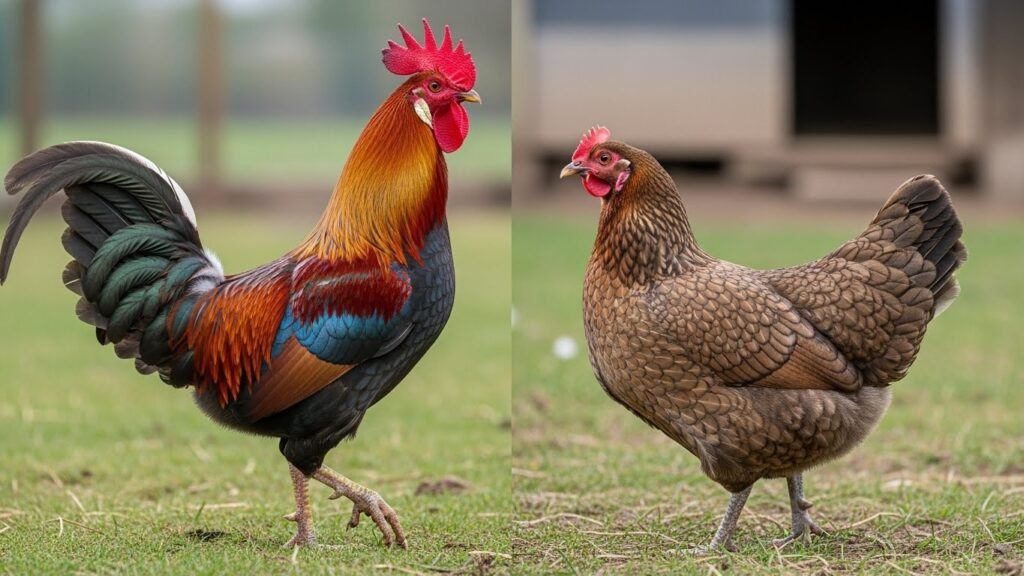
If you’re a backyard chicken keeper, differentiating between a rooster and a hen can be tricky, especially when they’re just chicks. Identifying whether you’re dealing with a male or female chicken is important for flock management. Whether you’re raising chickens for eggs, meat, or as pets, understanding the differences between roosters and hens is essential. In this guide, we’ll walk you through everything you need to know about how to identify a rooster vs. hen, including the physical traits, behaviors, and age-related signs that make it easier to distinguish the two.
Early Sexing Methods (Why They’re Often Unreliable)
Sexing chickens as chicks can be challenging, but there are several methods that have been developed to make the task easier for backyard chicken keepers. However, these methods are not always foolproof and can lead to mistakes.
Vent Sexing (at Hatching)
- What it is: Vent sexing involves examining the chick’s vent (cloaca) for internal differences between males and females.
- How it works: A trained professional can identify the gender by observing the genitalia.
- Drawbacks: It’s a method that requires skill and can be messy. It’s often not reliable for non-professionals and can cause harm to the chick.
Feather Sexing (Wing-feather Pattern / Growth)
- What it is: Feather sexing relies on observing the wing feathers of chicks. Males and females have different feather growth rates and patterns.
- How it works: Roosters typically have faster feather growth than hens, and their wing feathers may appear differently.
- Drawbacks: Feather sexing is breed-specific, and not all chickens have distinct feather patterns. It’s less reliable in some breeds and may be hard to spot in the early weeks.
Auto-Sexing (Breed-Specific)
- What it is: Auto-sexing refers to certain breeds where male and female chicks can be distinguished at hatching based on coloration.
- How it works: For example, male chicks might have a lighter color or distinct markings compared to females.
- Drawbacks: This method only works in breeds designed for auto-sexing, and it’s not applicable to all breeds of chickens.
Sex-Linked Breeds and Feather Growth
- What it is: Some hybrid chickens are bred for sex-linked traits, meaning males and females have different colors or feather patterns at birth.
- How it works: Males may have lighter feathers or a different down pattern, while females will have darker or more uniform coloration.
- Drawbacks: Sex-linked breeds are not always available, and feather growth rate differences may not be noticeable until later.
Physical Characteristics of a Rooster and Hen

As chickens mature, the physical differences between roosters and hens become more pronounced. Understanding these characteristics will help you identify them as they grow.
Combs and Wattles
- Roosters: Generally have larger and more prominent combs and wattles, which become more noticeable as they mature. These features are brighter and more vibrant in males.
- Hens: Have smaller, less pronounced combs and wattles. While some hens may develop larger combs, they remain smaller compared to those of roosters.
Spurs on Legs
- Roosters: Roosters develop spurs on their legs, which are used for fighting and protecting their flock.
- Hens: Hens may develop small spurs, but they are typically less developed than those of roosters.
Feathers (Plumage Patterns & Feather Shape)
- Roosters: Have long, pointy feathers, including saddle feathers (on the back near the tail) and sickle tail feathers. These feathers are often more colorful and glossy compared to those of hens.
- Hens: Have shorter, rounder feathers, especially on the neck and back. They lack the long, pointed feathers seen in roosters and their plumage is generally more muted in color.
Size, Shape, and Tail Feathers
- Roosters: Roosters are typically larger and more robust than hens. They also have longer, more colorful tail feathers, which are a distinguishing feature.
- Hens: Hens are smaller and have shorter, more rounded tails. Their body shape is also more petite compared to the larger build of a rooster.
Rooster vs. Hen Behavior
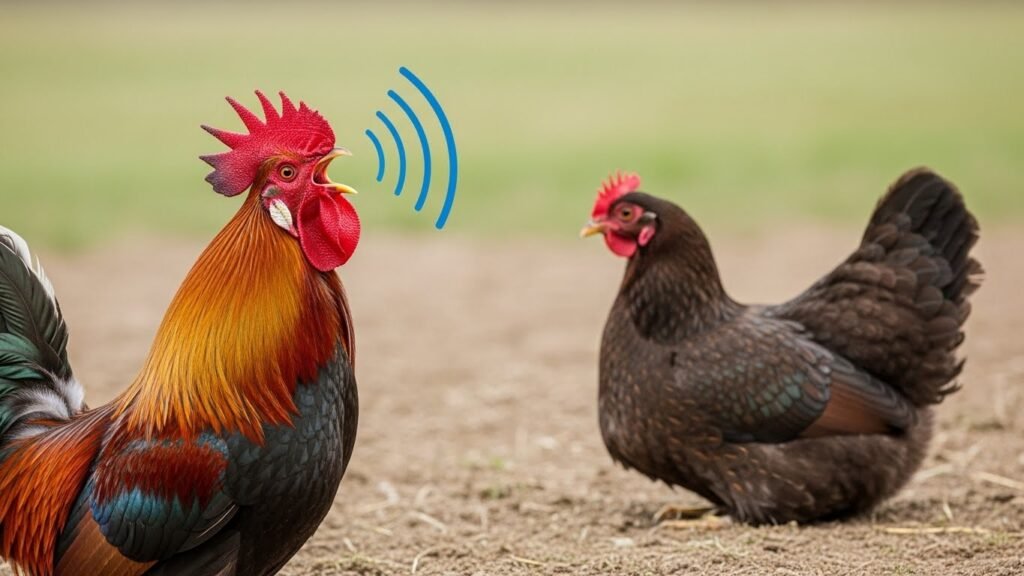
Beyond physical traits, roosters and hens also behave differently, especially as they mature. These behaviors can be critical indicators in identifying a rooster vs. hen.
Roosters’ Behavior
- Crowing: The most obvious behavior of a rooster is crowing, usually early in the morning but at any time of the day. This is a key sign that a chicken is a male.
- Tidbitting: Roosters make a distinctive sound called “tidbitting” while foraging or showing off to hens.
- Aggression: Roosters are generally more aggressive and protective, often fighting with other roosters and guarding the hens.
- Mating Behaviors: Roosters will attempt to mount hens to mate, a behavior that hens do not exhibit.
Hens’ Behavior
- Egg-laying: Hens lay eggs, regardless of the presence of a rooster. If you’re raising chickens for eggs, hens are essential to your flock.
- Squatting: When approached by a rooster, hens will often squat, signaling that they are ready to mate. This is not a behavior seen in roosters.
- Brooding: Hens will often sit on their eggs to incubate them, showing nurturing behaviors that roosters do not.
- Social Behavior: Hens are generally more passive than roosters and are more likely to form bonds with other hens. They also focus on foraging and egg-laying.
How to Identify a Rooster vs. Hen as They Mature
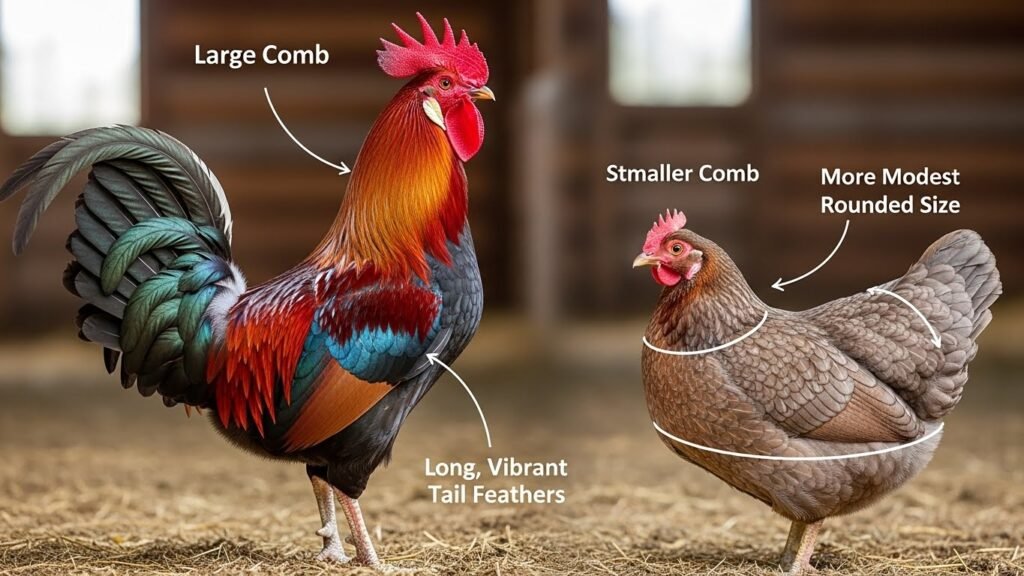
As chickens grow older, the physical and behavioral differences between roosters and hens become easier to identify.
Combs and Wattles
- Roosters: Their combs and wattles grow larger and more pronounced as they mature.
- Hens: Hens have smaller, more subdued combs and wattles, which remain underdeveloped compared to roosters.
Feather Differences
- Roosters: Their feathers become longer and more colorful, especially around the neck, back, and tail. They also develop long saddle and sickle feathers.
- Hens: Hens’ feathers remain shorter and rounder, and they don’t develop the long, striking plumage seen in roosters.
Spur Growth
- Roosters: Roosters develop larger spurs, which are visible in adulthood.
- Hens: While some hens may develop spurs, they are usually small or absent in most cases.
Behavioral Maturity
- Roosters: Begin to crow around 4-5 months old, exhibit mating behaviors, and display protective aggression.
- Hens: Do not crow, and their behavior is more focused on nurturing, egg-laying, and social bonding.
When You Don’t Need a Rooster
If you’re raising chickens for eggs, you don’t need a rooster. Hens will lay eggs regardless of whether or not a rooster is present. Fertilized eggs will only develop into chicks if there’s a rooster in the flock, but unfertilized eggs are perfectly edible and can still be collected from hens.
Special Cases and Breed-Specific Considerations
Some breeds of chickens have unique characteristics that make sexing difficult, even for experienced chicken keepers.
Difficult-to-Sex Breeds
- Silkies and Polish chickens are difficult to sex at a young age due to their similar feathering patterns.
- These breeds may require you to wait longer until they mature before you can clearly identify their gender.
Hen-Feathered Roosters
- Some breeds, such as the Easter Egger, feature hen-feathered roosters, where the males don’t have the typical long saddle and sickle feathers. This can make it harder to visually sex the birds.
Breeds with Close Gender Appearance
- Cochins and Langshans may look very similar at a young age, and it can be difficult to distinguish the males from the females.
- Rhode Island Red hens may also develop a large comb similar to a rooster, adding to the complexity of sexing them.
How to Tell Roosters and Hens Apart by Age
Chicks (0-8 Weeks)
- Early sexing methods like feather sexing and auto-sexing based on color can help, but these methods are most effective in specific breeds.
- Physical differences between roosters and hens are not obvious in chicks, and the traits develop as they mature.
Pullets and Cockerels (8-16 Weeks)
- By this age, roosters start showing visible differences like larger combs, wattles, and the development of long tail feathers.
- Hens continue to develop smaller combs and wattles and show no signs of crowing.
Adults (16+ Weeks)
- The most reliable signs are visible physical differences: roosters have large combs, wattles, and vibrant plumage, while hens remain smaller and more passive.
- Roosters also start crowing and exhibiting mating behavior, which is not seen in hens.
Additional Methods of Sexing Chickens
DNA Testing
- What it is: DNA testing is an advanced method where a small feather or blood sample is taken from the chick and sent for laboratory testing.
- How it works: The laboratory test identifies the genetic markers associated with male and female chickens, allowing for 100% accuracy.
- Advantages: It is the most accurate method and works for all breeds, even those that are difficult to sex visually.
- Drawbacks: It is expensive and generally not practical for most backyard chicken keepers.
Hatchery Sexing
- What it is: Many hatcheries offer sexed chicks, where the chicks are sexed as soon as they hatch.
- How it works: Hatcheries employ various techniques, such as early vent sexing or auto-sexing breeds, to provide customers with male or female chicks based on their needs.
- Advantages: It’s a convenient option for those who want to avoid dealing with mixed-sex flocks.
- Drawbacks: It may not always be available, and some hatcheries may charge a premium for sexed chicks.
Gender Differences in Egg Production
Roosters and Egg Laying
- Roosters do not contribute to egg-laying, but they play an important role in fertilizing eggs.
- Hens will continue to lay eggs regardless of the presence of a rooster. However, the presence of a rooster will ensure that some eggs are fertilized, which is necessary for the development of chicks.
Broodiness in Hens
- Broodiness is a behavior where hens stop laying eggs and focus on incubating them.
- It is more common in certain breeds like Silkies and Cochins. When a hen becomes broody, she will sit on her eggs for long periods, keeping them warm and protecting them.
- Roosters do not display broody behavior, as their role is primarily to protect and mate with hens.
Roosters and Flock Hierarchy
The Role of a Rooster in a Flock
- Roosters help establish the pecking order, a hierarchical system that dictates which chickens are dominant and which are subordinate.
- They play a protective role in the flock, often alerting hens to potential predators and keeping the flock safe.
- Roosters will sometimes engage in sparring with each other to establish dominance, and their aggressive behavior helps maintain order within the flock.
Protecting Hens and the Flock

- Roosters are known for their protective behaviors, such as guarding the hens from predators and intruders.
- They will often take the lead when there is danger, signaling for the hens to run for cover.
- A good rooster will be attentive and ensure that the hens are always safe and well-protected.
Recognizing Rooster and Hen Behaviors as Juveniles
Juvenile Roosters (Cockerels)
- At a young age, cockerels (male chickens) begin to show signs of developing combs and wattles. Their combs tend to grow larger and more vibrant than the hens’.
- Cockerels will also start displaying pointy neck feathers and saddle feathers.
- They may become more vocal, attempting to crow or make other rooster-like sounds as early as 12 weeks old.
Juvenile Hens (Pullets)
- Pullets (young females) generally develop smaller, rounder combs and wattles.
- Pullets do not show significant feathering changes like roosters and will continue to have rounder neck feathers and smaller body builds.
- Pullets focus on egg-laying behaviors, such as squatting when approached by a rooster, although they will not crow.
Behavior of Roosters and Hens in Flocks
Roosters as Protectors
- Roosters help establish and maintain the flock’s social order, ensuring that dominant hens get the best food and space.
- They also take the role of a protector, guarding the hens from potential dangers.
- In cases of predators, a rooster will often make a loud alarm call and lead the hens to safety.
Hens as Nurturers
- Hens are more focused on nurturing their eggs and the next generation. They will protect their nests and will often show broody behavior when they wish to incubate eggs.
- Hens are not as vocal as roosters and typically engage in softer sounds such as clucking when they are content or when alerting others to food.
The Role of Roosters in Fertilization
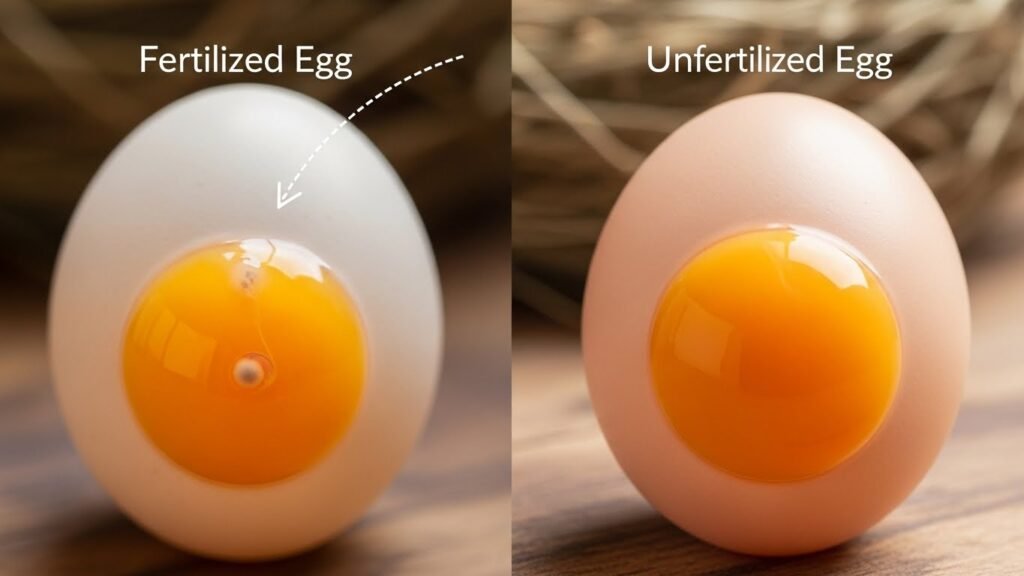
Fertilizing Eggs
- Roosters are essential for fertilizing eggs in a flock. When a rooster mates with a hen, the egg produced by the hen may be fertilized, resulting in chicks after incubation.
- Hens will lay eggs regardless of the presence of a rooster, but those eggs will be unfertilized and will not develop into chicks.
The Egg Song
- After laying an egg, hens often produce a vocalization known as the egg song, a series of loud clucks. This behavior is typically not seen in roosters.
- This behavior is purely a female trait, reinforcing the nurturing role hens play in the flock.
Common Myths and Misconceptions About Roosters vs. Hens
Misconception: Roosters Are Always Aggressive
- While roosters can be protective and sometimes aggressive, not all roosters are aggressive. Many breeds have docile and gentle roosters, especially when raised in a peaceful environment.
- Aggressive behavior can often be linked to overcrowding, competition, or poor training.
Misconception: Hens Don’t Need Roosters to Lay Eggs
- While hens will lay eggs without a rooster, fertilized eggs are required if you want to hatch chicks.
- Some people mistakenly believe that hens must have a rooster to lay eggs, but this is untrue. The presence of a rooster only influences whether the eggs are fertilized.
Conclusion
Identifying a rooster vs. hen can be tricky, especially at a young age. However, with attention to their physical characteristics, behaviors, and the right sexing methods, you can easily tell the difference as your chickens mature. Roosters tend to be larger, more colorful, and more aggressive, while hens are smaller, passive, and focused on egg-laying. By knowing the key traits to look for at different stages of development, you’ll be able to manage your flock with confidence.
FAQs: Rooster vs. Hen
How can you tell the difference between a rooster and a hen at birth?
- Answer: At birth, it is very difficult to tell a rooster from a hen, but some breeds exhibit auto-sexing where males and females have different colored down. However, this method works only with specific breeds. Otherwise, physical characteristics such as comb size, feather growth rate, and behavior become apparent as the chicks grow.
Do roosters always crow in the morning?
- Answer: No, roosters do not only crow in the morning. While they are known for crowing at dawn, they can crow at any time of the day. Roosters crow to assert dominance, announce their presence, or communicate with other chickens.
Can hens grow spurs?
- Answer: Yes, hens can grow spurs, but they are usually much smaller and less pronounced than those of roosters. In most hens, spurs are either small or absent, whereas roosters develop larger, more noticeable spurs on their legs as they mature.
Can a hen act like a rooster?
- Answer: It’s rare, but some hens may show more dominant behaviors or exhibit traits typically seen in roosters, such as crowing or attempting to protect the flock. However, these behaviors are often the result of hormonal imbalances or environmental stress and are not common in hens.
Do all chickens crow?
- Answer: No, only roosters crow. Hens may make sounds like clucking, chirping, and occasionally egg songs, but crowing is a behavior reserved for male chickens. It is one of the most reliable ways to distinguish a rooster from a hen.
Can roosters live together in the same flock?
- Answer: Roosters can live together in the same flock, but it’s not always ideal. Roosters tend to establish a pecking order, and multiple roosters may lead to territorial fights, especially if there are not enough hens to go around. The number of roosters per flock should ideally be one rooster for every 8 to 12 hens.
What is the role of a rooster in a flock?
- Answer: The primary role of a rooster is to protect the flock, maintain the pecking order, and fertilize eggs. They alert the hens to potential danger, leading them to safety, and they also help with maintaining the flock’s social structure by being the leader and the protector.
How do I sex chicks if I don’t know the breed?
- Answer: If you don’t know the breed, vent sexing or feather sexing can be used, but they require practice and expertise. In some cases, behavioral traits such as crowing or tidbitting will become evident as the chicks mature, allowing you to identify their sex at a later stage.
Why do roosters fight each other?
- Answer: Roosters fight to establish their dominance and maintain control over the flock. The fights are often for leadership and mating rights. The intensity of the fights depends on the number of roosters, the breed, and the available hens in the flock.
Can hens live without a rooster?
- Answer: Yes, hens can live without a rooster. They will still lay eggs, but the eggs will be unfertilized and will not hatch into chicks. A rooster is only necessary for fertilizing eggs if you want to raise chicks.
Do roosters protect hens from predators?
- Answer: Yes, one of the primary roles of a rooster is to act as a protector of the hens. Roosters are known to sound the alarm when predators are nearby, and they often lead the flock to safety. They may even engage with predators in an attempt to defend the hens.
How do roosters attract hens?
- Answer: Roosters attract hens by displaying courtship behaviors, such as tidbitting (making a series of calls while foraging), strutting, and dancing. They may also present food to the hens and try to impress them with their size, strength, and behaviors.
Can hens show rooster-like behaviors?
- Answer: Yes, in some cases, hens can show rooster-like behaviors, such as aggression or attempting to protect the flock. This is generally uncommon and may be due to hormonal imbalances, dominance within the flock, or lack of a rooster in the group.
What happens if a rooster doesn’t mate with hens?
- Answer: If a rooster does not mate with hens, the hens will still lay eggs, but they will be unfertilized and will not hatch into chicks. The eggs can still be eaten or used for other purposes, but they will not lead to new chickens.
Can a hen lay eggs without a rooster?
- Answer: Yes, hens will lay eggs regardless of whether there is a rooster present. The eggs will simply be unfertilized, meaning no chicks will be produced. If you are raising hens for eggs, you do not need a rooster in the flock.