Skip to content
The Origin Story: From Mystery Seeds to Iconic Aroid
If you are looking for a dramatic plant to add to your dark-leaved plant collection, the Anthurium Ace of Spades is the crown jewel. This coveted plant is more than just a houseplant. It is a piece of horticulture history. Its origins start with a mystery, leading to one of the most recognizable exotic plants in the world. Collectors everywhere prize this stunning aroid.
The Birth of the Legend
The story begins in the 1980s in Florida. Specifically, it starts in Homestead, Florida, at a nursery called Silver Krome Gardens. The founder, Dennis Rotolante, established this nursery in 1983. He quickly became known for plant innovations in the tropical growing industry.
The Anthurium journey, however, involves two other key figures. Rotolante’s best friend was Thomas Fennel III, who owned The Orchid Jungle. Fennel III gave Rotolante a batch of “mystery seeds.” These were not just any seeds. They held the key to this new, gorgeous specimen.
The seeds came from Fennel III’s father, Thomas Fennel II. Fennel II was an experienced plant explorer. He collected the original, extraordinary Anthurium while on an expedition in South America. He found this rarity growing high up in a tree. The original plant had dark, round leaves and possessed an unparalleled beauty.
Fennel II discovered the plant producing berries. Since there were no other Anthuriums nearby, he formed a hypothesis. He believed the plant had self-pollinated. This process, called “selfing,” creates genetic diversity. Rotolante, a skilled horticulturist, took the ten seeds and began cultivating them. He nurtured them carefully, waiting to see what the next generation would hold.
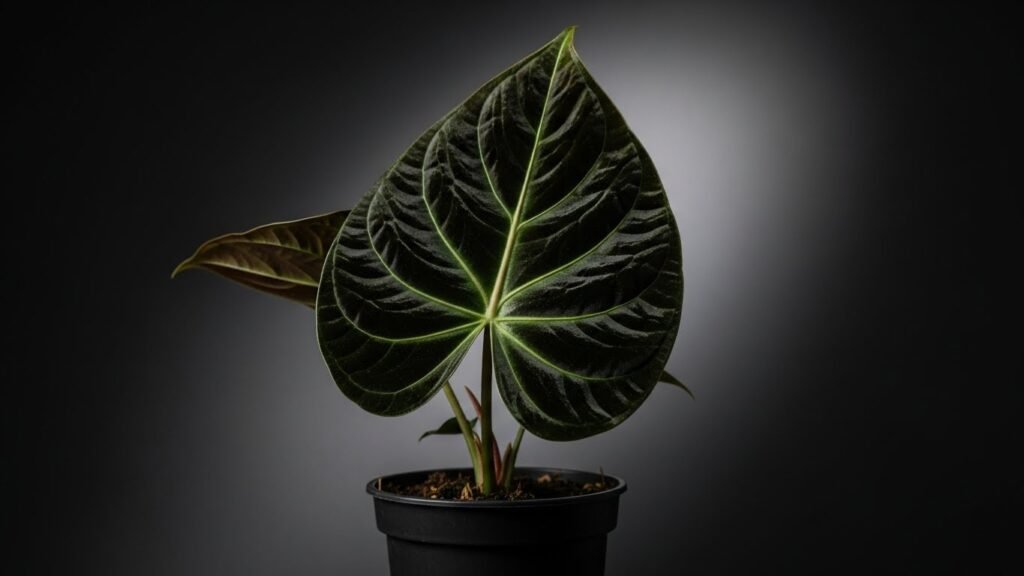
The seedlings showed striking diversity, as expected from self-pollinated seeds. However, one seedling stood out completely. It was a unique specimen. This specific plant had massive, velvety, spade-shaped leaves. The color was an ethereal darkness, giving the entire plant a gothic look. Rotolante knew he had found something extraordinary. This was truly a collector’s gem.
Naming the “Ace of Spades”
The standout plant needed a fitting name. The dramatic foliage was large, dark, and perfectly shaped like the ace of spades card. Therefore, Rotolante named the plant Anthurium Ace of Spades. It quickly became an icon in the plant world. The name acknowledged its dark beauty and its resemblance to the highest card in a deck of playing cards.
Preserving the Mother Plant’s Legacy
The history of the original mother plant is dramatic. In 1992, Hurricane Andrew struck Florida with devastating force. The rare plant cultivation facility at Silver Krome Gardens was nearly destroyed. The Anthurium Ace of Spades mother plant almost disappeared completely.
Fortunately, it survived. The legacy of this amazing plant is now carried on by the second generation. William Rotolante, Dennis Rotolante’s son, manages the nursery today.
The Anthurium Ace of Spades is much more than a plant. It symbolizes the meeting of human ingenuity and nature’s wonders. It tells a story of survival, dedication, and enduring beauty. This rich history makes the plant so appealing to plant enthusiasts.
Identifying the Ace of Spades: Signature Characteristics

It is important to know how to identify an authentic Ace of Spades. Many plants look similar, especially when they are young. However, the true Ace of Spades has consistent markers. Purchasing from a reputable source, like SKG or Tezula, is the best bet.
Key Visual Traits
When you examine the plant, several traits help you confirm its identity.
- Leaf Shape and Size: The leaves are large and have distinct heart-shaped leaves that look like a spade.
- Color and Texture: The defining feature is the color. It has a deep, velvety color that shows an iridescent shimmer in the light. This color remains dark even after the leaves have hardened off.
- Stem Structure: Check the petiole, or the stem that holds the leaf. The round stem structure extends all the way to the back of the leaf. This is a very specific trait.
- Veins: The veins are generally dark. New leaves often emerge with a reddish hue in the veins. These reddish veins keep a darker tone when compared to other velvet leaf anthuriums.
- Bloom Notes: For those lucky enough to see it bloom, the spadix is a dark maroon. The fruit produced is also similarly colored.
Differentiating Ace of Spades from Similar Velvet-Leaf Anthuriums

Distinguishing the Ace of Spades from other dark aroids is crucial for collectors. Mislabeling can happen, especially with tissue-cultivated plants or small seedlings.
The A. magnificum Distinction
The primary way to distinguish the Ace of Spades from Anthurium magnificum is the stem.
The round stem is the easiest way to identify a pure Ace of Spades.
Comparing to A. forgetii and A. clarinervium
Other popular velvet-leaf varieties have their own distinctions:
- Anthurium clarinervium: This plant is easily identified by its thick, pale green, almost white veins. It has a smaller, more pronounced heart-shaped leaves.
- Anthurium forgetii: This species has no sinus (the notch where the petiole meets the leaf). The leaves are completely round. This is a dead giveaway.
The “Dark Form” Distinction and Genetic Phenotype
The term Tezula Dark Form became popular among plant enthusiasts. The name refers to a highly selective process. It highlights the difference between plants from the same parent.
The Genesis of the “Dark Form” Label
While Silver Krome Gardens deserves credit for the initial naming and popularization of the plant, Tezula LLC focused on selection. Bill Rotolante and the Tezula team noticed the variation in color among the AOS plants in the greenhouse.
They decided to focus only on the dark forms. This was not about creating a new hybrid. It was about selection. This is how the “Dark Form” standard was born.
- Genetic Note: When the Ace of Spades undergoes selfing, only a small fraction of the seeds carry the dark gene. Most others are a plain green.
- The gorgeous and deep coloration made the dark forms much more desirable.
Strict Color Grading, Light, and Phenotypic Expression
Tezula’s biggest contribution was the creation of a color grading system. This system ensured customers always received the best version.
Color Grading Standard
The grading was strict. It was based on an original template photo. If a leaf was the same color as the template plant or darker, it was classified as a “Dark Form.”
Strict Color Grading and Phenotypic Expression
The darkness of the leaf is not just about genetics. It is also about its environment. This concept is called phenotypic expression.
- Influence of Environment: Light conditions play a critical role. Light absolutely determines just how dark a plant’s leaf will get.
- Indoor Growers: The original mother plants were grown in very bright conditions. This suggests that indoor growers who provide strong light can achieve deep, almost black leaves on their AOS.
- Phenotypic Variation: This variation explains why seedlings from the same batch can look so different. They have the same genetics, but small changes in environment—like light exposure or temperature—affect the final appearance.
This careful selection and understanding of genetics are key to preserving this collector’s gem. But getting the darkest form is only half the battle.
Comprehensive Cultivation and Care Requirements
Getting your hands on an Anthurium Ace of Spades is the first step. The second, and more challenging step, is giving it the care routine it deserves. This gorgeous aroid requires consistency. Forget the common myth that tropical exotic plants are easy. This plant demands strict attention, especially to humidity and moisture.
Optimal Environmental Conditions (Care at a Glance)
Success with this coveted plant starts with mimicking its native jungle environment. If you want those rich, dark leaves to flourish, you must manage its surroundings carefully. Here is a quick breakdown.
Watering and Moisture Management
The moisture equation is the single biggest struggle for collectors. This plant is not like Cacti or Succulents that enjoy long periods of drought. It is a true tropical plant.
Key to Consistency
- Regular watering is a must.
- Do not water simply on a schedule. Check the soil first.
- Allow the soil mix to get almost dry before watering again.
- Consistency prevents stress. Watering consistency is the foundation of plant health.
Consequences of Inconsistency
Inconsistent watering causes serious problems. Letting the dry soil go for too long is a common mistake.
- Too Dry: The plant will start absorbing its own reserves. This causes the lower leaves to turn yellowing. New leaves may emerge ratty and bedraggled.
- Too Wet (Soggy): Soil that stays soggy will quickly lead to rot in the roots. This is often fatal.
- Care Mistakes often stem from this balance.
Potting Solution
The type of pot you use makes a difference in drainage. Some collectors use porous pots, like terracotta. However, the author found those dried out too fast.
Switching to plain nursery plastic solved the problem. The plastic nursery pot offered excellent drainage without letting the soil evaporate too quickly. This helps maintain the needed watering consistency.
Substrate Composition (Soil, Rocks, and Bark)

The thick roots of the Anthurium Ace of Spades need room to breathe. The plant is an epiphyte in nature, meaning it grows on other trees, not in dense ground soil. Therefore, a dense soil will suffocate the roots.
Aero-Mix is Essential
You need a chunky, airy mix that provides air pockets. This prevents the soil from compacting around the roots.
- Recommended Mix Recipe: Use roughly 50% chunky amendments and 50% organic material.
- 50% orchid bark and/or pumice (or large perlite).
- 50% high-quality potting soil.
This mix lets air circulate. It is perfect for Tropical Plants like the AOS.
Repotting and Top Dressing
Repotting is important for root health. The author suggests repotting once a year to refresh the soil mix.
- Signs to Repot: If the nursery pot is packed with roots, or if the soil looks worn out, it is time to move up a size.
- Top Dressing: Adding a layer of bark or pumice on top of the soil (top dressing) helps. It reduces moisture evaporating too quickly. It also gives the pot a cleaner, more finished look.
Fertilization: Feed Your Foliage
A consistent supply of nutrients is vital for deep leaf color and large size. If you want your dramatic foliage to stay dark and healthy, you must feed your foliage regularly.
Inconsistency Signs
If you forget fertilizing, the plant will show it.
- The plant will absorb old leaves quickly to steal nutrients. You might only ever keep one or two leaves at a time.
- New leaves might emerge smaller, or worse, mutilated.
- Care mistakes related to feeding are easily corrected.
Solution for Consistency
Regular feeding is simple with the right product.
- The author found success using fertilizer spikes (fertilizer sticks). These provide a steady, slow-release of nutrients over three months.
- Use a balanced fertilizer. This gives the plant all the N-P-K (Nitrogen, Phosphorus, Potassium) it needs.
Choosing the Right Fertilizer Type
Understanding fertilizer options helps optimize growth. Anthurium plants are heavy feeders during the growing season.
The nitrogen (N) ratio is most important for the rich, dark leaves.
Lighting Technology

The right amount of light is crucial for maximizing the velvety color. While some tropical plants require extremely high light (like Anthurium regalis), the Ace of Spades is slightly less demanding. It can tolerate less intensity but still needs sufficient brightness to maintain its iridescent shimmer.
The Grow Light Zone
For indoors growing, relying on a window alone is often not enough to prevent etiolation (stretching). You need supplemental lighting.
- The plant performs amazingly well when positioned directly under a grow light.
- Look for LED solutions. LED strips or specific spot lights work best.
- Ensure the grow light is powerful enough to penetrate the dense velvet surface.
Wavelengths Matter
Plants use different light wavelength colors for different purposes.
- Red wavelength light is vital for flowering and overall growth.
- Blue wavelength light is important for compact foliage and dark color.
When buying a grow light, look at the light spectrum graph. Choose lights designed for Tropical Plants, not just lights meant for Cacti or Lithops. Some great aquarium lights (aquarium light bar) also work because they have the right spectrum for growing coral and aquatic species.
Calculating DLI (Daily Light Integral) for Optimal Growth
DLI is a measure of the total amount of light energy a plant receives in a day. It is an advanced metric for serious collectors.
- Understanding DLI: You need to find the sweet spot. Too little DLI means pale leaves and slow growth. Too much DLI means sun scorch on the velvet leaf anthuriums.
- Using temperature sensors and a humidity gauge alongside a light meter helps you manage the environment perfectly, preventing common care mistakes.
Troubleshooting, Propagation, and Legacy
Now that you have mastered the essentials of light, soil, and feeding, you are ready for the final layer of expertise. This section focuses on advanced maintenance, troubleshooting humidity issues, and learning how to expand your collection. Maintaining the dramatic foliage of your Anthurium Ace of Spades requires vigilance and knowledge of its unique needs.
Troubleshooting and Maintaining Perfection
The biggest threat to this gorgeous plant is often not disease, but environmental neglect. Consistent conditions are key to avoiding care mistakes. If you are experimenting with its environment, monitor the plant closely.
The Humidity Challenge
The Anthurium Ace of Spades is an unforgiving plant when it comes to moisture in the air. This coveted aroid evolved in the high-humidity jungle understory. If the humidity levels drop below 50% for long, you will see damage.
- An Unforgiving Plant: The plant is highly sensitive to fluctuations. Even letting the humidifier run out for a single day can damage the developing new leaves.
- The Grow Case Solution: Many serious collectors turn to a sealed environment like a greenhouse or a dedicated grow case. These are often Ikea cabinets fitted with LED strips that keep the humidity consistently high.
- Monitoring: Always use a reliable humidity gauge and temperature sensors. This takes the guesswork out of maintaining the environment.
Common Humidity-Related Leaf Damage

Lack of consistent humidity is often the reason new leaves emerge damaged.
- “Taco Leaf” and Unfurling Issues: The edges of the leaf stick together and dry out, preventing proper unfurling. The leaf often stays curled like a taco.
- Brown Tips and Edges: The delicate velvet tissue dries out, leading to crispy brown tips and margins.
- Edema: This is less common but happens when roots absorb water faster than the plant can transpire it in low humidity. It looks like small, dark, water-soaked spots.
Avoiding Common Care Mistakes
The care routine for the AOS is about balance.
- The plant’s struggles are usually traced back to inconsistencies. This is either in watering consistency or forgotten fertilizing.
- Set up a predictable schedule. Consistency is the secret weapon of the plant whisperer.
Pest Management and Prevention
Velvet leaf anthuriums can be magnets for tiny pests. Routine inspection is critical.
- Common Pests: Watch out for common pests like spider mites and thrips. They are easily hidden by the iridescent shimmer of the rich, dark leaves.
- Prevention: Wipe down the leaves with a damp cloth or a very mild insecticidal soap. Always handle the velvet surface gently.
Propagation and Expanding Your Collection
Once you have a healthy, mature prop plant, you may want to expand your dark-leaved plant collection. You have two main options for making more gorgeous specimens.
Propagation by Stem Cutting (Asexual)

This method creates an exact clone of the parent plant, ensuring the dark color is maintained. This method uses a pup/offshoot or a cut from the main stem.
- Procedure: Use a sharp, sterilized knife to trim a section of the stem that includes at least one node (the bump where the leaf meets the stem).
- Rooting Medium: Place the cutting in moist sphagnum moss or a perlite/pumice mix inside a high-humidity environment or a bag.
Growing from Seed (Sexual Propagation)
Growing from seed is a longer process. However, it gives you the chance to find new genetic variations.
- Pollination: Use a small paintbrush to transfer pollen from one bloom to another.
- Harvesting: Wait for the fruit to ripen. Inside the berries, you will find the seeds.
- Germination: Clean the seeds and plant them in moist sphagnum moss. Wait for the seedlings to emerge.
The Value and Ethics of Collecting
The Anthurium Ace of Spades is a true collector’s gem. Its value is tied to its history and scarcity, making ethical sourcing important.
Understanding the Current Market Value
The price of this exotic plant varies widely.
- Size and Form: Larger plants and those explicitly sold as Tezula Dark Form command a higher price.
- Provenance: Plants with verifiable origins, often from Silver Krome Gardens stock, are typically valued more highly than generic tissue culture plants.
Responsible Sourcing and Legacy Preservation
As a responsible collector, your choices matter.
- Supporting Reputable Sources: Buying plants from established nurseries supports the ongoing, ethical rare plant cultivation started by Dennis Rotolante.
- Preserving Legacy: By maintaining a healthy Ace of Spades, you are participating in the preservation of a unique plant line. This maintains the enduring beauty and the mystery of the plant world for future plant enthusiasts.
Your careful care routine ensures that the legacy of this stunning aroid continues for generations to come.
Advanced Care Details and Technical Troubleshooting
We must cover the specific technical aspects and seasonal adjustments that serious collectors use to maintain perfect Anthurium Ace of Spades health. This ensures maximum color saturation and robust growth.
Root System Health and Inspection
The roots are the powerhouse of your exotic plant. Understanding what healthy growth looks like is essential for preventing rot and ensuring efficient uptake of balanced fertilizer.
Identifying Healthy vs. Unhealthy Aroid Roots
A healthy Anthurium root system is specific. The thick roots should have a light, often pale tan or white, appearance when newly grown.
- Healthy Roots: These are firm, slightly rigid, and tend to be thicker than many other houseplants. They are excellent indicators of proper watering consistency.
- Unhealthy Roots (Rot): If you find the roots are brown, soft, and mushy, they are rotting. This usually means the soil mix is too dense or the drainage is poor. Immediate action is necessary to save the main stem.
Aroid Rooting Hormones and Cuttings
When propagating an offshoot or a pup/offshoot from the main stem, encouraging root growth safely is crucial.
- Hormone Use: Rooting hormones, typically powders or gels containing auxins, help stimulate root formation on the node. This speeds up the process and increases success rates for new seedlings.
- Natural Rot Prevention: After taking a cutting, many plant enthusiasts apply ground cinnamon or activated charcoal to the raw cut surface. This acts as a natural fungicide, protecting the plant from infection while the cut heals and new roots begin to form.
Seasonal Care and Dormancy Adjustments
Even in a controlled indoor environment, the change of seasons impacts the care routine. The reduction in natural sunlight hours in winter requires specific changes to avoid care mistakes.
Winter Care Adjustments for the AOS
During the winter, when light intensity naturally decreases, the plant’s metabolism slows down.
- Watering Needs: Reduce the frequency of regular watering. The soil mix will take longer to dry out, increasing the risk of rot. Always confirm the nursery pot is nearly dry before watering.
- Fertilizing: Cut back on fertilizer spikes or liquid feed significantly. The plant cannot use the nutrients efficiently when resting, and excess fertilizer salts can burn the thick roots. Resume the full fertilizing schedule only when active growth returns in spring.
- Temperature Stress: Ensure the plant is not near cold drafts from windows or doors. Sudden drops below 60°F can cause the rich, dark leaves to develop black, sunken spots.
Detailed Bloom Management
The Anthurium Ace of Spades is prized for its dramatic foliage, not its flowers. Managing the bloom is a strategic decision for the collector.
Trimming Bloom Stalks
The plant sends a great deal of energy into producing and maintaining the bloom stalks and subsequent fruit.
- Why Trim: Most collectors choose to trim the bloom stalks as soon as they appear. This redirects the plant’s energy towards producing larger, darker, and more magnificent new leaves—the main attraction.
- Procedure: Use clean, sharp shears to trim the bloom stalks close to the main stem, ensuring not to nick the stem itself.
Understanding the Spadix and Spathe
The “flower” of the Anthurium is a unique structure.
- Spathe: This is the modified leaf that acts as a backdrop. On the AOS, this hood is typically a dark color, matching the dark maroon mentioned in its identification traits.
- Spadix: This is the column structure arising from the spathe. It holds the tiny, actual flowers and is where the fruit develops if pollination occurs.
Advanced Light Metrics and Measurements
For maximizing the velvety, dark color, going beyond simple “bright indirect light” is necessary. Serious growers monitor quantifiable metrics.
PPFD Measurement for Maximum Color
PPFD (Photosynthetic Photon Flux Density) measures the number of photosynthetically active photons hitting a surface each second. This is a technical standard for assessing your grow light effectiveness.
- Ideal Range: While this varies, velvet leaf anthuriums generally thrive in a PPFD range of 150 to 300 $\mu mol\cdot m^{-2}\cdot s^{-1}$.
- Too Low: Below 100 PPFD results in etiolation (stretching) and pale leaves.
- Too High: Above 400 PPFD risks scorching the delicate velvet leaf anthuriums, leading to bleached or burnt spots on the dark leaves. Using a quality light spectrum graph is key to finding the right fixture.
Practicality of Tissue Culture and Sourcing
The majority of smaller Ace of Spades available are tissue-cultivated plants. Understanding this method is important for managing expectations.
TC Plants vs. Seedlings
- Tissue Culture (TC) Plants: These are clones grown in a lab (tissue culture). They ensure the exact genetics (e.g., the “Dark Form”) are passed down. They are often cheaper and cleaner.
- Seedlings: These have genetic variation (like those that lead to plain green leaves). They offer the exciting chance of finding an even darker hybrid but carry the risk of undesirable traits.
Hardening Off TC Plants
When you receive tissue-cultivated plants, they must “harden off.” They have been grown in 100% humidity.
- Gradually reduce humidity and slowly increase light intensity over several weeks. Placing them first inside a covered grow case helps this sensitive transition.
Common Misconceptions and Aroid pH
Finally, addressing common myths helps new collectors avoid frustration.
Soil pH Preference
- Anthuriums prefer a slightly acidic to neutral soil environment, typically in the range of pH 5.5 to 6.5. This pH range ensures efficient nutrient uptake, maximizing the effectiveness of your balanced fertilizer.
- A good chunky, airy mix (with bark and pumice) generally maintains this level naturally.
The Misting Debate
- Misting the Anthurium leaves only provides a momentary spike in humidity (lasting minutes). It is largely ineffective for healthy leaf development.
- Effective Humidity: Rely on a humidifier or sealed grow case to provide sustained, high humidity levels. This is the only way to avoid new leaves emerging ratty or curled.
Conclusion: Mastering the Gothic Gem of the Plant World
The Anthurium Ace of Spades is more than just a beautiful houseplant. It is a true collector’s gem with a fascinating story that spans decades, from the jungles of South America to the greenhouse of Silver Krome Gardens. By mastering its specific needs, you are not just growing a plant; you are participating in the preservation of a legacy.
To achieve those rich, dark leaves and maintain the plant’s iridescent shimmer, consistency is non-negotiable. Success hinges on a balanced care routine that addresses three key areas:
- Environmental Control: Providing high, stable humidity levels—ideally within a grow case—and using temperature sensors to maintain warmth.
- Substrate and Moisture: Utilizing a chunky, airy mix (bark and pumice) and adhering to strict watering consistency to prevent rot in the thick roots.
- Nutrition and Light: Ensuring regular application of balanced fertilizer and providing ample bright indirect light to maximize the phenotypic expression of its dark color.
By understanding the history of the Tezula Dark Form and the difference between seedlings and tissue-cultivated plants, you can make informed decisions about expanding your collection. The challenges this coveted plant presents are richly rewarded with its unparalleled beauty. Your dedication to these advanced care techniques will ensure your Anthurium Ace of Spades continues to thrive as a stunning gothic masterpiece
Frequently Asked Questions (FAQs)
Here are detailed answers to common questions about the Anthurium Ace of Spades, focusing on practical and maintenance specifics.
Is the Anthurium Ace of Spades toxic to pets or humans?
Yes, like most plants in the Anthurium genus and the wider aroid family, the Ace of Spades is toxic if ingested. It contains insoluble calcium oxalate crystals, which cause immediate pain, irritation, swelling of the mouth, throat, and digestive upset. Keep this gorgeous plant out of reach of pets and small children.
How fast does the Anthurium Ace of Spades grow?
The growth rate is generally moderate to slow, especially when establishing itself. Growth is significantly faster in optimal conditions (high humidity, stable warmth, and consistent fertilizing). You might see one large, new leaf emerge every 4 to 8 weeks during the peak growing season (spring and summer). Growth slows considerably in winter.
Can the Anthurium Ace of Spades be grown in Lechuza PON or semi-hydroponics?
Yes, many collectors successfully grow the Ace of Spades in soilless mediums like Lechuza PON, LECA (Lightweight Expanded Clay Aggregate), or other pumice-based semi-hydro setups. These methods are excellent for achieving the necessary chunky, airy mix and preventing rot, but they require very consistent nutrient delivery (liquid balanced fertilizer).
How often should I wipe the velvet leaves of my Ace of Spades?
The velvet leaf anthuriums tend to attract dust. You should gently wipe the rich, dark leaves once every 2 to 4 weeks using a soft, lint-free cloth or a very soft brush (like a makeup brush). Avoid using shiny leaf polishes. Regular cleaning is crucial for maintaining the iridescent shimmer and ensuring efficient photosynthesis.
What is the significance of the “reddish hue” on newly emerging leaves?
The temporary reddish hue seen on newly emerging leaves is a natural defense mechanism. The plant produces anthocyanins (red pigments) to protect the new, delicate tissue from intense light (UV radiation) before the chlorophyll fully develops and the leaf hardens off. As the leaf matures and its surface thickens, the red color recedes, leaving the signature velvety dark color.
Should I let the plant climb on a grow pole or moss pole?
While not strictly necessary, providing a grow pole or a moss pole is highly recommended, especially as the plant matures. Anthuriums are hemi-epiphytes, and giving the thick roots something to climb encourages larger leaf size and better overall growth structure. Moss poles help raise the localized humidity levels around the stem.
What is the common term for a new plant growing off the main stem?
A new plant growing directly from the base or side of the main stem of the Anthurium Ace of Spades is commonly referred to as a pup/offshoot or a basal offset. These can be safely separated and planted as a new plant (prop plant) once they have developed their own independent roots.
How do I treat root rot in the Ace of Spades?
If you suspect rot, remove the plant from its nursery pot immediately.
- Trim: Use sterile shears to trim away all soft, brown, mushy roots. Cut back to clean, firm tissue.
- Cleanse: Soak the remaining healthy roots in a hydrogen peroxide and water solution (1 part peroxide to 4 parts water).
- Repot: Repot the plant into completely fresh, dry chunky, airy mix. Avoid watering for several days to give the cuts time to heal.
Can I grow the Anthurium Ace of Spades in a closed terrarium?
Yes, the Anthurium Ace of Spades thrives in a closed or semi-closed terrarium environment. The high, constant humidity and stable temperature perfectly replicate its natural habitat. This setup virtually eliminates the risk of “taco leaf” and other humidity-related care mistakes. Ensure you monitor condensation to prevent fungal growth.
What is the life expectancy of a single leaf?
In ideal conditions, a healthy, mature rich, dark leaves on your dramatic plant can last for 1 to 3 years. If the plant is struggling with inconsistent fertilizing or dry soil, it will absorb old leaves much faster to allocate resources to new leaves.
How can I increase my plant’s self-pollination chances for seed production?
To encourage “selfing,” or self-pollination:
- Collect Pollen: When the spadix is in its male phase (releasing pollen), collect the pollen with a small brush.
- Store: Store the pollen in a cool, dry place.
- Apply: Wait for the same bloom to enter its female phase (when the stigma is wet and receptive) and apply the stored pollen.
What humidity gauge or temperature sensors do you recommend?
Look for a digital humidity gauge and temperature sensors specifically designed for use in greenhouse or terrarium environments. Many excellent options offer Bluetooth connectivity to track humidity levels over time, which is crucial for consistency. Choose reliable, water resistant models.
Why are my new leaves coming out smaller than the old ones?
New leaves coming out significantly smaller is a sign of energy depletion. The most common reasons are:
- Under-fertilizing: The plant lacks the nutrients to build large leaves, even with adequate light. Increase regular feeding.
- Root Issues: The roots are compromised (rot) and cannot absorb enough water and nutrients.
- Insufficient Light: Even with enough “brightness,” the total DLI may be too low, leading to weak growth.
Is a black-leaf Anthurium automatically an Ace of Spades?
No. While the Ace of Spades is known for its intense dark color, other velvet leaf anthuriums and hybrids can produce dark foliage. Always check the physical characteristics: the round stem, the specific veins pattern, and the spade-shaped leaves. Never trust color alone.
What are the common benefits of using pumice in the soil mix?
Pumice is a highly porous volcanic rock that is excellent for drainage.
- Aeration: It creates air pockets, which is crucial for the thick roots to breathe, preventing suffocation and rot.
- Moisture: Unlike perlite (which floats), pumice stays in place and holds small amounts of moisture and nutrients without becoming soggy.