Skip to content
Introduction and Environmental Imperative
The way we handle old building materials matters a great deal. Many homeowners and consumers wonder if their used plywood must head straight to the landfill. The great news is that it does not. Plywood, a strong composite timber product, offers many chances for a second life. You can choose to reuse it or send it for recycling.
Embracing the circular economy is smart. When we recycle wood, we help the environment. We cut down on the huge demand for new building materials. This limits deforestation and helps conserve our precious forest resources. Ultimately, using reclaimed timber shows respect for the trees they came from. Plywood truly is a versatile organic material.
Plywood’s Place in the Green Movement
We must understand that wood is inherently renewable. This makes it a sustainable choice for your next construction or commercial project. However, responsible disposal is crucial when a project is over. Plywood, at its core, is just layers of wood veneer glued together. This structure, which provides strength and durability, makes simple recycling a bit challenging. But modern technology and smart sorting processes have created solid solutions.
- Plywood is a highly valuable end of life material.
- It helps reduce waste and minimise environmental impact.
- Proper recycling lowers industry carbon emissions.
The key to starting is knowing what you have. This means learning how to classify your plywood pieces.
Plywood Classification and Acceptability for Circularity
Is your old ply really recyclable? That is the question many customers ask. The answer depends on what was done to the wood. We must sort the products correctly to ensure successful recycling.
The Two Classes of Recyclable Wood
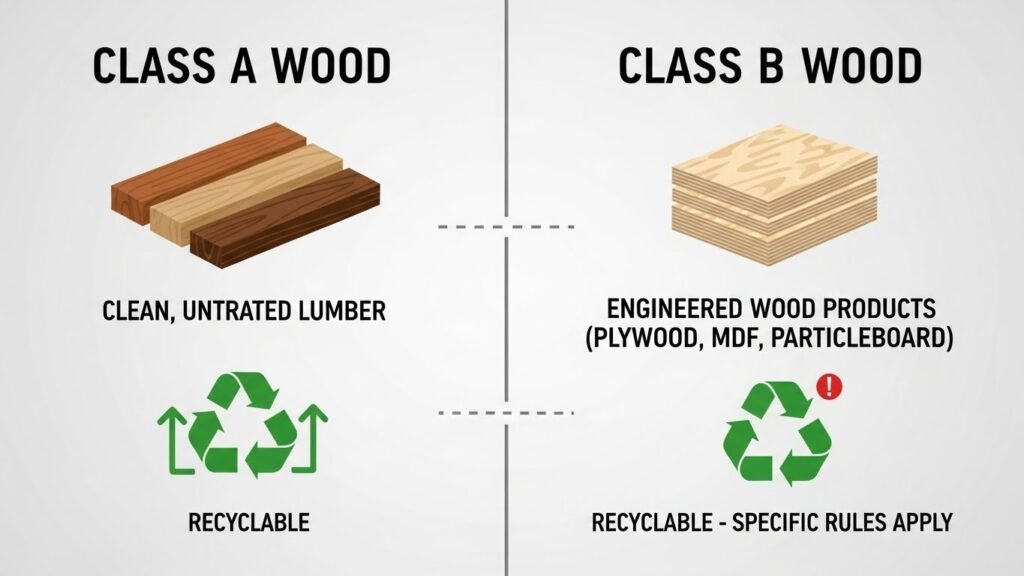
Experts sort scrap wood into specific classes. This sorting is the key to effectively recycling wood products. We must differentiate what can and cannot be recycled.
Class A—Untreated High Quality Timber
This class covers wood that is easy to reuse. It is often structurally sound and clean.
- This includes untreated timber.
- It is commonly used in high-quality furniture.
- It also includes framing for home or commercial spaces.
Class B—Engineered Wood Products
Class B is where plywood usually lands. These materials are processed but still highly recyclable. They must be clean to qualify for this class.
- This includes untreated, unpainted, and unstained engineered wood.
- Examples are plywood, particleboard, and MDF.
- Other examples include laminated veneer lumber (LVL) and glued laminated lumber.
Understanding “Wood Waste” Regulations
Different organizations define wood waste. For example, the Environment Protection Authority of New South Wales (NSW EPA) set guidelines years ago. They defined “wood waste” as green waste. This definition often includes yard and garden scraps, and sometimes even food scraps.
- Materials often labeled as wood waste include:
- Sawn untreated timber
- Spent pallets and crates
- Wood packaging
- Off-cuts and shavings
Knowing these definitions helps you sort wood from general trash. This is a crucial step for local programs.
Identifying Unrecyclable or Problematic Plywood
Not all plywood can be recycled. Some treatments ruin the chance for safe, industrial recycling. You must check your materials carefully before sending them off. This prevents harm to recycling plants and the environment.
- Treated Plywood: If boards have chemical preservatives, like Chromated Copper Arsenate (CCA), they are hazardous. They cannot be accepted by standard recycling programs.
- Painted or Stained Boards: Heavily coated or sealed plywood is hard to clean. The paint can contaminate the final products. They are often rejected for mulches or compost.
- Contaminated Boards: Plywood soaked in chemicals, oil, or sewage must go to hazardous waste disposal. Do not try to recycle these pieces.
| Plywood Acceptability Chart | Class | Status | Disposal Route |
| Untreated, Clean Ply | Class B | Recyclable | Donation, Reusing, Industrial Recycling |
| Heavily Painted/Stained | Class B (Contaminated) | Usually Rejected | General Waste or Specialized Disposal |
| Chemically Treated (CCA) | None | Hazardous Damage | Hazardous Waste Disposal |
The Ethical Choice for Responsible Consumers
Choosing to recycle or reuse is an ethical choice. It is smart for the wallet and even better for the planet. Think about the energy saved when you don’t cut down new trees. This commitment to sustainable practices is what drives the circular economy. We are all responsible for limiting deforestation.
When your interior design is due for a revamping, and your old panels need removing, think smart. Do not toss them out. Look for second-hand markets or specialized programs. You can often sell them as second-hand building materials.
This proactive approach makes a real difference. It is how consumers can actively conserve resources. Now that we know what is safe to use, we can focus on giving that plywood a second life. That leads us to the many great ways to reuse these excellent boards.
Phase 1: Maximizing Plywood Reuse (Keeping the Material Whole)
Part 1 showed us which plywood is safe to handle. Now, we dive into keeping that material whole. The best environmental option is always to reuse a product. This strategy skips the energy required for industrial recycling. When plywood retains its integrity, it avoids the journey to the shredder and mill. This is how you give your end of life plywood a truly valuable second life.
Donating and Selling for Second-Hand Markets
One easy step is to let someone else handle the reuse. Your old panels could be exactly what another person needs. You can avoid the waste stream entirely through trade and donation.
Selling and Utilising Second-Hand Building Materials
If your plywood is in good shape, consider selling it. There is a strong market for second-hand building materials. This is especially true for large, clean sections of structural or marine plywood.
- List your boards on local online platforms.
- This allows DIYers and small contractors to utilize them.
- You earn back some money from your project.
- You help reduce the demand for new timber.
Donation for Community Groups and Organizations
Many community groups and organisations depend on donated wood. Your scrap lumber is an amazing resource for their activities and work. Their appreciation for quality materials is huge.
- Men’s Shed Group: These groups often need material for their woodworking projects and building storage solutions.
- Environmental Care Groups: They can use plywood to make animal shelters or nest boxes. This is a great outdoor project.
- Schools and Universities: Their woodworking shops and art programs thrive on free materials for students’ crafting.
- Reclaimed Timber Specialists: Organizations like Among the Trees collect and resell reclaimed wood. They ensure the wood stays out of the landfill.
Functional Repurposing in Construction and Joinery (Large-Scale Reuse)

Plywood’s inherent strength and durability make it ideal for revamping existing design elements. You do not need to be a contractor to find new uses for large off-cuts.
Joinery and Cabinetry Applications
Large, clean plywood sections are perfect for joinery. You can create durable pieces for your home or commercial space.
- Build custom cabinetry for the garage or kitchen.
- Create built-in shelving units for a new interior design look.
- Use ply for custom storage boxes in a workshop.
- Contractors often use reclaimed boards for temporary framing.
Structural and Flooring Uses
Even if the plywood shows some wear, it can still serve a structural purpose. Many contractors are experts at finding these solutions.
- Beams and planks can be cut down for structural reinforcement in non-visible areas.
- Old flooring can be repurposed as sub-flooring in small areas.
- Doors can be taken apart and the panels repurposed for tabletops or walls.
- Ad hoc projects like temporary ramps or staging areas can use these durable materials.
Creative Projects for Scraps and Off-Cuts (Small-Scale Reuse)

Do not let tiny pieces of lumber go to waste. Even the smallest off-cuts have potential for transformation. This is where your arts and crafts skills come into play.
Building Outdoor Structures and Play Equipment
Plywood is resilient, making it great for outdoor projects. Remember to always use the correct glue type and a good seal for weather-resistant durability.
- Pet Houses: Create a custom pet shelter for your favorite animal.
- Garden Planters: Cut plywood into strips to create sturdy raised garden beds.
- Playground Equipment: Build small play structures or a simple sandbox for kids. Make sure you sand and seal the boards properly to prevent splinters.
Decorative Items and Home Goods
Plywood’s natural look and texture can be quite attractive. You can turn small scraps into useful, decorative items.
- Wall Art: Create small wall art or touchboards using textured plywood.
- Photo Frames: Use small plywood sections to craft unique photo frames.
- Stylish Vintage Looks: Apply paint or a craquelure (cracking) finish to give items a stylish vintage look.
- Plant Stands: Small plant stands are easy to create something new from scrap pieces.
Finding great resources online is easy. Look up a few tutorials to help you get inspired and start a creative project. By crafting and creating something new, you are actively reducing your environmental impact. This is a high-value way to honor your commitment to conserve. Up next, we look at what happens when the wood cannot be kept whole.
Phase 2: Plywood Recycling (Breaking Down the Material)
Sometimes, plywood is too damaged or small for reuse. It may have too many holes or stains. When that happens, the material moves to Phase 2: industrial recycling. This process breaks the composite timber product down. It transforms it into entirely new products. This stage ensures that wood fibers become a renewable resource.
Preparation and Contaminant Removal
Plywood faces challenges because of its layered structure. The glue, wood veneer, and sometimes film or laminate complicate the process. Therefore, preparation is key before reaching the recycling plants.
Deconstruction and Initial Cleaning
You need to do some work first. If the plywood piece is part of a larger structure, you must take it apart. This process is called deconstruction.
- Remove all screws and nails.
- Detach hinges or any metal hardware.
- Removing these contaminants is vital.
- Metal pieces can seriously damage the machinery.
Industrial Purification at the Plant

Once the clean wood arrives at the facility, the final purification begins. The waste wood is usually divided into various piles. Highly specialized equipment is then used.
- The wood goes through a heavy-duty shredder.
- It is processed through a mill.
- These machines break the lumber into small fibers or chips.
- Magnets and screens then remove any small metal contaminants still stuck in the scraps.
The Industrial Recycling Process and Wood Applications
Modern technology allows for a much higher percentage of wood products to be recycled. This is a huge win for the environment. Recycling plants are experts at taking Class B wood and giving it new life. They apply advanced sorting processes to maximize the recovery of the wood fiber.
Products Created from Recycled Plywood Fibers
The shredded and purified wood waste serves many purposes. It is transformed into essential products across various industry sectors. This fully closes the recycling loop.
Soil and Animal Applications (Mulch/Compost)
A lot of the wood fiber is returned to the garden and farm. These are some of the most common solutions.
- Mulches: Wood chips are used for landscaping and erosion control.
- Compost: Fibers improve soil improvement and health.
- Animal Bedding: Clean wood chips provide comfortable bedding for livestock.
New Engineered Products and Feedstock
The fine wood fibers become raw material for new construction products. This gives the wood an attractive look and new function.
- Feedstock: Recycled fibers are used as feedstock in manufacturing.
- Particleboard: These fibers are essential for producing new sheets of particleboard.
- Wood Panels: The material can be used in other engineered wood panels.
Energy Production
Wood waste also offers clean power. This is a smart way to address global energy needs.
- Biomass and Biofuel: Recycled wood is used to create biomass and biofuel.
- Energy Source: This provides a renewable energy source for large companies.
- Carbon Emission Reduction: Using this fuel helps dramatically reduce carbon emission.
Navigating Plywood Disposal and Local Programs
At-Home Wood Chipping and Mulch Production
You can do a bit of recycling right at home. This works best if you have a lot of small, untreated scraps.
- Wood Chipper: You can rent a wood chipper to shred yard waste and lumber.
- Mulch: The resulting chips can be used as mulch in your own garden.
- This is a convenient option for small renovations where you have accumulated many off-cuts.
Utilizing Council and Community Services
If you have large boards or accumulated volumes of waste, local programs are your best bet. You need to know which services are available in your area.
Checking Local Programs and Facilities
The easiest way to find help is to search online. Use simple phrases like “Recycle plywood near me.”
- Local Council: Most Australian councils (or your local municipal authority) have specialized programs.
- Recycling Facility: Check if there are local recycling facilities that accept Class B wood.
- Call ahead to confirm any fees or specific drop-off guidelines.
Council Collection and Consulting Authorities
Don’t forget about curb side pickup. This can save you a trip to the drop-off center.
- Council Collection Services: Many councils offer curb side pickup for timber waste. This is often part of a bulk waste collection schedule.
- Consult Authorities: Always check the guidelines from your local council or environmental protection agency. This confirms the acceptability of your specific material.
By following these tips for reuse and recycling, you actively become a champion for sustainable practices. Every effort to keep plywood out of the landfill helps conserve resources and minimize environmental impact.
Deep Dive into Plywood Chemistry and Safety
Plywood Adhesives: The Environmental Barrier

The main challenge for recycling plywood lies in the glue. Plywood’s great strength comes from the adhesives that bond the wood veneer layers. These adhesives often contain chemicals that are considered contaminants in industrial recycling. The requirement for “untreated” wood means avoiding these harmful glues.
The two most common glues are:
- Urea-Formaldehyde (UF): This is cheap and common in interior plywood and MDF. It cures easily. However, UF glue breaks down over time and can release formaldehyde, a Volatile Organic Compound (VOC), especially when heated.
- Phenol-Formaldehyde (PF): This glue is dark and is used in exterior and Marine Plywood. It is highly water-resistant. PF glue is much more stable than UF glue, which makes it slightly better for industrial recycling processes that create biomass fuel.
These contaminants prevent the wood fibers from being used for high-quality products like new particleboard.
Safety Precautions When Reusing Plywood
If you are a DIYer tackling renovations, safety should come first. Older plywood or salvaged material can pose risks you need to address. This is especially true when cutting or sanding.
- Formaldehyde Risk: Always assume old plywood contains UF glue. Do your cutting and sanding outside or in a space with strong air flow. This helps avoid breathing in dust that might contain VOCs.
- Treatments and Chemicals: Never burn older lumber or plywood. If the wood was treated (like with CCA), burning it releases toxic ash and fumes. These fumes cause environmental damage and are a health hazard.
- Personal Protective Equipment (PPE): Wear a good quality dust mask or respirator. Use safety glasses and gloves when sanding or breaking down old boards.
Economic and Market Dynamics of Reclaimed Plywood
The value of old plywood often goes unrecognized. Selling your salvaged lumber adds money back into your pocket. It also fuels a niche, green market.
Calculating the Commercial Value of Salvaged Plywood
Several factors determine how much money you can get for your second-hand building materials. This is not a fixed price.
- Size and Grade: Large, intact panels (4×8 feet or bigger) are worth the most. High-grade plywood like Birch or specialized Acoustic Plywood sells at a premium.
- Species: Bamboo Plywood and Hoop Pine are highly valued for their attractive look and strength.
- Condition: Clean, flat boards are best. Plywood with excessive nail holes, water damage, or deep scraps loses value quickly.
- Location: In areas with many construction projects or active community groups, demand is higher.
The Role of Deconstruction vs. Demolition in Wood Reclamation
The method used to tear down a building changes the value of the wood. This is a massive factor for large commercial project teardowns.
- Demolition: This involves crushing the structure quickly. The result is a mix of contaminated waste and broken material. The resulting scraps can only be sent to the shredder for low-grade uses like mulches or biomass.
- Deconstruction: This involves carefully taking the structure apart piece by piece. Workers remove screws and nails. This yields valuable, full-sized beams, planks, flooring, and plywood panels. These materials command a much higher resale price for reuse. This method is central to the success of reclaimed timber businesses.
Specific Plywood Types and Their End-of-Life Paths
Not all plywood is created equal. The type of ply dictates its best path for reuse or recycling. Understanding these differences is crucial for responsible disposal.
Marine Plywood and Exterior Plywood: Special Considerations
These two types of plywood are designed for tough outdoor project conditions. They use the stable Phenol-Formaldehyde (PF) adhesive.
- Durability and Reuse: Their weather-resistant nature makes them perfect for long-term reuse. They are great for building garden planters, subflooring, or pet houses.
- Recycling Fate: While the adhesive is more stable, it is still a contaminant. These panels are typically sent to create high-energy biomass fuel rather than new particleboard.
The Reusability of Specialized Plywoods
Some plywood products have a high inherent value. They are too nice to be turned into compost.
- Bamboo Plywood: This is a premium material known for its beauty. It is almost always sold for high-end joinery or decorative products.
- Acoustic Plywood: These panels are specialized for noise control. They are valuable for reuse in theaters, music studios, or commercial space applications. They should be sold or donated to avoid losing that specialized value.
- Shadowclad and Structural Plywood: These untreated options are high-value structural building materials. They are often used by smaller construction companies for new home projects.
Successful Case Studies and Industry Innovation
The shift toward a circular economy is gaining speed. Smart companies and local council programs are leading the way.
Pioneers in Plywood Reclamation (Case Studies)
Several organisations show that large-scale plywood reuse is possible and profitable. Their sustainable practices set a great example.
- Deconstruction Specialists: Companies that only focus on deconstructing buildings—not demolishing them—recover huge amounts of reusable lumber and beams. They operate as large-scale second-hand suppliers.
- Modular Builders: Some companies that build modular or temporary structures like event stages use Exterior Plywood and Film-Faced Plywood. They design the panels for easy, repeated deconstruction and reuse across multiple projects. This drastically reduces waste.
Future Innovations in De-Gluing and Plywood Recycling
The industry is working hard to find better ways to handle the formaldehyde problem. Technology is constantly evolving.
- Chemical/Thermal Breakdown: Researchers are looking into ways to chemically or thermally break down the adhesives. This would free up a much cleaner wood fiber.
- New Adhesives: Manufacturers are developing new, low- or no-VOC glues. These glues would make new plywood inherently more recyclable in the future.
- Advanced Sorting: Better sorting processes are being developed using optical sensors. These sensors could quickly identify and separate painted or contaminated ply from clean untreated wood before it enters the shredder.
Frequently Asked Questions (FAQs)
Why is treated lumber, like CCA plywood, considered hazardous waste?
Treated lumber uses strong chemicals to prevent wood rot and insects like termites. Chromated Copper Arsenate (CCA) contains arsenic, which is toxic. When this wood is burned or breaks down, it releases these chemicals into the environment and soil. Therefore, it must go to specialized hazardous waste disposal to prevent damage.
Can I safely sand or cut plywood that has mold or wood rot?
No, you should use caution. Cutting or sanding plywood with wood rot or mold releases spores and fungi into the air. This can cause respiratory problems. If the mold is minor, clean it outside using proper safety gear. If the damage is extensive, you should dispose of the material as construction waste.
What is the difference between Marine Plywood and Structural Plywood?
Marine Plywood is graded based on the stability of the core layers and the waterproof quality of its glue (PF adhesive). It is designed to handle wet conditions. Structural Plywood is graded for its strength and ability to carry a load in construction. Both are high-quality, but Marine Ply has superior water resistance.
How does the type of wood veneer (species) affect plywood recycling?
The wood veneer species affects the reuse value, but not the industrial recycling process itself. Hardwoods like Birch have high reuse value for cabinetry. Softer woods are common in structural panels. The core factor for recycling is always the adhesive (glue type) and whether it is untreated.
Are there any specific risks associated with reusing Fire Retardant Plywood?
Yes, Fire Retardant Plywood has been infused with chemicals to slow burning. These chemicals can include salts that cause corrosion in fasteners or paints. While it is safe to reuse structurally, you should avoid sanding it heavily and should never burn it.
How do I remove nails and screws efficiently from old plywood boards?
Use a cat’s paw or a small pry bar to get under the head of the nails and lift them out gently. For stubborn screws, use a drill with a reverse setting. Removing them gently helps minimize damage to the surrounding lumber, preserving the quality of the boards for second-hand sales.
What is the lifespan of plywood compared to solid timber?
Plywood is engineered to be dimensionally stable. This means it resists warping better than solid timber. A high-quality Exterior Plywood or Marine Plywood can last 25 to 50 years, especially if properly sealed. Reuse can extend this life almost indefinitely.
Can old plywood be used for making musical instruments?
Yes, high-quality plywood, especially Baltic Birch Plywood, is often prized for making speaker cabinets and occasionally the bodies of electric guitars. Its consistent density provides good acoustic properties. This is a very high-value arts and crafts reuse application.
What is the best way to clean old, dirty plywood before reusing it?
For general dirt, use a stiff brush and mild soap mixed with water. Allow the panels to dry completely before use. Do not saturate the ply. For persistent stains, light sanding with a low-grit paper is the best option for purification.
What is the “cracking” (craquelure) technique mentioned for home decorations?
Craquelure is an arts and crafts technique that involves applying a finish that intentionally cracks as it dries. This creates a fine web of lines. Applying this to plywood scraps gives them an aged, stylish vintage look for wall art or photo frames.
Do wood recycling facilities accept plywood scraps from a home chipper?
Generally, no. Industrial recycling plants need large volumes of consistently chipped wood that has been scanned for contaminants. Your home chipper output is best used for mulch in your own garden or yard.
Is laminated plywood (Melamine or film-faced) recyclable?
Laminated plywood (like Melamine or Film-Faced Plywood) is more difficult to recycle. The laminate layer must be stripped off first. In many regions, the plywood is only accepted for biomass fuel, as the film contaminates the fiber used for particleboard.
What should I do if my local council does not have a bulk waste wood program?
If there is no council collection service, check if there are commercial waste transfer stations nearby. These private facilities often have dedicated programs to accept timber for recycling. Alternatively, find a local woodworking shop or community group that accepts donations.
Are there specific structural safety checks I need to perform before reusing old beams or planks?
Yes. Before reuse, inspect beams and planks for excessive warping, deep cracks, or wood rot. If the material was supporting a heavy load before, consult a professional to ensure its durability for your new project. Never reuse severely compromised structural plywood.
How do low-VOC adhesives affect the future of plywood recycling?
The development of low- and no-VOC adhesives is great news. These glues contain fewer chemical contaminants. As these newer products reach their end of life, it will be easier for recycling plants to recover cleaner wood fiber. This increases the potential for the plywood to be transformed into new, high-quality engineered wood products.