Skip to content
Seasonal Timing and Optimal Feeder Placement
Getting your Hummingbird Feeders right is the key to attracting these tiny, iridescent jewels to your backyard. Providing a vital resource for these birds involves more than just hanging a container. You need to understand their travel schedules and prioritize their safety. This guide will walk you through the essential steps, ensuring you become an expert host for hummingbirds, from spring through the colder months.
Seasonal Rhythms: Understanding When and Where to Feed
Hummingbirds are driven by powerful migration instincts. Knowing when they arrive and depart is crucial for responsible feeder maintenance. Your role as a feeder host changes depending on the time of year.
Timing Feeders for Spring, Migration, and Winter
The time to put up your Hummingbird Feeders depends heavily on your location. East of the Mississippi, the primary visitor is the Ruby-throated hummingbird.
- Spring/Summer Setup: Put feeders up in February (especially for Ruby-throated hummingbirds east of the Mississippi). They start returning to the gulf coast in late February and March. They will be on the move north for a month or more.
- Quiet Period: Don’t worry if your feeders become quiet. This is normal from the end of April until about the 4th of July when the birds are busy with nesting.
- Migration Support: Do not take down your Hummingbird Feeders too early in the fall. Always leave your feeders out for 2–4 weeks after seeing the last of the breeding birds. This ensures a food source is available for any birds still traveling or migrating through.
- Take Down – Standard: If you live in an area where hummingbirds are only present during the breeding season, you can take feeders down in October.
- Location Dependency: The necessity of leaving Hummingbird Feeders out all winter really depends on where you live. This is especially true with consideration of the hummingbird migration.
Year-Round Support: The Phenomenon of Winter Hummingbirds
You may be surprised to learn that not all hummingbirds migrate south to Mexico or Central America. Increasingly, some species are overwintering along the gulf coast.
- Leaving Out All Winter: It is recommended to leave feeders up all year round to support these visitors. These feeders become a vital resource during the cold months.
- Overwintering States: Hummingbirds typically overwinter in US states like California, Texas, Florida, and Louisiana. Increasingly, many western species are also seen overwintering in Mississippi, Alabama, South Carolina, and Georgia.
- Definition: “Winter” hummingbirds are typically western species (like Rufous, Anna’s hummingbird, or Buff-bellied hummingbird) that choose to spend the winter in the East/Gulf Coast.
- Timing: These western vagrants may arrive as early as August and stay through February or March.
Feeder Placement: Optimizing Location for Safety, Visibility, and Nectar Integrity

Choosing the right location for your Hummingbird Feeders is as important as the nectar inside. The perfect spot offers a blend of high visibility and security.
- Visibility: Position the feeder in a highly visible place in your yard so hummingbirds can easily see it when flying through your neighborhood.
- Safety and Cover: A feeder should not sit out in the open, like an oasis in the middle of the desert. Hummingbirds feel exposed and unsafe when they are too far from cover. Place it near sheltering plants or a tree to provide them with a quick getaway route and safety.
- Distance from Cover: The optimal placement is 10 to 15 feet from a tree, shrub, or other hiding place. This distance gives them a place to rest and stay out of the sun, conserving energy when they are not feeding. Trees and shrubs also provide a place to roost while they wait their turn for an open feeding port.
- Aesthetics and Viewing: The main reason to hang Hummingbird Feeders is so that you can see the birds. Hang feeders close to windows where you can enjoy viewing the birds. Ensure the feeder is within range of your binoculars or camera equipment.
- Window Safety: Place the feeder close, but not too close, to a window to prevent collision.
- Perching/Guarding: Hummers like to guard their feeders. Provide a spot for the birds to perch close to the feeder so they can keep an eye on it. Crepe Myrtles are great for this, or you can tie a branch close to the feeder.
- Maintenance Access: Place the feeder in a spot that is easy for you to reach. This makes it easier to refill, clean, and monitor the feeder for pests.
Nectar Preservation: Sun, Shade, and Spoiling
The sun’s intensity can quickly turn a good meal into spoiled nectar. Proper maintenance of the nectar is vital.
- Sun/Shade Balance: Place the feeder in a spot that gets a mix of sun and shade throughout the day.
- Spoilage Risk: Intense sun can cause nectar to heat up and spoil or ferment in just a few hours. A shady spot is therefore crucial for preservation.
- Iridescent Colors: Keeping the feeder completely in the shade is not ideal either. You definitely want the natural light to hit the birds so you can see their iridescent colors.
Nectar Preparation, Sanitation, and Feeder Selection
Continuing our guide, we dive into the science of hummingbird nectar and the art of keeping your Hummingbird Feeders perfectly clean. Proper maintenance is key to protecting the health of your feathered visitors. You will also learn how to choose the right feeder to maximize safety and longevity.
Nectar Preparation and Feeder Sanitation: Best Practices
The food you offer must be safe, nutritious, and fresh. The correct sugar water recipe is very similar to the natural nectar hummingbirds get from plants.
The Simple, Healthy Nectar Recipe

- Formula: The answer is easy: use a mixture of plain table sugar and water. This is the most similar in chemical content to the natural nectar.
- Ratio: Mix ¼ cup sugar with each cup of water.
- Preparation: You can use hot tap water to dissolve the sugar. Boiling the water is not necessary. Let the mixture cool before using it.
- Storage: Extra nectar can be stored in the refrigerator for a week or so. You don’t have to fill the feeders to the top, especially if you have fewer birds.
Critical Mistakes to Avoid
The wrong ingredients can be harmful to these tiny birds.
- Sweeteners: Do not ever use honey or any other type of sweetener to feed hummingbirds.
- Coloring: Do not use red coloring. No red dye is needed to attract them. The store-bought red stuff costs a lot more than the homemade mixture. As long as the feeder is red or has red parts, it will attract the birds.
Feeder Cleaning Schedule and Techniques
Nectar is essentially sugar water and can spoil quickly. Cleanliness is essential to prevent harmful bacteria from developing.
- Nectar Freshness: Hummingbird nectar can spoil or ferment. Change the nectar regularly, even if the feeder is not empty.
- Cleaning Frequency – Warm Weather: Clean and refill feeders every 1–2 days when it’s warm.
- Cleaning Frequency – Cool Weather: Clean and refill feeders every 3–4 days when it’s cooler, or maybe every week in very mild winter weather.
- Warning Signs: Clean the feeder immediately if the solution turns cloudy or you can see black mold.
- Washing: Discard any unused sugar water first. Wash the feeder in hot tap water using your hands or a soft brush.
- Chemicals: Do not use any type of detergent or soap.
- Mold Removal: If you see any signs of mold, soak the feeder for 20 minutes in a weak bleach solution (1/4 cup bleach per gallon of water). It is not necessary to rinse after a bleach soak, as the chlorine dissipates.
Choosing the Right Equipment and Addressing Challenges
Your choice of Hummingbird Feeders and accessories can impact everything from maintenance to pest control. Selecting a good feeder makes your job much easier.
Feeder Selection for Durability and Pest Control
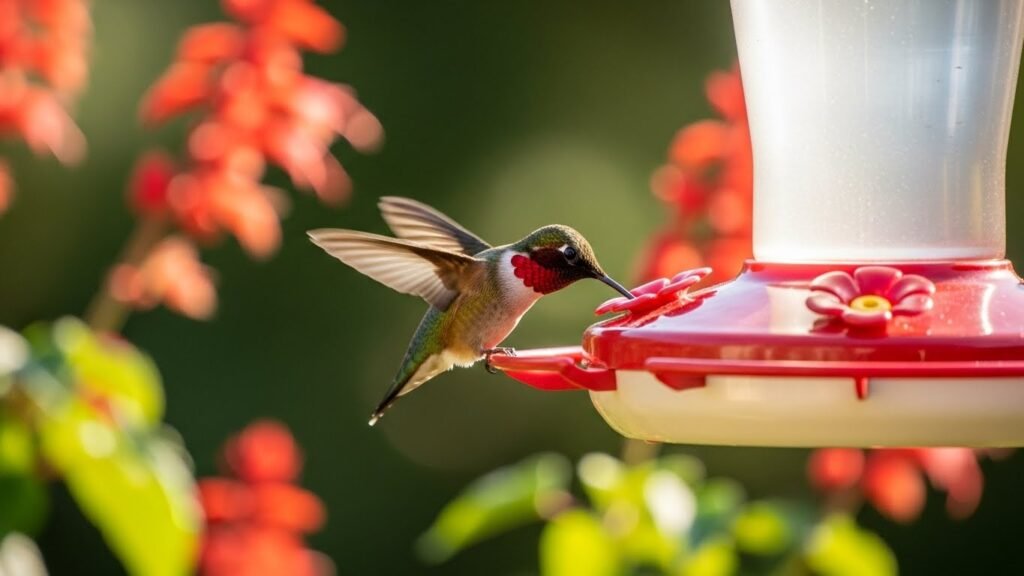
- Key Features: Look for a feeder that has a red color, a no-drip design, and ease of cleaning.
- Material: Feeders with a wide-mouth plastic or glass bottle are easy to clean. Glass feeders won’t break if you accidentally drop them.
- Pest Prevention Features: Avoid feeders that have yellow on them, as this attracts bees and wasps.
- Feeder Type: Saucer-type feeders (like the Droll Yankee style) often work best and seem to deter insects. Hummingbirds can reach down into the port farther than bees, so this helps with bee control.
Protecting Feeders from Cold

If you are hosting hummingbirds during the cold months, you need a plan for freezing temperatures. This is crucial to protect both the Hummingbird Feeders and the nectar.
- Frost Protection: When temperatures are below freezing, you should either bring in your feeder or consider a hummingbird feeder heater.
- Damage Prevention: A feeder heater will protect your feeder from damage, like cracking. It also stops the nectar from freezing, ensuring a constant food source.
Troubleshooting Pests, Aggression, and Habitat Enhancement
Welcome to the advanced section on Hummingbird Feeders! In this part, we tackle common frustrations: the anti-social nature of hummingbirds, insect invaders, and creating a truly attractive habitat. By mastering these elements, you will provide security and a reliable food source, making your yard a hummingbird magnet.
Addressing Challenges in Your Hummingbird Feeders
Managing Insect Pests (Ants and Bees)

Pests are a common issue, but there are simple solutions to protect your nectar.
- Ant Control: Ants are pretty easy to deal with. You will need an antguard, which is a cup with hooks that uses a moat (or possibly a chemical barrier) to prevent the ants from reaching the nectar.
- Bee/Wasp Control: Bees and wasps are a little tougher. They can be discouraged by using feeders that won’t allow the nectar to reach the edge of the port. Using a saucer-type feeder usually helps, since hummingbirds have long bills and tongues and can reach the nectar farther down.
Dealing with Avian Competition
Hummingbirds are notoriously aggressive and anti-social. You also need to watch out for other birds.
- Hummingbird Fighting (Squabbling): You really can’t stop the fighting; they are wired to be the most anti-social creatures on earth. Minimize the squabbling by placing multiple Hummingbird Feeders out of sight of each other.
- Other Birds: Birds like woodpeckers, finches, and orioles may seek the sugar water in a hummingbird feeder. These larger birds can be problematic, as they dominate the feeder and scare off hummingbirds.
- Solution: Offer alternative food sources (like seed feeders) away from the hummingbird feeder to keep them occupied elsewhere.
Creating a Hummingbird-Friendly Habitat with Plants and Cover
While Hummingbird Feeders provide a vital resource, natural plants provide the insects and natural nectar they rely on. A beautiful yard attracts more birds.
- Nectar Rich Plants: Hummingbirds love flowers that produce a lot of nectar.
- Location: Most preferred plants do well with some protection from full sun, such as understory plants beneath tall trees.
- Protection: Most nectar-rich plants are sensitive to frost. They may freeze back but will typically rebound from the roots quite nicely.
- Examples of Attractive Plants: Some proven nectar-rich plants include: Red Abutilon, Bottlebrush, Red Buckeye (native), Coral Honeysuckle (native), Firebush, Fire Spike, Fountain Plant, and various types of Salvia (like Scarlet sage, Anise Sage, and Pineapple Sage).
Supporting Year-Round Visitors with Natural Resources
If you are hoping to host a winter hummingbird, combining your Hummingbird Feeders with specific plants is essential. They need security and food during the cold.
- Year-Round Cover: Provide ample cover with evergreens (like camellias, hollies, ligustrum, sweet olive) for resting and protection, especially in winter.
- Winter Food Sources: Offer winter flowers such as winter-flowering shrimp plant, cuphea, russelia, firespike, and abutilon.
Identifying and Reporting Western Visitors
If you see a hummingbird during the colder months, it is likely a western vagrant.
- Western Species: These birds include the Rufous hummingbird, Black-chinned hummingbird, Buff-bellied hummingbird, Broad-tailed hummingbird, and the smallest, the Calliope hummingbird.
- Reporting Visting Birds: If you see a hummingbird between November and February, it should be reported to local birding organizations. They may want to come and band the birds so they can understand more about where they travel when they migrate.
Advanced Tips, Tools, and Trustworthiness
Now that you have the basics down, this section covers advanced techniques and accessories for your Hummingbird Feeders. From utilizing feeder cameras for easy observing to ensuring your practices follow the highest standards of care.
Enhancing Observation and Maintenance with Modern Tools
Technology has made observing and maintaining Hummingbird Feeders easier than ever.
Utilizing Feeder Cameras for Easy Observing
- Tracking Visitors: Smart hummingbird feeders often include a camera with a motion sensor to capture photo and video footage of hummingbirds feeding.
- Monitoring Activity: Using a camera can help you keep track of how many feathered visitors you are getting, especially when environmental factors change. This helps you judge when to take down feeders by looking at the amount of nectar being used.
- AI Recognition: Some cameras even offer AI recognition to identify more than 150 species of hummingbirds.
Smart Accessories for Feeders
A few simple accessories can dramatically improve your experience and the birds’ well-being.
- Feeder Heater: As discussed, a feeder heater is an essential accessory to stop nectar from freezing and to keep your feeder from becoming damaged by frost.
- Ant Moat: Most antguards create an ant moat, which is a vital part of stopping pests.
- Perching Ring: Feeders with a perching ring or attached perch offer hummingbirds a spot to sit on while they feed, which conserves energy.
- Rain Chain: Hummingbird rain chains can be beautiful additions to your yard. They act as a water feature and can harvest rainwater.
The Essential Role of Protein: Hummingbird’s Natural Diet
While sugar water provides the fuel and energy for a hummingbird’s rapid metabolism, it is critical to understand that nectar is only part of their diet. As responsible hosts, we must recognize the importance of their natural food sources, which provide the building blocks for life.
The Protein Imperative: Insects and Spiders

- Nectar vs. Protein: Nectar is an easily accessible carbohydrate (fuel) for daily survival, flight, and maintaining body temperature. However, hummingbirds are not vegetarians; they require a high-protein diet for growth, tissue repair, and, most importantly, reproduction.
- The Primary Food Source: Small, soft-bodied insects and spiders—collectively called “arthropods”—make up the majority of a hummingbird’s diet. They feed on gnats, aphids, mosquitos, fruit flies, and tiny spiders they find clinging to leaves or caught in webs.
- Crucial for Nesting: During the breeding season, the female (who does all the parenting) needs enormous amounts of protein. She feeds her nestlings an almost exclusive diet of insects, which are essential for the chicks’ rapid growth and feather development. If you see a female humming in the grass or around leaves, she is likely hunting for dinner, not a drink.
- Attracting Insects: By cultivating a variety of plants (beyond just red ones) and minimizing pesticide use in your yard, you ensure a healthy insect population, which is the most vital offering you can give to breeding hummingbirds.
Advanced Feeder Maintenance and Material Selection
The longevity and health safety of your feeders depend on specific tools and a clear understanding of the materials used in construction. Going beyond the basic cleaning techniques is key to providing a truly safe resource.
Specialized Tools and Chemical-Free Cleaning Alternatives

- Targeted Cleaning Tools: While a soft brush works for large areas, specialized small brushes, flexible wire brushes, or inexpensive baby bottle nipple brushes and pipe cleaners are essential for thoroughly scrubbing the small, narrow feeding ports and the tiny holes where mold and bacteria often accumulate.
- Natural Sanitizers: Although a weak bleach solution is effective, many birders prefer a non-toxic alternative. White distilled vinegar mixed with hot water (one part vinegar to four parts water) can be used to soak and sanitize feeders without leaving any potentially harmful chemical residue. Always rinse thoroughly after using either bleach or vinegar.
- Preventative Scrubbing: Even if the nectar looks clear, feeder parts should be scrubbed with friction. Simply rinsing or soaking is not enough to remove the sticky biofilm that is invisible to the eye but acts as a breeding ground for mold and bacteria.
Material Matters: Glass vs. Plastic Feeders
Choosing between common feeder materials has trade-offs that impact maintenance and durability.
| Feeder Material | Pros | Cons |
| Glass | Non-porous, resists scratching, easier to sterilize, retains clarity, typically lasts longer. | Heavier, more expensive, susceptible to breaking if dropped or knocked by a raccoon. |
| Plastic | Lightweight, inexpensive, easier to hang and refill. | Scratches easily, which creates microscopic grooves where bacteria and mold spores can hide; can cloud or yellow over time, making it harder to clean and a breeding ground for bacteria. |
Going Beyond the Feeder: Habitat Enhancements and Troubleshooting
A truly hummingbird-friendly yard considers all the bird’s needs: food, water, safety, and observation. By being mindful of potential hazards and observing their behavior, you can address issues before they become problems.
Critical Placement Hazards: Protecting from Predators and Windows
- The Cat Threat: A major missing safety component is the warning about domestic pets. Never place feeders in areas easily accessible to cats. Cats are natural predators, and a hummingbird distracted while feeding is an easy target. Place feeders high and away from low shrubbery where cats can hide.
- Window Safety Revisited: While placement near windows for viewing is mentioned, a crucial preventative measure is sometimes needed for high-traffic windows: using UV decals or hanging ribbons/paracord (spaced 2-4 inches apart) on the outside of the glass to make the window visible to the birds and prevent fatal collisions.
Behavioral Insights and Attracting Water Sources
- Tongue Action: Hummingbirds don’t suck nectar; they lap it up. Their tongue is a long, narrow tube with fringed edges that can move in and out of their bill up to 15-20 times per second.
- Roosting Spots: At night, hummingbirds enter a state of torpor to conserve energy. They will often choose small, sheltered branches, thin twigs, or even the back of a large leaf to roost and sleep. These locations are essential to their survival.
- Attracting Water: Hummingbirds do not typically use bird baths, but they love to fly through fine mist or water drips to bathe and drink. Adding a mister to a hose or placing a dripping feature near your feeder will further entice visitors.
Troubleshooting and Creating a Diverse Ecosystem
- When Visits Stop: If a popular feeder suddenly stops attracting birds, check for: a territorial bully driving off others; natural food blooming nearby (hummingbirds often prefer natural nectar when available); or evidence of pesticide use nearby, which can impact the insect population they rely on.
- The Holistic Habitat: Remember that a good feeder is part of a bigger plan. Having a variety of feeding stations (seed, suet, water) can create a thriving, balanced ecosystem that indirectly attracts and supports hummingbirds by providing a rich insect food base and ample cover.
Final Tips and Trustworthy Practices for Hummingbird Feeders
This final section emphasizes the trust and care necessary to be a great hummingbird host. Your diligence in proper maintenance ensures these delicate birds remain healthy and keep returning season after season.
Maintaining Trust and Expertise in Hummingbird Care
As an ornithologist might advise, responsible feeding hinges on consistency and clean practices. Your commitment to maintaining a clean and available food source is a reflection of your expertise and care.
- Consistency: During heavy migration periods, always watch the nectar levels. You do not want the feeders to go empty, causing birds to leave after you’ve gone to all this trouble.
- Auditing: One of the best ways to figure out if and when to take down your Hummingbird Feeders is just by observing. If it has been a few weeks since you’ve seen a hummingbird in your yard, it likely means you don’t need to leave your feeder out.
- Seasonal Care: Remember that caring for hummingbirds in winter really depends on where you live. This is especially true with consideration of the hummingbird migration patterns and local environmental factors.
Summary of Nectar and Cleaning Essentials
The following table summarizes the crucial steps for keeping your nectar fresh and safe.
| Condition | Nectar Change Frequency | Cleaning Protocol |
| Hot Weather | Every 1–2 days | Use hot water and a soft brush; never use detergent/soap. |
| Cool/Mild Weather | Every 3–4 days to one week | If mold is present, soak in a weak bleach solution. |
| Freezing Temperatures | Ensure the nectar is accessible and not frozen | Use a hummingbird feeder heater or bring the feeder inside. |
This comprehensive guide should give you everything you need to confidently manage your Hummingbird Feeders. By adhering to these practices—from the specific sugar water mixture to understanding seasonal migration and proper maintenance—you are providing a crucial, safe food source. Happy feeding!
Common Questions About Hummingbird Feeders and Care
Why should I only use white granulated sugar, and not alternatives like brown or organic sugar?
You should only use refined white granulated sugar. Brown sugar, raw sugar, confectioners’ sugar, and organic sugars all contain trace minerals, iron, or molasses that are difficult for hummingbirds to digest. These impurities can accumulate in their kidneys and liver and potentially cause long-term health issues or contamination.
Is it safe to use tap water when making hummingbird nectar?
Yes, standard tap water is generally safe, provided it is potable for humans. If you have extremely hard water or use a water softener (which can increase sodium levels), you may want to use filtered water. Avoid using distilled water exclusively, as it lacks trace minerals that hummingbirds may benefit from.
How long can I safely store prepared hummingbird nectar in the refrigerator?
Prepared nectar (the 1:4 sugar/water solution) can be stored in an airtight container in the refrigerator for up to two weeks. Always check for any cloudiness or fermentation before using it, even if stored properly.
How much nectar does an average hummingbird drink in a day?
Hummingbirds are tiny energy burners, consuming roughly 1.5 to 3 times their body weight in food per day. This translates to feeding approximately every 10–15 minutes and consuming about half of their body weight in sugar water daily.
Do hummingbirds actually drink plain water, or do they get all their liquid from nectar?
Hummingbirds do not typically drink plain water from sources like puddles or large baths. They get the majority of their hydration from nectar (which is 80% water) and dew on leaves, but they will drink water droplets from misters or specialized small water features while bathing.
What are the signs that my nectar has started to ferment?
Fermented nectar often appears cloudy (as bacteria multiply), may have fine white threads or black specks (early mold growth), and may contain small bubbles that cling to the sides of the feeder, indicating yeast growth and alcohol production. Fermented nectar should be discarded immediately.
Do hummingbirds feed at night?
No. Hummingbirds are diurnal (daytime) feeders. They must consume enough food before sundown to survive the night. They rely on visual cues (the bright red color of the feeder or flowers) to find food and do not fly or feed in complete darkness.
What is torpor, and how does it relate to hummingbird feeders?
Torpor is a deep, sleep-like state of reduced metabolic activity and body temperature (similar to hibernation) that hummingbirds enter on cold nights or when food is scarce. They enter torpor to conserve energy. Having feeders available early in the morning allows them to quickly break torpor and raise their body temperature after sunrise.
How fast can a hummingbird fly, and what is its top migratory speed?
In level flight, a hummingbird can fly at speeds of 20 to 30 miles per hour (mph). During their dazzling courtship dives, males can reach speeds approaching 50–60 mph. During migration, their average cruising speed is lower, but they are capable of sustained, high-speed travel.
What is the lifespan of a wild hummingbird?
While their small size suggests a short life, hummingbirds can live surprisingly long. Most survive about 3 to 5 years, but banded Ruby-throated Hummingbirds have been recorded living for at least 6 to 9 years in the wild.
What is the “hissing” or “chattering” sound I hear near my feeder?
The loud “chatter” or “hissing” sound is a vocalization used for territorial defense and communication between rival hummingbirds. Males use it aggressively to warn away intruders attempting to feed or enter their territory.
How large is a hummingbird’s nest, and where are they usually built?
A hummingbird nest is tiny, usually about the size of a large thimble or a walnut. It is constructed primarily of plant down and spider silk, which allows it to stretch as the chicks grow. Nests are typically built on horizontal, downward-sloping branches, often high in trees, and are sometimes camouflaged with lichen.
How many eggs does a hummingbird typically lay?
A female hummingbird typically lays two tiny, white eggs, which are no bigger than a small jellybean or a coffee bean. She performs all nesting duties alone, including incubation and feeding.
Should I worry about my feeder being infested with ants if I don’t see any?
Yes. It is always best to hang a feeder with a functional ant moat or guard regardless of whether you currently see ants. If the weather changes or a colony discovers the sweet water, an infestation can happen overnight, quickly contaminating the nectar.
Are there any natural materials that can be toxic to hummingbirds if they get into the nectar?
Yes. While natural, sap or chemicals from certain plants (like copper from treated wood, or pine sap) can be toxic if they drip into the nectar or if the feeder is placed directly against materials that leach chemicals. Ensure the hanging apparatus is clean and non-toxic.
Why is the metal on my feeder turning green?
If metal parts (like hooks or wire) are turning green, it indicates oxidation, likely copper corrosion. While copper in small amounts is not immediately harmful, prolonged ingestion of corrosive metal can be toxic. Replace corroded metal parts with stainless steel or plastic.
Is there a specific time of day when hummingbirds feed the most heavily?
Hummingbirds feed most intensely right after sunrise to break torpor and replenish energy stores, and again just before sunset as they try to consume enough fuel to last through the night. These are the two most critical times to ensure feeders are full and clean.
What is the ideal capacity for a hummingbird feeder?
The ideal capacity is one that matches your bird population and the weather. Smaller feeders (8–12 oz.) are generally better because they force you to change the nectar more frequently, ensuring freshness. Larger feeders (20 oz.+) are only suitable for heavily trafficked yards or cooler weather.
How can I discourage bears or raccoons from accessing my hummingbird feeders?
If larger wildlife is an issue, feeders must be brought in every evening at dusk and hung out again at dawn. Alternatively, place feeders on a baffle pole or a specialized, electrified fence (where legal) that prevents climbing access.
What is the white stuff I sometimes see on the outside of the feeding ports?
The white crusty residue is crystallized sugar left over from spilled or dried nectar. While usually harmless, it indicates where bacteria might be growing. It should be wiped off immediately with a damp cloth during cleaning.
Why is the female hummingbird so drab compared to the male?
The female’s duller, camouflage coloring (drab green/brown) is a survival mechanism. Since she is solely responsible for building the nest, incubating the eggs, and feeding the young, her coloring helps her blend in with the foliage, protecting her and the nest from predators.
Can I leave my feeder out when using mosquito spray in my yard?
Pesticides, especially airborne sprays like mosquito foggers, should be avoided. Hummingbirds rely on these tiny insects for protein. If spraying is absolutely necessary, remove the feeders first, wait until the spray has fully dissipated (at least 24 hours), and then thoroughly clean the feeder exterior before rehanging.
What is “nectar robbing” and do hummingbirds do it?
Nectar robbing occurs when a bird or insect bypasses the natural opening of a flower and pierces the base of the bloom to steal nectar. While some larger birds and bees are known robbers, hummingbirds generally do not engage in nectar robbing as their long bills are adapted for direct access.
Should I worry if I see a hummingbird constantly licking the feeder port?
No, this is normal and healthy behavior. When a hummingbird is actively feeding, it is rapidly extending and retracting its tongue (licking) to move the nectar into its mouth. If it’s hovering at an empty port, then the feeder needs refilling.