Skip to content
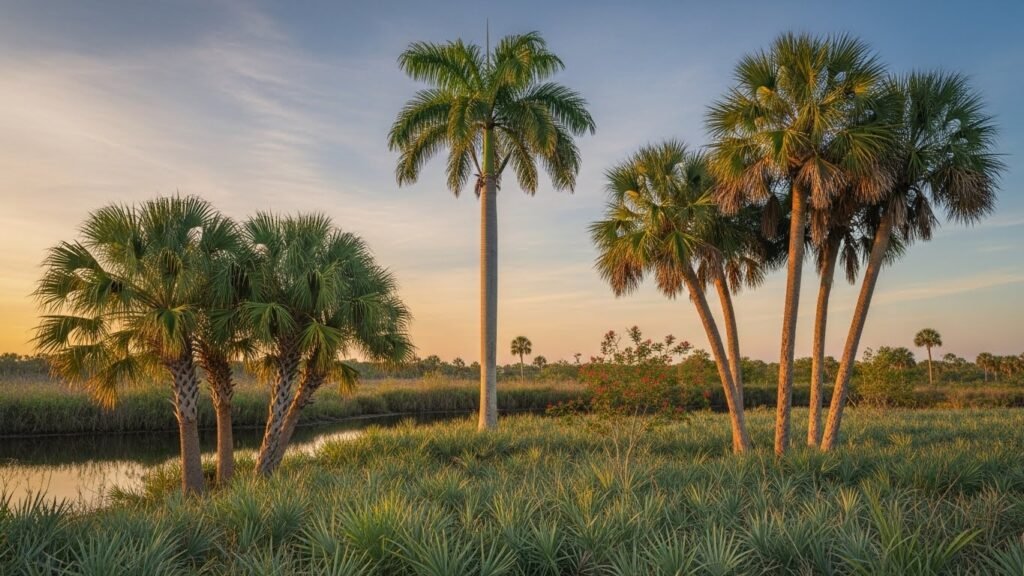
Florida is famous for its sunny beaches and swaying trees. You might wonder, are palm trees native to Florida? Many people think every palm they see belongs here. That is actually not the case at all. Florida has a mix of locals and visitors from far away. Knowing the difference helps you plan a better yard. It also helps our local birds and bugs stay happy.
Introduction to the Florida Palm Landscape
Palm trees are the big symbol of the Sunshine State. You see them on the state seal and every postcard. They make us think of vacation and warm weather. But did you know not all of them started here? Some came from across the ocean a long time ago.
Most people call them trees, but they are different. Scientists say they are more like giant grasses or lilies. They do not have rings inside like an oak tree. This makes them very flexible during big summer storms. They can bend without breaking most of the time.
It is very important to know which ones are native. Native plants have lived here for thousands of years. They know how to handle the heat and the sand. Florida has exactly twelve species that are true locals. All the others are just guests in our beautiful landscape.
The Botanical Anatomy of a Palm
The trunk of a palm is a very weird thing. If you cut one open, you will not see wood. It is full of tough fibers bundled together. These bundles carry water and food up to the leaves. This unique setup helps them survive very high winds.
Palm roots are also pretty cool to study. They do not grow one big deep taproot. Instead, they grow thousands of small, thin roots. These roots stay close to the surface of the soil. They spread out wide like a giant underground mat. This helps them grab water very quickly when it rains.
You can tell palms apart by their leaf shapes. Some have leaves that look like long feathers. Others have leaves that look like big hand fans. The young plants often look like small shrubs for years. They spend a lot of time building a strong base. Only then do they start growing tall into the sky.
Florida’s 12 Native Palm Species

Cabbage Palm (Sabal palmetto)
The Cabbage Palm is our official state tree. It is super tough and grows almost everywhere here. It can handle very salty air near the ocean. This palm is also very cold-hardy down to 20°F.
- State Seal: You can see this iconic palm on Florida’s official flag.
- Food Source: Native Americans once ate the “heart” of this palm tree.
- Versatility: It grows well in both swamps and dry sandy areas.
Saw Palmetto (Serenoa repens)
This palm usually grows along the ground like a vine. It has sharp, saw-like teeth along the leaf stems. It creates a thick green carpet in the woods. Many animals use it for a safe place to hide.
- Creeping Trunk: The stem often crawls horizontally under the leaves.
- Wildlife Value: The berries are used by many different forest animals.
- Hardiness: It is very resistant to fire and regrows quickly.
Royal Palm (Roystonea regia)
The Royal Palm is a giant in the palm world. It has a very smooth, gray trunk that looks like concrete. It grows mostly in the warm parts of South Florida. These trees can reach heights of up to 80 feet.
- Self-Cleaning: Old leaves fall off on their own without trimming.
- Large Scale: These are best for big parks or wide city streets.
- Regal Look: It is often used to line fancy driveways and entrances.
Needle Palm (Rhapidophyllum hystrix)
The Needle Palm is the world champion of cold weather. It can survive in places where it snows heavily. It does not grow a tall trunk like others. Instead, it grows in a big, rounded green clump.
- Sharp Spines: Long black needles protect the base of the plant.
- Slow Growth: It takes a long time to reach its full size.
- Rare Find: It is getting harder to find these growing in nature.
Silver Palm (Coccothrinax argentata)
This is a beautiful and small palm for gardens. The bottom of the leaves has a silver color. It glows when the wind blows the fronds around. It loves the rocky soil found in the Florida Keys.
Everglades Palm / Paurotis Palm (Acoelorrhaphe wrightii)
This palm grows in pretty, tight clusters of thin trunks. It has fan-shaped leaves with silver-green colors on them. It loves having its feet wet in the swamp. You will see it a lot in the Everglades.
Scrub Palmetto (Sabal etonia)
This palm is a specialist for the dry center of Florida. It stays very low to the ground most of its life. It looks a lot like a baby Cabbage Palm. It only grows in specific sandy areas called scrub.
Dwarf Palmetto (Sabal minor)
The Dwarf Palmetto is a very rugged little plant. It usually has no visible trunk above the ground. It can handle being flooded for a long time. It also survives very cold winters in North Florida.
Florida Thatch Palm (Thrinax radiata)
This palm is perfect for homes near the beach. It is very salt-tolerant and loves the sea breeze. It grows a slender trunk and a round top. It produces small white berries that birds love to eat.
Keys Thatch Palm (Leucothrinax morrisii)
This one is very rare and protected by the state. It has a beautiful blue-green color on the leaves. It stays fairly small compared to the Royal Palm. It is a true treasure of the Florida Keys.
Buccaneer Palm / Florida Cherry Palm (Pseudophoenix sargentii)
The Buccaneer Palm is very slow-growing and very tough. It has a swollen trunk that looks like a bottle. It can handle extreme winds and very salty water. It is one of our most endangered native species.
Miami Palm (Sabal miamiensis)
The Miami Palm is a very rare local palm. It is found mostly in the rocky soils of Miami-Dade. It is so rare that most people never see one. Saving its habitat is very important for its survival.
Popular Non-Native and Exotic Palms in Florida
The Coconut Palm (Cocos nucifera)
Many people think the Coconut Palm is a Florida native. It actually came from tropical Asia a long time ago. It loves the heat but can die in a freeze. It can actually be invasive in some parts of the state.
Date Palms (Phoenix species)
Date palms come from places like Africa and the Middle East. The Canary Island Date Palm is a very popular choice. It has a massive trunk that looks like a pineapple. The Pygmy Date Palm is a smaller version for yards.
The Fan Palm (Washingtonia robusta)
This tall palm comes from Mexico and the Western US. It grows very fast and can get incredibly tall. You often see them in rows along old highways. They are prone to getting hit by lightning during storms.
Exotic “Look-Alikes”
- Sago Palm: This is actually a cycad, not a true palm tree.
- Queen Palm: This is a cheap palm that often looks yellow and sick.
- Bismarck Palm: This giant has huge, stunning blue-silver fan-shaped leaves.
The Importance of Choosing Native Palms
Native palms are the best choice for your Florida home. They have lived here much longer than any of us. They have learned how to survive our weird weather patterns. They do not need much help to stay healthy.
Choosing native palms helps the local birds and bugs. Many native insects rely on these palms for food. Birds then eat those insects to feed their young. It keeps the whole Florida ecosystem working the right way.
Native palms are also much better at surviving big hurricanes. Their roots are built to hold onto Florida’s sandy soil. Exotic palms often fall over much easier during high winds. This saves you money on repairs after a big storm.
- Low Maintenance: Natives need less fertilizer and much less extra water.
- Biodiversity: They provide homes for many unique Florida wildlife species.
- Resilience: They are naturally resistant to many local plant diseases.
Planting and Care for Florida Palms

The best time to plant a palm is during summer. Our heavy summer rains help the roots get started quickly. You should dig a hole that is wide but shallow. Do not bury the trunk too deep in the dirt.
New palms need a lot of water for a few months. You should water them every single day at first. Once they are established, they can handle dry weather well. Most native palms are very good at surviving a drought.
Pruning is something many people get wrong with palms. You should never cut off green leaves from the tree. Only remove the leaves that are completely brown and dead. Cutting green leaves can actually starve the palm of energy.
- Watering: Keep the soil moist but not soaking wet for weeks.
- Pruning: Use the “9 to 3” rule for a healthy crown shape.
- Support: Use wood braces for tall palms to keep them straight.
Comparative Growth, Light, and Soil Requirements of Florida’s 12 Native Palms
Most native Florida palms are characterized by a slow growth rate, often adding only a few inches of height per year. While they take their time to reach maturity, this slow development often contributes to a much longer lifespan compared to fast-growing exotic species.
| Palm Species | Growth Rate | Light Requirement | Soil Preference |
| Cabbage Palm | Slow to Moderate | Full sun to partial shade | Versatile; thrives in swamps or dry sand |
| Saw Palmetto | Very Slow | Full sun to deep shade | Adaptable; thrives in woods and sandy soils |
| Royal Palm | Moderate to Fast | Full sun | Rich, moist soils; prefers warm regions |
| Needle Palm | Very Slow | Partial to full shade | Moist, well-drained soils; very cold-hardy |
| Silver Palm | Very Slow | Full sun to light shade | Rocky, limestone-based soils |
| Everglades Palm | Moderate | Full sun | Wet, swampy soils; loves “wet feet” |
| Scrub Palmetto | Very Slow | Full sun | Dry, specific sandy areas called scrub |
| Dwarf Palmetto | Slow | Partial shade to full sun | Rugged; handles flooding or dry conditions |
| Florida Thatch Palm | Very Slow | Full sun | Sandy, salt-tolerant coastal soils |
| Keys Thatch Palm | Slow | Full sun | Rocky, coastal soils of the Keys |
| Buccaneer Palm | Extremely Slow | Full sun | Rocky, very salty, and alkaline soils |
| Miami Palm | Very Slow | Full sun | Rocky soils specific to Miami-Dade |
Key Environmental Observations
- Adaptability: Native palms have lived in Florida for thousands of years and have learned to handle the local heat and sand.
- Salt Tolerance: Species like the Cabbage Palm and Florida Thatch Palm are specifically adapted to handle salty air and sea breezes near the ocean.
- Hydrology: While the Everglades Palm thrives in flooded grasslands, the Scrub Palmetto is a specialist for dry, sandy centers of the state.
- Resilience: Because they are built for Florida’s unique weather, these natives generally require less extra water and fertilizer once they are established.
Specialized Nutrition and Fertilization

Florida soil is very sandy and does not hold food well. Palms need a very specific type of fertilizer to thrive. You should look for a mix with the 8-2-12-4 ratio. This gives them the right amount of nitrogen and potassium.
Magnesium and Boron are also very important for palm health. If a palm lacks these, its leaves will look terrible. They might turn yellow or get weird frizzle at the ends. Using a slow-release fertilizer is the best way to help.
| Nutrient | Why it Matters | Sign of Deficiency |
| Potassium | General growth | Yellow spots on old leaves |
| Magnesium | Green color | Bright yellow bands on leaves |
| Manganese | New leaf health | Frizzled or tiny new leaves |
| Boron | Stem strength | Crooked or bent trunk growth |
Recommended Palm Tree Fertilization Schedule
To keep your landscape looking like a tropical oasis, following a consistent nutrition plan is key. Florida’s sandy soils drain very quickly, which means nutrients wash away before the roots can grab them. Using the right products at the right time ensures your native and foreign palms stay vibrant and pest resistant.
Spring Application (March – April)
- The Season Starter: This is the most important feeding of the year as the weather warms up and new growth begins.
- Fertilizer Ratio: Use a controlled-release fertilizer with an 8-2-12-4 Mg ratio to provide a steady supply of nitrogen and potassium.
- Application Area: Spread the granules evenly under the entire canopy of the palm, staying at least one foot away from the trunk to avoid bark burn.
Summer Application (June – July)
- Growth Support: Heavy summer rains in South Florida can cause nutrient leaching, so a mid-season boost is necessary.
- Micronutrient Focus: Ensure your mix includes manganese and boron to prevent “frizzle top” and other common nutrient deficiencies.
- Watering In: Always water the area thoroughly after applying fertilizer to help the nutrients reach the root mat.
Fall Application (September – October)
- Winter Prep: This final feeding helps palms build up strength before the cooler winter months arrive.
- Potassium Importance: High potassium levels during the fall help increase the cold-hardiness of species like the Cabbage Palm and Dwarf Palmetto.
- Timing Caution: Avoid fertilizing in late November or December, as you do not want to encourage tender new growth right before a potential freeze.
Year-Round Maintenance Tips
- Slow-Release Only: Never use “turf” fertilizer near your palms, as the quick-release nitrogen can cause severe damage.
- Soil Testing: If your palms still look yellow, contact certified arborists to perform a soil test to check for pH imbalances.
- Mulching: Keep a thin layer of organic mulch around the base to hold moisture and improve soil quality as it breaks down.
Common Pests and Diseases

Lethal Bronzing is a very scary disease for Florida palms. It is caused by a tiny bug that carries a germ. Once a tree gets it, there is usually no cure. You have to remove the tree to save the others.
Palmetto Weevils are big bugs that eat the heart of palms. They usually attack palms that are already stressed or sick. Keeping your palms healthy is the best way to stop them. Avoid over-pruning, as the smell of cut leaves attracts them.
Ganoderma butt rot is a fungus that lives in the soil. It creates a big mushroom-like shelf at the base of the tree. It rots the inside of the trunk until it falls. There is no known treatment for this soil-borne fungus.
Companion Plants for a Florida-Friendly Palm Landscape

To create a complete Florida oasis, pairing your native palms with the right companion plants is essential. These plants are chosen because they share similar light and soil requirements, helping to support local birds and insects while maintaining a low-maintenance yard.
Native Shrubs and Groundcovers
- Beautyberry (Callicarpa americana): A deciduous shrub that produces striking purple berries in the fall, which provides a vital food source for birds.
- Coontie (Zamia integrifolia): This native cycad looks like a small palm and pairs beautifully with the Saw Palmetto or Dwarf Palmetto.
- Firebush (Hamelia patens): A hardy shrub with red-orange flowers that attract hummingbirds and butterflies.
- Wild Coffee (Psychotria nervosa): This plant loves the shade provided by the dense canopy of a Cabbage Palm or Royal Palm.
Salt-Tolerant Coastal Companions
- Sea Oats (Uniola paniculata): Essential for beachside homes, these grass-like plants stabilize sand alongside Florida Thatch Palms.
- Blanket Flower (Gaillardia pulchella): A colorful, drought-tolerant wildflower that thrives in the same sandy soils as the Silver Palm.
- Railroad Vine (Ipomoea pes-caprae): A hardy groundcover that handles sea breeze and salt spray, perfect for pairing with the Buccaneer Palm.
Benefits of Companion Planting with Natives
- Ecosystem Support: Mixing different native plants ensures that native insects have varied food sources, which in turn supports the local bird population.
- Water Efficiency: Once established, these native groupings can handle Florida’s dry weather and weird weather patterns without much extra water.
- Visual Appeal: Using diverse heights and textures, like the creeping stems of Saw Palmetto combined with upright shrubs, creates a lush, tiered look.
Botanical Gardens and Nurseries to Visit
If you want to see these native palms and companion plants in their natural glory—or pick some up for your own yard—Florida has world-class botanical gardens and specialized nurseries. These locations offer a “living laboratory” where you can see how different species interact and thrive in real-world landscapes.
Top Botanical Gardens for Palm Enthusiasts
- Fairchild Tropical Botanic Garden (Coral Gables): One of the most famous botanical gardens in the world, Fairchild is home to an extensive Montgomery Palmetum and a massive collection of palms from Florida and the Caribbean. It is the best place to see rare species like the Buccaneer Palm and the Sargent’s Cherry Palm.
- Mounts Botanical Garden (West Palm Beach): As Palm Beach County’s oldest and largest public garden, Mounts features a dedicated “Florida Natives Garden.” Here you can see Firebush and Wild Coffee growing alongside native palms in a curated, educational setting.
- Marie Selby Botanical Gardens (Sarasota): With two bayfront campuses, Selby Gardens specializes in “air plants” but also showcases native nature and regional history. It’s an excellent spot to observe the Silver Palm and Florida Thatch Palm in a coastal environment.
- Key West Tropical Forest & Botanical Garden (Key West): This is the only frost-free botanical garden in the continental U.S. and focuses heavily on native plants. It’s a prime location to see the Keys Thatch Palm and endangered species unique to the Florida Keys.
- Naples Botanical Garden (Naples): A 170-acre paradise that features themed gardens and a “Center for Nature-Based Solutions.” It’s a great place to see how native palms are used to restore local ecosystems and protect beach dunes.
Specialized Native Plant Nurseries
- Green Isle Gardens (Groveland): Specializing in Florida native plants and wildflowers, this nursery is a hub for upland species. They encourage “Real Florida” gardening and provide plants like Blanket Flower and Muhly Grass to pair with your palms.
- Indian Trails Native Nursery (Lake Worth): Growing native plants for Florida’s wildlife since 1987, they offer consultation and design services to help you reinvent your yard with sustainable species like Simpson Stopper and Coontie.
- Southern Native Nursery (Loxahatchee): This family-owned nursery focuses on Florida natives, tropicals, and butterfly garden plants. They carry a wide variety of native shrubs and groundcovers that act as perfect companions for the Cabbage Palm and Saw Palmetto.
- Florida Native Plants Nursery & Landscaping (Sarasota): This nursery promotes biodiversity and helps homeowners redesign suburbia into the “Real Florida.” They specialize in finding the “right plant for the right place,” whether you have salt-swept sand or flooded wet soil.
- Sweet Bay Nursery (Parrish): Located in northern Manatee County, Sweet Bay specializes in wildlife-friendly landscapes. They are a great source for Perennial Wildflowers and Native Ferns to tuck under your palm canopy.
Tips for Your Visit
- Check the Calendar: Many botanical gardens host seasonal plant sales where you can buy rare native species that aren’t available at big-box stores.
- Ask the Experts: Nursery staff and garden volunteers are often deeply knowledgeable about local micro-climates. Don’t hesitate to ask which native palm will work best for your specific soil type.
- Take Photos: Use these visits to capture “landscape inspiration.” Take pictures of how plants are spaced and which colors look best together before you start your own planting project.
Final Checklist: Next Steps for Your Florida-Native Palm Garden
Transitioning your landscape to include more native Florida palms is a rewarding project that pays off in durability and ecological health. Use this step-by-step checklist to move from the planning phase to a thriving, low-maintenance garden.
Phase 1: Planning and Site Assessment
- Identify Your USDA Hardiness Zone: Determine if you are in Zone 8 (North Florida), Zone 9 (Central), or Zone 10-11 (South/Keys). This dictates which palms, like the cold-hardy Needle Palm versus the tropical Royal Palm, will survive your winters.
- Observe Light and Water: Spend a few days watching where the sun hits your yard. Note areas that stay wet after a storm—ideal for the Everglades Palm—versus high, dry sandy spots perfect for Scrub Palmetto.
- Measure Your Space: Research the mature height and spread of your chosen species. A Cabbage Palm needs vertical room, while a Saw Palmetto needs horizontal space to “creep.”
Phase 2: Selection and Sourcing
- Choose the Right Species: Match your site conditions to the “Growth, Light, and Soil Requirements” table provided earlier in this guide.
- Visit a Native Nursery: Avoid big-box stores for this project. Visit a specialized nursery like Green Isle Gardens or Indian Trails to ensure you are getting true Florida genetics.
- Select Companion Plants: Pick out Coontie, Firebush, or Wild Coffee at the same time to create a complete, tiered ecosystem.
Phase 3: Planting and Establishment
- Time Your Planting: Aim for the start of the summer rainy season (late May or June) to take advantage of natural irrigation.
- Dig a Proper Hole: Ensure the hole is at least twice as wide as the root ball but no deeper. Planting a palm too deep is a common cause of trunk rot.
- Initial Watering Schedule: Set a timer or a reminder to water your new palm daily for the first 30 days, then every other day for the following month.
Phase 4: Long-Term Maintenance
- Establish a Fertilization Routine: Mark your calendar for March, July, and October to apply a quality 8-2-12-4 Mg slow-release fertilizer.
- Practice “Hands-Off” Pruning: Resist the urge to “hurricane cut” your palms. Only remove fronds that are 100% brown.
- Monitor for Pests: Keep an eye out for the Palmetto Weevil or signs of Lethal Bronzing. Early detection by a certified arborist can sometimes save a landscape.
By following these steps, you aren’t just planting a tree; you are restoring a piece of the “Real Florida” in your own backyard. Your garden will become a resilient, beautiful sanctuary that stands the test of time and weather.
Conclusion: Preserving Florida’s Natural Landscape
Are palm trees native to Florida? Now you know the real answer to that. We have some amazing native species that belong right here. Choosing them for your yard is a smart and easy move. It makes your landscape look like a real Florida oasis.
If you are not sure what to plant, ask an expert. A certified arborist can tell you what will grow best. They can help you spot diseases before they get too bad. They are the best partners for a healthy and green yard.
Let’s keep Florida looking like the paradise it is meant to be. By planting native palms, we protect our history and our nature. Your yard can be a small part of a much bigger mission. Start your native palm journey today for a better tomorrow.
Frequently Asked Questions
Are palm trees actually trees?
Botanically speaking, palms are not true trees because they lack wood and growth rings. They are more closely related to grasses, bamboos, and lilies than to oaks or maples.
Do palm trees grow in Northern Florida?
Yes, several native species like the Needle Palm and Cabbage Palm thrive in Northern Florida. The Needle Palm is particularly famous for growing as far north as South Carolina.
What is the difference between a palmetto and a palm?
“Palmetto” is a name typically given to smaller palm species, such as the Saw Palmetto or Dwarf Palmetto. While all palmettos are palms, not all palms are considered palmettos.
Why do some palm trees have “boots” on the trunk?
The “boots” are the remaining bases of old leaf stalks that stay attached to the trunk after the fronds fall off. Over many years, these may naturally fall away to reveal a smooth trunk underneath.
Are there any palms native to the Florida Panhandle?
Yes, the Cabbage Palm, Saw Palmetto, and Needle Palm are all found naturally throughout the Panhandle. These species are well-adapted to the slightly cooler winters of that region.
How long do Florida native palms live?
Many native species, such as the Cabbage Palm, can live for over 100 years in the right conditions. Their slow growth rate often leads to a very long lifespan compared to fast-growing exotic species.
Can I grow a Coconut Palm in North Florida?
It is not recommended because Coconut Palms are very sensitive to cold and usually die if temperatures drop below freezing. They are best suited for the tropical climate of South Florida and the Keys.
What are the “berries” found on Saw Palmettos?
These are small fruits that serve as a vital food source for Florida wildlife like bears and birds. They are also harvested for medicinal purposes to support human health.
Are palm trees fire-resistant?
Many native Florida palms, especially the Saw Palmetto, have adapted to survive natural wildfires. Their growing tips are often protected by thick leaf bases, allowing them to regrow quickly after a fire.
How deep do palm tree roots grow?
Palm roots generally do not grow very deep; instead, they form a wide, shallow “root mat”. This structure helps them anchored against high winds and allows them to absorb surface water efficiently.
Why is the Royal Palm called “self-cleaning”?
This species is “self-cleaning” because its old fronds fall off entirely on their own, including the base. This leaves behind a smooth, green crownshaft and a clean trunk without the need for manual trimming.
Is it safe to eat the “heart of palm” from a native tree?
While edible, harvesting the “heart” or terminal bud of a palm tree kills the entire plant. For this reason, it is discouraged for wild native palms and is usually sourced from sustainable farms.
Do palm trees produce oxygen like other trees?
Yes, like all green plants, palms undergo photosynthesis to convert carbon dioxide into oxygen. They contribute significantly to carbon sequestration in tropical and subtropical landscapes.
Why do my palm fronds have brown tips?
Brown tips can be caused by various factors including salt spray, underwatering, or nutrient deficiencies. It is often a sign that the palm is lacking potassium or is stressed by the environment.
Are palm trees native to the Florida Everglades?
Yes, the Everglades Palm (Paurotis Palm) is specifically named for its native habitat in the flooded grasslands of the Everglades. It thrives in the wet, swampy conditions of that ecosystem.
What is a “clumping” palm?
A clumping palm, like the Everglades Palm or Needle Palm, grows multiple trunks or stems from a single base. This creates a thick, shrub-like appearance rather than a single tall trunk.
How fast do native Florida palms grow?
Most native species are considered slow-growing, often adding only a few inches of height per year. For example, the Silver Palm and Thatch Palm are known for their very slow development.
Can I move a mature native palm to a new location?
Yes, many native palms like the Cabbage Palm can be successfully transplanted even when mature. However, it requires professional equipment and careful watering to ensure the root system re-establishes.
Are there any endangered palms in Florida?
Yes, species like the Florida Cherry Palm (Buccaneer Palm) and the Keys Thatch Palm are listed as endangered or threatened. They face threats from habitat loss and rising sea levels.
What insects pollinate Florida palms?
Native palms are typically pollinated by a variety of bees, wasps, and beetles that are attracted to their nectar-rich flowers. These pollinators are essential for the production of seeds and fruit for wildlife.