Skip to content
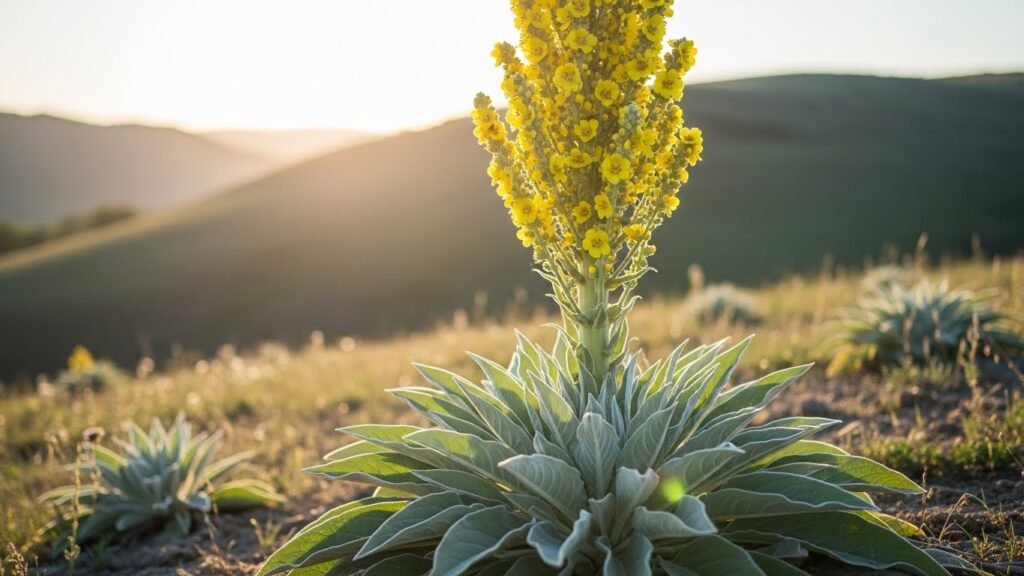
Understanding how to spot mullein look alikes is a total game-changer for hikers and gardeners. This plant has a wild history and some seriously useful features. You might see it on a walk or in your backyard. But wait, is that actually mullein you are looking at? Some other plants look almost exactly the same at first glance. This guide will help you identify the real deal every single time.
Understanding Common Mullein (Verbascum thapsus)
Mullein is a cool plant that stands out in a crowd. Most people know it by its fuzzy leaves and tall yellow stalk. It belongs to a group of plants called Verbascum thapsus. This plant is part of the Scrophulariaceae family. It is a tough survivor that can grow where other plants struggle. Knowing its family tree helps you separate it from mullein look alikes.

- Botanical Classification: It is officially known as Verbascum thapsus in the science world. It belongs to the Scrophulariaceae family.
- Geographic Range: This plant originally came from places in Europe and Asia. Now it grows all over North America and even Australia.
- Ecological Niche: You will find it in disturbed soil like roadsides or old pastures. It loves sunny spots with soil that drains well.
- Growth Cycle: This plant is a strictly biennial species. This means it takes two whole years to finish its life.
How to Identify Common Mullein in Every Stage
Identifying mullein depends on how old the plant is. It looks totally different in its first year compared to its second year. Many mullein look alikes only look like it during one of these stages. Pay close attention to the leaves and the height. The texture is usually the biggest giveaway for most people. Let’s break down what to look for as it grows.
The First-Year Basal Rosette
In the first year, the plant stays very low to the ground. It forms a circular pattern of leaves called a basal rosette. It does not grow a tall stem during this time. This is when it is most often confused with other ground plants. The leaves are the main feature you need to check.

- Growth Pattern: It stays low and spreads out in a wide circle. The leaves grow from a center point like a star.
- Leaf Size: These leaves can get surprisingly big, reaching up to 20 inches long. They are usually about 5 inches wide at the middle.
- Texture and Color: The foliage is a pale silver-green or bluish-green color. It is covered in a dense layer of soft hairs.
- The Flannel Feel: People call it cowboy toilet paper because it feels so soft. It has a thick, velvety, and felted texture.
The Second-Year Flowering Stalk
When the second year hits, the plant goes through a huge change. It shoots up a giant stalk that can tower over you. This is the stage where it is easiest to see from far away. Some mullein look alikes also grow tall, but they have different flowers. The stalk is the plant’s final mission to spread its seeds.
- Height: The main stalk can reach 6.5 feet or even higher in good soil. It usually grows straight up without many branches.
- Stem Characteristics: The stalk is very sturdy and thick. Just like the leaves, the stem is covered in those fuzzy hairs.
- Flower Spikes: You will see a dense spike of yellow flowers at the very top. These flowers are small and have five petals each.
- Flower Anatomy: The blooms open up in small groups along the spike. They don’t all bloom at the exact same time.
Detailed Guide to Mullein Look Alikes
Now let’s talk about the plants that try to trick you. There are several mullein look alikes that share similar features. Some have the same fuzzy leaves, while others have similar heights. You need to be careful because some are actually dangerous. Always double-check the details before you touch or pick anything. Here are the most common ones you will run into.
Lamb’s Ear (Stachys byzantina)

Lamb’s Ear is probably the most famous of all mullein look alikes. It has that same silvery, wooly look that people love. It is a perennial plant from the Lamiaceae family. People often plant it in gardens because it is so soft. However, it behaves very differently than mullein in the wild.
- Visual Similarities: It has silvery-grey leaves that are very wooly. The leaf shape is oblong, just like a young mullein.
- Height: This plant is much shorter and usually stays under 31 inches tall. Mullein will grow much taller in its second year.
- Bloom Style: It grows small purple or pink flowers instead of yellow ones. The flowers are crowded together on the spikes.
- Growth Habit: It spreads out like a carpet across the ground. Mullein stays as a single plant and doesn’t crawl around.
Foxglove (Digitalis purpurea)
Foxglove is one of the most important mullein look alikes to know. This is because it is very pretty but also very toxic. It is a biennial plant, just like mullein. In its first year, it sits on the ground as a rosette. You really have to look at the leaf edges to tell them apart.

- Visual Similarities: The first-year rosette has large, fuzzy leaves. It also grows a tall flowering stalk in its second year.
- Toxicity Warning: This plant is highly poisonous to humans and pets. It contains toxins that can affect the heart.
- Leaf Margins: Look for serrated or toothed edges on the leaves. Mullein leaves have smooth edges without any teeth.
- Flower Shape: It has large, tubular flowers that look like bells or fingers. The flowers are usually purple with spots inside.
Common Comfrey (Symphytum officinale)
Common Comfrey is another plant that people often mix up with mullein. It is a perennial that likes wet areas. It belongs to the Boraginaceae family. While it has big leaves, the feel of the plant is totally different. Many people grow it for traditional uses, but you must be careful.

- Visual Similarities: It has large, lance-shaped leaves that grow in a rosette. From a distance, the leaf shape looks very similar.
- Tactile Texture: The hairs on comfrey are very stiff and prickly. It feels scratchy, while mullein feels soft and velvety.
- Flower Clusters: It produces drooping, bell-shaped flowers in clusters. The colors are usually cream, purple, or pale yellow.
- Preferred Habitat: Comfrey loves damp grasslands and riverbanks. Mullein prefers dry, rocky, and disturbed soil.
- Safety Note: It contains pyrrolizidine alkaloids which can be toxic. Most experts suggest avoiding internal use of this plant.
Burdock (Arctium minus)
Burdock is a common weed that grows huge leaves. In its first year, it can look like a giant mullein patch from far away. It is famous for the sticky burs that get stuck in your hair. While it is not as fuzzy as mullein, the leaf size is a big distractor. It is often found in the same types of places as mullein.
- Visual Similarities: Young burdock has massive, broad green leaves. The growth habit on the ground is similar to a rosette.
- Leaf Undersides: Only the bottom of the leaf is felt-like. The top part is usually a darker green and feels smoother.
- The Burs: It creates round, purple flower heads with hooks. These turn into brown burs that stick to everything.
- Root System: It has a very deep and thick taproot. Some cultures harvest this root as a vegetable called Gobo.
Hoary Alyssum (Berteroa incana)
Hoary Alyssum is a smaller plant, but it still makes the list of mullein look alikes. It has a greyish-green color that can confuse people. This “hoary” look comes from tiny hairs all over the plant. It is usually found in dry fields where mullein also likes to hang out. It is much thinner and more delicate than the heavy mullein.
- Visual Similarities: It has that same frosted or grayish-green foliage. The fine hairs give it a dusty appearance.
- Size: This is a much smaller plant that usually stays under 3 feet. It doesn’t have the bulk or thickness of a mullein plant.
- Flowers: It has clusters of very tiny white flowers. Each petal has a deep notch in the middle of it.
Wild Clary (Salvia verbenaca)
Wild Clary is a type of sage that can look like a young mullein. The leaves at the base are wrinkled and have some hairs. It is a perennial that grows in similar temperate regions. If you are just looking at the ground leaves, you might get tricked. However, once it blooms, the difference is very clear.
- Visual Similarities: The basal leaves are wrinkled and somewhat hairy. The texture can mimic the look of a young mullein rosette.
- Leaf Shape: The edges are more lobed or wavy than mullein. Mullein leaves are more solid and oblong.
- Fragrance: Since it is a Salvia, it has a strong herbal smell. If you crush a leaf, it will smell like sage or mint.
Elephant’s Ear (Colocasia)
Elephant’s Ear is a tropical plant with giant leaves. Sometimes people see large-leafed plants and think they are mullein look alikes. These leaves are much bigger than almost any other plant. While the shape is broad, the rest of the plant is very different. You usually only see these in warm, wet gardens.
- Visual Similarities: It has extremely large and broad leaves. The size alone can make people think of a giant mullein.
- Surface Texture: These leaves are smooth and waxy. They do not have any of the fuzz or hairs found on mullein.
- Moisture Requirements: They need lots of water and tropical heat. You won’t find these growing on a dry, dusty roadside.
Comparative Analysis of Characteristics
To really master mullein look alikes, you have to compare them side by side. Looking at one feature is not enough. You have to look at the edges, the feel, and the flowers together. This helps you build a mental checklist for your next hike. Here is a quick way to compare the most important parts of these plants.
Leaf Margin and Edges
The edge of the leaf tells a big story. Mullein has what we call an “entire” margin, which means it is smooth. Most of its look alikes have some kind of pattern on the edge.
- Mullein: It has smooth edges all the way around.
- Foxglove: It has toothed or serrated edges like a saw.
- Burdock: The edges are wavy or have very small teeth.
Hair and Texture Types

The way a plant feels is a huge clue for identifying mullein look alikes. Mullein is famous for its softness. Other plants use hairs for protection, but they feel very different to your skin.
- Mullein: It has soft, branched hairs that feel like felt or flannel.
- Comfrey: It has stiff, simple bristles that can irritate your skin.
- Lamb’s Ear: It has very long, matted hairs that feel like wool.
Floral Structures and Color
When the plants bloom, the mystery usually disappears. Mullein has a very specific “look” for its flowers. If you see any other color than yellow on a tall spike, it is probably a look alike.
- Mullein: It grows a tall spike with small yellow flowers.
- Foxglove: It has hanging purple or pink tubular bells.
- Wild Clary: It produces whorls of blue or violet flowers.
Importance of Correct Identification
Why do we care so much about mullein look alikes anyway? It is actually a matter of safety and good gardening. Some of these plants are great for your yard, but others are dangerous. If you plan on using plants for tea or medicine, you must be 100% sure. Getting it wrong can lead to a very bad day.
Medicinal and Culinary Risks
Many people harvest mullein to make herbal teas. It has a long history of being used for lungs and coughs. But if you pick a look alike by mistake, the results can be scary.
- The Danger of Confusion: If you pick Foxglove instead of Mullein, it can be fatal. Foxglove affects the heart and is not for tea.
- Skin Sensitivities: Some plants like Comfrey have scratchy hairs. These can cause a rash or itchy skin if you handle them too much.
Weed Management and Invasive Potential
Knowing your plants also helps you keep your garden healthy. Some mullein look alikes are much harder to get rid of than others.
- Noxious Status: Mullein is considered a noxious weed in some states. One plant can make over 100,000 seeds that live for decades.
- Garden Control: You might want to keep Lamb’s Ear because it is pretty. But you definitely want to pull Burdock before those sticky burs form.
Tips for Field Identification
When you are out in the wild, you need quick ways to check. You don’t always have a book with you. These three simple tests will help you identify mullein look alikes in seconds. They work for both beginners and experts. Just remember to be gentle with the plants while you check them.

- The Touch Test: Rub the leaf gently between your fingers. If it feels like a soft flannel shirt, it is likely Mullein. If it feels scratchy or like sandpaper, it is probably Comfrey.
- Examine the Stem: Look at how the stalk grows in the second year. Mullein usually has one single, thick stalk without branches. Most look alikes will have multiple branches or different stems.
- Observe the Habitat: Look at where the plant is growing. Mullein loves dry, crappy soil and rocks. If the ground is super wet or swampy, you are probably looking at a look alike.
Final Summary of Findings
Identifying mullein look alikes is all about paying attention to the small stuff. You now know that the “flannel” feel is a huge giveaway. You also know that Foxglove is a dangerous double that you must avoid. Mullein is a fascinating biennial that changes a lot over two years. By using this guide, you can safely explore the world of wild plants.
- Recognition of the biennial cycle: Remember that it looks like a rosette first and a giant stalk second.
- Mastery of the Silvery-Green color palette: This specific color helps you narrow down the search quickly.
- Understanding the risk of toxic look-alikes: Always remember that looks can be deceiving and safety comes first.
| Plant Name | Life Cycle | Leaf Texture | Leaf Edges (Margins) | Flower Color & Shape | Height (Mature) |
| Common Mullein | Biennial | Soft, velvety, felt-like | Smooth (Entire) | Yellow, small, 5-petal spikes | 6.5+ feet |
| Lamb’s Ear | Perennial | Woolly, densely matted | Smooth (Entire) | Purple/Pink, small clusters | 1 – 2.5 feet |
| Foxglove | Biennial | Lightly fuzzy, soft | Toothed (Serrated) | Purple/White/Pink, tubular bells | 2 – 5 feet |
| Common Comfrey | Perennial | Prickly, stiff, scratchy | Smooth to wavy | Cream/Purple, drooping bells | 2 – 3 feet |
| Burdock | Biennial | Felted bottom, smooth top | Wavy or slightly toothed | Purple, thistle-like burs | 3 – 6 feet |
| Hoary Alyssum | Annual/Perennial | Fine, dusty hairs | Smooth | White, tiny, notched petals | 1 – 3 feet |
| Wild Clary | Perennial | Wrinkled, hairy | Lobed or wavy | Blue/Violet, small whorls | 1 – 2 feet |
| Elephant’s Ear | Perennial | Smooth, waxy, hairless | Smooth | Rare, spadix/spathe | 3 – 8 feet |
Frequently Asked Questions
Is common mullein considered an invasive species?
In many parts of North America and Australia, common mullein is classified as an invasive weed or a noxious species. Because a single plant can produce over 100,000 seeds that remain viable in the soil for decades, it can quickly take over disturbed lands and crowd out native vegetation.
Can mullein seeds be used for anything?
Historically, mullein seeds were used by indigenous groups and early settlers as a primitive fish anesthetic. The seeds contain saponins, which, when crushed and thrown into small bodies of water, can temporarily stun fish, making them easier to catch.
Why does mullein have such fuzzy leaves?
The dense, branched hairs on the leaves serve several biological purposes. They protect the plant from being eaten by insects and animals, provide insulation against extreme temperatures, and help the plant retain moisture by reducing evaporation from the leaf surface.
Is it safe to touch all mullein look-alikes?
While most are safe to touch, you should be cautious. Common Comfrey has stiff hairs that can cause mechanical skin irritation, and Foxglove is highly toxic if even small amounts of its sap enter your bloodstream through a cut or if you accidentally touch your mouth after handling it.
How long do mullein seeds stay dormant in the soil?
Mullein seeds are incredibly resilient. Studies have shown that they can remain dormant and viable in the soil for up to 100 years. They wait for the soil to be disturbed or for a fire to clear the area before they finally germinate.
Are there any butterflies or moths that rely on mullein?
Yes, the Mullein Moth (Cucullia verbasci) is a specific species whose caterpillars feed almost exclusively on the leaves of mullein plants. Several other generalist pollinators also visit the flowers for nectar and pollen.
Can you grow mullein look-alikes like Lamb’s Ear in containers?
Lamb’s Ear is actually very well-suited for container gardening. Unlike mullein, which has a deep taproot and grows very tall, Lamb’s Ear has a shallower root system and a spreading habit that makes it a great choice for pots or window boxes.
What is the difference between “Common Mullein” and “Moth Mullein”?
While Common Mullein has thick, woolly leaves and a very dense flower spike, Moth Mullein (Verbascum blattaria) has smooth, dark green leaves and larger, more individual flowers that can be yellow or white with purple filaments in the center.
Does mullein grow in the shade?
Mullein is a sun-loving plant and rarely thrives in full shade. It requires at least six to eight hours of direct sunlight to develop its second-year flowering stalk properly. Most of its look-alikes, like Foxglove, are much more tolerant of shady woodland conditions.
Is mullein a fire hazard when it dries out?
In the late autumn and winter of its second year, the tall flowering stalk of the mullein plant dries out completely and turns brown. In arid climates, these standing dead stalks can act as “ladder fuel,” potentially helping fire climb into higher vegetation.
Why do some people call mullein “Torchweed”?
The nickname “Torchweed” comes from the ancient practice of dipping the dried second-year stalks into tallow or wax. Because the stalks are sturdy and the dried seed heads are porous, they made excellent, long-lasting torches for nighttime outdoor use.
Can mullein look-alikes be used as a lawn substitute?
Lamb’s Ear is occasionally used as a silver-toned groundcover in areas with low foot traffic. However, most other look-alikes like Burdock or Comfrey grow too large and unruly to be used in place of grass.
Do animals eat mullein plants?
Most mammals, including deer and rabbits, avoid eating mullein because the fuzzy texture of the leaves is irritating to their mouths and digestive tracts. This is one reason why the plant survives so well in areas with high grazing pressure.
How can I tell the difference between mullein and a young Verbascum hybrid?
Garden centers often sell ornamental Verbascum hybrids that may have purple or pink flowers. You can tell them apart from wild common mullein by their more compact size and the fact that their leaves are often less “woolly” and more green.
Are the yellow flowers of mullein edible?
The flowers are generally considered edible and are sometimes used to garnish salads or are infused into oils. However, always ensure you have identified the plant correctly and haven’t confused it with the toxic Foxglove, which has tubular flowers.
Does mullein require fertilizer to grow?
Mullein actually prefers poor, low-nutrient soil. If you plant it in highly fertilized garden soil, it may grow too fast and become “floppy,” or it may succumb to root rot because rich soil tends to hold too much moisture.
Can you compost mullein and its look-alikes?
You can compost the leaves, but be very careful with the seed heads. Because mullein and Burdock seeds are so hardy, home compost piles often don’t get hot enough to kill them, which could lead to weeds spreading when you use the compost.
What is the best way to remove mullein from a garden?
The most effective way to remove mullein is to pull it by hand during its first year when it is still a rosette. Since it has a deep taproot, it is best to do this when the soil is moist. Once it flowers in the second year, you must cut the stalk before the seeds drop.
Why is mullein often found near railroad tracks?
Railroad tracks provide the perfect “disturbed” environment that mullein loves. The gravelly, well-draining soil and the lack of shade from trees create an ideal corridor for mullein seeds to travel and sprout.
Is it true that mullein was used as a dye?
Yes, the yellow flowers of the mullein plant have been used for centuries to create a bright yellow or green dye for wool and hair. In ancient Rome, it was even rumored that women used the flower infusion to brighten their hair color.