Skip to content
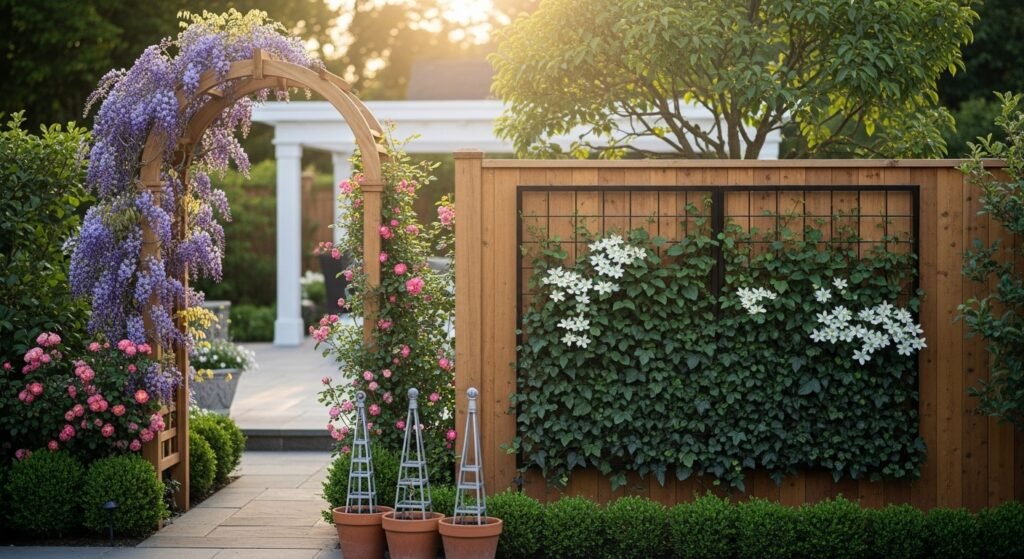
Ever looked at your backyard and felt it needed a glow-up? You probably asked yourself what is a trellis and how can it help. A trellis is a simple frame made of thin wood or metal bars. It acts like a ladder for your favorite climbing plants and vines. These structures help your plants grow straight up toward the sky. This creates a super cool look that makes any outdoor space pop. You can find them in all sorts of shapes, sizes, and tough materials.
What is a Trellis?
To really get what is a trellis, you have to see it as a plant’s best friend. It is a framework made of latticework or bars that cross each other. The main job of this structure is to support heavy vines. It stops them from crawling all over your lawn. Instead, it teaches them to grow vertically to save tons of space.
People have used these in gardens for a really long time. They blend a useful tool with a pretty design. They can turn a boring yard into a green paradise. Whether you have a tiny balcony or a huge field, a trellis fits right in.
- The framework is the skeleton that holds everything together.
- Latticework refers to the crisscross pattern of the slats.
- Vertical growth means your plants go up instead of out.
- Versatility allows these tools to work in any garden size.
What Does a Trellis Look Like?
When you ask what is a trellis, you might picture a simple grid. Most of them have tall vertical posts. These posts are joined by horizontal bars. Together, they form a strong support system for your greenery. This simple look can change to fit any vibe you want.
The design is usually very open. This is not just for looks. The gaps allow air to move around your plants. It also lets the sun hit every leaf. You can choose a very plain style or something super fancy.
- Vertical posts are the main legs that stand in the dirt.
- Crosspieces are the bars that run sideways.
- Supportive grid gives the vines a place to grab on.
- Garden style can be matched by picking the right design.
Materials Used in Trellis Construction
Choosing the right stuff to build your trellis is a big deal. Different materials change how long it lasts. They also change how much work you have to do. Most people pick based on their budget and their home’s look.
Wood
Wood is the classic choice for a cozy garden. It has a natural look that feels very warm. Many people use cedar or redwood because they handle rain well. However, wood can rot over time if you don’t take care of it. It might need a new coat of paint or stain every few years.
- Cedar smells great and naturally keeps bugs away.
- Redwood is strong and looks very high-end.
- Rustic charm makes your garden feel like a forest.
- Maintenance is required to keep the wood from falling apart.
Metal (Aluminum and Wrought Iron)
Metal is the way to go if you want something that lasts forever. Aluminum is a smart pick because it never rusts. Wrought iron is heavy and looks very fancy. These materials give your yard a modern or elegant feel. They are very strong and can hold up heavy fruit.
- Durability means it will stay standing through big storms.
- Weather-resistant materials don’t care about rain or snow.
- Modern aesthetic fits perfectly with new homes.
- Strength allows it to support huge, heavy vines.
Plastic and Vinyl
Plastic is perfect if you are on a tight budget. It is very light and easy to move around. You don’t have to worry about rot or rust with vinyl. It is a great choice for a temporary garden project. Many people use these for small flower pots on a porch.
- Lightweight builds make them easy for one person to carry.
- Budget-friendly options save you money for more plants.
- Vinyl stays white and clean with just a quick spray of water.
- Temporary setups are easy to take down in the winter.
Different Types of Trellises and Their Designs
There isn’t just one kind of trellis out there. You can find many styles to fit your specific needs. Some are for big walls, while others stand alone. Knowing the types helps you answer what is a trellis for your specific space.
Fan Trellis
The fan trellis looks exactly like an open hand fan. All the bars start at the bottom and spread out at the top. This design is perfect for showing off beautiful flowers. It creates a wide area for the plant to grow. It works best as a focal point in a small flower bed.
- Fan-shaped design spreads the plant out wide.
- The focal point means it draws everyone’s eyes.
- Flower beds look much better with this elegant shape.
- Spreading growth gives blooms plenty of room to shine.
Obelisk Trellis

An obelisk looks like a tall, thin pyramid or tower. It is a great way to add height to a flat garden. These stand on their own and don’t need a wall. They look very classy and high-end. You can put one right in the middle of a round garden.
- Tall and narrow shapes save space on the ground.
- The tower-like structure adds a dramatic feel to the yard.
- Elegance is easy to achieve with this classic design.
- Centerpiece use makes a boring lawn look professional.
Arbor and Arched Trellises

An arched trellis has a beautiful curve at the very top. These are often used as gates or entryways. Walking under a trellis covered in flowers feels like a dream. They frame a path and make your yard feel bigger. It is a sophisticated way to welcome guests.
- Curved design adds a soft look to your landscape.
- Entryway use defines where your garden starts.
- Pathways become much more interesting to walk down.
- Sophisticated vibes are easy to create with an arch.
Panel or Grid Trellis
The panel trellis is the most common type you will see. It is just a flat, square, or rectangular frame. These are great for making a modern and clean look. You can line them up to create a long green wall. They are very easy to install in raised garden beds.
- Modern aesthetic is perfect for a clean backyard.
- Organized gardens are easy to maintain with panels.
- Raised beds benefit from the extra vertical room.
- Structured framework keeps messy vines under control.
Teepee Trellis
A teepee trellis is made by leaning several poles together. They meet at a point at the top like a cone. This is a very strong shape for heavy veggies. It is a classic look for a kitchen garden. It is very easy to build yourself with just some sticks.
- The cone-shaped design is very stable in the wind.
- Vegetable gardens love this style for beans and peas.
- Sturdy support keeps your food off the dirty ground.
- A simple build makes it a great weekend project.
Wall-Mounted and Flat Trellises
If you have a tiny yard, a wall-mounted trellis is a lifesaver. These bolt directly onto a fence or the side of your house. They take up almost zero floor space. It is a smart way to turn a boring brick wall into a garden. This helps maximize every inch of your outdoor area.
- Space-saving design is perfect for urban balconies.
- Wall-mounted units stay out of the way of your mower.
- Blank walls get a total makeover with some vines.
- Maximize space by growing up instead of out.
| Trellis Type | Best Primary Use | Key Benefits | Recommended Plants |
| Fan Trellis | Decorative focal points in small flower beds or against narrow wall sections. | Spreads growth horizontally; provides high visual impact with minimal ground space. | Clematis, Mandevilla, and Climbing Roses. |
| Obelisk Trellis | Standalone centerpieces for garden islands or large containers. | Adds immediate vertical interest and elegance; very sturdy for windy areas. | Sweet Peas, Ivy, and Black-eyed Susan Vine. |
| Arched / Arbor | Framing garden entrances, walkways, or creating romantic transitions. | Creates a “tunnel” effect; provides a high-end architectural feel to the yard. | Wisteria, Trumpet Vine, and Climbing Hydrangea. |
| Panel / Grid | Large-scale coverage for fences, blank walls, or property boundaries. | Maximum surface area for climbing; creates effective privacy and noise screening. | Star Jasmine, English Ivy, and Japanese Honeysuckle. |
| Teepee Trellis | Functional support in vegetable patches and kitchen gardens. | Highly stable and easy to build/move; keeps heavy produce off the soil. | Pole Beans, Snap Peas, and Cucumbers. |
| Wall-Mounted | Maximizing space on balconies, patios, or tight side-yards. | Keeps pathways clear; transforms dead vertical space into a living green wall. | Passionflower, Bougainvillea, and Morning Glories. |
| A-Frame Trellis | Intensive vegetable gardening and high-yield produce rows. | Allows for harvesting from underneath; doubles the growing surface area. | Squash, Small Melons, and Pole Beans. |
| Espalier Frame | Training fruit trees or woody shrubs in formal garden designs. | Increases fruit yield in small spaces; creates a sophisticated, “estate” look. | Apple Trees, Pear Trees, and Camellias. |
The Purpose and Functional Benefits of Adding Trellises

Adding a trellis is one of the best moves for any gardener. It does way more than just look pretty. It solves a lot of common problems people have with their yards. When you think about what is a trellis is, think of it as a tool for success.
Space-Saving and Vertical Gardening
Many people have very small backyards these days. A trellis lets you grow a massive garden in a tiny spot. Instead of plants spreading across the grass, they grow up. This leaves more room for a table or a grill. It is the best way to handle vertical gardening.
- Maximize inches by using the air instead of the soil surface.
- Vertical gardening is the future of small city homes.
- Patios feel much larger when the plants are on the walls.
- Urban gardens can finally grow tall vegetables.
Promoting Plant Health
Plants that grow on a trellis are often much healthier. When vines sit on the ground, they can get sick. A trellis keeps the leaves dry and away from the dirt. This prevents a lot of common plant diseases. Your garden will thrive with the extra help.
- Air circulation prevents mold and mildew from growing.
- Sunlight exposure reaches every part of the plant.
- Pest control is easier when bugs can’t crawl onto leaves.
- Dry leaves help prevent rot after a big rainstorm.
Creating Privacy and Natural Screening
Nobody likes neighbors peeking into their yard. A trellis covered in thick vines is a natural wall. It blocks the view without feeling like a prison. You can also use them to hide ugly things like trash cans. It is a beautiful way to get some peace and quiet.
- Natural screen provides privacy using green leaves.
- Hide equipment like loud AC units or compost bins.
- Privacy is easy to get with fast-growing ivy.
- A green wall feels much more relaxing than a wooden fence.
Structural Organization
A big yard can sometimes feel messy. A trellis helps you organize the space into different rooms. You can use them to mark where the patio ends and the grass begins. It gives your garden a clean and professional layout. This makes your outdoor area feel much more intentional.
- Define zones to separate your dining area from the kids’ play spot.
- Garden layout stays organized and easy to walk through.
- A structured look keeps wild vines from taking over.
- Depth is added to flat yards using vertical lines.
Aesthetic and Year-Round Interest
Even when it is cold outside, a trellis looks great. In the winter, the wood or metal frame adds a cool shape to the yard. It keeps the garden from looking totally empty. During the summer, the “living wall” effect is stunning. It adds architectural beauty to your home.
- Architectural beauty comes from the strong lines of the frame.
- Winter interest stays after the leaves fall off.
- A living wall looks like a piece of art made of plants.
- Visual appeal increases the value of your whole house.
Trellis Use Ideas and Gardening Applications
Now that you know what is a trellis, how do you use one? There are so many creative ways to put them in your yard. You don’t have to follow the old rules. You can make your garden unique and fun.
Creating a Floral Archway
Imagine walking through a tunnel of purple flowers. You can do this by putting two arched trellises over a path. Plants like wisteria or clematis love to grow over these arches. It creates a magical entrance to your backyard. This is a classic move for a romantic garden.
- A floral tunnel is a show-stopping feature for any yard.
- Wisteria grows fast and has huge hanging flowers.
- Magical entrance makes guests feel special right away.
- Vertical focal point draws the eye up to the sky.
The Vertical Vegetable Garden
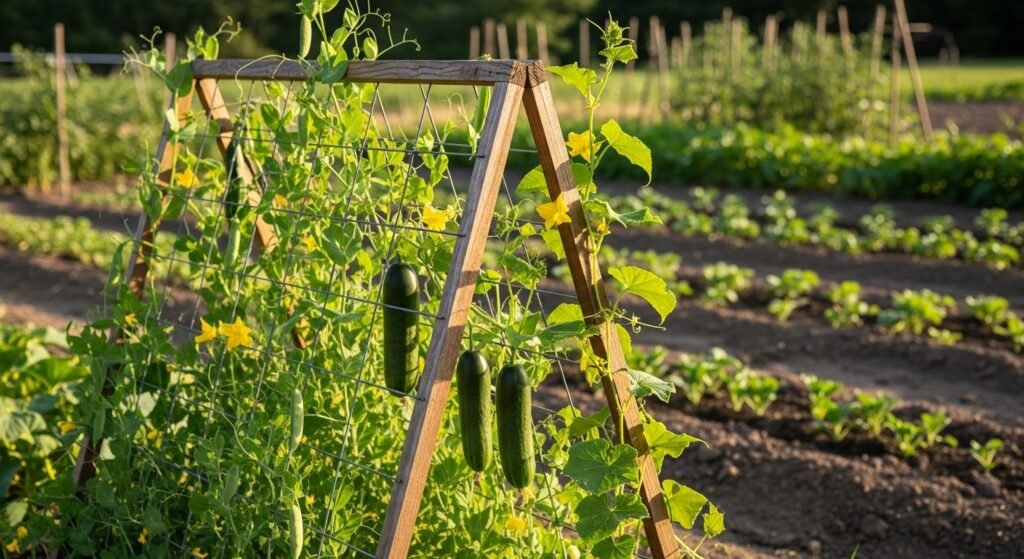
Growing food is a lot easier with a trellis. Many vegetables love to climb. This keeps your tomatoes and cucumbers clean and easy to pick. You won’t have to bend over as much to harvest your food. It makes your veggie patch look very neat and tidy.
- Climbing vegetables like beans and peas save ground space.
- Easy harvest means no more back pain from picking food.
- Clean produce stays away from the mud and dirt.
- Functional beauty turns a food garden into a work of art.
Enhancing Fruit Gardens
Fruit can be very heavy and needs a lot of support. A strong metal trellis is perfect for grapevines. It holds the weight of the fruit so the plant doesn’t break. This also helps the fruit get more sun, so it tastes sweeter. Kiwi is another great fruit that loves a tall trellis.
- Grapevines need a strong frame to hold heavy clusters.
- Sunlight exposure makes the fruit ripen much faster.
- Structural support prevents branches from snapping under weight.
- Kiwi plants grow very tall and look great on an arbor.
Upcycled and Decorative Trellises
You don’t always have to buy something new. You can make a trellis out of old junk. An old metal headboard or a wooden ladder works great. This gives your garden a very personal and “shabby chic” look. It is a fun way to recycle and save money.
- Upcycled items like old doors add a lot of character.
- Vintage style feels unique and very creative.
- Save money by using things you already have in the garage.
- Unique design ensures no one else has a garden like yours.
Hanging and Suspended Gardens
If you have no ground space at all, hang your trellis. You can hang small frames from a porch roof. This adds a whimsical feel to your outdoor space. It is like having a floating wall of greenery. This works perfectly for small balcony gardens.
- The whimsical feel makes the garden look like a fairy tale.
- Floating greenery adds interest at eye level.
- Balcony gardens can finally have tall climbing plants.
- Suspended structures keep the floor clear for chairs.
Best Plants for Trellising
Not every plant wants to climb. You need to pick the ones that naturally like to go up. Some use little curls to grab on, while others just lean. Picking the right plant makes your trellis look full and lush.
Flowering Vines
Flowering vines are the most popular pick for a trellis. They add a lot of color and a sweet smell to the air. Clematis is a favorite because it has huge, bright blooms. Mandevilla is great if you want a tropical look in the summer. Star jasmine smells amazing on a warm night.
- Clematis comes in many colors and loves to climb.
- Mandevilla has big pink or red flowers all summer long.
- Star Jasmine is evergreen and smells like a perfume shop.
- Honeysuckle attracts hummingbirds and butterflies to your yard.
Climbing Roses
Climbing roses are the ultimate sign of a fancy garden. They don’t actually climb by themselves, so you have to tie them. Once they are trained, they look incredible on a wall. They create a structured look that is very classic. They are perfect for framing a window or a door.
- Trained growth allows you to put the flowers exactly where you want.
- Classic patterns make your home look like an old estate.
- Fragrance from roses is a great way to welcome people home.
- Structured beauty keeps the thorny bushes looking neat.
Lush Greenery
Sometimes you just want a wall of green. Ivy is the king of covering walls and fences. It grows very thick and provides a lot of privacy. Wisteria is also great for greenery, but it can get very heavy. These plants turn a plain trellis into a “living wall”.
- Ivy is tough and grows in almost any kind of light.
- Privacy is highest with these dense, leafy plants.
- The living wall effect is very calming and cool in the heat.
- Wisteria provides a thick canopy of leaves in the summer.
Comparing Outdoor Structures: Trellis vs. Pergola
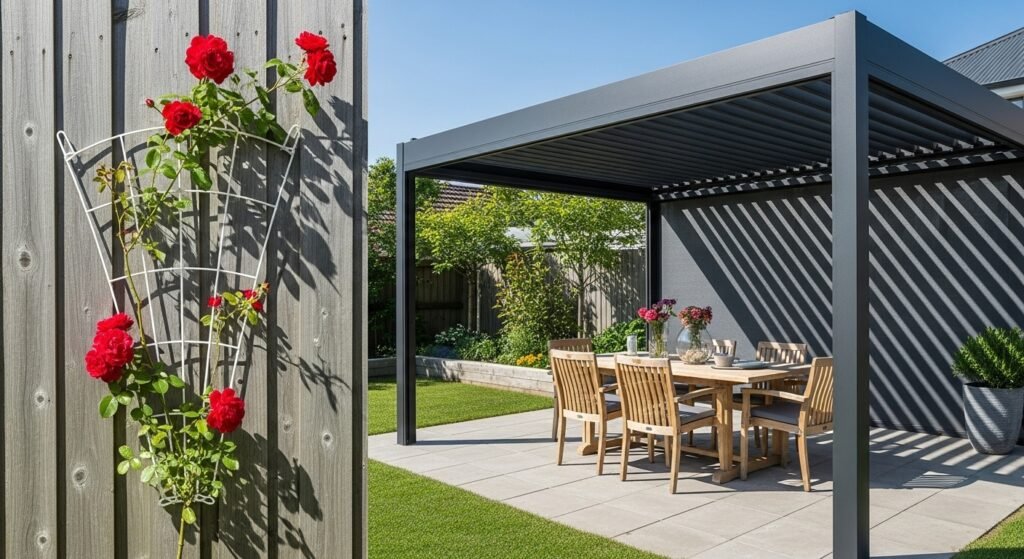
People often get these two things mixed up. While they both help in the garden, they are very different. Understanding the difference helps you decide which one to buy. It all comes down to what you want to do in your yard.
The Trellis
A trellis is a smaller tool. Its main job is to help your plants. It is lightweight and very easy for one person to install. You can put a trellis almost anywhere because it is so thin. It is mostly a decorative accent or a garden helper.
- Compact size fits in even the smallest corner of a yard.
- Plant-focused design is made for vines, not people.
- Easy install means you can do it yourself in a few minutes.
- Affordable compared to large building projects.
The Pergola
A pergola is a much bigger structure. It is designed for people to sit under. It has big pillars and a roof made of beams. Pergolas like the R-BREEZE™ define a whole outdoor room. They provide shade and a place to hang out with friends.
- Outdoor room creation gives you a place to relax or dine.
- Shade is provided by the roof beams or louvers.
- Architectural enhancement makes your whole house look better.
- A substantial build often requires professional help to install.
Key Distinctions
The biggest difference is the size and the goal. Trellises are for greenery, and pergolas are for living. You can actually put a trellis on the side of a pergola. This lets you have the best of both worlds. One provides the room, and the other provides the wall.
- Size is the first thing you will notice between them.
- Function determines if it is for your plants or your family.
- Building codes might apply to pergolas but rarely to trellises.
- Customization, like lights and fans, only works on pergolas.
Maintenance and Long-Term Care
If you want your trellis to last, you have to show it some love. A little work goes a long way in the garden. Different materials need different types of care. Taking care of the frame also helps your plants stay healthy.
- Wood care involves staining it to stop water from getting in.
- Cleaning metal or plastic is easy with a hose and some soap.
- Pruning your plants keeps them from getting too heavy for the frame.
- Training vines early ensures they grow in the right direction.
Conclusion: Transforming Your Landscape with a Trellis
So, what is a trellis? It is the secret weapon for a stunning backyard. It mixes style, durability, and a lot of practical use. Whether you want to grow food or just hide from the neighbors, a trellis is the answer. It turns a flat, boring lawn into a vertical paradise.
Choosing the right type is all about your personal goals. Do you want the rustic look of wood or the strength of metal? Do you need an arch for an entrance or a flat panel for a wall? Once you decide, your garden will never be the same. Start small and watch your greenery reach for the sky.
Frequently Asked Questions
Can a trellis be attached to a brick wall without drilling?
Yes, you can use specialized masonry adhesive hooks or a freestanding frame positioned inches away from the surface. Another option is using a wire trellis system that clips onto rain gutters or existing trim to avoid damaging the brick.
Which climbing plants are considered invasive for trellises in the USA?
Certain species like English Ivy, Chinese Wisteria, and Japanese Honeysuckle are considered invasive in many states. They can grow aggressively, escape the garden, and damage local ecosystems or even the mortar in your home’s walls.
How much weight can a standard wooden trellis hold?
A typical cedar lattice trellis can support between 20 to 50 pounds depending on its thickness and how it is anchored. For heavy crops like melons or thick woody vines like Trumpet Vine, a heavy-duty metal framework is required.
Is it better to paint or stain a wooden trellis?
Stain is generally better because it penetrates the wood fibers and won’t peel off as the wood expands and contracts. Paint sits on the surface and often cracks, making it difficult to sand and reapplying once vines have tangled through the grid.
How do I prevent a trellis from blowing over in high winds?
You must bury support posts at least 18 to 24 inches deep or use concrete footings for freestanding structures. For wall-mounted versions, use spacers to leave a gap, which allows wind to pass through rather than pushing against the structure like a sail.
Can I grow heavy fruits like pumpkins on a trellis?
Yes, but you must use a “cradle” or “sling” made of mesh or old fabric to support the individual fruit’s weight. The trellis itself must be made of reinforced steel or thick timber to prevent the entire framework from collapsing.
What is the difference between a trellis and an espalier?
A trellis is the physical structure plants climb, whereas an espalier is the horticultural technique of training a tree or shrub to grow flat against a support. You use a trellis as the tool to achieve an espalier design.
How do I train a plant to start climbing a trellis?
Most plants need a little help at the start; you can gently weave the stems through the lattice or use soft garden twine to tie them loosely. Once the plant’s tendrils sense the framework, they will naturally begin to wrap around it.
What is a “living trellis”?
A living trellis is a practice in landscaping where you use sturdier plants, like sunflowers or corn stalks, to act as the support structure for lighter climbing plants like beans. This is often seen in the “Three Sisters” gardening method.
Will a metal trellis get too hot and burn my plants?
In extremely hot climates like Arizona or Texas, dark-colored metal can heat up significantly in direct sun. Using light-colored coatings or providing afternoon shade can prevent the heat from damaging sensitive young tendrils.
How do I clean a trellis covered in dead vines at the end of the season?
Wait until the vines are completely dry and brittle, then use a pair of garden shears to cut them into small sections. A stiff brush can help scrub off remaining tendrils or suction cups left by plants like Boston Ivy.
Can I use a trellis indoors for houseplants?
Absolutely; small bamboo or wire trellises are perfect for indoor climbers like Pothos, Hoya, or Monstera Adansonii. They help manage the growth of the plant and keep it from trailing across floors or furniture.
What is the ideal grid size for a vegetable trellis?
For most vegetables like cucumbers and peas, a 4-inch by 4-inch grid is ideal. This provides enough support points for tendrils while leaving enough space for your hand to reach through during harvest.
Does a trellis help with powdery mildew?
Yes, by lifting foliage off the damp ground and spacing it out, a trellis significantly increases airflow. This prevents the stagnant, humid conditions that allow fungal diseases like powdery mildew to thrive.
How far should a trellis be placed from a fence?
If you are mounting it on a fence, leave a gap of 1 to 3 inches using spacers. This prevents moisture from being trapped against the fence, which causes wood rot, and gives the plants room to wrap around the back of the slats.
Can I use PVC pipe to build a DIY trellis?
PVC is a popular DIY material because it is cheap and waterproof. However, it can become brittle and crack after long exposure to UV rays unless it is painted with a UV-resistant coating.
Are there trellises designed specifically for pots and containers?
Yes, these are often called “pot trellises” or “vining stakes.” They usually feature spiked feet that push directly into the potting soil to provide immediate vertical support for container-bound plants.
What is a “hide-a-gate” trellis?
This is a design where a trellis panel is attached to a gate or used as a swinging screen. It allows for a continuous “green wall” look while still providing a functional path for people to walk through.
Can a trellis be used for bird protection?
While not their primary use, a trellis covered in dense vines provides excellent nesting sites and protection from predators for small backyard birds. Some gardeners even hang bird feeders directly from the sturdier crosspieces.
How do I choose between a flat and a 3D trellis?
Choose a flat trellis for walls, fences, or narrow borders to save space. Opt for a 3D trellis, like an obelisk or teepee, if you want a standalone centerpiece that adds volume and can be viewed from all sides.