Skip to content
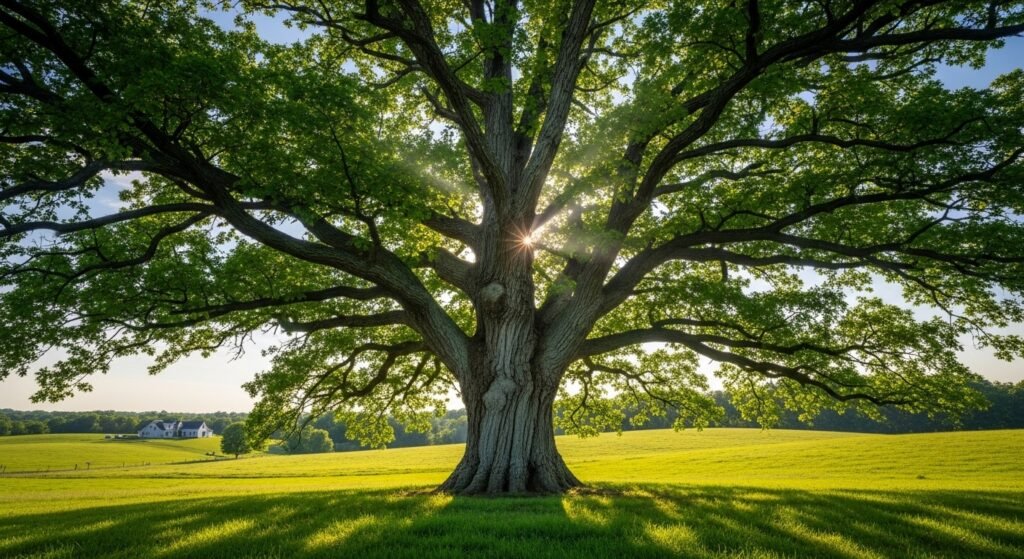
Planting an oak tree is like writing a letter to the future. It is a slow and steady process that rewards you with shade and beauty. If you are wondering how long does it take an oak tree to grow, you are in the right place. Most folks want to know if they will see the tree reach its full height in their lifetime. These trees are famous for their strength and long lives. They can stay in your yard for many generations of your family.
Introduction to the Oak Tree Legacy
The oak tree is a symbol of power and endurance across the world. It is the national tree of the United States because it stands so strong. These trees do more than just look pretty in a park or backyard. They provide a home for birds and squirrels in the neighborhood. Oaks also clean the air and keep the ground stable with roots. Understanding their growth helps you plan your landscape for years to come.
Planting an oak is a big commitment for any homeowner or gardener. You have to be patient because these giants do not grow overnight. Most species take a few decades to become large shade trees. However, the wait is worth it for the value they add to your home. A mature oak can lower your cooling bills during hot summers. It creates a peaceful spot for kids to play or for you to relax.
The legacy of an oak is measured in centuries rather than just years. Some oaks in the USA have been around since before the country was born. When you plant one, you are starting a cycle that lasts a long time. It is a gift for your children and their children as well. This guide will walk you through every step of that long journey. We will look at how fast they grow and what they need to thrive.
Factors Influencing Oak Tree Growth and Development
Many things change how fast your tree will reach the sky. Not every oak grows at the same speed even in the same yard. You need to look at the environment to guess the growth rate. Nature has a way of speeding things up or slowing them down. Here are the main things that affect the timeline of your oak tree.
- Species Type: The DNA of the tree is the biggest factor in its speed. Some oaks are built for speed while others focus on wood density.
- Soil Conditions and Composition: The ground must have the right vitamins for the tree to eat. Loamy soil is much better for growth than hard rock or dry sand.
- Climate and Temperature: Warm weather usually helps a tree grow for more months each year. Cold climates might mean a shorter growing season for the leaves.
- Sunlight Requirements: Oaks love the sun and need it to make food through photosynthesis. A tree in the shade will grow much slower than one in an open field.
- Environmental Competition: Other plants can steal the water and light from your young oak. Keeping the area clear helps the oak grow taller and faster.
- Water Availability: Young trees are very thirsty and need a lot of hydration to start. Without enough water, the growth might stop or the tree could even die.
The Comprehensive Life Cycle of an Oak Tree
Every giant oak started as a tiny nut on the forest floor. The life cycle is a beautiful process that takes a lot of time. It goes through several stages before it becomes a king of the forest. Each stage has its own challenges and milestones to meet. Knowing these stages helps you take care of the tree as it ages.
The Acorn and Germination Stage
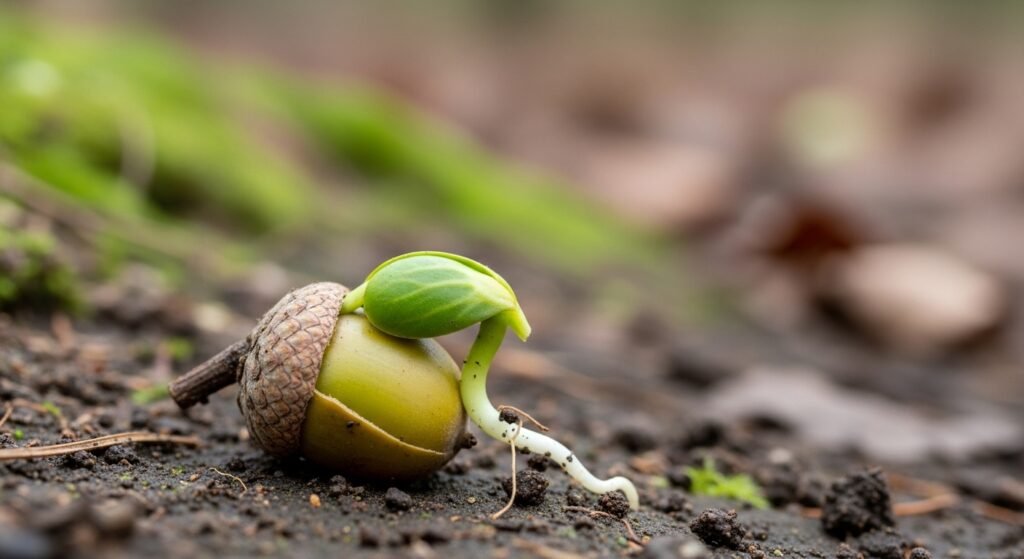
The journey begins with the acorn falling from a mother tree. This tiny nut contains all the energy needed to start a new life. Germination is the process where the nut wakes up and starts to grow. It usually happens in the spring when the ground gets warm and wet. The acorn sends out a small root called a taproot first.
- Acorn Selection: Only healthy and heavy acorns will sprout into strong trees.
- Moisture Needs: The shell needs to stay damp so the sprout can break through.
- Temperature: Soil needs to be just right, usually between 50 and 65 degrees.
- Timeline: Most acorns take about 4 to 6 weeks to show a green sprout.
The Seedling and Sapling Stage

Once the sprout pops out of the ground, it becomes a seedling. This is the most dangerous time for the little oak tree. Animals like deer or rabbits love to eat the tender green leaves. In the first year, it will only reach about 6 to 12 inches tall. It is focusing most of its energy on growing a deep root system.
As it grows bigger and gets a woody stem, it becomes a sapling. A sapling is like a teenager in the world of trees. It is taller than a person but still very thin and flexible. This is when the tree starts to look like a real oak. It will grow many more leaves to catch sunlight and make food. You must protect it from lawnmowers and pests during this time.
The Young Adult Stage
The young adult stage is often called the “stride” period by arborists. This happens between years 6 and 15 of the tree’s life. This is when the tree really starts to put on some serious height. It can grow up to 2 or 3 feet in a single good year. The trunk starts to get thicker and the bark becomes rougher.
- Vertical Growth: The tree focuses on reaching the sun above other plants.
- Canopy Development: Branches start to reach out to create a rounded shape.
- Reproduction: This is often when the tree produces its first small batch of acorns.
- Strength: The wood becomes much harder and can withstand stronger winds.
The Mature Stage
A mature oak is a sight to behold in any neighborhood or forest. It has a very thick trunk and a wide, reaching canopy of leaves. By this time, the tree is the main feature of the landscape. It provides deep shade that can cool a whole house or yard. The root system is now huge and reaches far past the branches.
Maturity is when the growth in height starts to slow down significantly. Instead of getting taller, the tree gets wider and much heavier. It produces thousands of acorns every few years to start new trees. A healthy mature oak can live for 200 to 600 years depending on the type. This is the peak of the oak tree legacy that you started.
The Senescence or Ancient Stage
Even the strongest giants eventually grow old and start to fade. This stage is called senescence, which is just a fancy word for aging. The tree starts to produce fewer acorns and some branches may die. You might see more hollow spots in the trunk where birds can live. While the tree is declining, it is still very important for the ecosystem.
Ancient oaks are like living history books in our natural world. They provide homes for many types of fungi, insects, and owls. Even a dying oak is full of life and helps the forest floor stay healthy. Eventually, the tree will fall and return its nutrients to the soil. This completes the long circle of life that began with one acorn.
Comparative Growth Rates of Specific Oak Species
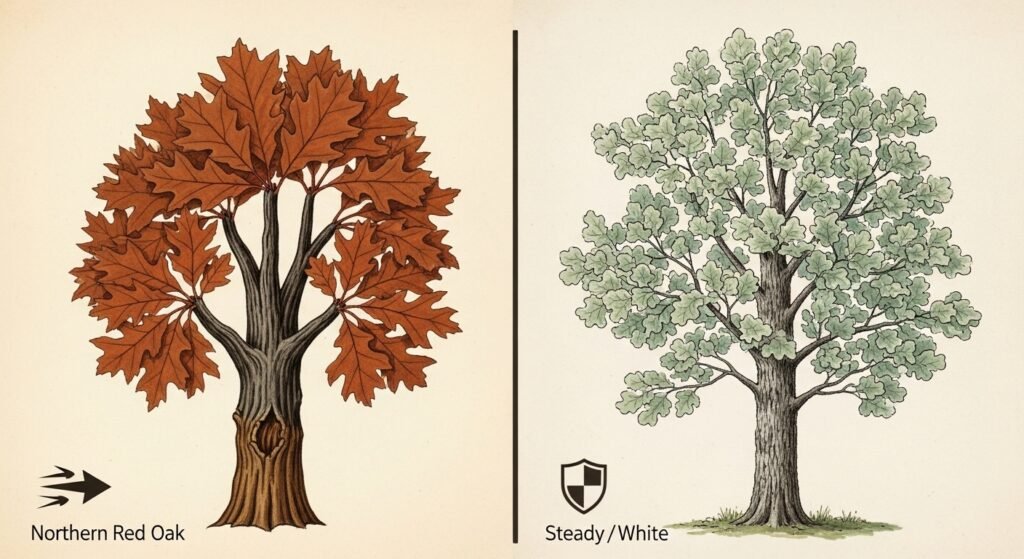
Not all oaks are the same when it comes to the clock. If you want a fast tree, you should pick a specific kind. If you want the strongest wood, you might pick a slower one. Knowing the species helps you answer the question of how long does it take an oak tree to grow. Let’s look at the most common ones people plant today.
Fast-Growing Oak Species
Some oaks are known for their “growth spurts” during the early years. These are great if you want shade in your lifetime. They reach for the sky quickly and fill out their canopy fast. You can see big changes in these trees every single summer.
- Northern Red Oak: This tree is a champion of speed in the oak family. It can reach 75 feet tall and grows very fast when it is young.
- Pin Oak: Also known as the Green Pillar, this tree is very popular. It can grow 2 feet or more every year in good soil.
- Red Oak Maturity: These trees reach their full size in about 60 to 80 years. They are famous for having beautiful red leaves in the autumn.
Slow-Growing Oak Species
Other oaks take their time to build a very solid foundation. These trees are known for having the hardest wood and the longest lives. They are the marathon runners of the plant world. They do not hurry, but they stay around much longer than the fast ones.
- White Oak: This is the classic oak tree that everyone loves for its shape. It grows about 1 foot per year, which is considered slow.
- White Oak Timeline: It takes about 100 to 200 years to reach its maximum size. It can live for over 6 centuries if it stays healthy.
- Blue Oak: This is a tough tree that lives in dry areas of the West. It grows very slowly to save water and energy.
Oak Tree Growth Milestones and Timeline
It helps to have a calendar in mind when you plant a tree. You can track its progress against these common milestones. This helps you know if your tree is healthy or needs more help. Remember that every yard is a little bit different for a tree.
Short-Term Growth (Years 1–5)
The first five years are all about survival and building roots. You won’t see a giant tree during this time, but a lot is happening underground. The tree is finding its place in the soil and getting steady. This is when you need to be the most helpful with water and mulch.
- 1 Year: The tree is just a small sprout under 12 inches tall.
- 3 Year: It should be a sturdy seedling about 3 to 4 feet tall.
- 5 Year: It reaches the sapling stage and might be 6 to 10 feet tall.
Mid-Term Development (Years 6–30)

This is the most exciting time for a person who planted the tree. You will see the oak change from a thin pole into a real tree. The trunk will get thick enough that you can’t wrap your hands around it. By the end of this period, the tree will be a major part of your property.
- Years 10-15: This is usually the fastest growth spurt for most oak species.
- Age 20: The tree is a young adult and starts making its own acorns.
- Age 30: You have a full shade tree that stands 30 to 50 feet tall.
Long-Term Maturity (50–300+ Years)
After half a century, the oak is a permanent fixture of the land. It has seen many seasons and survived many storms. The growth slows down, but the tree becomes more majestic every year. It becomes a landmark that people use to find their way.
- 50 Years: Fast species are at their full height, while slow ones are halfway there.
- 100 Years: The tree is fully mature and has a massive, heavy canopy.
- 200+ Years: The tree enters its ancient phase and becomes a local legend.
Essential Care and Maintenance for Maximum Growth
You can help your tree grow faster by being a good friend to it. Trees that get care always grow better than those left alone. You don’t have to do much, but the little things matter a lot. Following these tips can shave years off the wait for shade.
Planting Best Practices
Where you put the tree is just as important as the tree itself. You need to give it plenty of room to grow both up and out. Don’t plant an oak too close to your house or power lines. They need a lot of space for their big branches and heavy roots.
- Pick a Sunny Spot: Oaks need at least 6 hours of direct sun every day.
- Check the Soil: Make sure the dirt drains well so the roots don’t rot.
- Give Space: Plant at least 20 feet away from structures and other big trees.
Strategic Watering Schedules
Water is the fuel that drives the growth of your oak. Young trees cannot find water deep in the ground yet. You have to bring the water to them during the first few years. Once they are established, they can handle a little bit of drought.
- First 2 Weeks: Water the tree every single day to settle the dirt.
- Months 1-3: Water about two or three times a week depending on rain.
- After 1 Year: Water deeply once a week during the hot summer months.
Soil Management and Fertilization
The soil is like the refrigerator for your oak tree. It holds all the food and water the tree needs to survive. If the soil is poor, the tree will be skinny and weak. Adding a little bit of help can make a huge difference in growth.
- Fertilizer: Use a slow-release food in the spring to boost growth.
- Soil Testing: Check the pH level to make sure the tree can “eat” the nutrients.
- Avoid Compaction: Don’t park cars or drive heavy tools over the root zone.
Proper Mulching Techniques

Mulch is like a cozy blanket for the tree’s roots. It keeps the ground moist and prevents weeds from growing. However, many people put mulch on the wrong way. You have to do it correctly to help the tree breathe.
- The Bowl Shape: Don’t pile mulch against the bark like a volcano.
- Thickness: Keep the mulch about 2 to 4 inches deep for the best results.
- Drip Line: Spread the mulch out as far as the longest branches reach.
Pruning and Trimming for Health

Sometimes you have to cut a tree to help it grow better. Pruning removes the parts of the tree that are sick or broken. This lets the tree send all its energy to the healthy branches. It also helps the tree stay strong during wind and snow.
- Winter Timing: Always trim your oaks in the winter when they are sleeping.
- Remove Dead Wood: Cutting off dead branches prevents rot and disease.
- Hire an Arborist: For big trees, call a pro to keep the tree and you safe.
Estimating Your Oak Tree’s Progress
It is fun to guess how big your tree will be in a few years. While you can’t know for sure, you can look at the averages. Most oaks follow a predictable path if they have good care. Here is a quick look at what to expect as time goes by.
| Stage | Estimated Height | Estimated Age | Use for Home |
| Seedling | 1 foot | 1 year | Decorative pot |
| Sapling | 10 feet | 5-7 years | Garden accent |
| Young Tree | 25 feet | 15 years | Light shade |
| Mature Tree | 50+ feet | 30-50 years | Full property shade |
How Long to Reach a 10-Foot Sapling?
Reaching 10 feet is a big milestone for a young oak. It means the tree is finally taller than most fences and small sheds. For a fast-growing Red Oak, this might take only 5 years. For a slower White Oak, you might be looking at 8 to 10 years. Good watering and mulch will help you get there much faster.
How Long Until It Provides Shade?
Most people plant oaks because they want a cool spot in the summer. A tree starts giving real shade when it hits about 20 or 25 feet. This usually happens between year 15 and year 25 of the tree’s life. By this time, the canopy is wide enough to cover a patio or a small lawn. It is a great feeling when you can finally sit under your own tree.
How Long Until It Is Considered a Giant?
A “giant” oak is one that dominates the entire skyline of your yard. These trees are usually over 50 feet tall and very wide. It takes at least 50 years for most oaks to reach this legendary status. At this point, the tree is a massive structure that defines your home. It will likely stay that way for the next few centuries.
Common Obstacles to Oak Growth
The road to becoming a giant is not always easy. Nature can throw a lot of problems at a growing tree. You need to keep an eye out for these issues so they don’t slow down the growth. Catching a problem early can save the life of your oak.
- Pests: Insects like aphids or borers can eat the leaves or wood.
- Disease: Fungal growth and oak wilt are serious threats to these trees.
- Extreme Weather: Very cold winters or long droughts can hurt the branches.
- Human Damage: Construction and lawnmowers can hurt the bark or roots.
Conclusion: The Enduring Journey of the Oak
Growing an oak tree is one of the best things you can do for the planet. It takes a long time, but the results are truly amazing. When you ask how long does it take an oak tree to grow, remember it is a journey. It starts with a tiny acorn and ends as a massive king of the yard. You get to watch this change happen year after year.
By picking the right species and giving it good care, you can speed up the process. Even a slow tree will eventually become a majestic giant. You are creating a legacy that will last much longer than any house or car. It is a gift of clean air, cool shade, and natural beauty. Take the first step today and plant an oak for the future.
Frequently Asked Questions About Oak Growth
How deep do oak tree roots grow?
Most oak roots actually stay in the top 18 to 24 inches of soil where oxygen is plentiful. While they do have a deep taproot when they are young, they eventually grow a massive network of lateral roots. These side roots can spread out three to seven times wider than the branches of the tree.
Can you grow an oak tree in a pot or container?
Yes, you can start an oak in a pot, but it will eventually need to be moved to the ground. A large container can hold a young oak for about three to five years before the roots become too cramped. Once the roots start circling the inside of the pot, the tree must be planted outside to survive.
Do oak trees lose their leaves in the winter?
Most oaks are deciduous, meaning they drop their leaves in the fall and grow new ones in the spring. However, some species like the Live Oak are evergreen or semi-evergreen. These types keep their green leaves all winter long and only replace them slowly during the spring.
Why do some years have more acorns than others?
This is a natural cycle called a mast year. Every few years, oak trees produce a huge surplus of acorns to ensure that some survive being eaten by animals. Scientists believe this happens due to a mix of perfect weather and tree communication.
Is it safe to plant an oak tree near a sidewalk?
It is generally risky because oak roots are very strong and can lift concrete as they grow. If you must plant near a walkway, choose a smaller species or use a root barrier. A distance of at least 15 feet is recommended to keep your sidewalk flat and safe.
How can I tell the age of an oak tree without cutting it down?
You can estimate the age by measuring the trunk’s circumference at about four feet off the ground. Divide the measurement in inches by pi (3.14) to get the diameter, then multiply by the growth factor for that specific species. While not perfect, it gives you a very close guess.
What is the best fertilizer for a young oak tree?
A fertilizer with a balanced ratio like 10-10-10 or 12-6-6 works best for young trees. It provides the nitrogen needed for leaf growth and the phosphorus needed for strong roots. Always apply it in early spring just as the new buds begin to open.
Do oak trees attract lightning?
Because oaks grow tall and have high moisture content, they are hit by lightning more often than some other trees. Their height makes them a natural lightning rod in an open field. If you have a historic oak, you can actually have a lightning protection system installed by a pro.
Can oak trees grow in sandy soil?
Certain species like the Scrub Oak or the Sand Live Oak are built for sandy conditions. However, most common oaks prefer a mix of clay and silt that holds more water. If you have sandy soil, you will need to water more often and use plenty of organic mulch.
How do I protect a young oak from deer?
Deer love to eat the tender buds of young oak trees, which can stunt their growth. The best protection is a wire cage or a plastic tree guard that is at least five feet tall. This keeps the animals away from the trunk and the lower branches until the tree is big enough to survive.
What is oak wilt and is it curable?
Oak wilt is a deadly fungal disease that stops the flow of water inside the tree. It spreads through root connections and by beetles that carry the fungus. There is no easy cure once a tree is heavily infected, so prevention and early treatment are vital.
Do oak trees change the acidity of the soil?
Oak leaves are slightly acidic when they first fall, but they neutralize as they turn into compost. For most yards, the fallen leaves will not significantly change the pH of your soil. It is actually healthy to let the leaves break down naturally under the tree.
Can you grow an oak tree from a grocery store acorn?
It is possible if the acorns are fresh and haven’t been dried out or heat-treated. However, most acorns found in stores are for eating and may not sprout. It is much better to find a fresh acorn from a local park or forest floor in the autumn.
How much carbon dioxide does one oak tree absorb?
A mature oak tree can absorb about 48 pounds of carbon dioxide per year. Over its long life, it can store tons of carbon in its wood and roots. This makes planting oaks one of the most effective ways to help the environment in your own backyard.
Are oak tree leaves poisonous to pets?
Oak leaves and acorns contain tannins, which can be toxic to dogs, cats, and horses if eaten in large amounts. They can cause stomach pain or even kidney issues in some animals. It is best to keep a close eye on your pets if you have many acorns on the ground.
Why are my oak leaves turning brown in the middle of summer?
This is usually a sign of heat stress or a lack of water. If the edges are brown and crispy, the tree is likely thirsty. If the browning is patchy, it could be a sign of a pest like leaf miners or a fungal infection.
Do oak trees have flowers?
Yes, oaks produce small, stringy flowers called catkins in the springtime. They don’t look like garden flowers because they don’t have petals. These catkins release pollen into the wind to fertilize the female flowers that eventually become acorns.
Can I move a five-year-old oak tree to a new spot?
It is very difficult because the root system is already quite large. Moving a tree that old usually requires a professional tree spade and a lot of care. It is much safer and cheaper to plant a new sapling where you want it to stay permanently.
What should I do if my oak tree has two main trunks?
This is called a “co-dominant stem,” and it can be a weak point for the tree. It is best to have an arborist prune one side while the tree is young. This encourages a single, strong central leader that can better survive heavy winds.
How long does it take for an oak to produce its first acorns?
Most oaks do not produce acorns until they are at least 20 years old. Some species, like the white oak, may wait until they are 50 years old before they have a large crop. Patience is key when waiting for your tree to start its own family.