 Skip to content
If you love snacking, you probably know that grapes are a top-tier choice for everyone. They are sweet, juicy, and super easy to find at any local grocery store. But did you know there are tons of other fruits that look like grapes?. Some of these mimics grow on trees in Brazil or along the coast. Others might be hiding in your own backyard or a nearby forest.
The world of plants is honestly pretty wild and full of surprises. You might see a cluster of berries and think they are a snack. However, some of these grape lookalikes are actually dangerous to eat. It is super important to know exactly what you are looking at. This guide will help you spot the difference between a real grape and a sneaky twin.
Whether you are a gardener or just a fan of fruit, this is for you. We are going to dive deep into colors, textures, and where these fruits grow. From blue to purple to turquoise, the variety is truly insane. Let’s check out these cool fruits that look like grapes right now.
Introduction to Grape Mimics
Grapes are basically the gold standard for small, round, juicy fruits. Because they are so popular, we tend to compare everything to them. Botanically speaking, many plants use a berry structure to protect their seeds. This is why so many unrelated plants end up looking very similar.
Evolution is pretty smart when it comes to plant survival. Small round fruits are easy for birds to see and eat. When birds eat these fruits, they help spread the seeds around. This process is why the “grape shape” is found all over the world.
Accurate identification is the most important part of foraging or gardening. You don’t want to bite into something sour when you expect sweet. Even worse, you don’t want to eat something that could make you sick. Knowing the unique traits of each plant keeps you safe and happy.
In this guide, we will look at fruits from every corner of the earth. Some grow on vines, while others grow directly on tree trunks. You will see colors you didn’t even know fruit could have. It is a long journey through the world of fruits that look like grapes.
Distinctive Characteristics of True Grapes
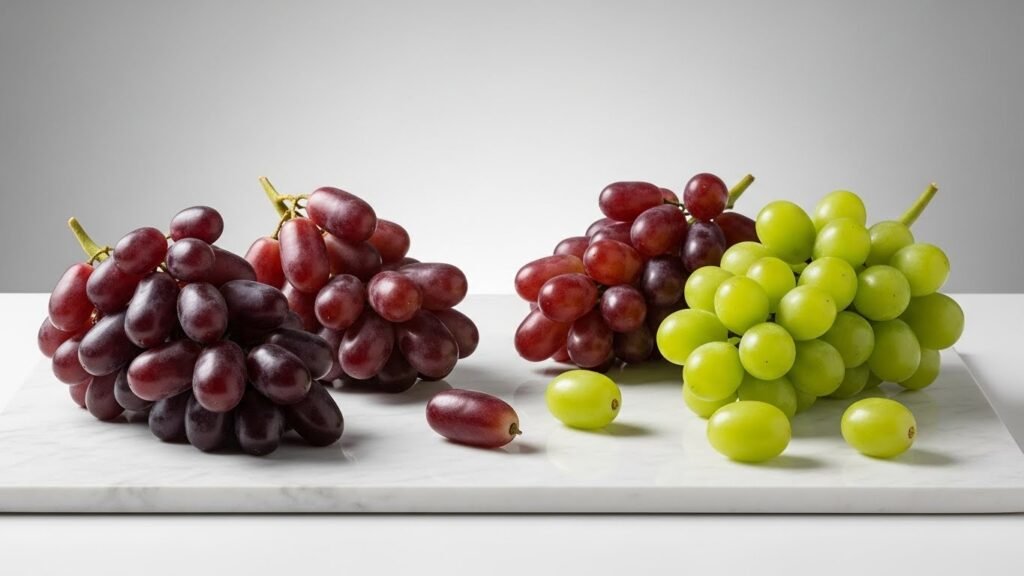
Understanding the Vitis Genus
True grapes belong to a specific group of plants called the Vitis genus. This group has been around for thousands of years. Humans have been growing them for food and juice since ancient times. There are dozens of species, but they all share common traits.
Botanical Anatomy
Grapes almost always grow on woody vines that love to climb. They use curly little things called tendrils to grab onto fences or trees. The leaves are usually shaped like hearts with jagged, lobed edges. If the plant is a bush or a tree, it probably isn’t a true grape.
Physical Traits
The actual fruit of a grape is usually round or oval-shaped. They have thin skins that are easy to bite through. Inside, you will find seeds that are shaped like tiny pears. They always grow in tight or loose bunches called clusters.
The Bloom
Have you ever noticed a white, waxy dust on your grapes?. That is called the bloom, and it is totally natural. It helps protect the fruit from moisture and bugs. Most true grapes will have this powdery look when they are fresh.
Tropical and Exotic Fruits That Mimic Grapes
Jabuticaba (Brazilian Grape Tree)
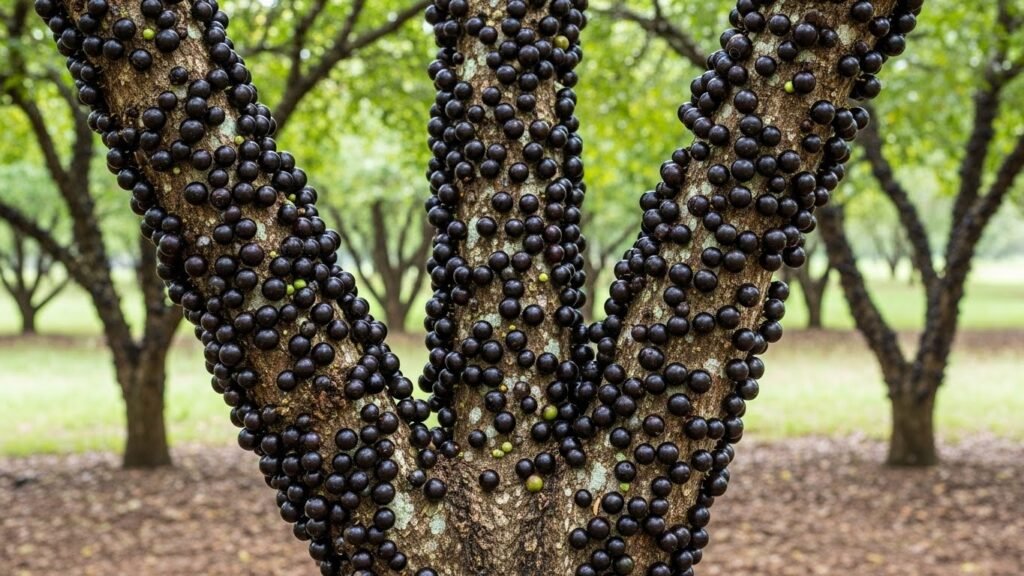
The Jabuticaba is one of the coolest trees in the world. It comes from Brazil and has a very weird way of growing fruit. Instead of hanging from vines, the fruit grows right on the trunk. This strange growth habit is called cauliflory.
- Appearance: These fruits are dark purple and look exactly like Concord grapes.
- Texture: They have a thick skin and a white, jelly-like pulp inside.
- Flavor: The taste is super sweet and very similar to a real grape.
- Uses: People in Brazil love to make jams, wines, and fresh juice with them.
Sea Grapes (Coccoloba uvifera)
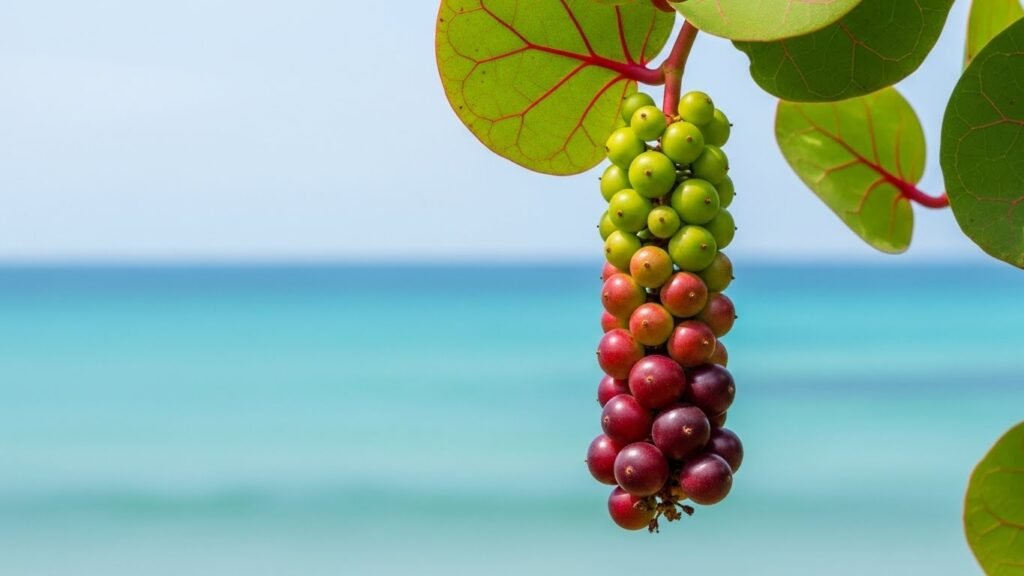
If you hang out on tropical beaches, you might see Sea Grapes. These plants love the sandy soil and salty air of the coast. They grow in long, hanging bunches that look just like grapes. They are a classic example of fruits that look like grapes.
- Environment: They thrive in tropical coastal areas like Florida or the Caribbean.
- Color: The berries start out green and turn a deep reddish-purple when ripe.
- Taste: They have a mix of sweet and salty flavors from the sea.
- Challenge: The fruit has a very large pit, so there isn’t much flesh to eat.
Indian Gooseberry (Amla)
The Indian Gooseberry, or Amla, is a famous fruit in Asia. It looks like a bright green, translucent grape. When you see them in a pile, the resemblance is quite strong. However, the taste is a totally different story.
- Nutrients: It is packed with a massive amount of Vitamin C.
- Flavor: Unlike grapes, these are very sour and astringent.
- Health: Many people use them in traditional medicine for better health.
- Food: They are often preserved in sugar or salt to make them easier to eat.
Marang and Breadfruit Relatives
Some tropical fruits don’t look like grapes on the outside. But once you peel them open, you see something very familiar. The seeds inside are often covered in a white pulp. These segments can look exactly like a cluster of grapes.
Wild and Forageable Grape Lookalikes
Muscadines and Scuppernongs
Muscadines are native to the Southeastern U.S. and are super tough. They are a type of wild grape, but they are very different from table grapes. They love the heat and humidity of the South.
- Skins: They have very thick, bronze or dark purple skins.
- Growth: They grow in small, loose clusters rather than big heavy bunches.
- Flavor: They have a very intense, musky flavor that people either love or hate.
- Gardening: Many people grow them at home because they resist diseases well.
Fox Grapes (Vitis labrusca)
Fox Grapes are the wild ancestors of the famous Concord grape. They grow all over North America and are very easy to find. If you find a wild vine, it is likely a Fox Grape.
- Scent: They have a very strong, earthy smell that fills the air.
- Skins: These are “slip-skin” grapes, meaning the inside pops right out.
- Identification: Look for the fuzzy underside on their large, green leaves.
Elderberries
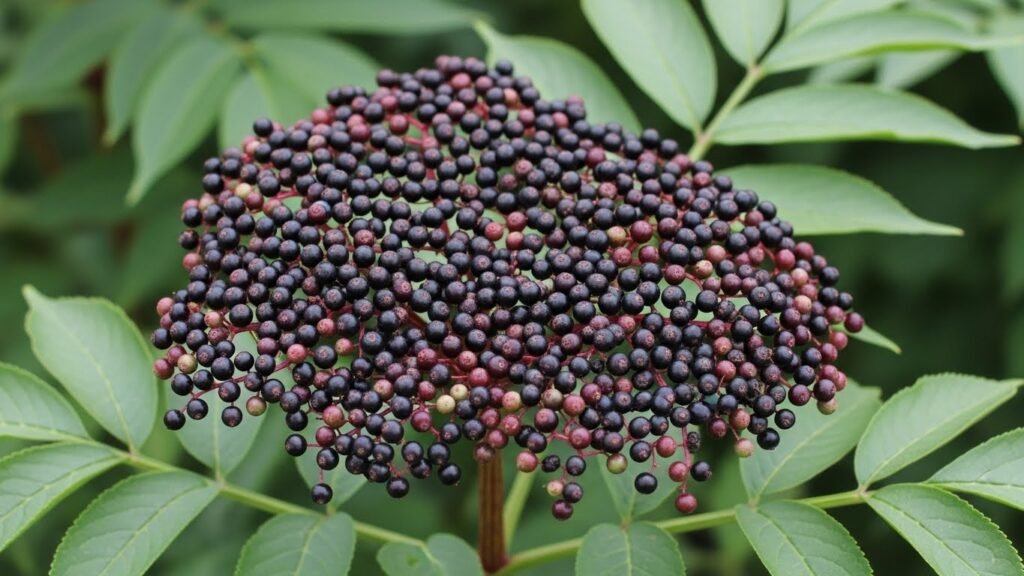
Elderberries are small, dark berries that grow on large bushes. They grow in big, flat-topped clusters that look like grape bunches. They are very popular for making health syrups.
- Clusters: The berries are tiny and dark purple or black when they are ripe.
- Warning: Never eat raw elderberries because they can be toxic.
- Cooking: You must cook them down to make them safe and delicious.
- Benefits: They are famous for helping your immune system during flu season.
Porcelain Berry (Ampelopsis glandulosa)

The Porcelain Berry is one of the most beautiful fruits you will ever see. It is an invasive vine that grows very fast. People often plant it because the berries look like little jewels.
- Colors: One cluster can have turquoise, lavender, and deep blue berries all at once.
- Mimicry: It looks so much like a wild grape that many people get confused.
- Difference: If you cut the vine, grapes have brown pith, but this has white pith.
Oregon Grape (Mahonia aquifolium)
The Oregon Grape isn’t actually a grape at all. It is a shrub with leaves that look like holly. However, the berries it produces are a dead ringer for grapes.
- Berries: They are dusty blue and grow in long, heavy clusters.
- Taste: They are very tart and usually need a lot of sugar to taste good.
- Gardening: It is a popular plant for landscaping because it stays green all year.
Small Berries and Garden Fruits
Blueberries
We all know blueberries, but some big ones can be tricky. Certain types of blueberries grow to the size of a small grape. Their color and round shape make them look like fruits that look like grapes.
- The Crown: Look at the bottom of the berry for a tiny “crown” or calyx.
- Growth: They grow on bushes, not on climbing vines with tendrils.
- Health: They are famous for being superfoods with tons of antioxidants.
Currants (Red, Black, and White)
Currants are tiny berries that grow in very elegant, drooping strings. They look like miniature grapes hanging from a bush. They are very common in European gardens.
- Red Currants: These are bright red and translucent like tiny rubies.
- Black Currants: These have a deep, dark flavor and are very high in Vitamin C.
- Texture: They are smooth and firm, but much more tart than a regular grape.
Honeyberries (Haskap)
Honeyberries are a relatively new fruit for many gardeners. They look like long, stretched-out blue grapes. They come from very cold regions like Siberia.
- Appearance: They have a blue skin and the same waxy bloom as grapes.
- Hardiness: These plants can survive crazy cold winters without any trouble.
- Flavor: They taste like a mix of a raspberry and a blueberry.
Identifying Dangerous Lookalikes (Toxic Species)
Canadian Moonseed (Menispermum canadense)
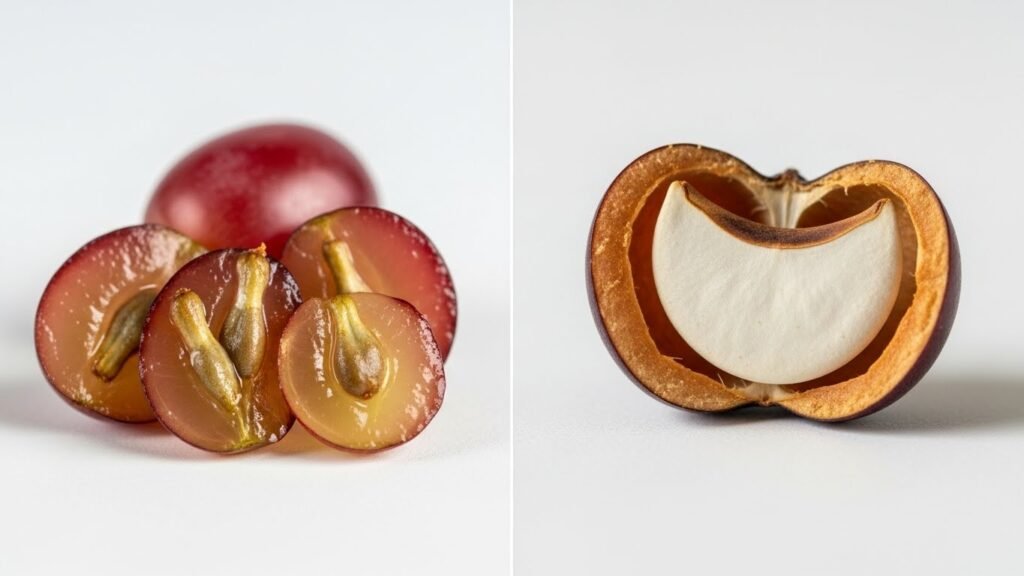
This is the most dangerous grape lookalike out there. It grows on a vine and has dark berries that look just like wild grapes. Eating these can make you very sick or even worse.
- The Seed: Grapes have pear-shaped seeds, but this has one crescent-moon seed.
- The Vine: This vine does not have tendrils for climbing like grapes do.
- The Leaf: The leaf stem attaches to the middle of the leaf, not the edge.
Pokeweed Berries (Phytolacca americana)
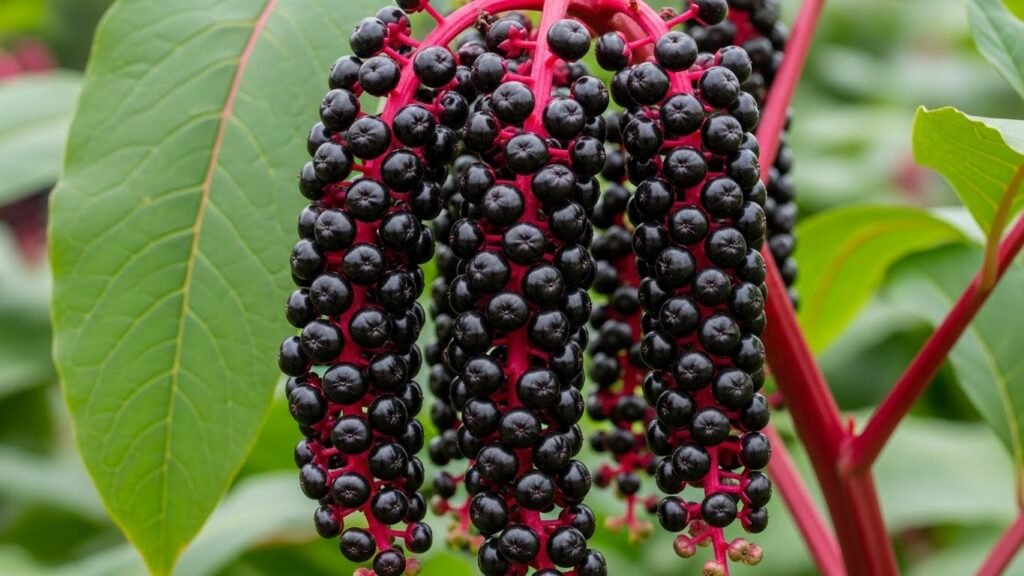
Pokeweed is a very common weed in the USA. It produces big bunches of dark purple berries on bright pink stems. They look tasty, but they are definitely not for humans.
- Stems: The bright magenta stems are a huge red flag to stay away.
- Growth: It grows as a tall, upright plant, not a climbing vine.
- Toxicity: These berries are poisonous to people but a great snack for birds.
Virginia Creeper
Virginia Creeper is a vine that often grows right next to wild grapes. It turns a beautiful red in the fall and grows small dark berries. While it looks cool, you should never eat the fruit.
- Leaves: It has five leaflets on each leaf, while grapes have one large leaf.
- Berries: The berries contain crystals that can irritate your mouth and throat.
Key Identification and Safety Guidelines
Botanical Comparison Framework
When you find fruits that look like grapes, you need a plan. Start by looking at the whole plant, not just the berry. Is it a vine, a bush, or a tree?. Check the leaves for that classic grape shape.
- Structure: Grapes climb with tendrils; many mimics are shrubs or trees.
- Seeds: Always cut a berry open to check the seed shape and count.
- Calyx: Look for the little crown at the bottom that grapes never have.
Practical Field Identification Tips
You can use your other senses to help you out too. If you scratch the bark of a grape vine, it usually looks shredded. Cut a vine and look at the pith in the center. If it is brown, it is likely a grape; if it is white, be careful.
Culinary and Practical Uses of Grape-Like Fruits
Fresh Consumption and Snacking
Some mimics are amazing to eat right off the plant. Jabuticaba and Muscadines are some of the best snacks you can find. Just remember that some have thicker skins that you might want to spit out.
Preserves, Jellies, and Syrups
Many grape lookalikes are perfect for the kitchen. Currants and Elderberries make some of the best jellies in the world. They have a lot of natural pectin which helps the jam set perfectly.
Fermentation and Winemaking
You don’t just need grapes to make good wine. Many people use Jabuticaba or Muscadines to craft unique, flavorful drinks. These fruits have high sugar content and great color for fermentation.
Health and Nutritional Comparison
Antioxidant Profiles
Purple and blue fruits are usually packed with health benefits. Grapes, blueberries, and elderberries all have high levels of antioxidants. These help your body stay strong and fight off sickness.
Vitamin and Mineral Content
Different mimics bring different things to the table. Amla is the king of Vitamin C, beating grapes by a mile. Thick-skinned fruits like Muscadines also give you a lot of healthy fiber.
Growing Grape Mimics in Your Garden

Climate and Zoning Requirements
Before you plant anything, check your local weather. Sea Grapes need warm, tropical sun to survive. On the other hand, Honeyberries love the freezing cold of the north.
Soil and Maintenance
Every plant has its own favorite dirt. Blueberries need very acidic soil to grow well. Vines like Muscadines will need a strong fence or trellis to climb on. Always watch out for birds, because they love these fruits as much as you do.
Comparison Table: Grapes vs. Popular Mimics
| Fruit Name | Growth Habit | Key Color | Flavor Profile | Edibility |
| True Grapes | Climbing Vine | Green, Red, Purple | Sweet, Juicy | Safe |
| Jabuticaba | Tree Trunk | Dark Purple | Sweet, Jelly-like | Safe |
| Elderberries | Large Shrub | Black/Purple | Tart (Must Cook) | Safe (Cooked) |
| Sea Grapes | Tropical Tree | Purple/Red | Salty-Sweet | Safe |
| Moonseed | Vine | Dark Purple | Bitter | TOXIC |
Conclusion: The Diversity of the Berry World
The world of fruits that look like grapes is truly amazing. Nature has a way of repeating successful designs in different places. From the beaches of Florida to the forests of Brazil, these mimics are everywhere.
Knowing these plants helps you appreciate the garden even more. It also keeps you safe when you are out exploring the wild. Whether you want to grow them or just eat them, these fruits are worth knowing.
So next time you see a bunch of round berries, take a closer look. It might be a grape, or it might be a beautiful tropical twin. Happy hunting and snacking in the wonderful world of fruit!.
Frequently Asked Questions
Are there any fruits that look like grapes but are poisonous to dogs?
While grapes themselves are toxic to dogs, many lookalikes are also dangerous. For instance, Pokeweed and Virginia Creeper can cause severe distress or even death in pets. If you have a curious dog, it is best to remove these plants from your yard to avoid any accidents during their outdoor playtime.
Can you grow Sea Grapes in a non-coastal backyard?
Sea Grapes are very picky about their environment and love the salty spray of the ocean. If you live in a cold climate or far from the coast, they might struggle to survive the winter. However, some people in warm zones like Florida grow them as privacy hedges even if they are a few miles away from the beach.
Is the skin of the Jabuticaba fruit edible like a regular grape?
The skin of the Jabuticaba is much thicker and tougher than your average grocery store grape. While it is technically edible and full of antioxidants, it has a very strong, tannic taste that some people find unpleasant. Most folks prefer to squeeze the sweet white pulp into their mouths and discard the purple skin.
Do any grape lookalikes grow in the desert?
Most grape mimics prefer humid or temperate areas, but some wild berries in arid regions can resemble small grapes. However, true desert plants usually have different water-saving structures. Always be extra careful with identification in the desert, as many small round fruits there are evolved to protect themselves with toxins.
Why do some people call Oregon Grape a “barberry”?
The Oregon Grape belongs to the Berberidaceae family, which is the same family as barberries. Even though it has “grape” in the name because of the fruit clusters, it is botanically much closer to a barberry bush. This is a classic example of how common names can be very confusing for new gardeners.
Can Muscadines be used to make traditional raisins?
Because Muscadines have such thick skins and large seeds, they are not usually turned into raisins. Traditional raisins come from thin-skinned, seedless grape varieties like Thompson Seedless. Trying to dry a Muscadine would likely result in a very tough, leathery snack that wouldn’t be very enjoyable.
Are there any white or yellow fruits that look like grapes?
Yes, the White Currant and the Indian Gooseberry are great examples of lighter-colored mimics. Some varieties of Honeyberries also have a pale yellow flesh once you peel back the skin. These are perfect for gardeners who want the grape look without the dark purple stains on their hands.
How do I stop birds from eating my grape lookalikes before I can harvest them?
Birds are the biggest fans of fruits that look like grapes because they can see the bright colors from far away. Using bird netting or shiny reflective tape can help keep them away from your bushes and vines. Some gardeners even use fake owls to scare off the smaller birds during the ripening season.
Do any of these fruits have a “crunchy” texture like some table grapes?
Most grape mimics have a softer, more jelly-like interior compared to the crisp “snap” of a fresh table grape. Currants are probably the closest in terms of having a firm, popping texture. Fruits like Jabuticaba and Muscadine are definitely on the squishier side of the spectrum.
Can I make wine out of Porcelain Berries?
Even though they look beautiful, Porcelain Berries are not generally used for winemaking because they don’t have a pleasant flavor. They are mostly grown for their ornamental look in floral arrangements. If you want to make home-made wine, stick to Fox Grapes, Elderberries, or true Muscadines.
Are there any grape-like fruits that smell like bubblegum?
Some varieties of the Fox Grape, particularly those related to the Concord, have a very sweet and floral aroma. Many people describe this scent as being exactly like grape-flavored bubblegum or soda. This “foxy” aroma is a key way to identify these wild vines in the woods.
Is it safe to use Elderberry wood for skewers or cooking?
You should never use the wood or leaves of the Elderberry plant for cooking or as skewers. Like the raw berries, the stems and bark contain compounds that can release cyanide. Stick to bamboo or stainless steel skewers and keep the Elderberry parts out of your kitchen.
What is the difference between a berry and a drupe?
In botany, a true berry like a grape has seeds inside the pulp. Some mimics are actually “drupes,” which means they have a single hard stone or pit in the middle, like a cherry. Sea Grapes are a perfect example of a grape mimic that is actually a drupe.
Do grape lookalikes require a lot of pruning?
Vining mimics like the Porcelain Berry or Muscadines need regular pruning to stay under control. If you let them go, they can easily take over your whole garden and choke out other plants. Shrub-style mimics like Blueberries or Currants are much easier to manage with just a little bit of seasonal trimming.
Can you find any of these fruits in a standard American supermarket?
Blueberries and sometimes Currants are easy to find at your local store. However, more exotic mimics like Jabuticaba or Sea Grapes are usually only found at specialty tropical markets or farmers’ markets in specific regions. Part of the fun of these fruits is that they are rare and unique!
Are there any grape mimics that bloom in the winter?
Most of these fruits follow the standard spring-bloom and summer-harvest cycle. However, in tropical climates, Jabuticaba trees can fruit multiple times a year if they get enough water. This means you could potentially see “grapes” growing on a tree trunk even in the middle of winter.
Why does the Indian Gooseberry make water taste sweet?
This is a very cool trick! After eating a sour Amla (Indian Gooseberry), drinking plain water often results in a surprising sweet taste. This happens because of specific compounds in the fruit that react with your taste buds. It’s a fun party trick for anyone trying the fruit for the first time.
Can these fruits be grown in containers on a balcony?
Blueberries and Currants are excellent candidates for container gardening if you have a sunny balcony. There are even “dwarf” varieties of Muscadines that can handle life in a large pot. Just make sure the pot has good drainage so the roots don’t get soggy and rot.
Do any of these fruits have medicinal properties?
Many of these fruits have been used in traditional medicine for centuries. Elderberries are world-famous for supporting the immune system, and Amla is a staple in Ayurvedic medicine. While they are healthy snacks, always talk to a doctor before using them as a primary treatment for any sickness.
How long does it take for a Jabuticaba tree to start fruiting?
If you grow a Jabuticaba from a seed, you might have to be very patient. It can take anywhere from 8 to 15 years for the tree to finally produce those grape-like fruits on its trunk. This is why many gardeners prefer to buy older, grafted trees that are ready to fruit much sooner.