 Skip to content
Aloe Vera is a highly popular, easy-to-care-for succulent that not only adds a touch of greenery to your home but also offers several medicinal benefits. If you’ve ever wondered how to take care of an Aloe Vera plant, this guide will provide you with everything you need to know, from the best sunlight conditions to water requirements and repotting tips. Aloe Vera thrives with minimal care, making it an ideal choice for beginners and experienced gardeners alike. By following this detailed care guide, you can ensure your Aloe Vera grows healthy, vibrant, and thrives for years to come.
About Aloe Vera
Origins and Description
Aloe Vera (Aloe barbadensis Miller) is a succulent plant native to North Africa but now widely cultivated across the globe. Known for its soothing and healing properties, Aloe Vera has been used for centuries for medicinal and cosmetic purposes. The plant is easily recognizable by its thick, fleshy leaves that store water, making it a resilient plant suited for dry, arid climates. Aloe Vera is often grown for its gel, which is extracted from the leaves and used to soothe sunburns, moisturize the skin, and treat minor cuts and wounds.
Aloe Vera’s Unique Features
Aloe Vera is a low-maintenance, drought-tolerant plant. It has long, thick leaves arranged in a rosette pattern that are usually green with a slight bluish tint. The gel inside its leaves has anti-inflammatory, antibacterial, and antifungal properties, making it an essential plant in many households. Aloe Vera can grow anywhere from a few inches to over two feet tall, and with proper care, it can last for many years.
Light Requirements
What Kind of Light Does Aloe Vera Need?

Aloe Vera thrives in bright, indirect sunlight but does not like being exposed to intense, direct sunlight for long periods. Direct sunlight can scorch its leaves, causing them to turn brown and crispy. Therefore, it’s essential to find a spot with ample indirect light.
- West-facing windows are ideal for Aloe Vera, as they receive warm afternoon sunlight.
- East-facing windows also work well, as they provide softer morning light.
- Avoid placing the plant in a shady spot for too long, as it will not grow optimally in low light conditions.
- If grown outdoors, ensure the Aloe Vera is shielded from direct midday sun, especially during summer.
Light Adjustment Tips
If your Aloe Vera starts to lean toward its light source, it’s time to rotate the pot. This will encourage even growth and prevent the plant from becoming lopsided. During the colder months, when light exposure decreases, you might need to move your Aloe Vera closer to a window or provide supplemental grow lights.
Temperature and Humidity Requirements
Aloe Vera is native to desert-like conditions, and it thrives in warm temperatures ranging from 59°F to 77°F (15°C to 25°C). It is essential to maintain these temperatures for optimal growth, as Aloe Vera does not tolerate frost.
Ideal Temperature Range

- Indoor Plants: Aloe Vera does well in typical room temperatures.
- Outdoor Plants: In regions with frost, Aloe Vera should be kept indoors or brought indoors during the winter months.
- Frost Protection: Aloe Vera plants should be protected from frost, as cold temperatures can damage or kill the plant.
Humidity and Environmental Preferences
Aloe Vera does not require high humidity. It thrives in dry, arid conditions, similar to its native habitat. Avoid placing it in areas with high humidity, such as bathrooms. It does best in dry, warm air, making it a perfect fit for indoor environments.
Soil and Potting Requirements
What Soil Is Best for Aloe Vera?
Aloe Vera needs well-draining soil to thrive. Since it is a succulent, it stores water in its leaves and cannot tolerate soggy soil. Overwatering and poor drainage can lead to root rot, a common issue for Aloe Vera plants.
- Cactus or succulent potting mix is ideal for Aloe Vera, as it ensures proper drainage.
- If using regular potting soil, mix it with perlite or coarse sand to enhance drainage.
- Aloe Vera should be planted in a pot with drainage holes to prevent water from accumulating at the bottom.
Choosing the Right Pot
When selecting a pot, choose one that allows proper airflow and drainage. Terracotta pots are ideal because they are porous, helping the soil dry out between waterings. If you’re using a plastic pot, ensure it has drainage holes and doesn’t trap excess moisture.
Watering Aloe Vera

Frequency and Methods
One of the most important aspects of how to take care of an Aloe Vera plant is getting the watering right. Aloe Vera is a succulent, which means it stores water in its leaves. Overwatering is a common mistake and can lead to root rot.
- Water every two weeks or when the soil feels dry to the touch.
- Moisture check: Stick your finger into the soil to check for moisture. If the soil is dry to a depth of about 2 inches, it’s time to water.
- In winter dormancy, reduce watering to once a month or whenever the soil is completely dry.
- Avoid watering in the evening to prevent prolonged moisture sitting on the soil overnight, which could lead to fungal growth.
Signs of Overwatering
If the Aloe Vera leaves turn brownish-red or soft and mushy, this could be a sign of overwatering. These leaves will become weak, and the plant may start to rot at the base. Ensure you let the soil dry out completely before watering again.
Fertilization and Pruning
How to Fertilize Aloe Vera
Aloe Vera does not require frequent fertilization. However, during its active growing season (spring and summer), you can feed it with a succulent fertilizer. Use a diluted balanced, water-soluble fertilizer (about half strength) every 4–6 weeks.
- Avoid fertilizing during the winter as Aloe Vera enters dormancy.
- Over-fertilizing can lead to weak growth, so keep fertilization minimal.
Pruning Aloe Vera
Pruning is essential for maintaining the appearance and health of your Aloe Vera plant. Removing dead or damaged leaves promotes healthier growth and ensures the plant doesn’t waste energy on unhealthy parts.
- Trim the old or damaged leaves from the base using a clean pair of scissors or pruning shears.
- Aloe Vera also produces pups (baby plants) at its base. These can be separated and replanted in their own pots.
Propagation and Reproduction
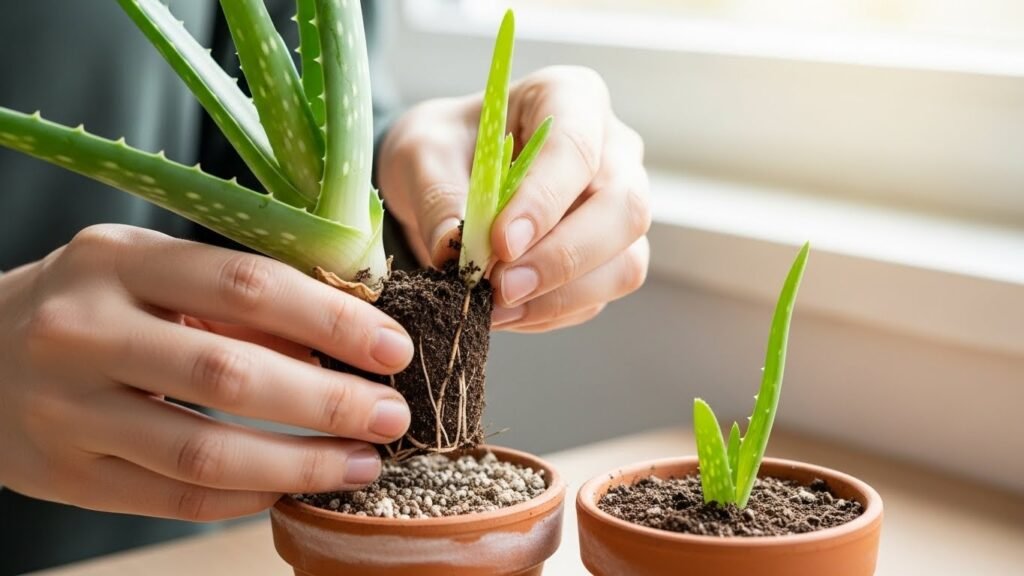
How to Propagate Aloe Vera
Aloe Vera is relatively easy to propagate, making it an ideal plant for multiplying in your garden or sharing with friends. Aloe Vera naturally produces pups (offsets) that can be separated from the parent plant and repotted into their own containers. This is the most common method of propagation.
Steps to propagate Aloe Vera through pups:
- Wait until the pups are at least 4 inches tall and have developed their own roots.
- Gently remove the pup from the base of the mother plant using a clean knife or your hands. Be sure to keep any attached roots intact.
- Let the pup dry for a day or two in a shaded area before planting it in a new pot to prevent root rot.
- Repot the pup in a small pot filled with well-draining soil. Use a succulent or cactus mix for best results.
- Water lightly after planting and allow the new plant to adjust before resuming normal watering schedules.
Aloe Vera Leaf Cuttings (Alternative Propagation Method)
Although pups are the most common way to propagate Aloe Vera, you can also propagate through leaf cuttings, although this method is slower and less reliable.
- Choose a healthy, mature leaf from the base of the plant.
- Cut the leaf at the base with a sharp, clean knife.
- Allow the cut leaf to callus for a few days to prevent rotting.
- After the cut has dried, place the leaf in a pot with well-draining soil. The leaf should remain upright as it begins to develop roots.
- Water sparingly, only when the soil is dry. The process may take a few weeks to months to see root development.
Tips for Successful Propagation
- Always use clean tools to avoid introducing bacteria or fungi.
- Aloe Vera propagates best in warm temperatures, so keep the plant in a spot with plenty of indirect sunlight and warmth.
- Be patient, as Aloe Vera is a slow-growing plant, and propagation can take time.
Harvesting and Using Aloe Vera Gel
Aloe Vera’s primary draw for many is the gel inside its leaves, which has countless uses, especially for skin care. The gel is known for its soothing properties, particularly for burns, cuts, and skin irritations. It’s also widely used in cosmetics for its moisturizing benefits.
How to Harvest Aloe Vera Gel

Harvesting Aloe Vera gel is simple and can be done in just a few steps:
- Choose a mature leaf from the outer section of the plant. These leaves are usually the largest and thickest.
- Use a sharp knife to cut the leaf as close to the base as possible. It’s better to take leaves from the outermost sections so that the inner leaves remain undisturbed for future growth.
- Rinse the leaf under water to remove any dirt.
- Cut the leaf into smaller sections. Use your knife to slice off the pointed tips and the thorny edges.
- Split the leaf open lengthwise, exposing the clear, thick gel inside.
- Scoop out the gel with a spoon or knife. You can use the gel immediately or store it in an airtight container in the refrigerator for up to a week.
Benefits of Aloe Vera Gel
- Skin Care: Aloe Vera gel is excellent for soothing minor burns, sunburns, and skin irritations.
- Moisturizer: It hydrates the skin without making it oily, making it a popular ingredient in skincare products.
- Hair Care: Aloe Vera gel can be used as a conditioner or scalp treatment.
- Medicinal Uses: Aloe Vera is also used to relieve constipation when taken internally, though caution should be exercised.
Storage Tips for Aloe Vera Gel
If you don’t use the gel immediately, store it in a clean container and refrigerate it. The gel will last about a week before its potency begins to diminish. For longer-term storage, you can freeze the gel in ice cube trays for easy use in future applications.
Additional Uses of Aloe Vera Gel
Aloe Vera gel isn’t just for treating sunburns and minor cuts—it’s a versatile product with a wide range of uses. Whether you’re looking to use Aloe Vera gel in your skincare routine, make natural remedies, or simply enjoy its many health benefits, here are some creative ways to incorporate it into your daily life.
Aloe Vera for Skin Care
Aloe Vera gel is perhaps best known for its ability to soothe and hydrate the skin.
- Soothing Sunburns: Aloe Vera gel cools down skin and reduces inflammation, making it perfect for soothing sunburns or skin irritations.
- Moisturizing: Aloe Vera acts as a natural moisturizer for dry skin. It hydrates the skin without making it greasy, making it ideal for all skin types.
- Acne Treatment: The anti-inflammatory and antibacterial properties of Aloe Vera help reduce redness and irritation from acne. Simply apply fresh Aloe Vera gel directly to the affected areas.
- Anti-Aging: Aloe Vera is packed with antioxidants, which help reduce the appearance of fine lines and wrinkles. Regular use can improve the skin’s elasticity and overall health.
Aloe Vera for Hair Care
Aloe Vera gel is also widely used in hair care products. Its moisturizing properties help to nourish the scalp and hair.
- Scalp Treatment: Aloe Vera gel can help treat dry, flaky scalp conditions like dandruff. Massage the gel directly onto the scalp to reduce irritation and moisturize dry patches.
- Conditioner: Aloe Vera can be used as a natural hair conditioner to soften and smooth hair. Apply the gel to damp hair after shampooing, leave it on for a few minutes, and rinse.
- Hair Growth: Aloe Vera is believed to stimulate hair growth by improving blood circulation to the scalp and nourishing the hair follicles.
Aloe Vera for Digestion and Detoxification
Aloe Vera has been used in traditional medicine for its digestive benefits. Drinking small amounts of Aloe Vera juice can aid digestion and help with detoxification.
- Digestive Aid: Aloe Vera contains compounds that help soothe the digestive tract and reduce irritation. It can help relieve constipation and promote regular bowel movements.
- Detoxifying: Aloe Vera juice is known for its detoxifying properties. It helps flush out toxins from the body and supports liver health.
Aloe Vera for Minor Burns and Cuts
The gel inside Aloe Vera leaves is well-known for its ability to soothe burns and cuts.
- Burn Relief: Aloe Vera gel helps cool down the skin, reducing pain and inflammation associated with burns.
- Wound Healing: The gel promotes faster healing by moisturizing the skin and providing essential nutrients. It can be applied directly to cuts and abrasions to reduce scarring.
Special Conditions for Aloe Vera Care
Aloe Vera is a resilient plant, but certain environmental conditions can affect its health. Let’s discuss how to adapt care depending on the seasons, climate, and whether the plant is indoors or outdoors.
Aloe Vera in Indoor vs. Outdoor Conditions
Indoor Aloe Vera Care
- Light: Aloe Vera needs bright, indirect sunlight indoors. A west-facing window is ideal, as it receives plenty of indirect light without exposing the plant to harsh afternoon sun. If sunlight is scarce, you can use grow lights to provide the necessary light for healthy growth.
- Temperature: Aloe Vera should be kept in an environment with temperatures between 59°F to 77°F (15°C to 25°C). Avoid placing it near cold drafts, such as air conditioners or open windows during winter.
- Humidity: Aloe Vera doesn’t require high humidity. In fact, it thrives in dry air. If your home is particularly humid (like a bathroom), it’s better to keep Aloe Vera in a drier, warmer area.
- Watering: Indoors, the soil may take longer to dry out, so be careful not to overwater. Ensure the soil is completely dry before watering.
Outdoor Aloe Vera Care
- Light: Aloe Vera can be grown outdoors in a sunny spot. However, it should be protected from direct midday sun, especially in extremely hot climates. Morning sun or late afternoon sun works best.
- Temperature: Aloe Vera is not frost-tolerant. It should be brought indoors during the colder months or kept in a frost-free area.
- Watering: Outdoor Aloe Vera may need more frequent watering due to exposure to outdoor elements. However, always check the soil before watering, as the plant can suffer from overwatering.
Aloe Vera in Drought Conditions
Aloe Vera is naturally drought-tolerant, but it can still suffer if exposed to prolonged dry spells without care. If you live in an area prone to drought or experience extreme heat, make sure to adjust the watering schedule and provide extra protection during the hottest months.
Tips for Aloe Vera in Drought Conditions:
- Increase watering frequency in summer, but always ensure the soil is completely dry before watering again.
- Ensure the Aloe Vera has enough light, but avoid excessive sun exposure, which can cause the leaves to burn.
- Use mulch around the base of the plant to help retain moisture and regulate soil temperature.
Seasonal Care for Aloe Vera
Just like all plants, Aloe Vera has specific care needs based on the season. Understanding these needs is crucial for ensuring healthy growth year-round.
Aloe Vera in Spring and Summer (Growing Season)
In spring and summer, Aloe Vera enters its active growing phase, meaning it requires more frequent care and attention to help it thrive.
- Watering: During the growing season, Aloe Vera needs more water. However, be sure to let the soil dry out between waterings to avoid overwatering. Water approximately every 2-3 weeks or when the soil feels dry to the touch.
- Fertilization: Aloe Vera benefits from light fertilizing during spring and summer. Use a diluted balanced liquid fertilizer at half strength every 4-6 weeks to support healthy growth.
- Sunlight: Aloe Vera will grow more quickly and vigorously in bright, indirect light. If grown outdoors, ensure the plant is in a spot that gets plenty of sunlight but not harsh afternoon sun.
- Propagation: Spring and summer are ideal times for Aloe Vera propagation, as the plant is actively growing, and new pups can be separated and replanted.
Aloe Vera in Fall and Winter (Dormant Period)
During fall and winter, Aloe Vera enters a dormant phase. It requires much less care during this time, as its growth slows.
- Watering: Reduce watering frequency to about once a month or whenever the soil is completely dry. The plant is not actively growing, so it doesn’t need as much water.
- Temperature: Keep Aloe Vera in a warm location, away from cold drafts. Protect it from frost or freezing temperatures.
- Light: Aloe Vera will still need sunlight, but it will tolerate lower light levels during the winter. Ensure it gets at least 4-6 hours of indirect sunlight per day.
- Fertilization: Aloe Vera doesn’t require fertilization in winter. Avoid fertilizing during this period, as it can stress the plant.
- Pruning: Only prune off dead or damaged leaves, as the plant is dormant and not actively growing.
Potting and Repotting Aloe Vera

When and How to Repot Aloe Vera
Repotting Aloe Vera is a necessary part of its growth process. Over time, the plant may outgrow its pot or need a new soil mix for healthier growth. Repotting is also essential for preventing root rot, which can occur when the plant is kept in too small a pot or when the soil doesn’t drain properly.
Steps to Repot Aloe Vera:
- Choose the Right Pot: When selecting a new pot, make sure it has drainage holes. Aloe Vera plants need soil that dries out quickly, and a pot without proper drainage can cause the roots to rot. A terracotta pot is ideal because it allows air to reach the roots, preventing water from accumulating.
- Choose the Right Size Pot: Aloe Vera doesn’t need a significantly larger pot. Select a pot that is 1-2 inches wider in diameter than the current pot to give the plant enough room to grow without being overwhelmed by extra space.
- Prepare the New Pot: Before repotting, ensure that the new pot is clean and has a well-draining soil mix (cactus/succulent mix). Add a layer of rocks or pebbles at the bottom of the pot for extra drainage.
- Remove the Aloe Vera: Gently lift the Aloe Vera out of its old pot. Be careful not to damage the roots, as they can be fragile. Shake off any excess soil and inspect the roots for signs of rot or disease.
- Place in New Pot: Place the Aloe Vera in its new pot, making sure the base of the plant is level with the top of the soil. Fill in the edges with fresh soil, pressing it gently around the roots to secure the plant in place.
- Allow the Plant to Settle: After repotting, let the plant sit for a few days in a shaded area to allow the roots to settle before watering.
Signs Your Aloe Vera Needs Repotting
- Root Bound: If you notice roots growing through the drainage holes or if the plant becomes top-heavy, it may be root bound and needs a larger pot.
- Slow Growth: If your Aloe Vera isn’t growing as fast as it used to, it may need more space to spread its roots.
- Watering Problems: If the soil doesn’t drain properly or the water sits on top of the soil, it’s time for a change in soil and a larger pot.
Repotting Frequency
Aloe Vera is slow-growing, so it doesn’t need to be repotted frequently. Repot every 2-3 years, or when the plant outgrows its current pot. If you notice the plant becoming root-bound or the soil becoming compacted, it’s time to repot.
Maintaining Aloe Vera Health
Regular Monitoring for Signs of Stress
Aloe Vera is a low-maintenance plant, but like any living organism, it can still show signs of stress when its needs are not met. Regularly monitoring the plant allows you to spot issues early and take corrective action.
- Check for wilting or discoloration: If the leaves become soft, mushy, or develop brown spots, it could indicate issues such as overwatering or pest infestations.
- Inspect for pests: Aloe Vera can occasionally attract pests like mealybugs, aphids, or scale insects. If you notice any sticky residue or small white spots, check the plant for pests.
- Look for signs of stress in leaves: Aloe Vera leaves should be firm and plump. If they begin to shrink or become wrinkled, the plant may need more water or sunlight.
- Monitor soil moisture: Aloe Vera requires well-draining soil, so overwatering or soggy soil can lead to root rot. Ensure the soil is drying out before watering again.
Optimizing Light Exposure
Aloe Vera thrives in bright, indirect light, and providing it with the correct lighting is crucial to its health.
- West- or east-facing windows are ideal for Aloe Vera as they provide consistent, indirect sunlight.
- If your Aloe Vera is not getting enough light, consider using grow lights during the shorter days of fall and winter.
- Rotate the plant every few weeks to ensure that it gets equal light on all sides, promoting even growth and preventing it from leaning toward the light source.
Soil and Potting Conditions
As previously mentioned, Aloe Vera prefers well-draining soil. Soil that retains too much moisture can cause the plant’s roots to rot, so it’s vital to use a cactus/succulent mix, which encourages good drainage.
- Avoid heavy or clayey soils, as they trap water and promote root rot.
- Ensure that the pot has adequate drainage holes so excess water can escape.
- If the soil becomes compacted over time, refresh it or repot the plant to ensure proper drainage and root health.
Temperature and Humidity Control
Aloe Vera thrives in warm temperatures, so maintaining the right environment is essential for its well-being.
- Keep Aloe Vera at temperatures ranging between 59°F and 77°F (15°C to 25°C) for optimal growth.
- Aloe Vera does not thrive in cold temperatures or frost, so ensure it is kept in a protected area, especially during the winter months.
- Although Aloe Vera is a drought-tolerant plant, it still needs to be protected from extremely humid environments that can lead to fungal infections.
Common Aloe Vera Issues and Solutions

Overwatering and Root Rot
One of the most common problems with Aloe Vera is overwatering, which can lead to root rot. Since Aloe Vera stores water in its leaves, it doesn’t need frequent watering, and overwatering can suffocate the roots.
Signs of Overwatering:
- Mushy, soft leaves that turn yellow or brown.
- Root rot: The plant will begin to smell bad, and the roots will appear black or mushy when removed from the soil.
Solution:
- Reduce watering frequency: Allow the soil to dry completely before watering again.
- Improve drainage: Use well-draining soil and ensure the pot has drainage holes to allow excess water to escape.
- If root rot is severe, consider removing the affected roots and repotting the Aloe Vera in fresh soil with proper drainage.
Sunburn and Leaf Scorching
Aloe Vera prefers indirect light, but if exposed to too much direct sunlight—especially in the hot afternoon sun—it can suffer from sunburn, which results in brown, crispy tips or scorched leaves.
Signs of Sunburn:
- Brown, dry tips on the leaves, or a sunken appearance.
- Discolored patches on the leaves.
Solution:
- Move the plant to a location with filtered sunlight or partial shade, especially during the hottest part of the day.
- Aloe Vera can handle direct sunlight in the morning or late afternoon, but midday sun should be avoided.
Pests Infestation
Aloe Vera is fairly resistant to pests, but it can sometimes attract mealybugs, aphids, or scale insects. These pests can damage the plant by feeding on its sap, causing yellowing leaves and overall plant stress.
Signs of Pest Infestation:
- Sticky residue on leaves or around the base of the plant.
- Small, white, cotton-like spots (mealybugs) or brown bumps (scale insects) on the leaves.
Solution:
- Manual removal: Gently wipe the affected leaves with a damp cloth or use a cotton swab dipped in rubbing alcohol to remove pests.
- Insecticidal soap: If the infestation is severe, use an insecticidal soap or neem oil spray to treat the plant. Follow the instructions on the label carefully to avoid damaging the plant.
- Regular checks: Inspect the plant every few weeks for any signs of pests and treat them immediately to prevent further damage.
Yellowing Leaves and Poor Growth
If Aloe Vera is not getting the right care, you may notice yellowing leaves or a lack of growth. This is often due to insufficient light, improper watering, or nutrient deficiencies.
Possible Causes of Yellowing:
- Poor drainage or overwatering, leading to root rot.
- Insufficient light, causing the plant to become leggy and weak.
- Nutrient deficiency, if the plant hasn’t been fertilized in a while.
Solution:
- Increase light exposure: Move the plant to a brighter spot with indirect light.
- Adjust watering: Ensure the soil is completely dry before watering again and that the pot drains well.
- Fertilize lightly: During the growing season (spring and summer), use a diluted fertilizer once a month to encourage healthy growth.
Aloe Vera Maintenance Summary
- Regular monitoring and care can prevent common issues like overwatering, sunburn, and pests.
- Aloe Vera prefers bright, indirect sunlight, well-draining soil, and temperatures between 59°F and 77°F.
- Adjust watering schedules based on the season, and ensure the plant is not exposed to extreme heat or cold.
- Aloe Vera is best propagated through pups (offsets) but can also be propagated through leaf cuttings, though this is slower.
- Harvest Aloe Vera gel for its soothing properties by cutting mature leaves and scooping out the gel for immediate use or storage.
Final Considerations for Growing Aloe Vera
Growing Aloe Vera is simple, but a few key factors ensure its longevity and health. Here are some final tips to help you care for your Aloe Vera plant for years to come:
Choosing the Right Pot and Soil
- Always use a well-draining pot with drainage holes. This ensures that excess water can escape and prevents root rot.
- Terracotta pots are ideal for Aloe Vera as they allow the soil to dry out between waterings.
- Use a cactus or succulent mix to ensure good drainage. If using regular potting soil, mix it with perlite or sand to improve drainage.
Watering Tips
- Aloe Vera requires minimal watering. Let the soil dry out completely between waterings.
- Check soil moisture with your finger before watering. If the soil is still damp, wait a few more days before watering again.
Fertilizing Aloe Vera
- Aloe Vera does not require heavy fertilization.
- Use a diluted, balanced fertilizer during the growing season (spring and summer). Fertilize once every 4-6 weeks for optimal growth.
Regular Maintenance
- Prune dead or damaged leaves regularly to keep your Aloe Vera looking neat and healthy.
- If you notice any issues with the plant, such as yellowing leaves or pests, address them immediately to prevent further damage.
Conclusion
Caring for Aloe Vera is straightforward and easy once you understand its basic needs. With minimal effort, you can grow a healthy and vibrant Aloe Vera plant that not only beautifies your space but also provides countless benefits for your health and well-being. Remember to provide plenty of bright, indirect light, avoid overwatering, and ensure your Aloe Vera has well-draining soil. Regularly monitor the plant for signs of stress and treat any issues promptly to keep your Aloe Vera thriving.
Whether you are using it for skin care, hair care, or digestive health, Aloe Vera is a versatile plant that can improve many aspects of your life. With the right care, your Aloe Vera plant can continue to thrive, offering years of medicinal benefits and aesthetic value. So, follow this guide on how to take care of an Aloe Vera plant, and enjoy all the natural benefits this wonderful succulent has to offer.
FAQs on Aloe Vera Care
How often should I water my Aloe Vera plant?
Water your Aloe Vera plant every 2–3 weeks or when the soil is completely dry. During the winter months, you can reduce watering to once a month.
Can Aloe Vera grow indoors?
Yes, Aloe Vera is a great indoor plant. It thrives in bright, indirect sunlight and can tolerate indoor conditions as long as it is not exposed to cold drafts or excessive humidity.
Is Aloe Vera safe for pets?
No, Aloe Vera is toxic to cats and dogs if ingested. It can cause vomiting, diarrhea, and lethargy. Keep Aloe Vera out of reach of pets.
How can I tell if my Aloe Vera plant is healthy?
A healthy Aloe Vera plant has firm, thick leaves that are a vibrant green (or slightly bluish). If the leaves are turning brown, soft, or mushy, this may indicate overwatering or root rot.
How can I fix Aloe Vera’s yellowing leaves?
Yellowing leaves are often a sign of overwatering, insufficient sunlight, or nutrient deficiency. Adjust your watering schedule, provide more sunlight, and fertilize lightly during the growing season.
How do I know when to repot my Aloe Vera plant?
Repot Aloe Vera when the plant becomes root-bound, where the roots are growing out of the pot’s drainage holes, or when the plant becomes top-heavy. Typically, Aloe Vera needs to be repotted every 2–3 years.
What type of pot is best for Aloe Vera?
A pot with drainage holes is crucial to prevent water from accumulating at the bottom. Terracotta pots are ideal as they allow for better air circulation and drainage, preventing root rot.
Can Aloe Vera be grown from seeds?
While it is possible to grow Aloe Vera from seeds, it is a slow process. The more common and easier method is propagating through pups (offsets), which grow at the base of the mature plant.
Can Aloe Vera grow outside?
Yes, Aloe Vera can be grown outside in regions with warm temperatures. It should be placed in a sunny spot with protection from intense midday sun and frost.
How do I harvest Aloe Vera gel?
To harvest Aloe Vera gel, cut a mature leaf near the base of the plant, then split it open lengthwise to reveal the clear gel inside. Scoop out the gel using a spoon or knife.
Is Aloe Vera good for skin care?
Yes, Aloe Vera gel is widely used for soothing skin irritations, sunburn, and moisturizing dry skin. It has anti-inflammatory properties that can help with acne and other skin conditions.
How can I propagate Aloe Vera from pups?
To propagate Aloe Vera from pups, gently separate the offsets (pups) from the mother plant when they reach at least 4 inches in height. Repot the pups in their own pots with well-draining soil.
How can I prevent pests on my Aloe Vera plant?
Check for pests like mealybugs, aphids, and scale insects by regularly inspecting your plant. If pests are present, you can remove them manually with a damp cloth or cotton swab dipped in rubbing alcohol. For severe infestations, use an insecticidal soap or neem oil spray.
Can Aloe Vera grow in low light?
Aloe Vera can tolerate low light, but it will not thrive. It needs bright, indirect sunlight to grow optimally. If light is insufficient, the plant may become leggy and weak.
How do I care for Aloe Vera in the winter?
In winter, Aloe Vera enters a dormant phase. Reduce watering to once a month or when the soil is completely dry. Keep the plant in a warm spot with access to indirect sunlight and avoid exposure to cold drafts.
How fast does Aloe Vera grow?
Aloe Vera is a slow-growing plant. It may take several years to reach full size. During the growing season (spring and summer), growth speeds up, but you can expect an Aloe Vera plant to grow about 3–4 inches per year under optimal conditions.
Can Aloe Vera be grown from leaf cuttings?
While it is possible to propagate Aloe Vera from leaf cuttings, it is not as effective as using pups. Leaf cuttings tend to root more slowly and may not always succeed. The best method for propagation is using the plant’s pups.
Why are the leaves of my Aloe Vera plant turning brown?
Brown leaves could be caused by overwatering, sunburn, or nutrient deficiencies. Adjust your watering schedule, move the plant to a more suitable location, and check the soil drainage to prevent further damage.