 Skip to content
Learning how to grow sweet potatoes can change your garden game. These plants are not just for Thanksgiving dinner. They are tropical powerhouses. Many people think you can only grow them in the deep South. That is just a myth. You can grow them in many places if you know the right tricks. The flavor of a home-grown tuber beats the store version every time. They are sweet, creamy, and totally worth the wait.
The Tropical Nature of the Plant
You need to know that sweet potatoes are tropical plants. They belong to the morning glory family. They are not like regular Irish potatoes. Irish potatoes like cool weather and cold soil. Sweet potatoes are the complete opposite. They crave heat and hate the cold. They are extremely sensitive to frost. Cold weather can kill them fast. You must treat them like the sun-lovers they are.
Nutritional Value
Growing your own food is great for your health. Sweet potatoes are packed with good stuff. They are famous for having lots of vitamins. The orange ones are full of beta-carotene. They also have antioxidants. They are a healthy carb source for your family. Plus, you can eat the greens too.
Misconceptions
There are many wrong ideas about this crop. Some people think it takes too much work. Others think their summer is too short. A grower in Idaho proved this wrong years ago. He grew them in a place with cold nights. He used tricks to trap heat. You do not need to live in the tropics. You just need to manage the soil temperature. We will show you exactly how to do that.
The Reward
The best part is the taste. Store-bought ones can be bland. Home-grown roots have unique flavors. You can choose different textures too. Some are dry and firm. Others are moist and sugary. You can pick the exact variety you want.
Understanding Climate and Heat Requirements
Heat is the most important factor for success. It matters more than almost anything else. You have to understand how heat works for these plants. It is not just about the calendar.
Heat Units vs. Growing Days
You might count the days on the calendar. But the plant counts “heat units.” This is the total amount of warmth it gets.
- Heat units matter more than days: A long cool summer might not be enough. A short hot summer could be perfect. It takes about 1200 heat units for early types to mature.
- Stable warmth is key: The soil needs to be consistently warm. It should be stable before you plant. Do not rush to plant just because the frost is gone.
- Soil temperature rules: The soil must be above 60°F to 65°F. Cold soil stops them from growing. They will just sit there and shiver.
Growing Zones and Adaptation
Your location changes how you grow them. You need a strategy that fits your zone.
- Northern growers: You have a shorter window. You need to trap heat. You can use clear plastic tunnels. You might need early varieties.
- Southern growers: You have plenty of natural heat. You can grow longer-season types. You might not need as many plastic covers.
- Microclimates: You can create a hot spot in your garden. Pick a place with full sun. Use a south-facing slope if you have one.
- Artificial aids: Use plastic mulches to warm the ground. This can trick the plant into thinking it is in the South.
Selecting the Right Variety
Choosing the right plant is step one. Not all sweet potatoes are the same. Some grow huge vines. Others stay small and tidy.
Growth Habit Classifications
You must know how much space you have. The vines can take over your garden.
- Standard varieties: These vines get very long. They can grow up to 16 feet. They are very vigorous. ‘Covington’ is a type that produces big tubers. But its vines are hard to control in small spots.
- Bush varieties: These are great for small gardens. The vines stay under 5 feet long. They are easier to manage. ‘Vardaman’ is a good bush type. It fits well in raised beds.
- Semi-bush types: These fall in the middle. They grow about 4 to 6 feet long. They offer a compromise between size and yield.
Maturity and Harvest Windows
You need a variety that fits your summer length.
- Early maturing: These are ready in about 90 days. They are best for the North. ‘Georgia Jet’ and ‘Beauregard’ are fast growers.
- Mid-season types: These need a few more weeks. They bulk up after the 90-day mark.
- Late varieties: These take a long time. They need around 140 days. Only grow these if you have a long hot season.
- Flavor profiles: Pick what you like to eat. ‘Vardaman’ is thinner but stores well. ‘Covington’ makes huge chunks.
Sourcing and Starting Sweet Potato Slips

You do not plant a whole potato in the ground. You plant a “slip.” This is a sprout with roots.
Understanding “Slips”
A slip is a baby plant. It grows out of the mother potato. You snap it off and plant it. You can buy them or grow them.
- Rooted sprouts: Slips are different from seed potatoes. You do not cut up the potato like you do for Irish ones.
- Parent stock: Start with healthy roots. Do not use a waxed potato from the store. It might not sprout well.
Method 1: The Water/Greenhouse Method (Indoor DIY)
This is a common way to start at home. It is good for small batches.
- Timing: Start this 6 to 8 weeks before planting. Do it inside your house.
- Technique: Put a sweet potato in water. Or place it in moist soil. Keep the top exposed.
- Temperature: Keep it warm. It needs to be 75°F to 80°F. This makes it sprout faster.
- Drawbacks: These slips might be weak. They can have insect problems. They are not as tough as field-grown ones.
Method 2: The Field Bed Method (Large Scale/Hardy)
This method produces stronger plants. It uses the natural soil.
- Timing: Start in late April or early May. This is usually around the last frost.
- Technique: Dig a wide trench outside. Put the roots in it. Cover them with peat moss.
- The tunnel: Wet the bed down. Cover the whole thing with clear plastic. This creates a greenhouse effect.
- Results: Slips appear in about 20 days. They are very hardy. They survive transplanting much better.
Buying and Handling Mail-Order Slips
Buying slips is easy. But you must handle them right when they arrive.
- Do not refrigerate: Cold kills them. Never put slips in the fridge.
- Reviving wilted plants: They might look dead when they arrive. Take them out of the box. Put them in wet soil or peat moss.
- Avoid water jars: Do not store them in a jar of water. They will rot and get mushy.
- Storage limit: You can hold them in wet soil for 10 days. Try to plant them sooner if you can.
Site Preparation
You need to get the bed ready. The soil must be loose. The tubers need room to expand.
Soil Requirements
The dirt matters a lot. Sweet potatoes are roots. They need to push through the soil easily.
- Texture: Sandy loam is the best type. Loose soil is perfect. Clay soil is too hard for them.
- Fertility: Do not use too much nitrogen. High nitrogen makes big leaves. It makes tiny potatoes.
- Drainage: The soil must drain well. Wet soil causes rot. Raised ridges help water run off.
- Amendments: Use a balanced fertilizer. Or use one low in nitrogen. Avoid fresh manure.
Bed Construction
You shape the earth to help the plant.
- Traditional ridges: Make mounds of dirt. They should be 8 to 12 inches high. This helps the sun warm the dirt.
- Raised beds: These are great for small gardens. You can build them 18 inches high. It makes digging them up much easier.
- Avoiding hardpan: Dig deep. If the soil is shallow, the roots will be crooked. Deep loose soil makes straight roots.
The “Black Plastic” Technique

This is a secret weapon for success. It helps in cold climates especially.
- Why use it: Sweet potatoes like “hot feet.” Irish potatoes like cold feet. Black plastic heats the soil up.
- Weed control: It stops weeds from growing. This saves you a lot of work.
- Application: Lay the plastic over your mound. Bury the edges with dirt to hold it down.
- Planting: Poke holes in the plastic. Space the holes one foot apart. Plant the slip right through the hole.
Planting Strategies
Timing is everything. Do not rush. Patience pays off with this crop.
Timing the Planting
You must wait for the heat.
- The “Hot Feet” rule: Wait until the soil is warm. It should be at least 60°F.
- Calendar estimates: Plant 3 to 4 weeks after the last frost.
- Late is okay: You can plant as late as July. Late plantings in warm soil often beat early plantings in cold soil.
- Stunted growth risk: Cold soil stunts the plant. It might never recover. It is better to wait.
Spacing and Layout
Give them room to grow.
- Standard spacing: Put plants 12 to 18 inches apart. Space the rows 3 to 4 feet apart.
- Small gardens: You can plant closer in raised beds. Try one foot apart. You can fit two rows in a wide bed.
- Handling vines: The vines will run everywhere. Make sure they do not choke other plants. You might need to turn them back into their row.
The Transplanting Process

Putting the plant in the ground is simple.
- Root trimming: You do not need big roots on the slip. Small roots establish faster. Less root mass means less transplant shock.
- Depth: Plant the nodes underground. Leaves should be above ground.
- Immediate care: Water them right away. Keep them very wet for the first week. This helps them settle in.
Care and Maintenance
Once they start growing, they are low maintenance. You just need to watch a few things.
Watering Protocols
Water helps make big tubers.
- Establishment phase: Water daily for the first week. They need to get over the shock.
- Growth phase: Give them about 1 inch of water a week. Consistent moisture is best.
- Drought tolerance: They can handle dry spells. But they yield better with water.
- Splitting warning: Do not let the soil get bone dry then flood it. The potatoes will grow too fast and crack.
- Late season: Stop watering 2 to 3 weeks before harvest. This helps the skin harden. It prevents rot in storage.
Managing Vines and Foliage

The vines grow fast. You need to manage them.
- Rooting at nodes: Vines touching wet soil will grow roots. This is bad. It steals energy from the main crop.
- Lifting vines: Gently lift the vines now and then. This breaks the tiny roots. Do not flip them over completely.
- Edible leaves: The leaves are tasty. You can cook them like spinach. Do not take too many from one plant though.
- Pruning: Avoid cutting the vines back too much. The leaves feed the potatoes.
Weed Control
Weeds steal nutrients. You must keep the bed clean.
- Early weeding: Weed often when plants are small.
- Canopy cover: Eventually the vines cover the ground. This shades out most weeds.
- Mulch: Use mulch to stop weeds. Black plastic is the best for this.
Troubleshooting Pests and Diseases
Critters love sweet potatoes as much as we do. You have to protect your crop.
Animal Pests
Animals can destroy a crop overnight.
- Deer: They love the green leaves. They will eat the vines to the ground. Use fencing or scent deterrents.
- Rabbits: They eat the young plants. Use wire hoops and row covers. Protect them for the first 3 to 4 weeks.
- Voles: These are the worst. They tunnel underground. They eat the potato from the top down. Cats and dogs are good predators for them.
Insect and Disease Issues
Bugs and fungus can be a problem too.
- Wireworms: These drill holes in the tubers. Crop rotation helps prevent them.
- Japanese beetles: They chew holes in the leaves. They usually do not ruin the harvest though.
- Nematodes: These are microscopic worms. They cause bumps on the roots.
- Fungal diseases: Scurf is a dark stain on the skin. Rot happens in cold wet soil. Planting in warm soil is the best prevention.
Harvest
Digging them up is like a treasure hunt. But you have to be careful.
Determining Maturity
How do you know they are ready?
- Yellowing leaves: The vines will start to turn yellow. This is a sign growth is slowing.
- The frost deadline: You must harvest before the ground freezes. Frost kills the vines. Cold soil rots the roots.
- Soil temperature: Dig them before soil hits 55°F. Below that, fungus attacks the roots.
- Vine removal: Cut the vines off first. It makes digging much easier.
Digging Techniques
Do not ruin the crop with your shovel.
- Use a fork: A spading fork is better than a shovel. A trowel is too small for deep beds.
- Start wide: Dig from the outside of the row. Work your way in. This stops you from stabbing the potatoes.
- Handle with care: The skins are super thin. They bruise very easily. Do not throw them into a bucket.
- Yields: You can get a lot from a small space. One bed can give you over 100 pounds.
Post-Harvest Care: Curing and Storage
You cannot eat them right away. They need to be cured. This makes them sweet.
The Curing Process
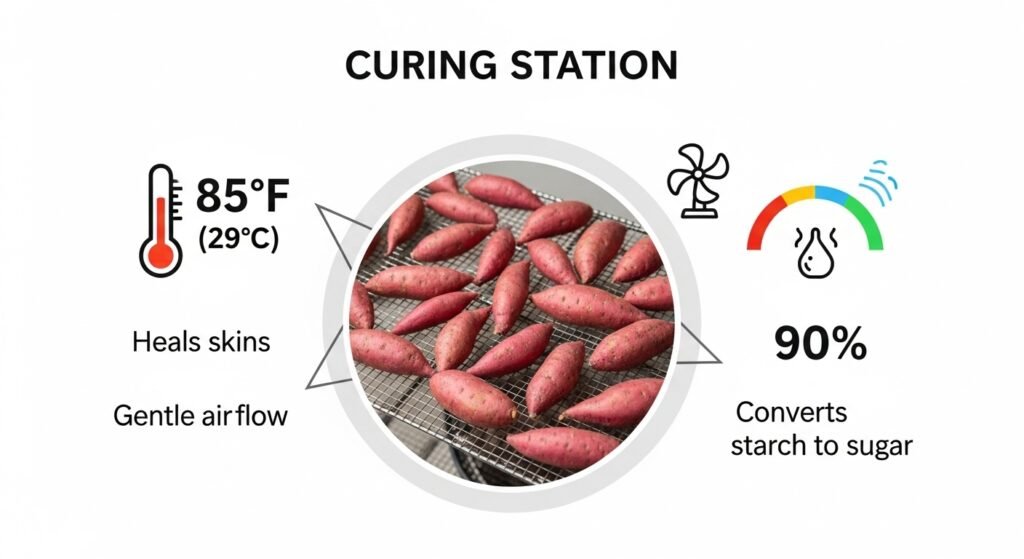
This step is mandatory. It changes starch to sugar. It also heals cuts.
- Purpose: Curing toughens the skin. It heals any scratches from digging. It develops the flavor.
- Conditions: You need high heat. Aim for 80°F to 90°F. You also need high humidity.
- Duration: Cure them for 10 to 14 days.
- Home methods: Use a small bathroom with a heater. Run the shower to make steam. Or put them near a furnace vent.
- Sunlight: Keep them out of direct sun. Sun can scald the potatoes.
Long-Term Storage
Store them right and they last all winter.
- Ideal environment: Keep them cool and dry. The perfect temperature is 55°F to 60°F.
- No fridge: Never put sweet potatoes in the refrigerator. The center will get hard. The taste will change.
- Avoid cold: Temps below 55°F cause rot. Temps too high cause sprouting.
- Don’t touch: Do not handle them too much. Every touch can bruise them. Bruises lead to rot.
- Longevity: If cured right, they last until May. You can eat them for months.
Conclusion
Now you know how to grow sweet potatoes. It is all about heat and timing. Be patient in the spring. Let the soil get warm. Choose the right variety for your yard. Take care when you harvest and cure.
Sustainability
You can save your own potatoes for next year. Pick the best roots to sprout next spring. You will never have to buy slips again.
Final Encouragement
Do not be afraid to try. Even in the North, you can do it. Use black plastic and row covers. The taste of a home-grown sweet potato is the ultimate reward. Get your slips ready and start planning your patch today.
Frequently Asked Questions
What is the difference between a sweet potato and a yam?
True yams (Dioscorea) are starchy, dry tubers with rough, bark-like skin native to Africa and Asia, often growing up to 100 pounds. Sweet potatoes (Ipomoea batatas) are moist, sweet members of the morning glory family. In US supermarkets, “yams” are usually just soft, orange-fleshed sweet potatoes, a misnomer derived from the African word nyami.
Can I grow sweet potatoes from a grocery store tuber?
Yes, but with caution. Conventional grocery store sweet potatoes are often treated with a sprout inhibitor (chlorpropham) that prevents them from producing slips. Always choose organic tubers, which are not treated, or scrub the skin thoroughly to attempt to remove the chemical, though results are not guaranteed.
Can I plant the whole sweet potato directly in the ground?
It is not recommended. Planting a whole potato often results in a massive, tangled root system and excessive vine growth with very few harvestable tubers. Using slips forces the plant to develop distinct, new storage roots rather than just enlarging the mother potato.
How large of a container do I need for container gardening?
Sweet potatoes have extensive root systems. You need a container that holds at least 15 to 20 gallons of soil per plant to get a decent yield. Fabric grow bags are excellent for this as they provide superior drainage and air pruning for roots.
Do sweet potatoes need a trellis?
Bush varieties do not, but vining varieties benefit greatly from trellising in small spaces. While they don’t have tendrils to climb like peas, you can weave the long vines through a cattle panel or fence. This improves airflow and leaves the ground clear for weeding.
What is the ideal soil pH for sweet potatoes?
They prefer slightly acidic soil, with a pH between 5.5 and 6.5. This pH range helps prevent growing rough, scabby skins, which is more common in alkaline (sweet) soils.
Do sweet potatoes flower and produce seeds?
Yes, they produce trumpet-shaped flowers similar to morning glories, usually in late summer. They rarely produce seeds in temperate climates due to the daylight length requirements, but the flowers are harmless and do not indicate the crop is ready for harvest.
Can I propagate new plants from vine cuttings?
Yes. If you have a healthy established plant, you can cut a 6-inch section of the vine (stem tip), strip the lower leaves, and plant it directly into moist soil. It will root quickly. This is often how farmers in long-season areas start a second crop.
What are good companion plants for sweet potatoes?
Root vegetables like beets and parsnips are poor companions as they compete for root space. Good companions include bush beans, which fix nitrogen, and aromatic herbs like summer savory or dill, which can help repel the sweet potato weevil.
Why are my sweet potatoes long and stringy?
This is often caused by high temperatures combined with poor soil aeration or excessive nitrogen. It can also happen if the soil was too heavy, preventing the tuber from “bulking up” into a rounder shape.
Can I eat sweet potatoes raw?
While not toxic like raw Irish potatoes, raw sweet potatoes contain trypsin inhibitors that can make digestion difficult and block nutrient absorption. Cooking neutralizes these inhibitors and makes the tuber easier to digest.
Why are my sweet potatoes hollow inside?
Hollow heart is usually caused by uneven watering or a boron deficiency in the soil. Rapid growth spurts followed by dry spells can cause the internal tissue to tear apart, leaving a cavity.
Can I keep a sweet potato vine as a houseplant?
Yes. You can take a vine cutting before the first frost, root it in water or soil, and keep it in a sunny window through the winter. It makes a decorative trailing plant and can be used to produce cuttings for slips the following spring.
How many slips can one sweet potato produce?
A single healthy medium-sized tuber can produce between 15 and 30 slips over the course of a few weeks if you harvest them continually as they reach the proper size.
What is the specific N-P-K ratio recommended for fertilizer?
Look for a fertilizer with a ratio of 5-10-10 or 8-24-24. The first number (Nitrogen) should always be lower than the second (Phosphorus) and third (Potassium) numbers to prioritize root development over leaf growth.
Why did my sweet potatoes turn out shaped like “S” or “L”?
This happens when the tuber hits an obstruction in the soil, such as a rock, a hard clay clod, or a layer of hardpan. The root grows around the obstacle, resulting in twisted or bent shapes.
Can I plant slips that haven’t grown roots yet?
Yes. Slips broken off the mother potato without roots can be planted directly into warm, moist soil. They will develop roots from the buried nodes within 48 to 72 hours, provided the soil remains damp.
What happens if frost hits the vines before I harvest?
If a light frost kills the vines, you must harvest immediately (within 24 hours). The decay from the dead vines can travel down the stem into the tubers, spoiling the flavor and storage life. Cut the vines off at soil level immediately if you cannot dig right away.
Why are the leaves on my plant purple?
Some varieties, like ‘Blackie’ or ‘Ace of Spades’, naturally have deep purple foliage. However, if you planted a green variety and the leaves turn purple, it often indicates a phosphorus deficiency or cold stress.
How many years should I wait to plant sweet potatoes in the same spot?
Practice a 3 to 4-year crop rotation. This prevents the buildup of soil-borne diseases like scurf and wireworms which can overwinter and destroy future crops.