 Skip to content
Building a backyard vineyard is a total game-changer for any home gardener. Growing grape vines on a trellis lets you snag fresh fruit right from your own dirt. This setup turns a messy patch of vines into a beautiful, organized masterpiece. You get better air, more sun, and way less rot on your plants. It is the smartest way to handle woody perennial vines that live for decades.
Introduction to Advanced Trellis Engineering
Most folks think a trellis is just some sticks in the ground. Real trellis engineering is about moving way beyond those flimsy wooden stakes. You want to create a rigid, freestanding support system that stays put. It needs to handle high winds and heavy ice storms without flinching. A solid build means you only do the work once.
The Structural Philosophy
A great trellis acts like the skeleton for your grape vines. It has to be tough enough to stay standing for a long time. You are building a home for a plant that lives a long life. If the skeleton is weak, the whole plant eventually falls down. Solid engineering keeps everything straight and true through every single season.
Durability Goals
Your main goal is a framework that can support hundreds of pounds. Mature grape vines on a trellis get surprisingly heavy during the harvest. A big crop of purple or green grapes adds massive weight. You want a structure that lasts for decades without needing constant repairs. Using heavy-duty materials ensures your vineyard stays standing through the years.
The Hybrid Approach
The best way to build is by using a hybrid material strategy. You combine metal vertical posts with horizontal cross-beams and tensioned wires. Metal posts are much better than wood because they do not rot. Adding a rigid top bar prevents the posts from leaning inward. This mix of materials gives you the best of both worlds.
Site Selection and Vineyard Preparation
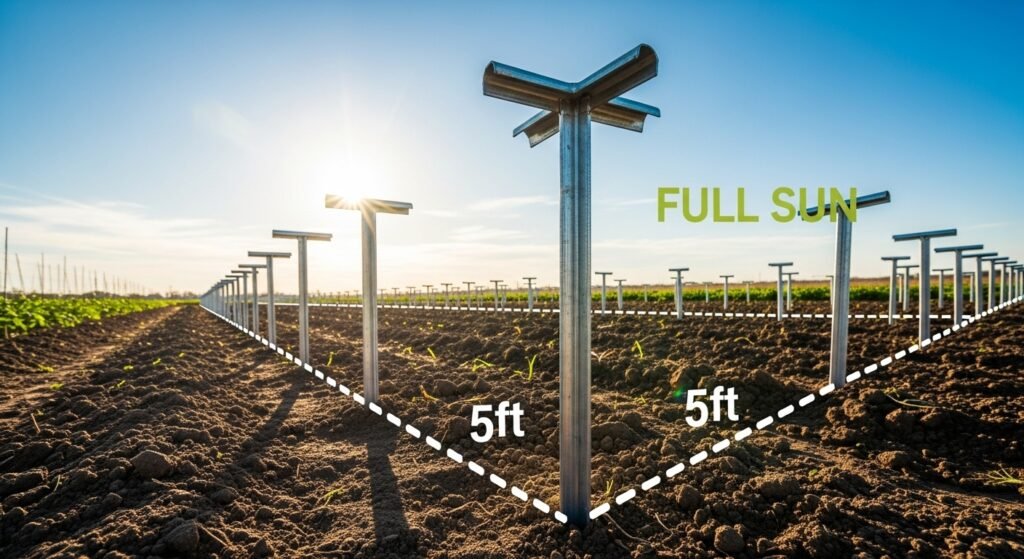
Picking the right spot is the first step to sweet success. You cannot just toss grape vines on a trellis anywhere. They are picky about their home and need specific conditions. Proper prep work now saves you a lot of headaches later. Spend some time watching your yard before you start digging holes.
Optimizing Solar Exposure
Grapes are absolute sun worshippers that need at least 6–8 hours of light. Full sun helps the fruit get sweet and keeps leaves dry. Good light prevents nasty stuff like powdery mildew from taking over. If you plant in the shade, your grapes will be sour. Always aim for the brightest spot in your entire garden area.
Topographical Planning
You need to make sure your trellis follows the ground contour. A level top profile looks professional and keeps things neat. Do not ignore slopes or bumps in your garden soil. Map out where each post will go before you buy materials. This helps you maintain a uniform height across the whole row.
Row Orientation
Thinking about North-South versus East-West orientation is a very big deal. A North-South row usually gets the most even sunlight on both sides. This ensures all your grape vines on a trellis ripen at once. It also helps the wind blow through the rows to dry leaves. Check your local wind patterns to see what works best.
Soil Testing and Amendment
Grapes need good drainage and the right pH levels to thrive. Test your soil to see if it needs extra fertilizers. You want a deep root system that can find water easily. If your soil is heavy clay, you might need to fix it. Healthy soil leads to a healthy plant that grows fast.
Comprehensive Material and Tool List

Getting all your gear ready makes the job go way faster. You do not want to stop halfway to run to the store. Using the right gardening tools ensures a high-quality finished product. Look for heavy-duty options that can handle the outdoor elements. Quality hardware is the secret to a professional-looking vineyard.
Structural Framework
- Heavy-Duty T-posts are the backbone of the entire trellis structure.
- Standard T-posts are inexpensive and very easy to find at stores.
- EMT conduit provides a rigid top bar that won’t bend easily.
- An electrical conduit with a 1-inch diameter is perfect for horizontal support.
- T-connector fittings join the vertical posts to the horizontal bars.
Hardware and Wiring
- High-tensile wire handles the weight of the vines without snapping.
- Galvanized wire in 12–14 gauge is the industry standard for durability.
- Stainless steel screws prevent rust from weakening your connections over time.
- Washers and ferrules are necessary to secure the ends of your wires.
- Stoppers keep the wire from slipping back through the post holes.
Corrosion Resistance
The weather is the biggest enemy of your new trellis system. Always choose galvanized or stainless steel parts to stop rust. Cheap metal will flake and break after just a few years. Investing in better hardware keeps your grape vines on a trellis safe. It is worth the small extra expense for long-term peace of mind.
Post Installation and Spacing Logistics

How you set your posts determines the strength of the trellis. This is the most physical part of the whole project. Take your time to get the measurements exactly right every time. Accurate spacing ensures your wires stay tight and do not sag. It also makes the trellis look great in your yard.
Determining Span Lengths
- A 5-foot span is the best choice for maximum wire support.
- Standard spacing prevents heavy grape clusters from pulling the wires down.
- Extended 10-foot spans work if you use a rigid top rail.
- Span distance depends on the type of grapes you are growing.
- Longer spans save money on posts but require stronger horizontal bars.
Anchoring and Stability
Use a post hole digger to reach a depth of 18 inches. Setting your posts deep enough ensures they will never tip over. Make sure every single post is vertically straight and plumb. You can backfill with soil or use concrete for extra stability. Tamping the dirt down firmly is a key step for success.
End-Post Bracing
The end posts take the most pressure from the tensioned wires. You need to use H-bracing to keep them from leaning inward. A slanted brace can also provide the extra support you need. Without bracing, the wires will eventually go limp and saggy. This keeps your grape vines on a trellis looking sharp.
Installing the Rigid Top Rail System

The top rail is what makes this a high-end trellis. It adds a level of strength you just cannot get otherwise. It locks the entire row of posts into one unit. This prevents the ends from moving even under a heavy load. It is a smart addition for any serious home gardener.
Measuring the Spans
Measure the distance between your posts after you have set them. Cut your electrical conduit to fit perfectly between the T-post tops. It is better to measure twice and cut just once. Accuracy here ensures the T-connector fits snugly on the pipe. This creates a clean look for your grape vines on a trellis.
Connecting the Framework
Slide the conduit into the T-connector fitting on top of each post. Use structural sleeves or bolted clamps to keep everything in place. This connection needs to be very tight to be effective. It holds the top of the trellis together like a bridge. Now your framework is ready for the heavy vine weight.
Locking the Joints
Drill a 1/8-inch hole through the fitting and the conduit. Use a power drill and a sharp drill bit for this. Drive a stainless steel pan-head screw into that hole immediately. This locks the rail so it cannot slide or rotate. It creates a solid, non-collapsible unit for your garden space.
The Anti-Collapse Benefit
The rigid top bar is a total lifesaver for your trellis. It stops the posts from being pulled together by the wires. This means your horizontal wires will stay tight for years. You won’t have to go back and tighten things every spring. It makes growing grape vines on a trellis much easier.
The Multi-Tier Wire Configuration
Wires are where the actual climbing and growing happen for vines. Having multiple tiers allows you to spread out the growth. This gives every leaf a chance to catch some sun. It also makes pruning and harvesting much more organized tasks. Most gardeners prefer four separate levels for their grape vines.
Vertical Markings and Measurement
- First-tier placement should be 1.5 feet above the ground.
- Ground clearance allows for air to flow under the plants.
- Incremental spacing of 1.5 feet between each wire works perfectly.
- Four wire runs provide enough room for a mature vine.
- Marking the posts with a permanent marker helps with drilling accuracy.
Drilling and Threading
Use a drill bit slightly larger than your wire gauge. Drill through the center of the T-posts at each mark. Make sure the holes are aligned so the wire stays straight. Thread the wire through the bottom hole and move upward. Take your time to avoid getting any nasty wire kinks.
Wire Tensioning and Termination
Proper tension is what separates a good trellis from a bad one. You want the wires to be as tight as possible. Loose wires lead to messy plants and damaged fruit clusters. Termination hardware keeps that tension locked in for the long haul. It is the final touch on your construction phase.
Securing the Starting Point
Use a washer, ferrule, and stopper at the first post. This creates a dead end that the wire cannot pull through. Use pliers to crimp the ferrule down onto the wire. Be careful not to fray the metal while you work. This anchor point must be incredibly strong to hold tension.
Final Tensioning Procedures
Pull the wire taut at the very last terminal post. You can use a wire strainer to get it really tight. Make sure there is no slack visible anywhere in the row. Lock the end with another stopper to hold the position. Now your grape vines on a trellis have perfect support.
Secondary Support Options
Sometimes you need a little extra help for your plants. Secondary supports can make a big difference for young vines. They help guide the growth exactly where you want it. You can use rigid or flexible materials for these lower tiers. It depends on your budget and your specific garden goals.
Rigid Lower Horizontals
You can use a smaller conduit for the lower horizontal runs. These provide a very fixed surface for the vines to grab. They won’t stretch or sag as wire might do. Rigid bars also help keep the posts perfectly spaced apart. It is a very sturdy way to train your plants.
Wire-Tied Supports
If you want to save money, use heavy-gauge tie-wire. You can secure lower rigid bars to T-posts this way. It is a fast and simple method for any gardener. Just make sure the ties are tight so nothing rattles. This adds another layer of stability to your garden structure.
Horticulture and Training Systems
A trellis is only useful if you train the vines correctly. You need a plan for how the plant will grow. Different training systems work better for different types of grapes. This is where the art of viticulture really begins to shine. Proper training ensures you get the most fruit possible.
The Four-Arm Kniffin System

- Structure alignment uses the multi-tier wire layout very effectively.
- Yield optimization comes from spreading the plant across four arms.
- Training the leader up the center is the first major step.
- Wire spacing allows each arm plenty of room to grow.
- Airflow is maximized when the plant is spread out like this.
Cordon and Spur Pruning
Cordon pruning involves developing permanent horizontal arms on the wires. These arms, or cordons, stay on the trellis for years. Spur pruning is when you cut back the new growth. You leave small spurs along the rigid framework of the arm. This is a great way to manage mature vines.
Advanced Vine Management on the Trellis

Managing your vines is an ongoing job throughout the season. You cannot just build it and walk away forever. Keeping a close eye on the canopy prevents many problems. It ensures the fruit gets enough light to ripen perfectly. Good management leads to a massive, sweet harvest every year.
Canopy Management Techniques
Leaf thinning is important to let air reach the fruit. Use the wire tiers to tuck and tie young shoots. This keeps the foliage from becoming a giant, tangled mess. Proper positioning helps the sun reach the inner parts of the plant. It is the best way to grow healthy grape vines.
Sun Scald Prevention
While grapes love the sun, too much can burn the fruit. You can manage the top-tier canopy to provide some shade. Let the leaves on the top wire hang over slightly. This protects the sensitive clusters during the hottest part of summer. It keeps your grapes looking and tasting their absolute best.
Irrigation and Nutrient Integration
You can easily attach a drip line to the bottom wire. This delivers water directly to the root system with no waste. Securing the tubing keeps it off the ground and safe. It also makes it easy to see if any clogs happen. Consistent watering is key for growing big, juicy grapes.
Multi-Purpose Applications of the Structure

This trellis design is not just for grapes, believe it or not. It is a versatile tool for any serious home gardener. You can use the same basic plan for many plants. It is a great way to get more value from your work. High-quality structures open up tons of new gardening possibilities.
Espalier Fruit Trees
You can train fruit trees to grow flat against the wires. This is called espalier, and it saves massive amounts of space. Apples, pears, and peaches work beautifully with this multi-wire system. The rigid framework handles the heavy branch weight without any trouble. It turns a small yard into a productive orchard.
Vegetable Support Systems
- Tomato espalier works great for tall heirloom tomato varieties.
- Vigorous plants stay off the ground and away from pests.
- Cucumbers love to climb the 10-foot span of the wires.
- Pole beans find the horizontal wires easy to grab onto.
- Squash can even be grown vertically to save garden space.
Maintenance and Seasonal Care
Keeping your trellis in top shape is a yearly task. A quick check-up every spring goes a very long way. You want to catch small issues before they become big ones. Regular maintenance ensures your grape vines on a trellis stay safe. It is the best way to protect your long-term investment.
Structural Inspections
Metal can expand and contract when the temperature changes significantly. Check your wire tension at least once every single year. Look at the mechanical fittings to make sure they are tight. Check for any rust at the ground level of posts. Tighten any loose screws to keep the frame solid.
Winterizing the Vineyard
In very cold areas, you might need to slacken the wires. This prevents the metal from snapping when it gets brittle. Use the dormant season to do your heavy cane pruning. Use the rigid bars as a guide for your cuts. Winter is the best time to prep for next year.
Harvesting Efficiency and Safety
A well-designed trellis makes harvesting much more fun and easy. You won’t have to crawl on the ground for fruit. Having the grapes at eye level is much more ergonomic. It also makes it easier to see which clusters are ripe. A safe trellis is a happy place to work.
Ergonomic Heights
Designing your wires at the right heights prevents back pain. You can stand up straight while you pick your grapes. It also makes it safer for kids to help in the garden. Everyone can reach the fruit without needing a tall ladder. It makes the whole process much more enjoyable for everyone.
Load Bearing during Harvest
Your trellis needs to hold up under the extra harvest weight. The rigid top rail provides a place to lean a ladder. It also supports heavy picking baskets that you might hang. A strong structure won’t wobble while you are working on it. This keeps you safe while you gather your sweet rewards.
| Feature | MIgardener Method | Structural Rail Method |
| Post Type | Standard Post | Heavy-Duty T-Post |
| Top Support | Tensioned Wire | Rigid EMT Conduit |
| Span Distance | 5 Feet | Up to 10 Feet |
| Drill Bit Size | Slightly larger than a wire | 1/8 inch for screws |
| Main Benefit | Simple and fast | Maximum longevity |
Building your own system for grape vines on a trellis is rewarding. It gives you a sense of pride every time you harvest. With the right materials and a little work, you can succeed. Your garden will look better and produce more than ever before. Start planning your layout today and get those vines growing.
Frequently Asked Questions
Which grape varieties are best suited for a multi-tier wire trellis?
Vigorous cultivars like Concord, Niagara, or Muscadine thrive on multi-tier systems because they produce extensive canopy growth that requires the additional vertical support levels provided by a four-wire setup.
How do I prevent the metal T-posts from sinking further into the ground over time?
Install T-posts with the anchor plate (the spade-shaped metal piece) positioned 2 to 3 inches below the soil surface. This plate acts as a stabilizer to prevent both vertical sinking and lateral shifting.
Is it necessary to ground a metal trellis against lightning?
While rare, a long metal trellis can conduct electricity. If your vineyard is in a high-elevation, storm-prone area, driving a copper grounding rod at one end and connecting it to the wire can mitigate strike risks.
Can I use plastic-coated wire instead of galvanized steel?
Plastic-coated wire is not recommended because the coating eventually cracks under UV exposure, trapping moisture against the metal and causing rapid, hidden corrosion that leads to sudden wire failure.
What is the ideal time of year to install the trellis framework?
Early spring or late autumn is ideal. Installing while the ground is workable, but the vines are dormant, prevents accidental root damage to existing plants and allows the structure to settle before the heavy growing season.
How do I manage bird protection on a multi-tier structure?
The rigid top rail makes it easy to drape bird netting over the entire structure. You can secure the netting to the lowest wire tier with clothespins or clips to create a complete enclosure for the fruit zones.
Should I paint the EMT conduit and T-posts?
It is not required for durability, but painting with a UV-resistant outdoor enamel can help the trellis blend into the landscape. Ensure you use a primer specifically designed for galvanized metal to prevent peeling.
Can this trellis system support heavy snowfall?
Yes. The rigid top rail distributes the weight of snow across the vertical posts, preventing the “accordion effect” where tensioned wires pull end-posts inward under the weight of heavy ice or snow.
How do I attach the primary vine trunk to the trellis without girdling it?
Use flexible vinyl tie tape or loose garden twine. Never use thin wire or zip ties directly on the trunk, as these will cut into the bark and kill the vine as it expands in diameter.
What should I do if the ground is too rocky to dig 18 inches deep?
If you cannot reach the full depth, use a shorter span between posts (3–4 feet) and consider a wider concrete footing at the base to compensate for the lack of depth and provide lateral stability.
Can I grow seedless table grapes and wine grapes on the same trellis?
Yes, but group them by vigor. Plant faster-growing vines at one end and slower varieties at the other to prevent the more aggressive plants from shading out the smaller ones.
How do I handle a trellis built on a steep hill?
Install posts vertically (plumb), not perpendicular to the slope. Step the wire tiers so they remain parallel to the ground, creating a “stair-case” effect for the vine arms to follow.
What tool is best for cutting high-tensile galvanized wire?
Use a dedicated high-tensile wire cutter or a pair of heavy-duty bypass loppers. Standard wire snips will often notch or dull immediately when used on 12-gauge galvanized steel.
How many vines can I plant between two posts in a 10-foot span?
Usually, two vines are planted in a 10-foot span, spaced 5 feet apart. This allows each vine to have 5 feet of horizontal wire for its “arms” to grow without overlapping the neighbor.
Will the metal wires get too hot and burn the vine tendrils?
In most climates, no. Grape vines are resilient, and the foliage typically shades the wire. In extreme desert climates, some gardeners use thicker wire to dissipate heat more effectively.
How do I repair a wire that has snapped in the middle of a row?
Use a wire crimp sleeve or a “Maasdam” style wire joiner. Do not try to knot the wire, as high-tensile steel is too brittle to hold a knot and will snap again at the bend.
Can I integrate solar lights into the T-post caps?
Yes. Many standard solar post caps fit over 1-inch conduit or T-posts. This can add an aesthetic element and improve visibility in the garden at night.
What is the difference between a “fruiting wire” and a “catch wire”?
A fruiting wire supports the permanent arms (cordons) and the weight of the grapes. Catch wires are higher up and exist purely to “catch” and hold the foliage upright to prevent it from flopping.
How do I prevent weeds from growing directly under the trellis?
Apply a thick layer of organic mulch or install a strip of landscape fabric under the bottom wire. This keeps the area clear for airflow and prevents competition for nutrients.
Is it safe to use pressure-treated wood as end-posts in this system?
While this guide focuses on metal, if you use wood, ensure it is rated for ground contact. Be aware that some older treatments contain chemicals that some organic gardeners prefer to keep away from food crops.