 Skip to content
Dahlias are the true rockstars of the summer garden, growing from unusual tubers planted in spring to produce mind-blowing blooms until the first frost. However, these flowers are like us after a long day; they need a cozy place to rest once the weather turns cold. If you live in an area where the ground freezes, you can’t leave them outside, making proper storage the secret to ensuring a floral wonderland year after year.
While storing dahlia bulbs might seem like a lot of work initially, it is a rewarding effort that feels like a winter vacation for your favorite flowers. This guide will walk you through every step, covering both professional methods and simple shortcuts to help your plants return bigger and better. It’s time to dive into the world of dahlia dormancy and prepare your garden for a successful spring.
Understanding Dahlia Winter Hardiness

Dahlias are technically perennials, but they are tender souls. They are not like those tough oak trees that can stand in the snow all winter long. They come from warmer places like Mexico. So they really appreciate a bit of warmth. If you want to keep them alive, you have to understand what they can handle. It is all about knowing your limits and the limits of your plants.
USDA Hardiness Zones
Dahlias are generally hardy to USDA Zone 8. This means they can handle temperatures around 10 to 15 degrees Fahrenheit. If you live in Zone 8 or higher, you might be one of the lucky ones. You could potentially leave your tubers in the ground all winter. But even then, it is a bit of a gamble. The weather can do some pretty crazy things sometimes. A sudden deep freeze could ruin everything. So even in warm spots, many people choose to dig them up.
The Real Killer
Most people think the cold is what kills dahlias. But that is not usually the case. The real villain in this story is actually the wet. Dahlias are very prone to rotting. If they sit in soggy, freezing soil all winter, they will turn to mush. Poor drainage is the number one enemy of a dormant dahlia. Even if the temperature is okay, the rain can be a problem. You want your tubers to stay dry and sleepy, not wet and rotting.
The Only Guarantee
You can try mulching your plants to keep them warm. You can plant them in the most well-drained spot in your yard. But there is still no absolute guarantee they will survive a rough winter. The only way to be 100% sure is to dig them up. Storing dahlia bulbs inside is the only foolproof method. It gives you total control over their environment. You do not have to worry about a random snowstorm or a week of heavy rain. It is the best way to protect your investment.
Why Dig and Store Tubers?
You might be wondering if all this digging is really necessary. Why not just buy new ones every year? Well, there are a lot of great reasons to save your tubers. It is not just about being frugal. It is about being a better gardener. Plus, it is actually a lot of fun to see what is happening underground.
- Cost Efficiency: Let’s be real, dahlia tubers can be expensive. If you buy twenty new plants every year, that adds up fast. Saving your tubers saves you a ton of cash.
- Variety Preservation: Sometimes you find that one perfect dahlia. Maybe it is a rare heirloom or a color you absolutely love. Those varieties can be hard to find again in the spring. If you store them, you know you will have them.
- Inventory Growth: This is the coolest part. One dahlia tuber grows into a whole clump over the summer. When you dig them up, you can divide that clump into several new plants. Your garden can literally double or triple in size for free.
- Garden Control: When you store them yourself, you know exactly what you are getting. You can check their health before they ever go back into the ground.
Preparing for the Big Dig: Pre-Harvest Steps
You do not want to just go running out there with a shovel the moment it gets chilly. A little bit of prep work goes a long way. If you plan ahead, the whole process will be way less stressful. You want to set yourself up for success.
Labeling Your Plants While They Bloom
This is the most important step, and people always forget it. Once the frost hits, your dahlias look like brown sticks. Every single variety looks exactly the same when it is dead. You will not remember which one was the pink one and which was the purple one.
- The Identification Crisis: Don’t wait until the foliage is gone to guess what is what.
- Tagging Methods: Use waterproof plastic tags or flagging tape. Tie them around the base of the stem while the flowers are still blooming.
- The Sharpie Rule: Use a high-quality permanent garden marker. Regular pens will fade or wash away in the winter rain.
Managing Nitrogen Levels
You also need to think about what you are feeding your plants. Your dahlia’s diet affects how well it sleeps.
- Stop Fertilizing: Stop giving your dahlias food in the late summer.
- Avoid Watery Tubers: Too much nitrogen late in the season makes the tubers “watery.” These types of tubers are much more likely to rot in storage. You want them to be firm and starchy, not soft and bloated.
Choosing Your Approach: Traditional vs. The Dry Method
There is no single “right” way to store your dahlias. Every gardener has their own favorite trick. You have to decide which method fits your lifestyle. Some people love the process, while others just want it done.
The Traditional Expert Method
This is the way many pros do it. It takes more time, but it gives you a lot of control.
- Washing and Cleaning: You wash every bit of dirt off the tubers as soon as you dig them up.
- Disinfecting: Many people dip their clean tubers in a bleach solution. This helps kill any bad bacteria or fungus.
- The Medium: You pack them in things like peat moss, wood shavings, or vermiculite. This keeps them from drying out completely.
- Individual Wrapping: Some folks even wrap each tuber in plastic wrap. It sounds crazy, but it works for a lot of people.
The Dry Storage Shortcut
This is my personal favorite way to go. I found this method by accident because I was too busy to do the fancy version. It turns out, the dahlias loved it.
- Minimal Effort: You don’t have to spend hours washing things.
- Natural Protection: Leaving a little dirt on the tubers acts like a protective coat.
- Tougher Skins: I have noticed that tubers stored this way develop thicker skins. This actually makes them more resistant to shriveling up.
Step-by-Step: The Digging Process
Ready to get your hands dirty? This is the main event. Digging up your dahlias is a bit like a treasure hunt. You never know how many new tubers you will find.

Timing the Dig
Timing is everything. You have to wait for the right signal from nature.
- The First Frost: Wait until a hard frost turns the leaves black. This tells the plant to send all its energy down into the tubers for the winter.
- The Waiting Period: Some people wait about a week after the frost before digging. This helps the “eyes” on the tuber become more visible.
- Cutting Back: Cut the stems down so there is only 5 or 6 inches left above the ground. This gives you a nice handle to pull on.
Lifting the Clumps
Be gentle! You do not want to damage the tubers while you are digging them out.
- Gentle Extraction: Use a pitchfork or a shovel. Dig a big circle about a foot away from the stem so you don’t slice anything.
- Shaking it Off: Pick the plant up by the stem handle and give it a good shake. Get the big chunks of dirt off.
- Initial Inspection: Scrape away the extra dirt between the tubers with your fingers. Look for any squishy or rotten spots and break those off right away.
Advanced Tuber Anatomy: What to Keep
Not every tuber you dig up is a winner. You need to know which ones are worth your storage space. It is all about the anatomy.

Identifying the Eye
A dahlia tuber is not like a potato. A potato can sprout from anywhere. A dahlia can only sprout from a specific spot called the “eye.”
- The Growth Point: The eye is found on the crown of the tuber. This is the area where the tuber attaches to the main stem.
- The Three Essentials: To grow next year, a tuber needs a body, a neck, and an eye. If it is missing any of those three parts, it is basically useless.
Dealing with Mother Tubers
The mother tuber is the one you planted last spring. After a full summer, she usually looks a bit rough.
- The Original Source: She will be darker and more wrinkled than the new tubers.
- Discard or Keep: Most experts say to toss the mother tuber. She is the most likely part to rot over the winter. Focus your energy on the fresh, new tubers.
The Environment: Where to Keep Your Tubers
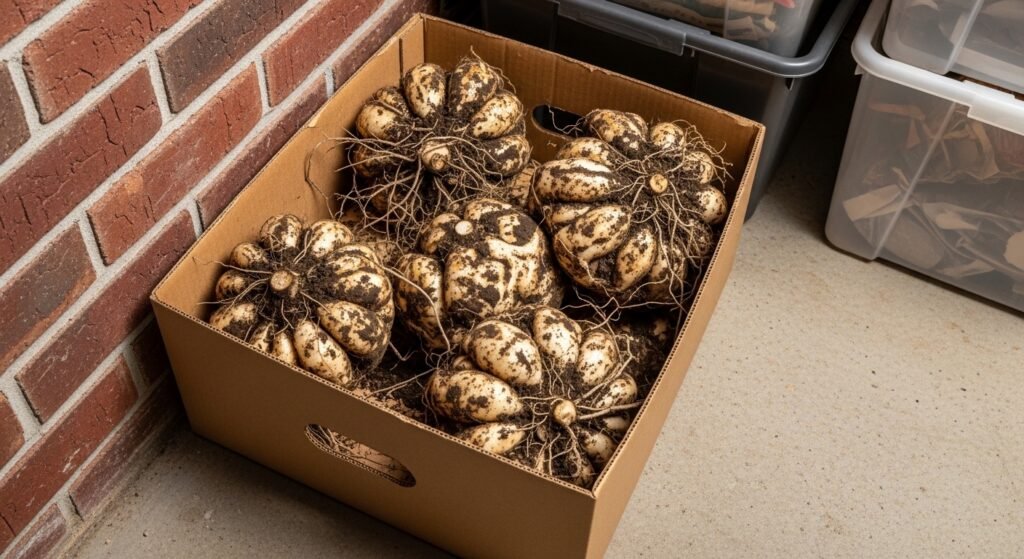
Your storage spot can make or break your success. You need a place that is cool but not freezing.
- Temperature Goldilocks Zone: You want it to be between 40 and 50 degrees Fahrenheit.
- Ideal Locations: A basement is perfect. An attached garage or a cool closet can also work well.
- Avoid the Freeze: If the temperature drops below freezing in your storage spot, your dahlias will die. The water inside them turns to ice and destroys the plant cells.
Maintenance During Dormancy
Storing dahlia bulbs is not a “set it and forget it” situation. You need to check in on them every once in a while.
Monitoring for Moisture
Even though they are dormant, they still need a tiny bit of moisture.
- The Mist Method: If you are using my dry storage method, bring a hose down to the basement a few times a winter.
- The Mist Setting: Use the “mist” setting on your nozzle to lightly dampen the tubers. This keeps the soil from getting too dry.
- Preventing Shriveling: If they look like raisins, they are too dry. Give them a little more mist.
- Preventing Rot: If you see any mold or “fuzz,” they are too wet. Increase the airflow and throw out any tubers that feel soft.
Dealing with Controversial Results
Some people might tell you that my dry method is wrong. They might cringe when they see dirt in a box. But I do this every year and my flowers are huge.
- Stacking Risks: Don’t pile your tubers too deep in the boxes. They need room to breathe.
- Spring Division: If you use the dry method, wait until spring to divide them. If you cut them in the fall and leave the dirt on, they are more likely to rot.
Spring Awakening: Getting Ready to Plant
When the birds start singing, it is time to wake up your dahlia bulbs. This is when all your hard work pays off.

Waking Up the Tubers
- Pre-Sprouting: Move your boxes to a warmer spot in March or April.
- Dividing in the Spring: This is the perfect time to clean them off and cut them apart. The eyes will be big and easy to see because they are starting to grow.
Testing for Viability
- The Snap Test: Give the tubers a little squeeze. They should feel firm like a fresh potato.
- The Bad Signs: If they snap like a dry stick or feel like a sponge, they didn’t make it. Toss those and keep the healthy ones.
To Dig or Not to Dig?
If this sounds like way too much work, don’t sweat it. You have options. Gardening should be fun, not a chore.
- Heavy Mulching: If you are in a borderline zone, try a foot of straw or wood chips. It might be enough to keep the ground warm.
- The Annual Approach: Lots of people just buy new tubers every spring. One dahlia produces so many flowers that many consider it a fair price for a summer of beauty.
Storing Dahlia Bulbs Table Guide
| Step | Traditional Method | Dry Storage Method |
| Cleaning | Wash thoroughly with water | Shake off big clumps only |
| Disinfecting | Bleach or sulfur dip | None required |
| Packing | Peat moss or shavings | Cardboard box or crate |
| Division | Usually done in the fall | Must be done in the spring |
| Moisture | Managed by packing medium | Occasional misting |
Conclusion: Don’t Let Fear Stop the Flowers
Storing dahlia bulbs doesn’t have to be a scary mystery. Whether you want to follow the expert rules or try my lazy dry method, the most important thing is to give it a shot. You will learn so much about your plants just by looking at them in the winter. Experiment with different spots in your house and see what works best for your specific climate. Dahlias are tougher than most people think. They want to grow, and they want to bloom for you. So grab your shovel this fall and save those tubers. Your future self will thank you when your garden is exploding with color next July. Happy gardening!
Frequently Asked Questions
Can I store dahlia tubers in a crawl space?
A crawl space can work if it stays dry and maintains the right temperature. You need to make sure it doesn’t drop below freezing during a cold snap. Check the humidity levels often because these spaces can sometimes get too damp. If it feels soggy down there, your tubers might rot before spring.
Is it okay to use a refrigerator for storing dahlia bulbs?
Most home refrigerators are actually a bit too cold for dahlia tubers. They also tend to have very low humidity, which can dry the tubers out fast. Additionally, ripening fruits in the fridge give off ethylene gas. This gas can actually damage the tubers or kill the eyes. It is much safer to stick with a cool basement or a dark closet.
What should I do if my tubers sprout early in mid-winter?
If you see sprouts in January, your storage area is likely too warm. You should try to move them to a slightly cooler spot to slow them down. Do not break the sprouts off unless they are rotting. Just keep them as cool as possible until it is actually time to plant.
Can I store dahlia tubers in a cedar chest?
Cedar has natural oils that can help repel pests, which is a plus. However, cedar is also very good at absorbing moisture. If you put tubers directly in a cedar chest, they might shrivel up. Always line the chest or put the tubers in a container inside the chest to keep the moisture balanced.
What happens if I accidentally slice a tuber while digging?
Don’t panic if your shovel catches a tuber. If it is a clean cut, you can often save it by letting it “callous” over. Leave it out in a dry, room-temperature spot for a few days until the wound is dry and hard. If the damage is right at the neck or the eye, it might not survive, but a cut on the tail is usually fine.
Do I need to provide light for my tubers during the winter?
Actually, the opposite is true. Dahlias need to be kept in total darkness while they are dormant. Light can trigger them to start growing too early or cause the tubers to turn green. Keep your boxes or crates covered with a burlap sack or a lid to keep things dark.
Can I use sand as a packing medium?
Sand is an old-school method that some gardeners still swear by. It is great for keeping temperatures stable and blocking out light. The downside is that sand is very heavy and can be messy to deal with in the spring. If you use it, make sure the sand is slightly damp but not wet.
Is it possible to store dahlias in a garden shed?
In most climates, a garden shed is too risky. Sheds are usually not insulated, so the temperature swings are too extreme. It might be 60 degrees during the day and 20 degrees at night. This will either wake the tubers up or freeze them solid.
How do I know if a tuber has “Crown Gall”?
Look for weird, cauliflower-like growths at the top of the tuber clump. This is a bacterial disease called Crown Gall. If you see this, you cannot save the plant or the tubers. You must throw the entire thing in the trash—do not compost it, or the bacteria will spread to your whole garden.
Can I store my tubers in plastic garbage bags?
Plastic bags are risky because they trap all the moisture inside. Without any airflow, your tubers will likely turn into a bag of mush within a few weeks. If you must use plastic, make sure to poke dozens of holes in the bag to let the tubers breathe.
What are “blind tubers” and should I keep them?
A blind tuber is a fat, healthy-looking tuber that has no eye. This happens if the tuber was broken off without a piece of the neck or crown attached. Even though it looks great, a blind tuber will never sprout. You can save yourself the space and toss these out during your fall cleanup.
Should I use cinnamon on my tubers?
Some home gardeners use cinnamon as a natural fungicide on cut surfaces. It can help dry out a wound and prevent mold from growing. While it is not a professional requirement, it is a safe and cheap trick if you are worried about rot on a sliced tuber.
Can I store dahlias in my apartment?
Yes, but it can be tricky to find a cool spot. Many apartment dwellers use the bottom of a coat closet or even a spot under the bed away from heaters. If your apartment stays at 70 degrees, you will need to check them very frequently for shriveling since they won’t stay truly dormant.
Does the size of the tuber matter for next year’s blooms?
Surprisingly, no. A tiny tuber the size of a AA battery can grow a plant just as big as a tuber the size of a sweet potato. As long as it has a healthy eye and enough energy to get started, the size doesn’t change the flower quality.
Should I wash my tubers with a power washer?
Definitely not. A power washer is much too strong and will strip the skin right off the tubers. Use a gentle garden hose with a spray nozzle. You want to remove the dirt, not damage the delicate tissue of the tuber.
Can I leave the stalks long in storage?
It is better to trim them down to a few inches. Long, hollow stalks can trap water and act like a straw that feeds rot directly down into the crown. Trimming them also makes the clumps much easier to stack and manage in your boxes.
What do I do if I find bugs in my storage box?
If you see small gnats or mites, your storage is likely too damp. You can lightly dust the tubers with garden sulfur to discourage pests. If you see larger bugs, you might need to move the tubers to a more secure, sealed container that still allows for air exchange.
Is it okay to store different varieties in the same box?
You can, but you must keep them separated. Use paper bags or dividers to make sure the varieties don’t get mixed up. If a tag falls off, you will have a “mystery dahlia” next year, which can be fun but frustrating if you are trying to design a specific garden.
How do I recognize “Leafy Gall”?
Leafy Gall looks like a bunch of tiny, stunted sprouts growing all at once in a tight cluster. Like Crown Gall, this is a disease that cannot be cured. If you see this during your winter check-ins, discard the clump immediately to protect your other tubers.
Can I use pine needles as a packing material?
Pine needles are usually too acidic and don’t hold moisture well enough to be helpful. They can also be quite sharp and poke holes in the skin of the tubers. It is much better to stick with peat moss, sawdust, or even just leaving the natural soil on them.