 Skip to content
Fall is a total vibe when the trees start showing off their colors. One of the most amazing sights is seeing trees with red leaves popping in your yard. These trees bring a lot of heat and depth to any outdoor space. You can find everything from deep burgundy to fiery scarlet shades. Picking the right tree can make your home look like a million bucks. Let’s dive into the world of red foliage and find your perfect match.
Introduction to Red Foliage in the Landscape
Red leaves are a huge win for anyone wanting a cool garden. They create a bold contrast against green grass or blue skies. These colors make a space feel warm and cozy as the weather cools down. Design pros love them because they act like a natural focal point. You can use them to lead the eye toward your front door. They also look great when planted in groups for a big color splash.
The science behind this change is actually pretty rad. During the summer, leaves are green because they are full of chlorophyll. When it gets cold, the green fades away and other pigments take over. Anthocyanins are the stars that create those famous red and purple hues. These pigments help protect the leaves from sun damage as they die off. This process turns your neighborhood into a living art gallery every year.
Nature lovers and hikers always look forward to this seasonal interest. Red trees are a favorite for curb appeal because they stand out so much. They provide a sense of seasonal rhythm that feels very grounding. Adding these to your landscaping is a smart move for long-term beauty. Whether you want an evergreen or a deciduous tree, there is a red option. You can even find trees with red leaves that fit in small pots.
Popular Red-Leafed Maple Varieties (Acer Family)

Acer palmatum Atropurpureum (Japanese maple)
The Japanese maple is a classic choice for a reason. It has a naturally rounded shape that looks very elegant. The layered branching makes it look like a piece of living sculpture. It usually grows between 13 and 26 feet tall at its peak. This size makes it perfect for most residential areas and backyards.
- Foliage Color: The leaves emerge purple in the spring and turn scarlet in the fall.
- Growth Habit: It has a slow growth rate which makes it easy to manage.
- Best Uses: This tree is a top pick for small gardens or large containers.
- Hardiness: It is quite hardy and thrives in USDA zones 5 through 8.
Specific Japanese Maple Cultivars
Gardeners often look for even more specialized red tones. There are three specific types that experts really love.
- Acer palmatum Bloodgood: This is a very famous variety that stays deep red all summer.
- Acer palmatum Suminagashi: Its lacy leaves turn a bright, glowing red in the fall.
- Acer palmatum Trompenburg: The leaves have rolled edges that look super unique.
Acer rubrum (Red Maple)
The Red Maple is a total legend in North American forests. It is native to eastern and central regions of the continent. This tree is famous for having red parts all year long. It has red flowers in the winter and red seeds in the summer. When fall hits, it puts on a show that is hard to beat.
- Color Profile: It usually shows off a glorious red but can sometimes be orange.
- Wildlife Value: It is a great tree for seed-dispersing birds in your area.
- Size: This is a large tree that needs plenty of room to grow.
- Soil Needs: It is very adaptable and can handle wetter soils in wetlands.
Acer saccharum (Sugar Maple)
Sugar Maples are the true stars of the fall foliage season. These are the trees used to make that tasty maple syrup. The leaf shape is so famous it is on the Canadian flag. Their fall color is often described as bright and totally otherworldly. They can turn shades of red, gold, and vibrant orange all at once.
- Color Range: The red is often very vivid and stands out in a forest.
- Landscape Role: It provides excellent shade during the hot summer months.
- Growth: These trees grow large and live for a very long time.
- Climate: They prefer cooler climates and well-drained soil to look their best.
Acer ginnala (Amur Maple)
If you have a small yard, the Amur Maple is your best friend. It is a smaller member of the maple family that handles cities well. It is very tough and can handle some drought once established. The fall color is a fiery red that adds a ton of warmth. It is a great alternative if you cannot fit a huge Sugar Maple.
- Size Factor: It stays small, making it perfect for urban areas and patios.
- Color Intensity: It is renowned for having a very deep and consistent red.
- Structure: It can be grown as a single trunk or a multi-stemmed tree.
- Maintenance: It is very low-maintenance and doesn’t need much pruning.
Acer palmatum Cascade
The Cascade variety is a stunning weeping form of Japanese maple. Its branches hang down gracefully like a colorful waterfall in the wind. The leaves are finely cut and look like delicate lace. This texture gives the tree a very soft and airy feel. It looks amazing when planted near water features or rock gardens.
- Texture: The lacy leaves provide a unique look compared to broad-leafed trees.
- Fall Transition: It shifts from a light green to a brilliant, eye-catching red.
- Form: The pendulous branches make it a perfect focal point for a garden.
- Site Choice: It does best in a sheltered position away from harsh winds.
Distinctive Deciduous Trees with Red Fall Interest
Cornus florida (Dogwood)
The Dogwood is a classic choice for many American home gardens. It offers beauty through all four seasons of the year. In the spring, it is covered in beautiful white or pink flowers. By summer, it grows bright red berries that birds absolutely love. The fall is when the leaves turn a stunning reddish-purple or maroon.
- Seasonal Beauty: It gives you white blossoms in spring and red leaves in fall.
- Wildlife: The red berries are a huge hit with local birds and critters.
- Yard Size: Its medium size makes it perfect for typical residential lawns.
- Versatility: It grows well under the canopy of larger trees in the understory.
Cornus kousa (Japanese dogwood)
The Japanese dogwood is a bit tougher than the native Florida variety. It blooms a little later in the season, which extends your spring color. The fruit looks like big red raspberries and is very unique looking. In the autumn, the leaves turn a deep red to purple-red color. It is a great pick for people who want a compact tree.
- Compact Growth: This tree is an excellent option for tight urban spaces.
- Fall Color: Expect a rich, deep red that stays beautiful for weeks.
- Disease Resistance: It is generally more resistant to common pests than other dogwoods.
- Visual Interest: The peeling bark on older trees adds interest even in winter.
Additional Dogwood Varieties
Experts also suggest these two specific dogwood relatives for extra texture.
- Grey Dogwood (Cornus racemosa): A tough shrub where leaves turn deep purplish-red against white berries.
- Alternate Leaf Dogwood (Cornus alternifolia): This tree has a cool pagoda shape and maroon fall leaves.
Liquidambar styraciflua (Sweetgum)
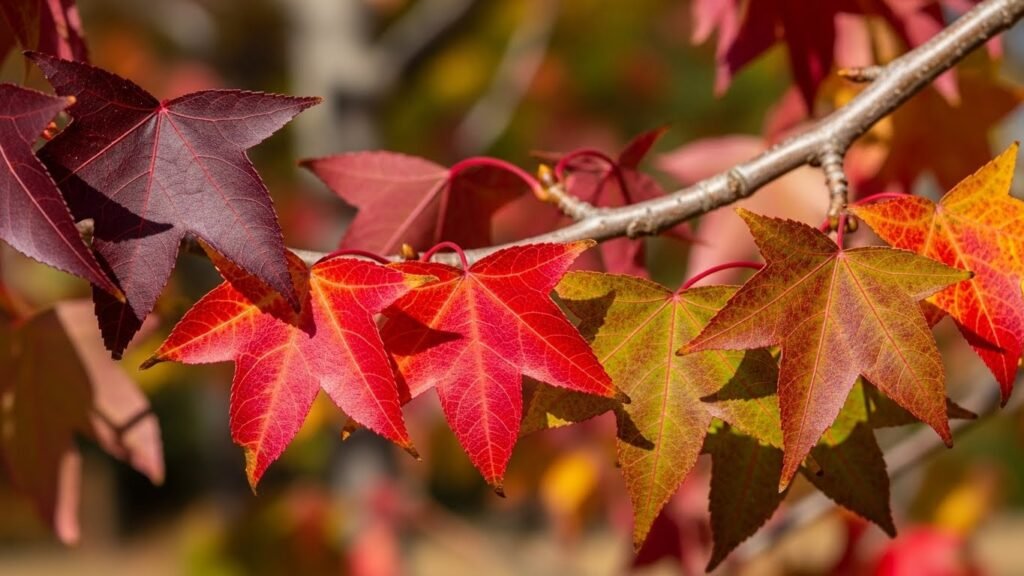
Sweetgum trees are famous for their cool star-shaped leaves and spiked fruit. These trees grow quite large and need a lot of open space. They are often found in the southeastern parts of the United States. A single leaf can have purple, gold, and red all at once. This creates a multicolored effect that looks like a painted masterpiece.
- Leaf Shape: The star-shaped leaves are very easy to identify and look cool.
- Color Palette: You get a mix of red, orange, and purple on one tree.
- Scale: These are big trees and are best for large parks or estates.
- Adaptability: They are very hardy and can grow in many different soil types.
Nyssa sylvatica (Black Tupelo / Black Gum)
The Black Tupelo is often the first tree to turn red in the fall. It is widely considered one of the best stars of the season. The leaves are very glossy and turn a fiery, brilliant scarlet red. Small deep blue fruit also appears and contrasts with the red leaves. It is a very sturdy tree that can live for hundreds of years.
- Early Color: It usually starts the fall show before other trees begin changing.
- Contrast: The blue fruit against the red leaves is a total showstopper.
- Hardiness: It handles wet soil very well and is often found in wetlands.
- Structure: It has a very straight trunk and a clean, pyramidal shape.
Oxydendrum arboreum (Sourwood)
Sourwood is a hidden gem that more people should plant in gardens. It has a unique leaning trunk that gives it a lot of character. In the summer, it has clusters of white flowers that smell like honey. When fall arrives, the color is an eye-popping crimson or flame orange. The leaves are very long and shiny, which helps them glow.
- Summer Flowers: It produces ivory white flowers that look like lilies.
- Autumn Glow: The crimson red color is among the brightest in any forest.
- Bark Interest: The light gray bark looks great against the dark red leaves.
- Growth: It is a slow grower that works well in a variety of settings.
- Soil Preference: It really needs acidic soil to keep its red color intense.
Oak Species with Red Characteristics

Quercus alba (White Oak)
White Oaks are massive, majestic trees that can live for a long time. While most white oaks turn brown, this specific one often turns red. The color can range from a soft yellow to a deep, dark red. It is a very sturdy tree that provides a ton of shade. Planting one is a great gift for future generations of your family.
- Longevity: These trees are very long-lived and become part of the history.
- Unexpected Color: It is one of the few white oaks with dark red leaves.
- Sturdy Form: It has a broad canopy that is perfect for a big backyard.
- Wildlife: It produces acorns that are a primary food source for many animals.
Quercus rubra (Northern Red Oak)
The Northern Red Oak is a fast-growing tree that loves the sunshine. It is one of the most common oaks found in American landscapes. The leaves turn a beautiful shade of red or maroon every single fall. It is a very hardy tree that can handle city pollution quite well. The red color is often more intense than what you see on other oaks.
- Growth Rate: It grows faster than most other oak species in the forest.
- Color Tone: You will see shades ranging from orangish-red to a deep maroon.
- Durability: It is a tough tree that works well in residential areas and parks.
- Fall Reliability: You can count on it for consistent red color year after year.
Specific Oak and Ash Variations
There are also a few southern and narrow-leafed oaks that offer red tones.
- Southern Red Oak (Quercus falcata): This southern tree has leaves that turn a cool copper-red.
- Willow Oak (Quercus phellos): It has narrow leaves that turn a soft bronze or rusty red.
- Green Ash: Though usually yellow, it can show a bronze-red in the right weather.
- Blue Ash: This is a hardy tree that can show purplish or red hues in fall.
Quercus shumardii (Shumard Oak)
The Shumard Oak is a stately tree that is native to the south. It is often chosen for large public spaces and neighborhood parks. It grows quite tall and has a very open, airy canopy. In the fall, the leaves turn a vibrant, shining red that stands out. It is very adaptable to different types of soil and weather.
- Vibrancy: It is known for having one of the brightest reds of any oak.
- Drought Tolerance: It handles dry spells better than many other large shade trees.
- Urban Use: It is a popular choice for planting along streets and sidewalks.
- Maintenance: It is a clean tree that is easy to care for once established.
Quercus coccinea (Scarlet Oak)
The Scarlet Oak is the king of bright red color in the oak family. Its leaves are deeply lobed and turn a brilliant, fiery scarlet. This color can sometimes be even brighter than the famous Red Maples. It prefers sandy or gravelly soils and lots of bright sunlight. It is a fantastic choice if you want a tree that truly glows.
- Brightness: The red on this tree is often considered the most intense.
- Sun Requirements: It needs full sun to develop that legendary scarlet color.
- Leaf Detail: The leaves have very deep notches that look sharp and cool.
- Landscape Pick: It is a top choice for anyone wanting maximum fall impact.
Ornamental and Fruit-Bearing Trees
Photinia Red Robin
Photinia Red Robin is a very popular choice for creating privacy hedges. It is an evergreen, so it keeps its leaves all through the winter. The coolest part is the new growth that appears in the spring. These new leaves are a bright, shiny red before they turn green. It gives your garden a pop of color twice a year.
- Spring Color: New leaves are a vibrant red that looks like a flower.
- Privacy: It is a dense grower that makes a perfect living fence.
- Sunlight: The more sun it gets, the redder the new leaves will be.
- Feeding: Giving it some compost in spring helps the red stay bright.
Malus purpurea Crimson Cascade (Crab Apple)
The Crimson Cascade is a beautiful purple weeping crab apple tree. It has a very romantic look with branches that sweep toward the ground. In the spring, it is covered in deep pink flowers that smell great. The leaves are a dark purple-red color that lasts all through the summer. Small red fruits appear in the fall for even more visual interest.
- Flowering: It produces a massive amount of deep pink blossoms in spring.
- Foliage: The dark purple-red leaves provide a great contrast to green plants.
- Small Scale: It stays relatively small, so it fits in most garden sizes.
- Year-Round Interest: From flowers to fruit, it always has something to look at.
Cercis canadensis Forest Pansy (Redbud)
The Forest Pansy Redbud is famous for its heart-shaped leaves. These leaves emerge as a deep, shiny burgundy or purple color. They keep this rich color through most of the summer months. In the fall, they transition into a mix of red, gold, and purple. It is a small tree that is perfect for a front yard focal point.
- Leaf Shape: The heart-shaped leaves are very charming and unique looking.
- Spring Blooms: Tiny pink flowers grow directly on the bark before leaves appear.
- Color Retention: It holds its dark purple color better than many other trees.
- Placement: It looks best when planted where you can see the leaves up close.
Sorbus commixta (Japanese Rowan)
The Japanese Rowan is a delicate tree with very fine-textured leaves. These pinnate leaves are made of many small leaflets on one stem. In the fall, they turn a fiery, glowing red that is very beautiful. The tree also produces clusters of bright red berries in the autumn. These berries stay on the tree and provide food for winter birds.
- Texture: The fine leaves give the tree a very soft and light appearance.
- Berries: Red berry clusters add a second layer of color to the red leaves.
- Size: It is a small to medium tree that is great for urban gardens.
- Bark: The bark is smooth and silvery, which looks cool in the winter.
Unique Shrubs and Under-Appreciated Varieties
Euonymus alatus (Burning Bush)
The Burning Bush is a shrub that truly lives up to its fiery name. In the fall, it turns a uniform, blazing red that is incredibly bright. It is often used to create low hedges along walkways or driveways. It is very easy to grow and can handle many different conditions. Some people even use it as a standalone accent in their garden.
- Intensity: The red color is so bright it almost looks like it is glowing.
- Ease of Care: It is very tough and requires very little work from you.
- Hedges: It is a top choice for anyone wanting a colorful living border.
- Sun Needs: It needs full sun to reach that maximum level of red color.
Rhus Family (Staghorn, Smooth, and Winged Sumac)
Sumacs are often overlooked but they have some of the best fall colors. They love to grow in bright sunlight along the edges of forests. The Winged Sumac is even called the flameleaf sumac because it is so red. These plants are very tough and can grow in poor, rocky soil. They provide a bold, tropical look to a North American garden.
- Pioneer Plants: They are often the first plants to grow in new open areas.
- Crimson Fruit: They produce red fruit clusters that stay through the winter.
- Bold Color: All varieties turn a brilliant, eye-catching shade of red.
- Sun Lovers: They are happiest when they are soaking up the full sun.
Stewartia pseudocamellia (Japanese Stewartia)
The Japanese Stewartia is a tree that offers something for every season. It has beautiful white flowers in the summer that look like camellias. The bark peels away in flakes to reveal orange, gray, and brown colors. In the fall, the leaves turn a stunning mix of red and deep orange. It is a slow-growing tree that is perfect for a small yard.
- Multi-Season: It has flowers, cool bark, and great fall color all in one.
- Bark Detail: The mottled bark is a great feature for winter interest.
- Color Mix: You get a beautiful blend of red and orange hues in fall.
- Compact Size: It is a great pick for small residential gardens and patios.
Cotinus Grace (Smokebush)
The Smokebush is famous for the “smoky” clusters of pink-purple flowers it has in June. It is a very versatile plant that can handle wind and some dry soil.
- Maintenance Tip: Experts say to give it a hard prune in late winter to keep it colorful.
- Fall Hues: The oval leaves turn from burgundy to a bright scarlet and orange.
Cercidiphyllum japonicum (Katsura Tree)
The Katsura tree is a sensory delight for your garden or landscape. It has heart-shaped leaves that turn shades of red, orange, and yellow. When the leaves fall and start to dry, they smell like burnt sugar or caramel. This amazing fragrance fills the air during the autumn months. It is an elegant tree with a very graceful and balanced shape.
- Fragrance: The falling leaves emit a distinct and sweet caramel scent.
- Leaf Shape: The rounded heart-shaped leaves are very pretty and soft.
- Fall Tones: You will see a beautiful mix of warm red and golden yellow.
- Structure: It has a very clean and symmetrical growth habit as it matures.
Taxodium distichum (Bald Cypress)
The Bald Cypress is a unique conifer because it actually loses its leaves. Most trees with needles stay green all year, but not this one. In the fall, its soft needles turn a beautiful rusty red color. It is a very tough tree that is famous for growing in swamps. It can also grow just fine in normal, drier garden soil.
- Unique needles: It is one of the few needle-leafed trees that change color.
- Rusty Red: The color is a very warm and earthy tone of red.
- Wetland Hero: It is the best choice for areas of your yard that stay wet.
- Longevity: These trees can grow to be very old and very large over time.
Ginkgo biloba (Ginkgo)
Ginkgo trees are ancient living fossils that are very tough and hardy. They are famous for their fan-shaped leaves that turn bright gold. However, some special varieties can develop a reddish tint in certain climates. They are excellent city trees because they handle smoke and salt very well. They are also virtually free from most pests and diseases.
- Ancient History: These trees have been around since the time of dinosaurs.
- Leaf Shape: The fan-shaped leaves are unlike any other tree in the world.
- Hardiness: They are incredibly resistant to pollution and harsh city life.
- Fall Surprise: While usually gold, keep an eye out for those rare red hues.
Fraxinus americana (White Ash)
White Ash trees are big, strong trees that are native to North America. They provide a lot of shade and are very important for local forests. Their fall color is often a deep, rich red or a dark purple. This red color looks amazing against the tree’s pale, diamond-patterned bark. It is a classic shade tree that looks great in a large backyard.
- Contrast: The dark red leaves pop against the light gray bark.
- Big Shade: It grows a large canopy that is perfect for summer cooling.
- Color Consistency: It reliably produces those deep red tones every autumn.
- Variety: It stands out from other ash trees that usually just turn yellow.
Essential Care and Maintenance for Red-Leafed Trees

Placement and Sunlight
Sunlight is the most important factor for getting that bright red color. The red pigments, called anthocyanins, need light to develop in the leaves. If a tree is in too much shade, it might stay green or turn brown. However, some delicate maples can get sunburned if the afternoon sun is too hot. You should try to find a spot with morning sun and afternoon shade.
- Color Boost: Full sun exposure usually leads to the most vibrant red colors.
- Protection: Sheltered positions help keep delicate leaves from tattering in the wind.
- Site Selection: Check your specific tree’s needs before you start digging a hole.
- Spacing: Give your tree enough room so it isn’t shaded by other buildings.
Soil and Hydration
Most trees with red leaves prefer soil that drains well and is full of nutrients. If the soil is too wet for too long, the roots might rot. Adding compost or manure to the soil in the spring is a great idea. This gives the tree a boost of energy to grow healthy leaves. Keeping the tree hydrated during dry summer spells is also very important.
- Drainage: Ensure your planting spot doesn’t have standing water after a rain.
- Fertility: Use well-rotted garden compost to improve the quality of your soil.
- Watering: Consistent moisture helps the tree stay healthy and colorful in the fall.
- Mulching: A layer of mulch around the base helps keep the roots cool.
Pruning and Shaping
Pruning helps keep your trees healthy and looking their absolute best. For many trees, the best time to prune is late winter or early spring. This is when the tree is dormant and won’t bleed too much sap. You should remove any dead or crossing branches to improve air flow. Shaping the tree early on helps it develop a strong and beautiful structure.
- Timing: Late winter is usually the safest time for most deciduous red trees.
- Air Flow: Thinning out the middle helps prevent diseases from starting in leaves.
- Form: Pruning helps weeping varieties keep their graceful and drooping shape.
- Health Check: You can always ask a certified arborist to check your tree’s health.
Selecting the Right Tree for Your Space

Small Gardens
If you have a tiny backyard or just a patio, you can still have red leaves. Many varieties of Japanese Maple are bred to stay small and compact. Amur Maples and Kousa Dogwoods are also great picks for limited space. You can even grow some of these in large pots if you don’t have a yard. This lets you bring that fall color right up to your back door.
- Container Picks: Acer palmatum varieties are the champions of pot growing.
- Vertical Space: Choose trees with a narrow shape if you have close neighbors.
- Visual Impact: A small red tree can act as a stunning focal point.
- Low Mess: Smaller trees mean fewer leaves to rake up in the fall.
Large Landscapes
People with big properties have the most options for giant red trees. Stately Oaks and massive Sugar Maples can reach heights of over 60 feet. These trees provide incredible shade and can even lower your cooling bills. Sweetgums and Black Tupelos also look amazing when given plenty of room. These big trees will become the landmarks of your neighborhood over time.
- Shade Value: Large maples and oaks are the kings of cooling your yard.
- Wildlife Support: Bigger trees provide more food and homes for local animals.
- Visual Scale: A large red tree can be seen from far down the street.
- Legacy: Planting a large tree is an investment that lasts for generations.
Screening and Privacy
Using trees with red leaves for privacy is a very smart design move. Photinia Red Robin is one of the best choices because it is evergreen. It keeps your yard private all year and has red leaves in the spring. Burning Bush is another great option for a colorful, low-growing hedge. These plants give you a wall of color that blocks out the rest of the world.
- Evergreen Privacy: Photinia gives you a red and green wall all year long.
- Dense Growth: These plants grow thick enough to block wind and noise.
- Seasonal Walls: Burning Bush provides a temporary but blazing red boundary.
- Maintenance: Hedges need regular trimming to keep their tidy and neat shape.
Conclusion: Bringing the Fire of Autumn to Your Landscape
Adding trees with red leaves to your property is one of the most rewarding investments a homeowner can make. These trees do more than just change color; they provide a seasonal rhythm that transforms your outdoor space into a dynamic, living environment. From the early spring flush of the Red Robin Photinia to the late-season brilliance of the Scarlet Oak, red foliage offers a spectrum of warmth that green plants simply cannot match. By selecting a mix of species—such as the elegant Japanese Maple for small focal points and the sturdy Northern Red Oak for expansive shade—you ensure that your landscape remains vibrant and visually engaging for years to come.
Proper care is the secret to unlocking the full potential of these scarlet showstoppers. Remember that sunlight is the primary fuel for those brilliant red pigments, so placing your trees in open, bright locations is key. When you combine the right placement with consistent hydration and healthy soil, you are rewarded with a display that can be seen from down the street. Whether you are planting a legacy tree for future generations or a simple privacy hedge for your own peace of mind, the fiery hues of these trees will continue to make your home look like a million bucks every single fall.
FAQs About Trees with Red Leaves
What is the specific chemical process that creates red leaves?
The red color comes from pigments called anthocyanins. These are produced in the late summer and fall as sugar gets trapped in the leaf. As the green chlorophyll breaks down, these red pigments become visible. High levels of sunlight and cool nights speed up this specific chemical process.
Can trees with red leaves grow in deep shade?
Most of these trees will struggle to turn red if they are in deep shade. Without enough sunlight, the leaves may just turn a drab brown or stay a murky green. Red pigments need UV light to develop their full brightness. If you have a shady yard, try to pick a tree like the Japanese Maple that can handle partial light.
Why do some leaves turn red while others on the same tree stay green?
This usually happens because of uneven sun exposure across the canopy. The leaves on the outer edges get more sunlight and turn red first. The leaves tucked inside the branches stay green longer because they are shaded. Temperature differences between the top and bottom of the tree can also cause this uneven look.
Is it possible for an evergreen to have red leaves?
Yes, but it usually happens with new growth rather than a fall change. The Photinia Red Robin is a great example of an evergreen that produces red leaves in the spring. Some other evergreens might take on a bronze or reddish tint during a very cold winter. This is often a protective reaction to the freezing temperatures.
Do red leaves indicate that a tree is sick?
If the leaves turn red out of season, it could be a sign of stress or disease. Early red coloring in mid-summer often means the tree is thirsty or has root damage. However, if the color change happens in the fall, it is perfectly natural. Always check the trunk for pests if the red looks spotted or weirdly timed.
Which trees with red leaves are best for attracting birds?
The Flowering Dogwood and the Black Tupelo are legendary for attracting local birds. They produce red and blue fruits that are packed with energy for the winter. Birds will flock to your yard to eat the berries while the red leaves are still on the branches. It creates a very lively and natural scene in your backyard.
Can soil pH affect how red the leaves become?
Soil pH is a huge factor for certain species like the Sourwood. These trees love acidic soil and will show much brighter reds when the pH is low. If your soil is too alkaline, the tree might look yellow or pale instead of a deep crimson. You can add sulfur to your soil to help lower the pH level.
Do all maple trees eventually turn red in the fall?
No, some maple varieties are actually famous for turning bright yellow or orange. For example, the Silver Maple often turns a soft yellow while the Striped Maple is known for its gold tones. Only certain species like the Red Maple or Sugar Maple are reliable for that classic scarlet look. Always check the specific variety before you buy one at the nursery.
How does a wet summer affect the fall red color?
A very wet summer can actually dull the red colors in the autumn. If the tree has too much water, it might not produce as much sugar in the leaves. These sugars are the building blocks for those amazing red anthocyanins. A slightly dry late summer followed by cool nights usually produces the best show.
Are trees with red leaves more expensive to buy?
Some ornamental varieties like the Japanese Maple can be more expensive because they grow slowly. Rare cultivars with unique leaf shapes often carry a higher price tag at the nursery. However, common native trees like the Red Oak or Red Maple are usually very affordable. The price mostly depends on the age and size of the tree you choose.
Can I use the fallen red leaves as mulch in my garden?
Red leaves make excellent mulch and will add nutrients back into your soil. You should shred them first with a lawnmower so they break down faster. They will help keep moisture in the ground for your other plants during the winter. Just make sure the leaves didn’t come from a tree that was suffering from a fungus.
Do red leaves stay on the tree longer than yellow leaves?
Oak trees are famous for holding onto their red leaves well into the early winter. This is a trait called marcescence where the dead leaves don’t fall off right away. Most maples will drop their red leaves much faster once the first hard frost hits. If you want color that sticks around, an oak is your best bet.
Is the sap of red-leafed trees also red?
No, the sap inside the tree is usually clear or a light amber color. The red pigment is strictly located in the skin and cells of the leaves. Even the Red Maple, which has red twigs and flowers, still has clear sap. The color of the leaves doesn’t have any impact on the color of the wood or sap.
Which red-leafed trees are the most drought-tolerant?
The Sumac family and the Scarlet Oak are very tough when it gets dry. They have deep root systems that can find water even during a hot summer. Once these trees are established, they don’t need much extra watering from you. They are perfect for low-maintenance landscapes or rocky hillsides.
Can pollution change the color of red leaves in the city?
Heavy pollution can sometimes cause leaves to turn brown or drop early before they get red. However, the Ginkgo and the Northern Red Oak are very resistant to city smog. They can still put on a great red show even if they are planted near a busy street. Keeping the leaves clean of dust can help them stay vibrant.
Do trees with red leaves need special fertilizer?
Most of these trees don’t need a special “red leaf” fertilizer to look good. A balanced, slow-release fertilizer in the spring is usually all they need for healthy growth. The red color is mostly controlled by the weather and sunlight, not the food you give them. Over-fertilizing can actually lead to weak growth that doesn’t color well.
Why do some red leaves look purple or maroon?
This happens when there is a high concentration of both red and blue pigments in the leaf. Species like the Forest Pansy Redbud have very dark leaves that appear almost black or purple. The pH of the sap inside the leaf can also shift the red color toward a more purple or blue tone. It adds a lot of depth and mood to your garden.
Can I grow a Red Maple from a seed I find on the ground?
You can definitely grow a Red Maple from those little “helicopter” seeds. Just make sure to plant them in a pot with good soil and keep them moist. It takes a few years before the sapling will start showing its famous fall color. It is a fun and free way to start a forest in your own backyard.
Do the red berries on these trees last all winter?
Some berries, like those on the Japanese Rowan, can last quite a long time if the birds don’t eat them. Others, like the dogwood berries, are usually eaten very quickly by squirrels and birds. If you want winter color, look for trees that produce hard berries that stay on the branches. They provide a nice pop of red against the white snow.
What is the best way to photograph red leaves?
The best time to take photos is during the “golden hour” just before sunset. The low sun will make the red leaves look like they are glowing from the inside. Try to stand so the sun is behind the leaves to capture that translucent red effect. Cloudy days are also great for getting deep, saturated red tones without harsh shadows.