 Skip to content
If you have ever stared at the condiment aisle and wondered what whole grain mustard is, you are not alone. This grainy spread is a staple for sandwich lovers and fancy chefs alike. It brings a specific pop to your food that smooth yellow mustard just cannot match. In this guide, we will dive deep into everything that makes this condiment a kitchen superstar. We will look at how it is made and why it tastes so good. You will learn how to use it like a pro in your own home cooking.
Understanding Whole Grain Mustard
Definition and Visual Characteristics
- Visible Seeds: The most obvious answer to what is whole grain mustard is that it contains visible seeds.
- Partial Grinding: Unlike smooth mustard, these seeds are only partially crushed during the making process.
- Textural Profile: It offers a unique mouthfeel that ranges from a coarse paste to intact spheres that pop when you bite them.
What is whole grain mustard exactly when you look at the jar? You will see a thick mix that looks more like a rustic mash than a creamy sauce. The seeds are ground just enough to release their flavor and create a binding paste. However, the maker stops before the seeds vanish into a smooth liquid. This leaves you with a condiment that has a lot of “tooth” and character. It is often described as “old-fashioned” or “country-style” mustard.
The Raw Materials: Types of Mustard Seeds

- White Seeds: These are also called yellow seeds and provide a very mild base for many blends.
- Brown Seeds: These seeds are the spicy foundation for both whole grain and Dijon varieties.
- Black Seeds: These are the most intense seeds used for high-heat blends and Indian cooking.
Most whole grain mustards rely on a mix of white and brown seeds. White seeds give the mustard body and a bit of sweetness. Brown seeds provide that signature spicy kick that clears your sinuses. Some craft makers will throw in black seeds if they want to create a very hot version. Understanding these seeds is key to knowing what whole grain mustard is and how it gets its heat. Every brand uses a slightly different ratio to create their unique flavor.
The Science of the “Zing”
The “zing” in mustard does not actually exist until the seeds are broken. When you grind the seeds, a chemical reaction happens that creates mustard oil. This oil is what gives you that spicy sensation in your nose. The type of liquid used in the mix also changes how this heat behaves over time. Vinegar tends to stabilize the heat and keep it sharp for longer. Water or wine can make the mustard even hotter at first but it fades faster.
The Production Process of Whole Grain Mustard
Harvesting and Selection
Farmers harvest mustard seeds once the pods turn brown and the plants are dry. Quality matters because old seeds lose their natural oils and spice. The best makers look for seeds with high oil content to ensure a bold flavor. Once harvested, the seeds are cleaned and sorted to remove any dust or stems. This ensures that the final product is pure and delicious. The selection process is the first step in creating a premium condiment.
Milling and Grinding Techniques
- Stone-Ground Method: This traditional style uses heavy stones to slowly crush the mustard seeds.
- Mechanical Milling: Modern machines can grind seeds quickly but may generate heat that alters the flavor.
- Controlling the Crack: Makers carefully monitor the grind to keep many seeds whole or just slightly cracked.
The goal is to achieve a perfect balance between a spreadable paste and whole seeds. If you grind too much, you end up with something closer to Dijon. If you grind too little, the mustard will not stay together on your spoon. Stone grinding is often preferred because it keeps the seeds cool. This preserves the delicate flavors and the spicy integrity of the mustard. It is a craft that takes time to master.
The Role of Liquids and Acids
- White Wine: This is the classic choice for a sophisticated and rounded flavor profile.
- Vinegar: Most commercial brands use vinegar to add sharpness and act as a natural preservative.
- Verjuice: This is an acidic juice made from unripened grapes used in very traditional recipes.
The liquid is just as important as the seeds when defining what is whole grain mustard. Most whole grain mustards use wine to give the flavor more depth and elegance. The acid in the liquid stops the heat-producing reaction at a specific point. This allows the maker to control exactly how spicy the final product will be. Without the right liquid, the mustard would just be a bitter and dry powder.
Whole Grain Mustard vs. Dijon: The Great Debate
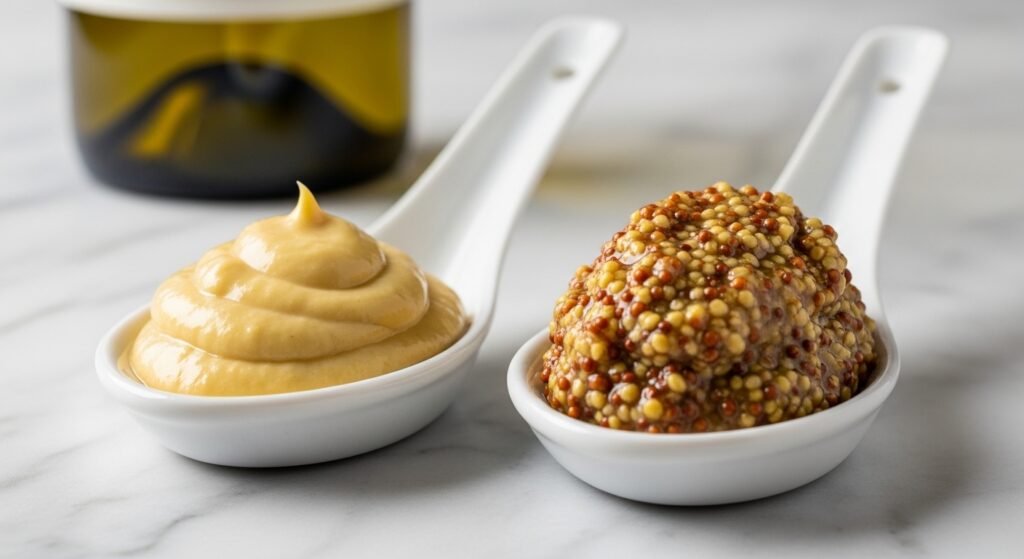
Identifying the Main Differences
- Texture: Dijon is smooth and creamy while whole grain is coarse and rustic.
- Visual Appeal: Dijon is a uniform pale yellow color.
- Multi-Toned Look: Whole grain is speckled with different shades of brown and tan seeds.
When people ask what is whole grain mustard, they often compare it to Dijon. While they use similar seeds, the way they are processed is totally different. Dijon seeds are ground into a fine powder and then filtered to remove all hulls. Whole grain mustard keeps everything in the jar for a more natural look. This makes whole grain mustard feel more “homemade” and less processed. It is the perfect choice for someone who loves texture in their food.
Flavor Profile Comparison
Dijon is famous for having a sharp and clean heat that hits your palate quickly. It is very intense and can sometimes be overwhelming if you use too much. Whole grain mustard has a more complex and earthy flavor. Since the seeds are not all crushed, the flavor is released more slowly as you chew. Many people find whole grain mustard to be more approachable and less harsh. It provides a savory depth that lingers longer on the tongue.
When to Use Which
- Emulsifying: Use Dijon for smooth salad dressings or sauces where you want a creamy texture.
- Crusting: Use whole grain for coating meats like ham or pork before roasting.
- Sandwiches: Whole grain adds a great “pop” to thick deli sandwiches and burgers.
You should reach for Dijon when you want the mustard to disappear into a dish. It is great for making a smooth vinaigrette or a creamy pan sauce. Reach for whole grain when you want the mustard to be a visible part of the meal. It looks beautiful on a plate and provides a nice crunch. Many chefs keep both in the kitchen because they serve very different purposes. Knowing the difference helps you decide what is whole grain mustard best used for in your recipes.
Varieties and Regional Styles of Whole Grain Mustard
Traditional French Moutarde à l’Ancienne

This is the classic “old-style” mustard that many people think of first. It comes from regions like Meaux in France and has been made the same way for centuries. It usually features a very high concentration of whole seeds and a wine-based liquid. The flavor is bold but refined and very aromatic. It is often sold in stoneware jars to preserve its tradition. This style is the gold standard for what is whole grain mustard in the culinary world.
German-Style Whole Grain (Senf)
- Süßer Senf: This is a sweet whole grain mustard popular in Bavaria.
- Sausage Pairing: It is the traditional companion for white sausages known as Weisswurst.
- Coarse Grind: German versions often have a very thick and chunky consistency.
German mustard often balances the spice of the seeds with brown sugar or honey. This makes it much sweeter than the French versions. It is a very hearty condiment that stands up well to heavy meats and breads. If you go to an Oktoberfest, you will definitely see this on the table. It shows how different cultures answer the question of what is whole grain mustard. It is all about the local tastes and ingredients.
Modern Craft and Infused Variations
- Honey-Infused: A popular choice for those who like a sweet and spicy mix.
- Horseradish: Adds an extra level of nasal-clearing heat to the grainy texture.
- Alcohol-Infused: Many craft brands now use stout beer, bourbon, or chardonnay.
Today, small-batch makers are getting very creative with whole grain mustard. You can find flavors that range from smoky chipotle to sweet maple. These infused mustards are great for modern cooking and adventurous eaters. They take the basic idea of what is whole grain mustard and turn it into something new. You can use these to easily upgrade a simple grilled chicken or roasted vegetables. They make great gifts for foodies who love to experiment.
The Culinary Versatility of Whole Grain Mustard
Elevated Sandwiches and Charcuterie
- Cured Meats: The acidity of the mustard cuts through the fat of salami and ham.
- Grilled Cheese: Swiping a little mustard inside a grilled cheese makes it taste grown-up.
- Cheese Boards: It is a must-have item for a professional-looking snack platter.
Whole grain mustard is a hero on any sandwich. It adds more than just flavor because it adds a satisfying texture. When you build a charcuterie board, a small bowl of grainy mustard is essential. It pairs perfectly with hard cheeses like cheddar and soft cheeses like brie. It cleanses the palate between different bites of rich meat and cheese. This is one of the easiest ways to enjoy whole grain mustard at home.
Marinades and Meat Applications

Using whole grain mustard as a rub for meat is a pro move. The whole seeds stick to the surface and create a delicious crust during cooking. This works especially well for roasted lamb or a thick pork loin. The mustard does not burn as easily as sugary rubs might. Instead, it toasts and releases a deep, nutty aroma. You can also mix it with herbs and garlic for an easy marinade.
Dressings, Vinaigrettes, and Sauces
- Thick Vinaigrette: The seeds add body to a dressing without needing extra oil.
- Mustard Cream Sauce: Mix it into heavy cream for a classic sauce for salmon or steak.
- Natural Emulsifier: Like all mustards, it helps keep oil and vinegar from separating.
If you want your salad to look fancy, use whole grain mustard in the dressing. The little seeds look great clinging to fresh greens. It also provides a better “cling” so the dressing stays on the lettuce. For a warm sauce, stir it in at the very end of cooking. This keeps the seeds from getting too soft and preserves their pop. It is a simple way to make a basic meal feel like a restaurant dish.
Health Benefits and Nutritional Profile
The Power of the Mustard Seed
Mustard seeds are tiny but they are packed with nutrients. They are very low in calories, making them a great way to add flavor without fat. They contain antioxidants that help protect your body from stress. Mustard also has glucosinolates, which are compounds known for their health-promoting properties. When you ask what is whole grain mustard, you are looking at a very healthy condiment. It is one of the cleanest ways to spice up your diet.
Dietary Considerations
- Gluten-Free: Most whole grain mustards are naturally free of gluten.
- Vegan-Friendly: It is a plant-based product that fits into almost any lifestyle.
- Sodium Levels: Be careful with store-bought brands as they can be high in salt.
Because it is so simple, whole grain mustard is safe for most people. It does not usually contain the thickeners or dyes found in cheap yellow mustard. Always check the label if you have a specific allergy. Artisanal brands often have fewer additives and lower sodium than big commercial jars. It is a great choice for adding a big punch of flavor to a healthy meal.
How to Shop for and Store Whole Grain Mustard
Reading the Label
When you shop, look at the ingredient list first. The first ingredient should be mustard seeds, not water or vinegar. Avoid jars that list “natural flavors” if you want the most authentic taste. Real whole grain mustard does not need a lot of extra junk to taste good. The fewer the ingredients, the better the quality usually is. This helps you find the best version of what is whole grain mustard in your local store.
Storage and Longevity
- Refrigeration: You should keep your mustard in the fridge after you open it.
- Losing the Kick: Mustard does not really rot, but it will lose its spicy flavor over time.
- Volatile Oils: Cold temperatures help keep the oils that provide heat from evaporating.
If your mustard starts to look dry or dark on top, it is losing its freshness. You can usually stir it back together if it separates a little. A jar of whole grain mustard can last for several months in the refrigerator. For the best taste, try to use it within six months of opening. This ensures you get that signature “zing” every time you use it.
DIY: Making Your Own Whole Grain Mustard at Home

The Basic Equipment and Ingredients
Making your own mustard is surprisingly easy and very rewarding. You just need a glass jar, some mustard seeds, and your choice of liquid. You do not need fancy machines if you have a mortar and pestle. A food processor can also work if you use the pulse button carefully. Starting with dry seeds allows you to control exactly what goes into your jar. It is the ultimate way to understand what whole grain mustard is from the ground up.
A Step-by-Step Guide
- Soaking: Soak your seeds in liquid for at least 24 hours to soften them.
- Grinding: Crush about half of the seeds to create a thick paste.
- Seasoning: Add salt, a pinch of sugar, and any herbs you like.
- Aging: Let the finished mustard sit in the fridge for a few days before eating.
Freshly made mustard can be very bitter at first. This is because the chemical reactions are still happening inside the jar. Letting it “age” for a few days mellows the bitterness and lets the heat develop. You can experiment with different wines or vinegars to find your favorite mix. Once you make your own, you might never go back to the store-bought stuff again.
Conclusion: The Enduring Legacy of the Grain
Whole grain mustard is more than just a topping for a hot dog. It is a versatile tool that can transform your cooking from boring to brilliant. Whether you buy a fancy French jar or make your own at home, it adds a special touch to every meal. Now that you know what whole grain mustard is, you can use it with confidence. Go ahead and add a spoonful to your next roast or sandwich and enjoy the pop!
Frequently Asked Questions
Does whole grain mustard have a shelf life if unopened?
Unopened jars can last up to two years past the best-by date if stored in a cool, dark pantry. The high acidity from vinegar and the natural properties of the seeds act as strong preservatives. Always check that the safety seal is intact before using an older jar.
Can you use whole grain mustard as a binder for smoking meat?
Pitmasters often use it as a binder for dry rubs on brisket or pork shoulder. The coarse texture helps the spice rub stick better than smooth versions. It creates a tacky surface that holds onto smoke particles during the cooking process.
Is whole grain mustard safe for people with nut allergies?
While mustard seeds are not nuts, they contain proteins similar to those found in tree nuts. Some people with severe nut allergies may also react to mustard. Always check for cross-contamination warnings on the label if you have a sensitive allergy.
Why does my homemade whole grain mustard taste bitter?
Freshly ground mustard contains compounds that are naturally very bitter and harsh. This bitterness fades away after the mustard sits in the refrigerator for a few days or weeks. Commercial brands age their product before shipping to ensure a balanced flavor for the customer.
Can you freeze whole grain mustard to make it last longer?
Freezing is not recommended because it can break down the cell walls of the seeds and ruin the texture. The emulsion of vinegar and water may also separate upon thawing. Since it lasts so long in the fridge, freezing is generally unnecessary for preservation.
Is there a difference between “old-fashioned” and whole grain mustard?
These terms are usually used interchangeably on food labels and menus. “Old-fashioned” or “Moutarde à l’ancienne” refers to the rustic method of leaving seeds mostly intact. Both terms signal that you are getting a coarse, textured product rather than a smooth one.
How do you thin out whole grain mustard that has become too thick?
You can stir in a teaspoon of white wine, apple cider vinegar, or cold water. Add the liquid slowly and whisk until you reach your desired consistency. Avoid using oil, as it may change the flavor profile and prevent the mustard from sticking to food.
Does whole grain mustard contain a lot of sugar?
Most traditional whole grain mustards contain zero or very little added sugar. This makes it a much better choice for low-carb or ketogenic diets compared to honey mustard. Always read the nutrition label to ensure no syrups or sweeteners were added during processing.
Can whole grain mustard be used in hot soups or stews?
It is a great addition to beef stews or potato soups for a hit of acidity and texture. Add it toward the end of the simmering process to keep the flavor bright. It helps cut through the heaviness of cream-based or fatty meat-based broths.
Is whole grain mustard considered a fermented food?
Traditional mustard making involves a short soaking period that can trigger minor fermentation. However, most modern commercial versions rely on vinegar to provide the tang. If you want truly fermented mustard, you must look for “raw” or “probiotic” labels at health food stores.
Why does whole grain mustard turn brown over time?
Oxidation is the main reason mustard loses its bright color and turns a duller brown. While it is usually still safe to eat, the flavor may be significantly weaker. Keeping the lid tightly sealed and the jar cold will slow down this color change.
Can I use whole grain mustard if I am on a low-sodium diet?
Mustard seeds are naturally low in sodium, but salt is added during the pickling process. Look for “low sodium” artisanal brands or make your own at home. When making it yourself, you can control the salt levels or use salt substitutes.
What is the best way to get the last bit of mustard out of the jar?
Pour a little bit of olive oil and vinegar directly into the nearly empty jar and shake it. This creates an instant “jar vinaigrette” and ensures you do not waste any of the flavorful seeds. You can then pour this mixture directly over your salad.
Does the color of the mustard seed affect the nutritional value?
All mustard seeds offer similar health benefits, including antioxidants and minerals. Black and brown seeds have a slightly higher concentration of the oils that provide heat. The nutritional differences between them are very small in the quantities typically consumed.
Is whole grain mustard okay for pregnancy?
Yes, it is considered safe and is actually a great way to add flavor to food without excess fat. Some people find that the spice helps with minor nausea, while others may find it triggers heartburn. It is a pasteurized product, so there is no risk of raw bacteria.
Can you use whole grain mustard as a substitute for egg in breading?
The thick, sticky consistency makes it a decent vegan binder for breadcrumbs on chicken or tofu. Slather a thin layer over the protein before pressing it into the crumbs. It adds a layer of flavor that plain egg wash cannot provide.
Why is wine used in whole grain mustard instead of just water?
Wine adds complex acids and fruit notes that water simply lacks. The alcohol also helps to extract and preserve the spicy oils within the mustard seeds. It results in a more sophisticated condiment that tastes less like “vinegar” and more like a sauce.
Can pets eat whole grain mustard?
Mustard seeds are generally toxic to dogs and cats and can cause severe stomach upset. Never share food that has been heavily coated in mustard with your pets. If they accidentally consume a small amount, watch for signs of vomiting or lethargy.
Does whole grain mustard help with leg cramps?
Some people believe that the acetic acid in mustard can help trigger reflexes that stop muscle cramps. While many athletes swear by swallowing a teaspoon of mustard, scientific evidence is still limited. It is a common “old wives’ tale” that remains popular in the sports world.
What is the best wood for smoking mustard seeds?
If you are making smoked whole grain mustard, applewood or cherrywood are the best choices. These fruitwoods provide a sweet smoke that complements the natural spice of the seeds. Avoid heavy woods like mesquite, which can make the mustard taste bitter.