Skip to content
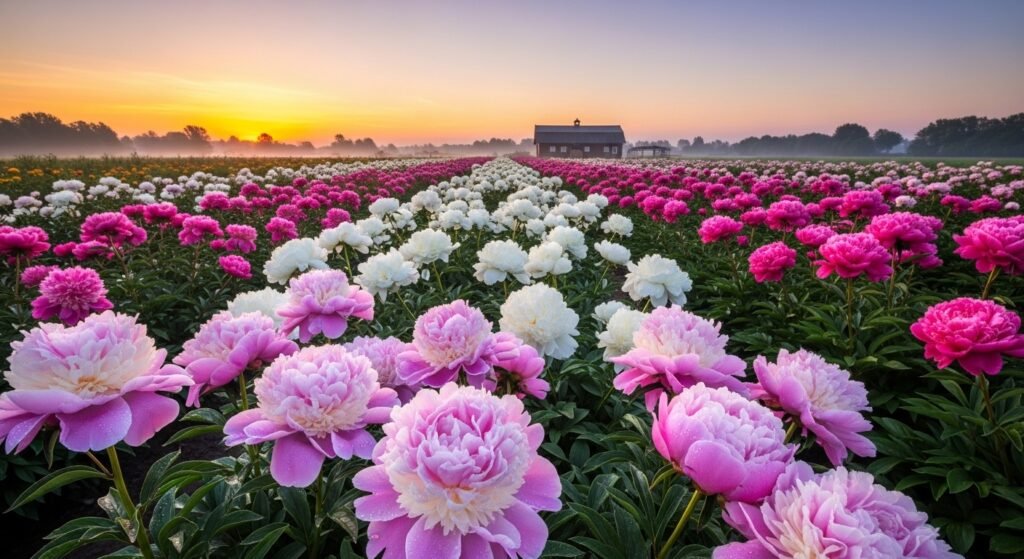
Are you looking to start a flower farm or spice up your garden? You have come to the right place because we are diving deep into the world of peonies. These flowers are the absolute stars of the late-spring garden. They show up right when spring bulbs fade and before summer flowers start blooming. Even though their bloom time is short, they make a massive statement. Many people call them the unicorn of the floral world. This is because they are easy to grow and stay in high demand. If you want to make money or just have a stunning yard, you need to know the best types of peonies.
The Allure of Peonies in the Floral Industry
Peonies are legendary for being big and showy. They are the heavy hitters of the late-spring and early-summer season. For a flower farmer, they are a total dream crop. They require very little maintenance once they are established in the ground. You do not have to replant them every year like zinnias or sunflowers. This makes them a great long-term investment for any business.
- Low Maintenance: Once you plant a peony root, it can live for over fifty years.
- High Demand: Customers go crazy for these blooms every single spring.
- Great Profits: Peonies often sell for much higher prices than other spring flowers.
- Perfect Timing: They fill the “hunger gap” in the floral calendar.
Strategic Planning for a Peony Farm
Before you buy a thousand roots, you need a solid plan. Your choice of varieties depends on who is buying your flowers. Are you selling to fancy wedding designers or locals at a roadside stand? Designers might want rare, expensive types of peonies. Local customers usually want something that looks like the classic peony from their grandma’s garden. It is easy to get distracted by rare flowers that cost a fortune. However, a successful farm focuses on what actually sells.
- Know Your Market: Ask your local wholesalers what colors they need most.
- Focus on Classics: Most retail shoppers want big, fluffy, fragrant blooms.
- Check the Stems: Farmers need varieties with strong stems that do not flop.
- Balance Your Colors: Make sure you have a mix of whites, pinks, and corals.
Top White and Blush Peony Varieties for Elegance
White peonies are the bread and butter of the wedding industry. They look clean, elegant, and timeless in a bridal bouquet. Blush varieties are also top sellers because they look romantic. Here are the best white and blush types of peonies to grow.
Duchess de Nemours

This is a timeless variety that has been around for a long time. It features pure white double blooms with a tiny hint of ivory in the center. The real selling point here is the scent. It smells absolutely heavenly and fills a whole room with fragrance.
- Color: Pure white with a warm ivory heart.
- Form: Full double blooms that look very lush.
- Best Use: High-end floral arrangements and wedding work.
- Scent: One of the most fragrant peonies you can find.
Bowl of Cream

The name says it all for this stunning flower. It produces massive, bowl-shaped flowers that are a creamy white color. These blooms are often larger than a human hand. They are so packed with petals that they look like giant scoops of whipped cream.
- Size: Extra-large blooms that make a huge statement.
- Texture: Fluffy and luxurious with hidden golden stamens.
- Growth: It has very strong stems to hold up those heavy heads.
- Visual Appeal: It looks very high-end and expensive.
Nick Shaylor

This variety is a true showstopper that has won many awards. It is a double-flowered peony that comes in a very soft shade of blush. The shape is perfectly round and the blooms are quite large. It is often cited as one of the most beautiful peonies ever grown.
- Awards: It has received the prestigious APS Gold Medal twice.
- Color: A delicate blush that fades to a soft white.
- Reliability: It is known for being a consistent producer in the field.
- Marketability: Designers love this one for its soft, romantic look.
Essential Pink Peony Varieties for High Volume
Pink is the most iconic color for a peony. When people think of these flowers, they usually imagine a big pink bloom. You cannot have a flower farm without several pink types of peonies. These are usually the first ones to sell out at any market.
Sarah Bernhardt

If there is a queen of the peony world, it is Sarah Bernhardt. This is the go-to pink classic for almost every grower. It has fluffy double blooms in a perfect soft pink shade. The base of the petals has a touch of darker pink for extra depth.
- Popularity: This is often the top-selling variety in the entire world.
- Fragrance: It has a light, pleasant scent that customers love.
- Growth: It is a very robust grower and produces tons of flowers.
- Farmer Tip: Many growers plant entire fields of just this one variety.
Monsieur Jules Elie

This is a “bomb-form” peony that was first introduced way back in 1888. It is known for its very large and fragrant double blooms. The color is a captivating, deep shade of pink. It is a very practical choice because it has incredibly strong stems.
- Form: Unique “bomb” shape with a high center of petals.
- History: A classic heirloom that has stood the test of time.
- Strength: Stems are tough enough to handle wind and rain.
- Appeal: It looks very traditional and nostalgic.
Bold Red and Coral Peony Varieties
Red and coral peonies bring a lot of energy to the garden. While pinks and whites are soft, these colors are bold and eye-catching. Coral varieties are especially popular right now in modern floral design.
Red Charm

This is arguably the best red peony on the market today. It has deep, rich red blooms in a perfect bomb shape. It is a very vigorous grower and puts out many flowers every year. The color is so intense that it stands out from across the field.
- Color: A true, deep crimson red with no purple tones.
- Form: Perfectly symmetrical bomb-style flowers.
- Performance: It is known for being very reliable and healthy.
- Timing: It often blooms slightly earlier than the pink varieties.
Coral Charm

This variety is famous for its incredible color-changing ability. It starts out as a bright coral and slowly fades to peach and cream. This “morphing” makes it a favorite for photographers and designers. It has semi-double blooms that show off bright yellow centers.
- Visuals: Unique coral-pink petals that age beautifully.
- Design: Extremely popular for boho-style weddings and events.
- The Downside: The fragrance is not great and can be a bit stinky.
- Awards: It has won several gold medals for its unique beauty.
Unique and Specialty Peony Varieties for Niche Markets
Sometimes you want something a little different to grab attention. Specialty types of peonies can help your farm stand out from the crowd. These varieties have unique shapes or colors that you don’t see every day.
Do Tell

This is an anemone-shaped peony that looks very delicate. It has soft pink outer petals and a wild center of raspberry and lemon. The stems are a dark red color and are surprisingly strong. It is a very prolific bloomer that earns its space in any field.
- Appearance: Very unique center with contrasting “staminodes”.
- Stems: Thin but wiry and strong red stems.
- Bloom Count: It produces a high number of flowers per plant.
- Style: Great for a whimsical or wildflower look.
Soft Salmon Saucer

This variety will make your customers stop and ask if it is even a peony. It has large, saucer-shaped blooms in a soft salmon color. This is much simpler than the fluffy doubles, but it looks very modern. It is a great choice if you want to offer something trendy.
- Shape: Single, saucer-like flowers with a simple elegance.
- Color: A rare and beautiful salmon-pink hue.
- Form: Offers a clean and architectural look for arrangements.
- Modernity: Fits perfectly with the current trend of “quiet luxury”.
Etched Salmon

If you really want to impress people, Etched Salmon is the one. It has intricate double blooms in a very specific salmon-pink shade. Each petal looks like it has been carefully etched or carved. It is a more expensive root, but it is worth the splurge.
- Detail: Stunning petal texture that looks very high-end.
- Impact: One of the most photographed varieties on social media.
- Value: Can be sold at a premium price due to its rarity.
- Beauty: Often considered the “perfection” of the salmon types.
Cultivation Essentials for Maximum Yield
Getting the best types of peonies to grow requires some prep work. You cannot just toss them in the dirt and hope for the best. Peonies are heavy feeders and need the right environment to thrive. If you do it right, they will reward you for decades.
- Sunlight: They need at least six to eight hours of full sun every day.
- Soil: They love well-draining soil that is rich in organic matter.
- Planting Depth: Do not plant the “eyes” more than two inches deep.
- Spacing: Give them plenty of room for airflow to prevent disease.
| Feature | Requirement | Why it matters |
| Sunlight | Full Sun | Necessary for big blooms |
| Soil Type | Well-drained | Prevents root rot |
| Planting Time | Fall | Allows roots to establish |
| Depth | 1-2 inches | Too deep and they won’t bloom |
Maintenance and Pest Management
Peonies are tough, but they do have a few enemies. The biggest issue is usually a fungus called Botrytis. This can make the buds turn black and die before they open. Good airflow and clean gardening habits are your best defense.
- Staking: Use cages or twine to keep the heavy flowers from flopping.
- Ants: Do not worry about ants; they are just eating the nectar.
- Cleanup: Cut the foliage to the ground in late fall to remove pests.
- Watering: Water at the base of the plant to keep the leaves dry.
The Business of Peonies: Harvesting and Profitability
If you are farming, when you cut the flower is everything. You don’t want to wait until they are fully open. For the best vase life, you must harvest them in the “marshmallow stage”. This is when the bud feels soft like a marshmallow but is not yet open.
- Marshmallow Stage: Squeeze the bud; if it’s soft, it’s ready to cut.
- Cold Storage: You can keep cut peonies in a fridge for several weeks.
- Pricing: Research your local market to set fair but profitable prices.
- Marketing: Use high-quality photos to show off the different types of peonies.
Conclusion: Building a Legacy with Peonies
Choosing the right types of peonies is the secret to a successful garden or farm. You want a mix of the reliable classics and a few stunning showstoppers. Remember to focus on what your customers or your own eyes love most. Whether it is the giant Bowl of Cream or the color-changing Coral Charm, these flowers will bring joy every year. Start planting this fall and you will be rewarded with a sea of blooms for a lifetime.
| Variety Name | Flower Type | Primary Look & Color | Fragrance Level | Best Growing Conditions | Unique Feature |
| Duchess de Nemours | Double | Pure white with an ivory heart | Very High | Full sun, fertile soil, needs support | The gold standard for wedding fragrance. |
| Bowl of Cream | Double | Creamy white, massive bowl shape | Low | Full sun, extra space for airflow | Blooms are often larger than a human hand. |
| Nick Shaylor | Double | Soft blush pink fading to white | Mild | Full sun, consistent moisture | Award-winning symmetry and form. |
| Sarah Bernhardt | Double | Classic soft pink with dark accents | Moderate | Full sun, hardy in most zones | The most popular commercial variety. |
| Monsieur Jules Elie | Bomb | Captivating deep pink, high center | High | Full sun, strong wind protection | Features incredibly sturdy, practical stems. |
| Red Charm | Bomb | Deep crimson red, tight petals | Low | Full sun, well-drained soil | A vigorous grower with intense color. |
| Coral Charm | Semi-Double | Bright coral changing to peach | Unpleasant | Full sun, early season heat | Famous for changing colors as it ages. |
| Do Tell | Anemone | Soft pink with raspberry center | Low | Full sun, thin but wiry stems | Offers a unique, wild contrast in colors. |
| Soft Salmon Saucer | Single | Simple salmon-pink saucer shape | Mild | Full sun, modern landscape | A simple, elegant twist on the classic look. |
| Etched Salmon | Double | Unique salmon-pink, etched petals | Moderate | Full sun, premium soil nutrients | Petals look hand-carved or etched. |
Frequently Asked Questions
What is the best time of year to plant peony roots?
Fall is the ideal time to plant peonies, usually between late September and November. This allows roots to establish before the ground freezes without the stress of summer heat.
Can peonies grow in containers or pots?
Yes, but you need a very large, deep pot with excellent drainage. Choose dwarf varieties like the Patio Peony series to ensure the plant doesn’t outgrow its space.
Why are my peonies growing leaves but not flowers?
This usually happens if they are planted too deep, receive too much nitrogen, or don’t get enough sunlight. Ensure the eyes are only 1-2 inches below the soil surface.
Do peonies need to be divided every few years?
Unlike many perennials, peonies actually prefer to be left alone. You only need to divide them if they become overcrowded or if you want to propagate more plants.
How do I get rid of ants on my peony buds?
You don’t need to get rid of them. Ants are attracted to the sugary nectar and do not harm the flower; they may even help protect the plant from other pests.
Can peonies grow in warm climates like Florida or Southern California?
Most herbaceous peonies need a “chill period” in winter to bloom. Gardeners in warmer zones should look for Itoh (intersectional) peonies or specific low-chill varieties.
What is the difference between herbaceous, tree, and Itoh peonies?
Herbaceous peonies die back to the ground in winter. Tree peonies have woody stems that stay above ground. Itoh peonies are a hybrid of both, offering massive blooms and sturdy stems.
How long does it take for a newly planted peony to bloom?
It typically takes three years for a peony to reach full blooming potential. The first year is for root growth, the second for small blooms, and the third for a full show.
Should I remove the “side buds” on the stems?
If you want one massive “trophy” bloom, pinch off the smaller side buds. If you want a longer display in the garden, leave them to bloom after the main flower fades.
What is the best fertilizer for peonies?
Use a low-nitrogen fertilizer, such as a 5-10-10 blend, in early spring. Avoid high-nitrogen lawn fertilizers which promote leaves but discourage flowers.
Are peonies toxic to dogs or cats?
Yes, peonies contain paeonol, which is toxic to pets if ingested. It can cause vomiting and diarrhea, so keep them in a protected area of the garden.
How do I prevent Botrytis blight?
Improve air circulation by spacing plants at least 3 feet apart. Always remove and dispose of foliage in the fall to prevent fungal spores from overwintering.
Can I grow peonies from seeds?
You can, but it is a slow process. It takes several years for a seedling to bloom, and the resulting flower may not look like the parent plant.
What should I do with the foliage after the flowers die?
Leave the green foliage until it turns yellow or brown in the fall. The leaves gather energy for next year’s blooms through photosynthesis.
Why did my peony change color?
Peonies don’t typically change their DNA, but environmental factors like soil pH, temperature, and sun exposure can cause colors to appear more or less intense.
How do I support heavy double peonies?
Install metal peony hoops or tomato cages early in the spring before the plant gets too tall. This allows the stems to grow up through the supports naturally.
Can peonies be grown in the shade?
They can grow in partial shade but will produce fewer and smaller flowers. For the best performance, they require at least 6-8 hours of direct sun.
How do I preserve peonies for winter use?
While they are fresh flowers, you can air-dry certain varieties by hanging them upside down in a dark, dry place. They will shrink and darken but retain their shape.
Is it okay to move a peony plant?
Peonies have deep taproots and hate being moved. If you must, do it in the fall, taking as much of the root ball as possible, and expect a year or two of no blooms.
What makes a peony “fragrant” versus “spicy”?
White and pink varieties often have a sweet, rose-like scent. Red varieties frequently have a “spicy” or “earthy” scent, while some corals have a musky odor.