Skip to content
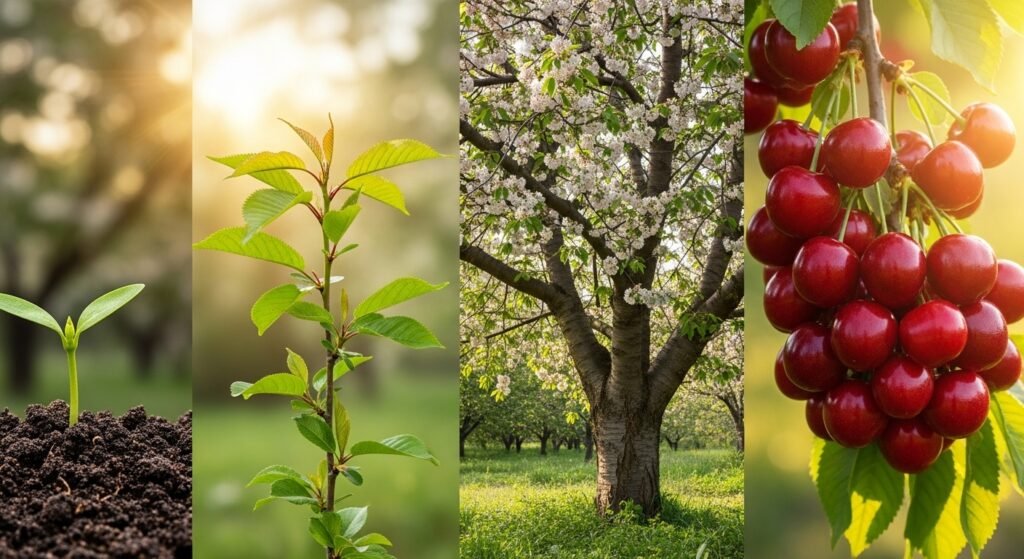
Growing your own fruit is like a total vibe for your backyard. It is a long journey but seeing those red gems pop up is worth it. You need to know the cherry tree growth stages to get the best fruit. This guide covers every single step from a seed to a giant tree.
Understanding the Basics of Cherry Trees
Before you dig a hole, you gotta know what you are planting. Cherries are not just one thing. They belong to the Prunus family of plants. You can pick sweet ones or sour ones depending on what you like. Sweet cherries are the ones you snack on fresh. Sour cherries are usually the best for pies and jams.
Types of Cherry Trees
Sweet cherry trees usually grow best in hardiness zones 5 to 7. They often need a buddy tree to help them make fruit through cross-pollination. Sour cherries are tougher and handle colder zones like 4 to 6. Most sour types are self-pollinating so they can hang out alone. You should check your local weather before you buy a tree.
Optimal Growing Conditions
Cherry trees are big fans of the sun. They need full sunlight to make the sugar that makes the fruit taste good. Your soil needs to drain water really well so the roots do not get soggy. Sweet cherries need a lot of room, usually 35 to 40 feet apart. Sour cherries are smaller and only need about 20 to 25 feet of space.
Geographic Distribution
Cherry trees grow all over the place if the weather is right. Sweet cherries can handle cold down to -16°F if they are healthy. They can produce a massive amount of fruit, sometimes up to 300 pounds. Sour cherries usually give you about 100 pounds of fruit. Knowing your area helps you pick a tree that will actually survive the winter.
Yield Expectations by Tree Size
- Standard trees are the big boys that reach full height and give the most fruit.
- Semi-dwarf varieties are a middle ground for people with medium-sized yards.
- Dwarf varieties are perfect for small spaces or even big pots.
- Sweet tree production can range from 15 to 20 gallons of cherries every year.
- Sour tree production is usually lower, around 3 to 18 gallons depending on size.
Optimal Growing Conditions and Site Selection
Picking the right spot is the most important part of the job. If the spot is bad, the tree will struggle forever. You want a place where the tree feels like a star. It needs plenty of light and the right dirt to grow strong.
Sunlight Requirements
Your cherry tree needs at least 6 to 8 hours of sun every day. Without enough sun, you will get more leaves and way less fruit. Sun also helps dry off the leaves after it rains. This prevents gross mold and diseases from growing on your tree.
Soil Composition
Cherries love loamy soil that is not too thick or too sandy. The pH balance should be right in the middle, around 6.0 to 7.0. You can get a cheap test kit to check your soil at home. If the soil is too acidic, the tree might not get its vitamins.
Spatial Planning
- Sweet cherries need 35 to 40 feet of room to breathe.
- Sour cherries are okay with 20 to 25 feet of space.
- Airflow is key so the trees do not pass germs to each other.
- Root room is vital because roots spread out further than the branches do.
Climate Resilience
You need to know how cold your winters get before planting. Sweet cherries are a bit more sensitive than the sour ones. A late frost in the spring can kill all your flower buds. If that happens, you will not get any cherries that year.
Wind Protection
High winds can rip the pretty blossoms right off the branches. If the blossoms fall early, the bees cannot pollinate them. Try to plant your tree near a fence or a taller hedge. This acts as a windbreak to keep the branches safe and steady.
The Germination Process: The Beginning of Life
The cherry tree growth stages start with a simple seed. You can find these seeds inside the pits of the cherries you eat. It is a slow process but it is cool to watch. You have to trick the seed into thinking it went through a winter.

Seed Collection and Preparation
Save the pits from the best cherries you can find. Clean off all the fruit bits so they do not get moldy. Let them dry out on a paper towel for a few days. Only use pits that look healthy and are not cracked.
Cold Stratification
- Biological necessity means the seed needs a fake winter to wake up.
- Duration should be about 30 to 60 days in a cold spot.
- Temperature needs to stay around 34°F to 40°F, like inside a fridge.
- Moisture is kept by putting pits in a bag with damp peat moss.
Planting the Seed
Once they have been cold for a while, they are ready for dirt. The best temperature for them to sprout is 15 to 20°C. Use a small pot with light soil that stays moist but not wet. Give them a little bit of light but not direct hot sun yet.
Emergence
Wait about 2 to 4 weeks and you will see a green shoot pop up. Under the dirt, a taproot is growing straight down to find water. This is the most fragile time for your new cherry tree. Keep it away from hungry bugs and pets that might knock it over.
The Seedling Stage: Early Growth Patterns
Now your seed is a baby tree called a seedling. It is working hard to build a solid foundation. This stage is all about getting tall and growing roots. You have to be patient because it won’t have fruit yet.
First Year Development
In the first year, your little tree will grow about 6 to 12 inches tall. It will look more like a twig with a few leaves at first. This is when the tree decides if it is going to be strong. Keep the soil moist so it does not dry out and die.
True Leaf Formation
The first leaves that pop out look very simple. Later, the tree grows true leaves that look like real cherry leaves. These leaves have jagged edges and help the tree catch more sun. More leaves mean the tree can make more food for itself.
Root System Foundation
- The initial taproot goes deep into the ground to anchor the tree.
- Lateral roots grow sideways to find nutrients in the topsoil.
- Stability is created as these roots weave through the dirt.
- Water uptake happens mostly through the tiny hairs on the root tips.
Environmental Sensitivity
Seedlings are like babies and can get sunburned if it is too hot. They also hate being stepped on or chewed by rabbits. You might want to put a little fence around them. Watch out for heavy rain that could wash the little tree away.
Advanced Propagation Methods
If you do not want to start from a seed, there are other ways. Most pros use these methods to get fruit faster. It also makes sure the tree grows exactly the fruit you want. These methods can be a bit more technical.
Grafting Techniques
Grafting is like a tree surgery where you join two different plants. You take a branch from a tasty tree and attach it to a strong rootstock. This makes the tree grow faster and stay healthier. Common rootstocks like Mazzard or Mahaleb are used for this.
Softwood Cuttings
You can cut a branch from a healthy tree in the summer. If you put it in special soil, it might grow its own roots. This is called a softwood cutting. It is a great way to make a copy of a tree you already love.
Tissue Culture
This is some high-tech science stuff done in a lab. Scientists use tiny bits of a plant to grow thousands of new ones. This makes sure the trees are totally free of any nasty viruses. Most of the trees you buy at a nursery start this way.
The Vegetative Growth Phase
This is the teenager phase of the cherry tree growth stages. The tree is not making flowers yet, just getting big. It spends all its energy on wood and leaves. This phase usually lasts about 3 to 5 years.

Annual Growth Rates
Healthy trees grow about 12 to 24 inches every single year. If your tree is growing less than that, it might need more food. If it grows too much, the wood might be weak and break easily. Balance is the name of the game here.
Structural Development
The tree starts to fill out and get a round shape called a crown. You want a strong trunk to hold up all the heavy fruit later. The branches should be spaced out so light can reach the middle. This helps the tree grow evenly on all sides.
Nutritional Needs
- Soil fertility must be checked to see if the tree has enough vitamins.
- Micronutrients like Boron and Zinc help the tree stay green and healthy.
- 5-10-10 fertilizer is the best mix to use in the early spring.
- Watering should be deep and regular during dry summer weeks.
Early Pruning
Pruning means cutting off branches to help the tree grow better. You want to get rid of branches that are crossing or rubbing. This helps the tree focus its energy on the best branches. It also makes the tree look way better in your yard.
Training Systems for Young Trees
How you prune your tree determines its shape for life. Different shapes work better for different types of cherries. You have to start training them when they are still young. It is easier to bend a twig than a thick branch.
Central Leader System
This makes the tree grow like a Christmas tree with one main trunk. It is the most popular way to grow sweet cherries. This shape helps the tree get very tall and strong. It also keeps the branches from getting too heavy and snapping.
Open Center (Vase) System
This shape makes the tree look like a bowl or a vase. It is great for sour cherries because it lets light into the middle. Light in the center helps the fruit ripen all at the same time. It also makes it easier for you to reach the fruit when it is time to pick.
Steep Leader System
This is a mix of both systems used in professional orchards. It keeps the tree narrow so you can plant more trees in a small area. This is called high-density planting. It takes more work to maintain, but you get a ton of fruit.
The Flowering Stage: The Promise of Fruit
This is the prettiest part of the cherry tree growth stages. In the spring, the tree explodes with white or pink flowers. This usually happens in April or May depending on where you live. These flowers are the secret to getting cherries.

Blossom Development
The flowers start as tiny green buds that slowly get bigger. They turn into beautiful blossoms with five petals. The color might start light and get darker as they stay open. A tree full of blossoms is a sign that a big harvest is coming.
The Pollination Process
- Bees are the most important helpers because they carry the pollen.
- Beneficial insects like butterflies also help move pollen around.
- Cross-pollination is when two different trees trade pollen to make fruit.
- Self-fertile trees can make fruit using their own pollen.
Factors Affecting Bloom Time
The weather has a huge impact on when the flowers open up. Warm weather makes them pop out fast. If it stays cold, they will take their time. Healthy trees that get plenty of water will always have more flowers.
Fruit Formation and Development
Once the flowers fall off, the real magic happens. Small green nubs appear where the flowers used to be. These will grow into the juicy cherries you love to eat. This part takes about 2 to 3 months.
Post-Pollination Transition
The petals will fall like snow on the ground once they are done. The middle of the flower starts to swell up into a tiny green ball. If the flower was not pollinated, the little nub will just fall off. You want as many of these to stay on the tree as possible.
The Maturation Timeline
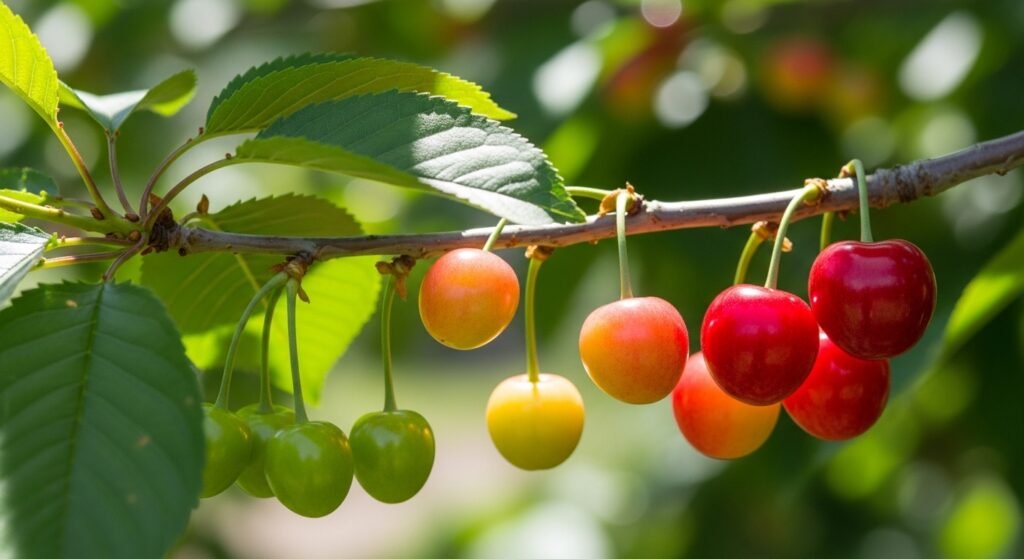
The fruit starts out hard and very green. It gets bigger every day as it drinks up water and nutrients. Inside the fruit, a hard pit is forming to protect the seed. This is when the tree needs the most water to make the fruit juicy.
Color Transformation
- Green stage is when the fruit is growing in size but tastes bitter.
- Yellow stage happens in some varieties before they turn red.
- Red stage is when the cherries start to get sweet.
- Black/Dark stage is when sweet cherries are at their peak sugar level.
The “June Drop” and Natural Thinning
Sometimes the tree grows too many cherries and can’t feed them all. It will naturally drop some of the small ones in early summer. Do not panic if you see green cherries on the ground. The tree is just making sure the remaining cherries are high quality.
Nutrient and Water Demands
During this time, the tree is working overtime. If the soil gets too dry, the fruit might stop growing. If it gets too much water all at once, the skins can burst or crack. Try to keep the soil moisture even so the fruit grows smoothly.
Harvesting Season and Timing
Harvesting is the best day of the year for any gardener. You finally get to taste the results of your hard work. Sweet cherries usually show up in June, and sour ones in July. You have to be fast before the birds get them.

Determining Maturity
You can’t just go by color alone. Give a cherry a gentle squeeze to see if it is slightly soft. The best way to know is to just taste one. If it is sweet and tastes like a cherry, it is ready to go.
Sweet Cherry Harvest
Sweet cherries are usually ready in early June. They should be dark and glossy when you pick them. If you pick them too early, they won’t get any sweeter once they are off the tree. Wait for that perfect deep color.
Sour Cherry Harvest
Sour cherries take a little longer and ripen in mid-July. They should be bright red and very easy to pull off the stem. These are perfect for making pies right away. You can also leave them a few extra days to lose some of that tartness.
Optimal Picking Techniques
- Pull by the stem so you do not bruise the soft fruit.
- Pick in the morning while it is still cool outside.
- Use a basket with holes so the cherries can breathe.
- Be gentle because cherries can squish very easily.
Post-Harvest Care and Storage
Once you bring them inside, you need to keep them fresh. Cherries do not last very long at room temperature. You should eat them or store them as soon as possible. Here is how to make them last.
Immediate Handling
Keep the stems on until you are ready to eat them. Removing the stem creates a hole where the fruit can start to rot. Do not wash them until right before you snack. Water on the skin can make them get moldy in the fridge.
Refrigeration Protocols
Cherries love the cold. Put them in the back of the fridge where it is the coldest. They can stay fresh for about 10 days if you keep them dry. Use a container that lets a little air in so they do not get slimy.
Long-term Preservation
- Freezing is easy if you pit them first and lay them on a tray.
- Thawing cherries makes them a bit soft, but they are great for smoothies.
- Drying cherries makes them like cherry raisins for trail mix.
- Canning lets you keep that summer taste all through the winter.
Dormancy and Winter Care
When the leaves turn yellow and fall off, the tree is going to sleep. This is called dormancy and it is a vital part of the cherry tree growth stages. The tree needs this rest to have energy for the next year. You still have a little work to do in the winter.

The Biological Rest Period
The tree stops growing and shuts down its systems. This protects it from freezing to death in the snow. It looks like a bunch of dead sticks, but it is very much alive. This nap is what allows it to bloom in the spring.
Chilling Requirements
Cherry trees need a certain amount of cold hours to bloom right. These are called chill hours and they happen between 32-45°F. If the winter is too warm, the tree might get confused. It might not grow any flowers at all the following spring.
Winter Protection Strategies
- Mulching the base helps keep the roots at a steady temperature.
- Tree wrap can prevent the trunk from cracking in the sun.
- Hydration is still needed if the ground is not frozen and it is dry.
- Frost blankets can be used for young trees during crazy cold snaps.
Dormant Season Pruning
Late winter is the best time to do your heavy pruning. Since there are no leaves, you can see the shape of the branches clearly. Cut off any wood that looks diseased or broken. This helps the tree grow fast as soon as it wakes up.
Disease Prevention and Management
Even a healthy tree can get sick sometimes. You have to be like a doctor and check your tree often. Catching a problem early makes it much easier to fix. Most diseases are caused by tiny germs or mold.

Identifying Common Pathogens
- Brown Rot makes the fruit look fuzzy and rotten while still on the branch.
- Cherry Leaf Spot puts purple or brown dots on the leaves.
- Black Knot creates big black lumps on the branches that look like burnt popcorn.
- Powdery Mildew looks like someone spilled white flour on the leaves.
Prevention Strategies
Keep your yard clean by picking up fallen leaves and old fruit. This stops germs from hiding in the trash over the winter. Space your trees out so the wind can dry the leaves. Use the right varieties that are naturally tough against sickness.
Treatment Options
If your tree gets sick, you can use organic sprays like copper fungicide. Always prune off the sick parts and throw them in the trash, not the compost. If the problem is really bad, you might need a stronger chemical from the store. Follow the instructions carefully so you do not hurt the bees.
Integrated Pest Management (IPM)
Bugs love cherries just as much as you do. Some bugs eat the leaves, while others crawl inside the fruit. You want to use a mix of different ways to keep them away. This is called Integrated Pest Management.
Common Pests
The Western Cherry Fruit Fly is a major villain for cherry growers. It lays eggs inside the fruit, and then you find a worm when you bite in. Aphids are tiny bugs that suck the juice out of the leaves. Birds are also a huge pest because they will eat your whole harvest in one morning.
Biological Controls
You can use good bugs to fight the bad bugs. Ladybugs love to eat aphids and keep your tree clean. You can also hang birdhouses for birds that eat insects but not fruit. Using nature to help you is way better than using tons of poison.
Troubleshooting Common Growth Issues
Sometimes your tree looks weird, and you do not know why. It could be the weather or just a lack of vitamins. Here are some of the most common issues people face.
Fruit Cracking
If it rains a lot right before harvest, the cherries might split open. This is because they drink too much water too fast. You can try to pick them early if you know a big storm is coming. Calcium sprays can also help make the skins a bit tougher.
Non-Bearing Trees
If your tree is old enough but has no fruit, check the chill hours. It might also be getting too much nitrogen from your lawn fertilizer. Too much nitrogen makes the tree grow leaves but no flowers. Also, make sure you have a buddy tree for pollination if needed.
Yellowing Leaves
Yellow leaves usually mean the tree is stressed. It might be getting too much water, or the soil might be too wet. It could also be a sign of Chlorosis, which means the tree needs more iron. Check the dirt and make sure it is not soggy.
Long-term Tree Health and Longevity
A cherry tree is a long-term friend for your yard. It can live for 30 to 50 years if you take care of it. As the tree gets older, it needs a little more attention.
Reaching Full Maturity
By the time the tree is 10 years old, it is in its prime. It will give you the most fruit during this time. The branches will be thick and the shade will be great. Enjoy this time because the tree is at its most beautiful.
Maintenance Cycles
Keep up with your yearly pruning and fertilizing. Check the mulch every spring to make sure it is still there. Water the tree during heatwaves even when it is old. A little bit of work every year keeps the tree happy for decades.
Identifying Stress Signs
Watch for branches that are dying back or fruit that is getting smaller. This could be a sign that the tree is getting too old or has a hidden disease. Stunted growth is another big red flag. If you see these, you might need to change how you care for it.
Conclusion: The Rewards of Understanding the Cycle
Knowing the cherry tree growth stages makes you a better gardener. From that first tiny sprout to the massive harvest, every step matters. It takes work, but nothing beats a bowl of fresh cherries from your own tree. Keep an eye on your trees, give them what they need, and they will reward you for a long time.
Frequently Asked Questions
What are the best companion plants for cherry trees?
Marigolds and lavender are top tier choices for your orchard. They attract pollinators while keeping nasty pests away from the trunk. Chives can also help prevent apple scab and other fungal issues. Garlic is another solid pick to ward off borers and aphids naturally.
Can I grow a cherry tree in a large pot or container?
You totally can if you pick a dwarf variety. These trees stay small but still produce a decent amount of fruit. Use a pot that is at least 15 to 20 gallons. Make sure the container has plenty of drainage holes to avoid root rot.
How much water does a mature cherry tree need per week?
A fully grown tree usually needs about 10 gallons of water every week. During a heatwave, you might need to bump that up. Always check the soil a few inches down to see if it is dry. If the dirt feels dusty, it is definitely time to give it a soak.
Why are my cherry tree leaves turning red in the summer?
This is usually a sign of stress or a nutrient deficiency. It could be a lack of magnesium or phosphorus in the soil. Sometimes, it is just the tree reacting to a sudden change in temperature. Check your soil pH to make sure the tree can actually eat its food.
Is it safe for dogs or cats to eat cherries?
The fruit itself is okay in small amounts, but the pits are dangerous. Cherry pits contain cyanide, which is toxic to pets if they crunch them. The stems and leaves are also harmful to animals. Keep your pets away from the fallen fruit to stay safe.
How do I protect my cherry harvest from hungry birds?
Bird netting is the most effective way to keep your harvest safe. You can also hang shiny objects like old CDs or reflective tape. These items scare the birds when they catch the sunlight. Some people use plastic owls, but you have to move them often or birds get smart.
What is the average lifespan of a sweet cherry tree?
Sweet cherry trees usually live between 20 to 30 years. If you take amazing care of them, they might reach 50. Sour cherry trees tend to have a slightly shorter lifespan. Proper pruning and feeding are the keys to a long and happy tree life.
How do I fix a cherry tree that is leaning?
You should stake a young tree if it starts to tilt during growth. Use soft ties so you do not damage the bark on the trunk. If a mature tree is leaning, it might have root damage or poor soil. You may need to call a pro to see if it is still safe.
What happens if I do not prune my cherry tree?
If you skip pruning, the tree will get too thick and messy. Sunlight won’t reach the middle, and the fruit will be small and sour. Overgrown trees are also much more likely to catch diseases. Regular trims keep the tree strong and the fruit plentiful.
Can I use the wood from a dead cherry tree for a BBQ?
Cherry wood is famous for giving meat a sweet and fruity flavor. It is perfect for smoking chicken, pork, or even beef. Just make sure the wood is dry and seasoned before you toss it in. Never use wood that has been treated with chemical sprays.
Why do my cherries have a bitter taste?
If your sweet cherries taste bitter, they might have been picked too early. Cherries do not get sweeter once you pull them off the branch. It could also be a sign of a nutrient imbalance in the soil. Make sure the tree gets plenty of sun to build up those sugars.
Does a cherry tree need a special type of mulch?
Organic mulch like wood chips or shredded bark works best. It keeps the moisture in the ground and feeds the soil as it rots. Keep the mulch a few inches away from the actual trunk. If the mulch touches the bark, it can cause rot or attract bugs.
How do I stop ants from climbing my cherry tree?
Ants usually climb trees to “farm” aphids for their sweet honeydew. You can use a sticky trap or “tree tanglefoot” around the base of the trunk. This creates a barrier that the ants cannot cross. Once the ants are gone, the ladybugs can finish off the aphids.
Can I grow a cherry tree from a store bought cherry?
You can try, but the results are usually a big surprise. Most store cherries are hybrids, so the seed won’t grow the same fruit. The tree might turn out to be a wild type with tiny, sour fruit. It is a fun experiment, but buying a nursery tree is safer.
Why is my cherry tree oozing clear or amber sap?
This is called gummosis and it is the tree’s way of healing itself. It usually happens because of an injury or a bug boring into the wood. It can also be a sign of a bacterial infection. Keep the area clean and try to find the source of the stress.
How do I deal with a late spring frost?
If a frost is coming while your tree is in bloom, cover it with a big sheet. This can save the blossoms and ensure you still get fruit. Some people also use old-school holiday lights to create a tiny bit of warmth. Make sure the cover reaches the ground to trap the heat.
What is the best time of day to water my cherry tree?
Early morning is the absolute best time for watering. This allows the leaves to dry off during the day, which prevents mold. Watering at night can keep the tree too damp for too long. If you water in the heat of the day, much of it just evaporates.
Do cherry trees lose their leaves every year?
Yes, cherry trees are deciduous, which means they go bald in the winter. They usually turn yellow or orange before falling off in the autumn. This is a normal part of the tree getting ready for dormancy. If they fall off in the summer, you have a problem.
How do I know if my cherry tree is dead or just dormant?
You can do a “scratch test” on a small branch with your fingernail. If the wood underneath is green and moist, the tree is alive. If it is brown and brittle, that specific branch is dead. Check several spots before you decide to give up on the tree.
Can I plant a cherry tree near my house or foundation?
It is not a great idea because cherry roots are very strong and spread far. They can eventually crack pipes or mess with your foundation. It is best to plant them at least 15 to 20 feet away from any buildings. Give those roots plenty of room to grow without causing trouble.