Skip to content
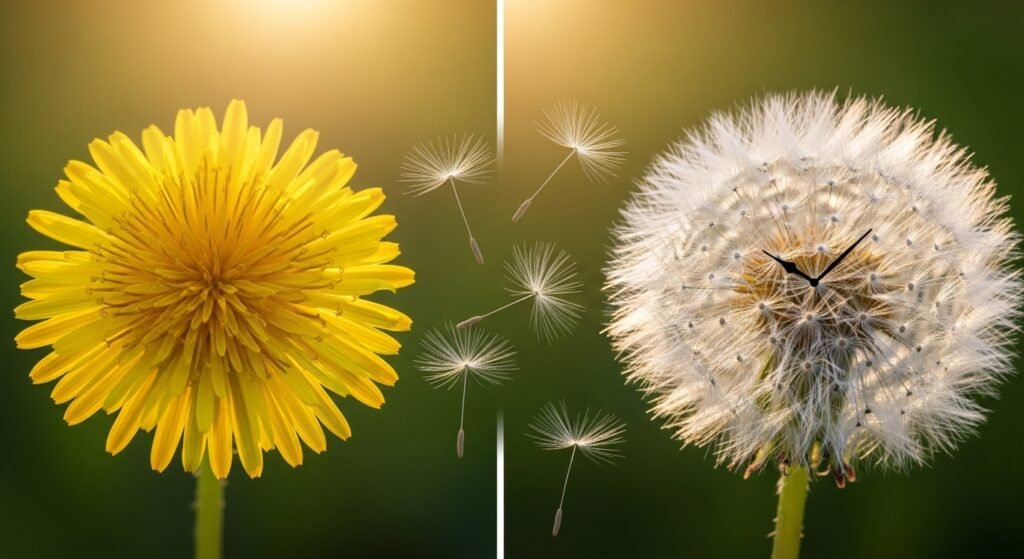
Dandelions might seem like simple weeds in your backyard, but they are actually super cool plants. The dandelion plant life cycle shows how nature can adapt and keep going no matter what happens. These yellow flowers are everywhere and they have some amazing secrets to share with us. When you look closely at a dandelion, you see a plant that is a total survivor. It goes through many stages to stay alive and grow in almost any place you can imagine.
The dandelion, known as Taraxacum officinale, is a tough perennial plant that lives for many years. It has bright yellow flowers that light up the grass in the early spring. Understanding the dandelion plant life cycle helps you see why it is so good at spreading. This guide will take you through every step of its journey from a tiny seed to a fluffy white puffball. You will learn how it grows, how it survives the cold, and why it is actually good for the earth.
Introduction to Dandelions: Nature’s Resilient Beauty
Many people think dandelions are just annoying weeds that ruin a perfect green lawn. But if you look at them as nature’s resilient beauty, your whole perspective might change. They are not just random plants popping up to bother gardeners. They are complex living things with a very rich history behind them.
The dandelion plant life cycle is a perfect example of how a plant can be both beautiful and very strong. It starts as a small seed and turns into something that can withstand being stepped on or mowed over. This plant is a master of adaptation and it knows how to keep its species going. It is a biological marvel that has been around for a very long time.
Origins and Historical Significance
The story of the dandelion goes back much further than you might think. These plants were not always considered pests by the people who lived near them. In fact, they were once highly valued for their many uses in daily life.
- Etymology: The word dandelion comes from the French phrase “dent de lion”. This translates to “lion’s tooth” because the leaves have jagged edges that look like teeth.
- Ancient Use: Dandelions have been a part of Chinese medicine for a very long time. They were also used in Europe during the 17th century to help with health problems.
- Symbolism: For many cultures, the dandelion is a symbol of loyalty and staying strong. People have long admired its ability to thrive even in very difficult spots.
Why Dandelions Matter in Our Ecosystem
Dandelions are actually super important for the health of our planet. They play a big role in the ecosystem that most people never even notice. Without them, many other creatures would have a much harder time surviving.
- Early Spring Pollination: Dandelions are some of the first plants to bloom when the weather gets warm. This provides a much-needed snack for hungry bees and butterflies waking up from winter.
- Soil Aeration: The deep taproot of the dandelion acts like a natural drill for the earth. It breaks up hard soil so that air and water can reach deep down.
- Nutrient Cycling: These plants pull minerals from deep in the ground up to the surface. When the leaves die, those nutrients help other plants grow better nearby.
Basic Characteristics of Taraxacum Officinale
To understand the dandelion plant life cycle, you need to know what makes this plant unique. The dandelion has several specific parts that help it stay alive and reproduce. Every part of the plant has a special job to do during its life.
- Morphology: The plant has jagged leaves that grow in a circle close to the ground. It has a hollow stalk that carries a milky sap inside of it.
- Resilience Factors: Dandelions can grow in cracks in the sidewalk or in thick grass. Their ability to spread seeds quickly is one reason they are so successful.
Understanding the Comprehensive Dandelion Plant Life Cycle
The dandelion plant life cycle is a never-ending loop of growth and renewal. It is a perennial plant, which means it can live for a long time and come back every year. Each stage of the cycle is vital for the plant to continue its journey.
The cycle moves through several distinct phases that keep the plant healthy. It starts with a seed finding a good spot to grow in the dirt. From there, it develops roots and leaves before finally showing off its yellow flower. After the flower fades, the plant prepares to send its seeds out into the world again.
From Seed to Seedling: Early Growth Stages
Every dandelion starts its life as a tiny seed with a big dream. The beginning of the dandelion plant life cycle is all about finding the right home. Once the seed finds a good spot, it starts the hard work of growing.
Optimal Germination Conditions
Dandelion seeds are not very picky, but they do have some preferences. They need the right environment to start waking up and growing into a plant. If the conditions are good, they will sprout very quickly.
- Temperature requirements: Seeds like it best when the soil is between 59°F and 77°F. This warm weather tells the seed that it is safe to start growing.
- Soil depth: Dandelion seeds need to be very close to the surface of the soil. They usually grow best if they are less than an inch deep in the dirt.
- Germination timeline: Once the seed starts to sprout, you will see a tiny plant in about 7 to 14 days. This is the very first step of the dandelion plant life cycle.
Root Development Process

As soon as the seed sprouts, it starts building its foundation. The root is the most important part of the plant for staying alive over time. It grows fast and deep to find water and nutrients.
- Immediate priority: The plant focuses all its energy on growing a strong taproot. This root acts like an anchor to keep the plant from being pulled out.
- Nutrient storage: Within just a few weeks, the root starts to store food for the plant. This helps the dandelion survive when the weather gets bad or cold.
First Leaves Formation
After the root is set, the dandelion starts growing its first leaves. This is a very busy time for the young plant as it tries to get bigger. The leaves are essential for making the energy the plant needs to bloom.
- Vegetative growth phase: This stage usually lasts between 4 and 10 weeks. The plant spends this time getting as much sun as possible to get strong.
- Leaf size: Dandelion leaves can grow quite long, sometimes reaching up to 12 inches. They have jagged edges that look like the teeth of a lion.
- Rosette formation: The leaves grow in a flat circle right on top of the ground. This shape helps the plant catch the most sunlight and stay safe from the wind.
The Flowering Phase: A Golden Transformation
The most famous part of the dandelion plant life cycle is the yellow flower. This is when the plant is most visible and beautiful in the garden. The flower is more than just a pretty face; it is a complex machine.
The Anatomy of the Bloom

When you look at a dandelion flower, you are actually looking at many flowers. Each tiny yellow petal is part of its own small flower called a floret. All these florets work together to help the plant make new seeds.
- Composite flowers: One dandelion head can have hundreds of these tiny florets inside of it. They all sit together in a big yellow circle to attract insects.
- Bud emergence: The flower buds grow from the very center of the leaf circle. They push up on a hollow stalk until they are ready to open.
Seasonal Timing
Dandelions don’t just bloom once and then quit for the year. They are very hard workers and will flower as much as they can. You can see them blooming throughout most of the year if the weather is okay.
- Blooming window: You will see the most flowers from April to November. They love the spring and fall but can even bloom in the summer heat.
- Diurnal movement: These flowers have a daily routine that they follow very strictly. They open up wide in the morning and close up tight when the sun goes down.
Pollination and Seed Formation Process
For the dandelion plant life cycle to continue, it needs to make seeds. This process involves help from friends and some clever plant tricks. Once the flower is pollinated, it starts to change into something new.
Role of Pollinators
Insects are the best friends of the dandelion during the flowering stage. The bright yellow color is like a big neon sign for bees and butterflies. They come for the sweet nectar and help the plant in return.
- Attracting insects: Dandelions reflect UV light that we can’t see, but bees can. This makes the flowers look like a bullseye to a hungry bee.
- Pollination agents: Many different bugs visit dandelions, including honeybees and bumblebees. They carry pollen from one flower to another as they fly.
Genetic Flexibility
Dandelions are very smart when it comes to making sure they have offspring. They have a few different ways to create seeds so they never fail. This flexibility makes them one of the most successful plants on Earth.
- Pollination methods: They can use cross-pollination with other plants or even pollinate themselves. This means they can still make seeds even if there are no bees around.
- Seed numbers: A single flower head can produce between 150 and 200 seeds. That is a lot of new plants coming from just one flower.
Development of the Seed Head
After the yellow petals have done their job, they start to go away. The plant then focuses all its power on making the seeds grow big and strong. You will see the flower head close up for a little while during this time.
- Withered petals: The yellow parts of the flower dry up and fall off the plant. This leaves behind a green base where the seeds are hiding.
- Stalk elongation: The stem of the flower grows taller during this stage. It wants to get the seeds as high as possible so the wind can catch them.
Transformation to the White Puffball Stage
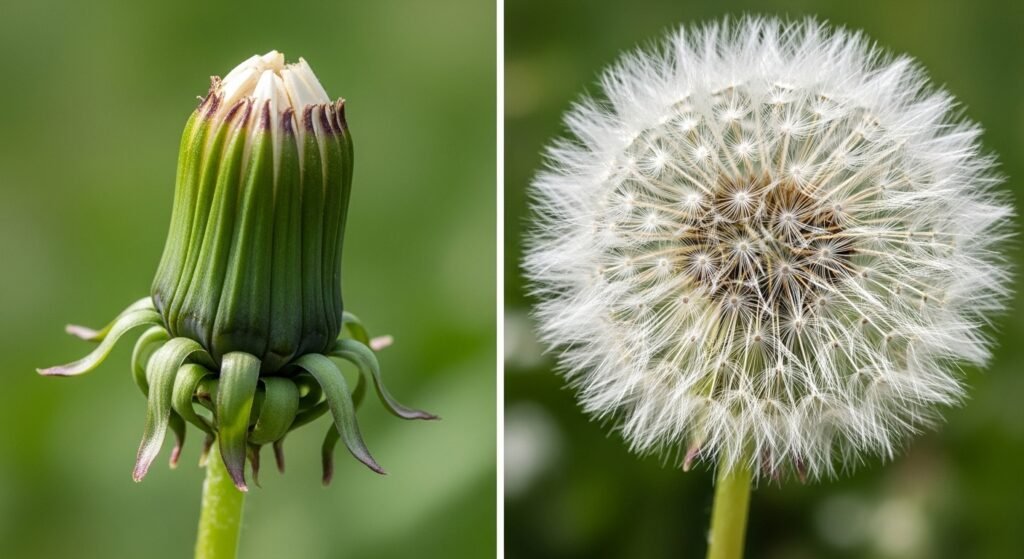
This is the part of the dandelion plant life cycle that kids love the most. The yellow flower is replaced by a soft, white ball of fluff. This puffball is actually a very advanced tool for spreading the plant’s seeds.
- The clock: Many people call this white puffball a “clock” and blow on it to tell time. Each little white piece is attached to a seed that is ready to fly.
- The pappus: The white fluff is called a pappus, and it acts like a tiny parachute. It is very light and can stay in the air for a long time.
Seed Dispersal Mechanisms: Engineering for Travel
The way a dandelion spreads its seeds is a masterpiece of natural engineering. It doesn’t just drop its seeds and hope for the best. It uses the wind to carry its children far away to new places.
The Mechanics of the Parachute

The tiny parachutes on the seeds are built for maximum airtime. They are designed to catch even the smallest breeze and stay aloft. This helps the dandelion find new spots to grow where there is no competition.
- Pappus structure: Each seed has about 100 little bristles that make up its parachute. This structure creates a special kind of air bubble that keeps it floating.
- Wind dispersal distance: Dandelion seeds can travel incredibly long distances. Some can fly as far as 60 miles away from the parent plant.
Environmental Synchronization
Dandelions are very in tune with the weather when it comes to releasing seeds. They know when the best time is to let their seeds fly into the air. They use environmental cues to make sure their seeds have the best chance.
- Humidity actuator: The little parachutes can open and close based on how much moisture is in the air. They close up when it’s rainy so the seeds don’t get heavy and fall.
- Dry conditions: When the air is dry, the parachutes open wide to catch the wind. This is the perfect time for the seeds to start their journey.
Scientific Significance
Scientists are actually studying dandelions to learn how to build better machines. The way the seeds fly is so efficient that it has inspired new technology. There is a lot to learn from such a common little plant.
- Soft robotics: Researchers are looking at how the seeds move to make better robots. The natural movement of the dandelion is a great model for future inventions.
- Aerodynamic efficiency: The seeds use a unique way of flying that is very energy-efficient. This could help us design better flying tools or even parachutes for humans.
The Root System: A Strategy for Eternal Survival
While the flowers are pretty, the root is the real powerhouse of the plant. The dandelion plant life cycle relies heavily on its deep and strong root system. This is what allows the plant to survive when things get tough.
Taproot Development and Depth

The dandelion grows a long, vertical root called a taproot that goes straight down. This root is like the plant’s anchor and its lifeline to the earth. It makes the dandelion one of the hardest plants to get rid of in a garden.
- Penetration levels: The taproot can grow as deep as 10 to 15 feet into the ground. This lets the plant find water even when the surface soil is bone dry.
- Anchoring mechanisms: The root holds onto the dirt so tightly that it’s hard to pull the whole thing out. This protects the plant from animals or people trying to remove it.
Nutrient Storage Methods
The taproot isn’t just for holding on; it’s also a big pantry for the plant. It stores all the food and vitamins the dandelion needs to grow back later. This storage system is a key part of the dandelion plant life cycle.
- Energy storage: The root is full of carbohydrates and healthy minerals like iron and zinc. It also contains lots of vitamins that keep the plant healthy.
- Storage tank: Think of the root as a battery that keeps the plant powered up. Even if the leaves are gone, the root still has plenty of energy left inside.
Regeneration Capabilities
One of the most amazing things about dandelions is how they can grow back. They have an incredible ability to heal themselves and start over. This makes them one of the most resilient plants in your yard.
- Survival from fragments: If you leave even a tiny piece of the root in the ground, it can grow a whole new plant. This is why they keep coming back even after you pull them up.
- Healing power: The plant can quickly repair any damage to its root system. It is a survivor that refuses to give up easily.
Winter Survival and Perennial Growth
Dandelions don’t die when the snow starts to fall. They have a very smart plan for making it through the cold winter months. This part of the dandelion plant life cycle is all about waiting and staying safe.
Techniques for the Cold
When winter comes, the dandelion gets ready for a long nap. It stops growing and hides its most important parts underground. This dormancy helps it survive freezing temperatures that would kill other plants.
- Dormancy: The leaves on top of the ground might turn brown and die away. But underneath the soil, the root is still very much alive and waiting.
- Energy conservation: The plant stops using its energy to make flowers or seeds. It keeps all its stored food safe in the taproot until the weather warms up.
Spring Regrowth
As soon as the ground begins to thaw, the dandelion is ready to go. It is often the first plant to show green leaves in the early spring. This gives it a big head start over other plants that have to grow from seeds.
- Perennial advantage: Since the root is already there, the plant can grow very fast. It doesn’t have to wait for a seed to sprout to start its year.
- Fast-tracking growth: The stored energy in the root lets the dandelion bloom before many other plants even wake up. This is a key part of the dandelion plant life cycle’s success.
Environmental Factors Affecting Growth and Adaptation
Dandelions are tough, but they still care about where they live. Certain factors in the environment can help them grow better or make it harder for them. They are masters at adapting to whatever the world throws at them.
Soil Conditions
The dirt that a dandelion grows in makes a big difference in how healthy it is. While they can grow almost anywhere, they do have a favorite kind of soil. Understanding this can help you manage them in your own garden.
- Preferences: Dandelions love soil that is full of nutrients like nitrogen and potassium. They also like soil that lets water drain away easily.
- Obstacles: They don’t do as well in soil that has too much calcium in it. Soil without enough organic matter can also slow down their growth.
- pH sensitivity: They prefer soil that is slightly acidic or neutral. If the soil is just right, the dandelion plant life cycle will move even faster.
Climate Resilience
Dandelions are world travelers and can be found in many different countries. They can survive in climates that would be too harsh for most garden flowers. This resilience is a hallmark of the dandelion plant life cycle.
- Temperature range: They can live in cold mountains or hot coastal areas without any trouble. This flexibility is why you see them all over the world.
- Water management: Thanks to their deep roots, they can handle long periods without any rain. They just pull water from deep underground until it rains again.
- Waterlogging: The only thing they really hate is soil that stays too wet for too long. Too much water can actually make the root rot and kill the plant.
Seasonal Changes and Adaptation Patterns
The dandelion changes its behavior throughout the year to match the seasons. Each season brings a new focus for the dandelion plant life cycle. This constant adaptation keeps the plant healthy and thriving year-round.
- Spring: This is the time for rapid growth and showing off bright yellow flowers. The plant is busy making new seeds to spread around.
- Summer: Dandelions keep on blooming and making seeds as long as it’s warm. They are very productive during the long sunny days.
- Autumn: As the days get shorter, the plant starts moving its energy down into the root. It’s preparing for the cold months ahead.
- Winter: The plant stays quiet underground and survives on its stored food. It’s the resting phase of the dandelion plant life cycle.
Additional Value: The Chemical Defense and Utility of Dandelions
Dandelions have some hidden chemical powers that help them stay safe. These natural tools are part of why they are such successful survivors in nature. They are not just pretty flowers; they are well-defended plants.
The Role of Milky Latex
If you ever break a dandelion stem, you will see a white, milky liquid inside. This is called latex, and it has a very important job for the plant. It’s not just there for show; it’s a defensive weapon.
- White sap: The sap tastes very bitter, which keeps hungry animals from eating the plant. It’s like a built-in “do not eat” sign for the dandelion.
- Healing properties: The latex acts like a bandage that helps the plant heal if it gets cut. It also keeps bad fungi from getting inside the plant and making it sick.
Dandelions as Companion Plants
In a garden, dandelions can actually be very helpful neighbors. They do things that help the other plants around them grow better and stronger. Many people are starting to see them as useful instead of just weeds.
- Dynamic accumulators: They pull up minerals from deep in the dirt and share them with the soil. This makes the ground richer for all the plants nearby.
- Ethylene gas: Dandelions release a special gas that can help nearby fruits and veggies ripen faster. This can be a great natural boost for your garden harvest.
Advanced Management and Utilization for Gardeners
If you want to manage dandelions in your yard, you have to be smart about it. Knowing the dandelion plant life cycle is the best way to control them without using chemicals. You can also find ways to use them instead of just throwing them away.
Biological and Mechanical Control
Trying to get rid of dandelions can be a challenge if you don’t have a good plan. You have to understand how they grow so you can stop them at the right time. There are several ways to manage them naturally.
- Timing the harvest: If you pull them up, make sure you do it before they turn into puffballs. This stops them from spreading thousands of new seeds in your yard.
- Smothering techniques: You can use mulch or ground covers to block out the sunlight they need. This can stop the seeds from ever getting the chance to sprout.
Utilizing Dandelions for Soil Health
Instead of tossing dandelions in the trash, you can use them to help your garden. They are full of good stuff that your other plants will love. Turning dandelions into plant food is a great way to use their natural power.
- Dandelion tea fertilizer: You can soak the leaves and roots in water to make a nutrient-rich drink for your plants. This tea is full of nitrogen and potassium that makes veggies grow big.
- Green manure: Shredded dandelions can be added to your compost pile to make it even better. They add organic matter that makes the soil healthy and fluffy.
Beyond the Garden: Human Health and Culinary Uses
Dandelions are not just for bees and soil; they are good for humans too! People have been eating and using dandelions for a very long time. They are packed with nutrition and have many different uses in the kitchen.
Foraging Safety and Ethics
If you want to pick dandelions to eat, you have to be very careful. You need to make sure you are getting them from a safe and clean place. It is also important to leave some for the animals that need them.
- Clean sources: Never pick dandelions from lawns that have been sprayed with chemicals. You want to find a place that is as natural as possible for your food.
- Sustainable harvesting: Don’t take every single dandelion you see in one spot. Leave some flowers for the bees and butterflies to enjoy.
Nutritional Profile and Culinary Preparation
Dandelions are actually a “superfood” that is full of vitamins. Every part of the plant can be used in some way to make something tasty. It’s a fun and healthy way to explore the dandelion plant life cycle.
- The leaves: Young dandelion leaves are great in salads or sautéed with a little garlic. They have a slightly bitter taste that many people really enjoy.
- The roots: You can roast the roots and grind them up to make a drink that tastes like coffee. It’s a great choice if you want something warm without the caffeine.
- The petals: Dandelion petals can be used to make wine, jelly, or even sweet syrup. They have a delicate honey-like flavor that is very unique.
Conclusion: Value and Ecological Contribution
The dandelion plant life cycle is truly one of the wonders of the natural world. From its deep roots to its flying seeds, every part of the plant is designed for success. While some people might see them as pests, they are actually vital members of our environment.
Dandelions help feed our pollinators, improve our soil, and even provide us with healthy food. Their resilience shows us how life can flourish even in the most unlikely places. Next time you see a yellow dandelion in the grass, take a moment to appreciate its amazing journey. It is a true survivor and a master of the game of life.
FAQs About the Dandelion Plant Life Cycle
Can dandelions grow in the shade?
Dandelions are tough but they really love the sun. They can grow in partial shade, but they won’t be as big. You will notice fewer flowers if they don’t get enough light. Sunlight is the fuel that keeps the dandelion plant life cycle moving fast.
Is the white milky sap in the stem poisonous?
The milky sap is not usually poisonous to humans. It just tastes very bitter to keep bugs away. Some people with sensitive skin might get a little itchy if they touch it. It is mostly just a natural defense for the plant.
How long does a single dandelion flower stay open?
A single flower usually lasts for about two to three days. It opens and closes every day based on the sunlight. After those few days, it closes up for good to start making seeds. This is a very quick part of the dandelion plant life cycle.
Do dandelions grow back if you mow them?
Yes, they grow back very quickly because of their deep roots. Mowing usually just cuts the leaves and the flower off. The root stays safe underground and sends up new leaves in a few days. You can’t stop the dandelion plant life cycle just by mowing the lawn.
Can dandelion seeds grow in water?
Dandelion seeds need soil and air to grow properly. They might sprout in wet paper or very shallow water for a bit. However, they will eventually rot if they stay underwater too long. They need well-drained ground to finish the dandelion plant life cycle.
Why do dandelions close up when it rains?
The plant closes its petals to keep the pollen dry and safe. If the pollen gets wet, it won’t work to make new seeds. Closing up is a smart way the plant protects its future. This behavior ensures the dandelion plant life cycle stays on track.
Do all dandelions have the same number of seeds?
No, the number can change depending on how healthy the plant is. Some might have only 50 seeds while others have over 200. Better soil and more sun usually mean more seeds. More seeds help the dandelion plant life cycle spread further.
Are dandelions native to North America?
Most of the dandelions we see were actually brought over from Europe. Early settlers brought them because they were so useful for food and medicine. Now they are found all over the continent. They have adapted perfectly to the local environment here.
Can you grow dandelions on purpose in a garden?
Lots of people grow them on purpose for their health benefits. You just need to give them some space and keep the soil moist. They grow very easily and don’t need much help from you. It is a fun way to watch the dandelion plant life cycle up close.
How fast does a dandelion grow?
A dandelion can go from a seed to a flowering plant in just a few months. In the peak of spring, you might see leaves grow an inch in a day. They are one of the fastest growers in the backyard. This speed helps them beat other plants for space.
Do dandelions have any natural enemies?
Birds like finches love to eat the seeds from the puffballs. Some caterpillars also like to munch on the green leaves. Even though they are tough, dandelions are a big part of the local food chain. Many animals rely on them to stay alive.
Why is the dandelion stem hollow?
The hollow stem is a clever bit of engineering by nature. It is very strong but also flexible enough to bend in the wind. This keeps the flower from snapping off during a big storm. It also carries the milky sap to the flower head.
Can dandelions change the pH of the soil?
Dandelions don’t change the pH much, but they show you what the soil is like. They often grow in soil that is slightly acidic. Their deep roots pull up minerals that can make the topsoil healthier over time. They are great “doctors” for your garden dirt.
What is the difference between a dandelion and a hawkweed?
Hawkweeds look a bit like dandelions but they have hairy stems. Dandelion stems are always smooth and hollow. Hawkweeds also have multiple flowers on one branch. Dandelions only ever have one flower per stalk.
Do dandelions bloom in the winter?
In very warm places, you might see a few dandelions bloom in the winter. In cold areas, they stay dormant under the snow. They wait for the first sign of warmth to start the dandelion plant life cycle again. They are very good at telling when spring is near.
Can dandelion seeds stay alive in the soil for a long time?
Dandelion seeds can wait in the dirt for several years. They stay dormant until the soil is disturbed or they get enough light. This is why they suddenly appear after you dig in your garden. The dandelion plant life cycle is always ready to start.
Why do dandelions grow so well in sidewalk cracks?
The concrete helps hold heat, which keeps the roots warm. The cracks also collect water and a little bit of dirt. Since other plants can’t grow there, dandelions have no competition. They love having their own private spot to grow.
Does every dandelion flower turn into a puffball?
Yes, if the flower is healthy and gets pollinated, it will turn into a puffball. The yellow petals must fall off so the seeds can grow their parachutes. This is the most important step for making new plants. It marks the end of one generation and the start of many others.
Can you stop dandelions from spreading without using poison?
You can stop them by picking the flowers before they turn white. This prevents the seeds from ever flying away in the wind. Digging up the whole root is another great way to manage them. Staying active in the garden keeps the dandelion plant life cycle in check.
How do dandelions help the grass grow?
The long roots act like a natural aerator for your lawn. They create tunnels that let air and water reach the grass roots. When dandelions die, they turn into rich compost for the grass. They are actually a great partner for a healthy green lawn.