Skip to content
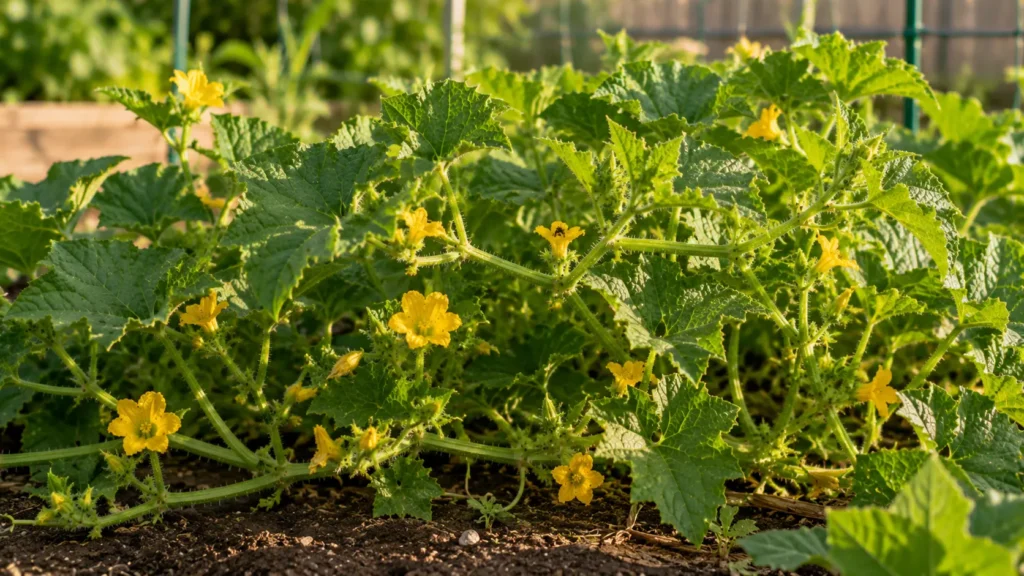
Seeing a cantaloupe plant covered in yellow flowers can be exciting. But if those flowers keep appearing without a single melon forming, it is easy to think something is wrong.
I would not pull the plant out just yet.
The first thing I check is what type of flowers the plant is producing. Cantaloupe plants can produce many male flowers before the fruit-producing flowers appear. If female flowers are present but the small melons are not growing, I then look at pollination, bee activity, heat, water stress, and other growing conditions.
In most cases, there is a reason behind the lack of fruit. Once I work out which stage is failing, the solution becomes much easier.
Is It Normal for Cantaloupe Plants to Flower Without Fruit?
Yes, especially when the plant has only recently started flowering.
Cantaloupe plants produce male and female flowers on the same plant. Some plants can also produce flowers with both male and female parts.
The early flowers are often mostly male. These flowers produce pollen but do not develop into melons. Female flowers appear later, and the small swelling beneath the flower can develop into fruit after successful pollination.
So if I see a healthy vine covered with flowers but no fruit during the early flowering stage, I give it some time before changing anything.
When should I start worrying?
I pay closer attention when I can clearly see female flowers but they keep dropping without producing young melons.
That tells me the problem may be more than simply being too early in the season.
At that point, I check the following:
- Are bees visiting the flowers?
- Are female flowers opening normally?
- Has the weather been very hot?
- Has the plant been under water stress?
- Has there been heavy rain?
- Has the plant received too much fertilizer?
- Are there signs of pests, disease, or root problems?
That simple check usually gives me a better answer than adding more fertilizer or water without knowing the cause.
First, Check What Type of Cantaloupe Flowers You Have

Before I try to fix a fruiting problem, I identify the flowers.
This is one of the easiest things to miss if you are growing cantaloupe for the first time.
Male cantaloupe flowers
Male flowers usually have a thin stem and do not have a small swollen fruit beneath the flower.
Their job is to produce pollen.
When a male flower opens, bees can collect pollen from it and transfer that pollen to another flower.
After the flower has done its job, it can fall away.
So if I see a lot of male flowers dropping, I don’t automatically treat that as a problem.
Female cantaloupe flowers

Female flowers are easy to spot once you know what to look for.
Look directly behind the flower.
You should see a small swelling that looks like a tiny melon.
That is the ovary, and it can grow into a cantaloupe after successful pollination.
This gives me a simple rule:
No swelling below the flower = probably a male flower.
Small swelling below the flower = a fruit-producing flower.
If I have lots of flowers but almost none have that swelling, I don’t start hand pollinating yet. The plant may simply be at the stage where male flowers are appearing first.
Why Is My Cantaloupe Flowering but Not Producing Fruit?

There are several possible reasons. I start with the most common ones and work down the list.
1. The Plant Is Producing Mostly Male Flowers
This is one of the first things I check.
Cantaloupe plants often produce male flowers before female flowers. A young plant can therefore look like it is flowering heavily while producing no fruit at all.
If the plant looks healthy and I am seeing mostly male flowers, I usually give it more time.
I don’t remove the flowers.
I don’t add extra fertilizer.
I simply watch for the small swollen ovaries that signal the arrival of female flowers.
Stress can also delay female flower production. Heat and drought are two conditions that can make the problem worse.
2. Female Flowers Are Not Being Pollinated
If female flowers are appearing but no young melons are developing, pollination is one of the first things I investigate.
A female flower needs pollen to reach its receptive part before it can develop into fruit.
Bees do most of this work in an outdoor garden.
If a female flower opens but does not receive enough pollen, the small swelling may stop growing and eventually fall away.
So I don’t just count flowers.
I look for female flowers that actually start developing into small melons.
3. There Are Not Enough Bees Visiting
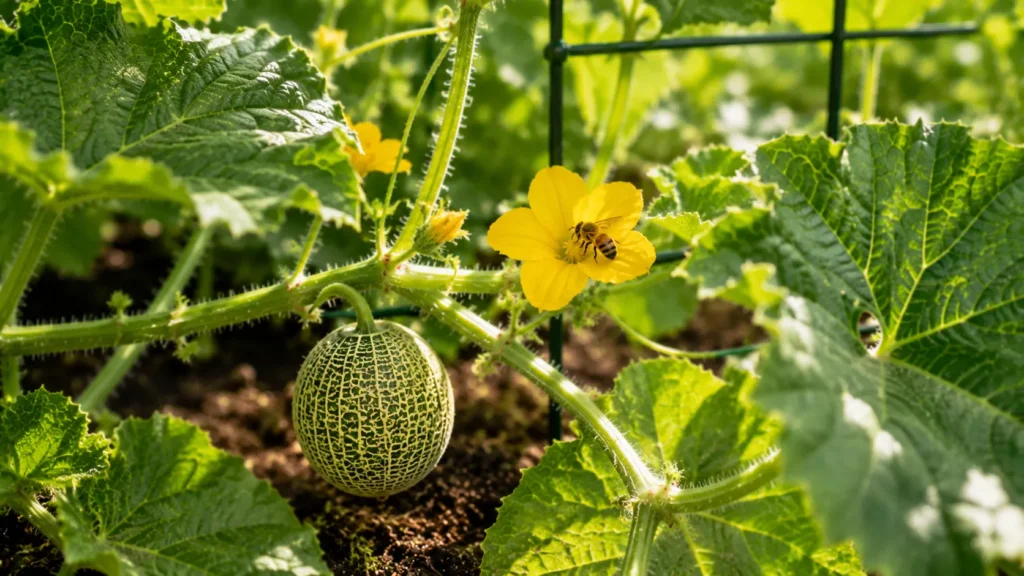
When I see female flowers but no fruit, I watch the plant during the morning.
I want to see whether bees and other pollinators are actually visiting the open flowers.
Having flowering plants somewhere in the garden does not guarantee that the cantaloupe flowers are being pollinated.
If pollinator activity is very low, fruit set can suffer. Bees are important pollinators for cantaloupes, and encouraging natural pollinators can help.
I try to make the garden more attractive to pollinators by keeping suitable flowering plants nearby and avoiding unnecessary insecticide use while flowers are open.
4. The Weather Has Been Too Hot
Cantaloupes like warm growing conditions, but extreme heat during flowering can cause problems.
Very hot conditions can affect the production of female flowers and can also interfere with pollinator activity.
This is why I look at the weather before assuming that the plant needs more fertilizer.
If the plant produced flowers during a period of extreme heat and most of those flowers were male, I would give it some time after conditions improve.
High temperatures have been linked with poor female flower production and poor fruit set in cantaloupe.
5. Water Stress Is Affecting Fruit Set
A cantaloupe plant that is struggling for water may also have trouble setting fruit.
If the soil is very dry around the root zone, I correct the watering problem rather than focusing only on pollination.
I also avoid swinging between extremely dry soil and heavy soaking.
Consistent moisture is especially useful while the plant is flowering and developing fruit.
I would not turn this into a reason to water constantly, though. Too much water can create other problems.
For the full watering schedule and techniques, I would use my separate watering cantaloupe guide rather than trying to put the whole subject into this article.
6. Too Much Fertilizer May Be Encouraging Male Flowers

More fertilizer does not always mean more melons.
This is especially worth remembering if the vine is growing very strongly but producing mostly male flowers.
High fertility can encourage excessive vegetative growth and male flower production, which can lead to poor fruit set.
So if my cantaloupe has huge vines and plenty of flowers but very few female flowers, I would review how much fertilizer it has received before adding anything else.
I would not add a random nutrient mix simply because the plant has no fruit.
7. Heavy Rain or Wet Weather Is Limiting Pollination
Weather can cause another problem during flowering.
If flowers are opening during periods of heavy rain, bee activity can be reduced.
Wet weather can also make successful pollination more difficult.
I pay attention to whether the lack of fruit began during a long period of rain or poor weather.
If the plant looks healthy but fruit set improves once the weather becomes more suitable, the weather may have been part of the problem.
8. Overhead Watering Is Disrupting Bee Activity
This is a small detail, but it is worth checking.
If I use a sprinkler over the cantaloupe vines while the flowers are open, I can interfere with bee activity.
The issue is not that water itself prevents cantaloupes from producing fruit.
The issue is that spraying the flowers while pollinators are active can make it harder for them to do their job.
If possible, I prefer watering the soil around the root zone instead of spraying the flowers.
9. The Plant Has a Root, Pest, or Disease Problem
Sometimes the flowers are not the real problem.
A plant can flower heavily while struggling below the soil or dealing with another source of stress.
For example, root-knot nematodes can stress cantaloupe vines and have been associated with lots of blooms but poor fruit production. Pests and diseases can also interfere with fruit development.
I look at the whole plant.
Does it have strong growth?
Are the leaves healthy?
Is the vine badly wilted?
Are the roots showing signs of damage?
Are there unusual spots, insects, or distorted leaves?
If the plant looks weak, I investigate the wider plant-health problem instead of assuming that pollination is the only issue.
Why Are Tiny Cantaloupes Forming and Then Falling Off?

This is slightly different from having no fruit at all.
If I see a tiny melon forming behind a flower and then notice it turn yellow, shrivel, and fall off a few days later, I pay close attention to pollination.
Incomplete pollination is one possible cause of young fruit aborting. Environmental stress, high temperatures, high fertility, diseases, insects, and root problems can also affect fruit set.
I work through the problem like this:
Tiny fruit forms → fruit stops growing → fruit changes color or shrivels → fruit drops.
Then I check:
- Was the flower properly pollinated?
- Were bees visiting?
- Was the weather unusually hot or wet?
- Was the plant under water stress?
- Does the plant show signs of other stress?
This is much more useful than immediately assuming the plant needs more fertilizer.
How to Get a Cantaloupe Plant to Set Fruit
Once I know what is going wrong, I make the smallest change needed.
1. Give early male flowers time
If the plant is young and producing mostly male flowers, I wait for female flowers.
There is no reason to panic simply because the first flowers do not produce melons.
2. Check female flowers every morning
I look for the small swollen ovary beneath the flower.
Once I see female flowers, I pay more attention to pollinator activity.
3. Watch for bees
I check the flowers while they are open.
If bees are regularly visiting, I let natural pollination do its job.
4. Keep the plant from becoming stressed
I pay attention to soil moisture, heat, and the general condition of the vine.
A healthy plant has a better chance of producing and holding fruit.
5. Avoid excessive fertilizer
If the vine is already growing strongly, I don’t keep adding fertilizer just because fruit has not appeared.
Too much fertility can work against good fruit production.
6. Protect pollinator activity
I avoid unnecessary insecticide use while bees are actively visiting flowers.
I also avoid disturbing the flowers during their main pollination period.
7. Hand pollinate if needed
If female flowers are appearing but natural pollination seems poor, hand pollination is an option.
I use a fresh male flower and transfer its pollen to the receptive part of a female flower.
For the full process, my cantaloupe plant pollination guide covers hand pollination in more detail.
Should I Hand Pollinate My Cantaloupe Plant?

I don’t hand pollinate every cantaloupe flower automatically.
If bees are visiting regularly and young melons are forming, I leave the plant alone.
I use hand pollination when I have a good reason to think natural pollination is failing.
For example, if I have several female flowers, very little bee activity, and no fruit setting, I may help the plant along.
The best time is generally early in the day when the flowers are fresh and open. A small paintbrush can be used to move pollen from a male flower to a female flower.
The important part is identifying the correct flowers.
A male flower provides the pollen.
A female flower has the small swollen ovary.
Do I Need Two Cantaloupe Plants to Get Fruit?
No.
I don’t need two cantaloupe plants simply for pollination.
A single plant can produce male and female flowers, allowing pollen to move between flowers on the same plant.
The real issue is getting pollen from the male flower to the female flower.
In an outdoor garden, bees and other pollinators usually handle that job.
If natural pollination is poor, I can hand pollinate the flowers instead.
How Long After Flowering Does Cantaloupe Fruit Form?
I don’t expect every flower to turn into a visible melon.
First, the plant needs to produce a fruit-producing flower.
Then that flower needs successful pollination.
After that, I watch the small swelling beneath the flower.
If it keeps getting larger instead of yellowing, shrinking, and falling away, fruit set has likely occurred.
The important point is that flowering and fruiting are two different stages.
Seeing flowers does not mean the plant has failed simply because there is no melon yet.
Quick Cantaloupe Fruit-Set Diagnosis

| What I see | What it may mean | What I would do |
| Lots of flowers but no swelling | Mostly male flowers | Give the plant more time |
| Male flowers keep falling | Normal flower cycle | Don’t worry |
| Female flowers are present but no fruit | Poor pollination is possible | Watch bee activity |
| Bees rarely visit | Pollination may be limited | Encourage pollinators or hand pollinate |
| Tiny melons form then fall | Poor fruit set or plant stress | Check pollination, heat, water, and plant health |
| Mostly male flowers during extreme heat | Heat may be affecting flowering | Wait for better conditions and reduce plant stress |
| Huge vines with many male flowers | Excess fertility may be involved | Review fertilizer use |
| Flowers open during heavy rain | Pollinator activity may be reduced | Watch the next flowering period |
| Plant looks weak and fruitless | Wider plant stress may be involved | Check roots, pests, disease, and growing conditions |
Final Thoughts
When I see a cantaloupe plant covered in flowers but no fruit, I don’t assume that the plant is failing.
I start by looking closely at the flowers.
If most are male, the plant may simply need more time. Cantaloupes often produce male flowers before the female flowers arrive.
If I find female flowers with small swollen ovaries, I then look at pollination. I watch for bees, check the recent weather, and look at the plant’s moisture and overall health.
If the young fruit forms and then turns yellow or falls, I investigate incomplete pollination and other forms of plant stress.
The biggest mistake I would avoid is trying several fixes at once. Adding more fertilizer, changing the watering, spraying the plant, and hand pollinating every flower makes it hard to know what actually helped.
Instead, I would identify the stage where the problem is happening:
No female flowers → wait and check growing conditions.
Female flowers but no fruit → check pollination.
Tiny fruit forms then drops → check pollination and plant stress.
That simple approach makes a cantaloupe flowering but not fruiting problem much easier to solve.
Frequently Asked Questions
Why does my cantaloupe have flowers but no fruit?
The most common reasons are that the plant is producing mostly male flowers or that female flowers are not being pollinated. Heat, water stress, heavy rain, excessive fertility, and other plant problems can also affect fruit set.
Why are my cantaloupe flowers falling off?
If the flowers are male, falling off is normal because they do not develop into fruit. If female flowers with a small swollen ovary are falling before the young melon develops, poor pollination or plant stress may be involved.
Why does my cantaloupe plant have only male flowers?
Young cantaloupe plants often produce mostly male flowers first. Heat and other stresses can also delay the appearance of female flowers. If the plant is otherwise healthy, I would give it some time and keep watching for flowers with swollen ovaries.
Can one cantaloupe plant produce fruit?
Yes. One plant can produce the male and female flowers needed for fruit production. The key is successful pollen transfer between flowers.
How do I know if a cantaloupe flower can produce fruit?
Look below the flower. A small swollen structure that looks like a tiny melon indicates a fruit-producing flower. A male flower lacks this swelling.
Why are my tiny cantaloupes turning yellow and falling off?
Incomplete pollination is one possible cause. Heat, water stress, excessive fertility, diseases, insects, and root problems can also cause young fruit to stop developing and fall.
Should I add fertilizer if my cantaloupe is flowering but not fruiting?
I would not add fertilizer blindly. If the plant already has strong vine growth and many male flowers, excessive fertility may actually be part of the problem.
Do bees need to pollinate every cantaloupe flower?
Only fruit-producing flowers need successful pollination to develop into melons. Male flowers produce pollen and naturally fall away after flowering.
Can I fix poor cantaloupe fruit set by hand pollinating?
Yes. If female flowers are present but natural pollination appears poor, hand pollination can help. I would do it while the flowers are fresh and open, preferably in the morning.