Skip to content
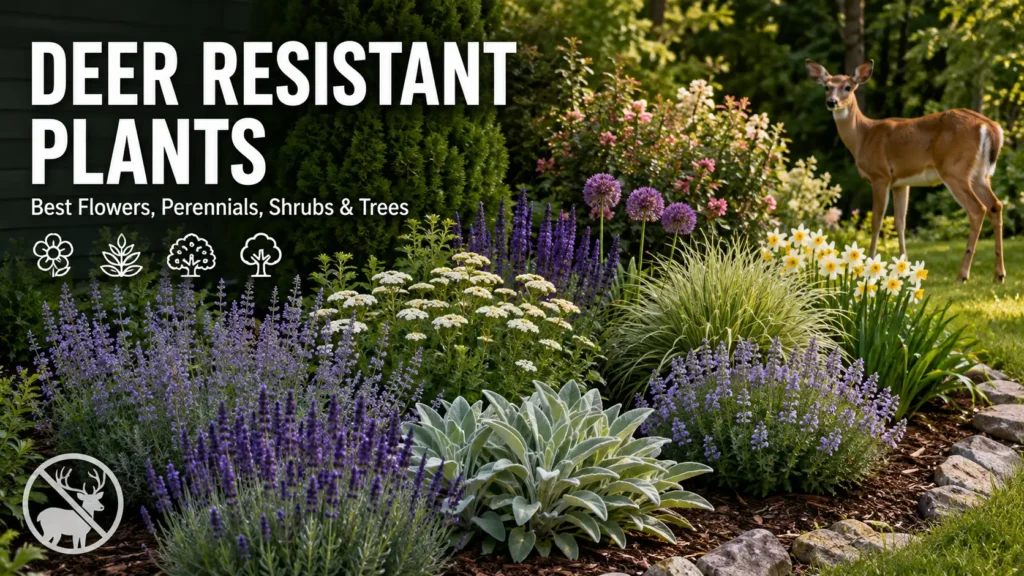
If deer visit your garden often, I would choose plants they tend to avoid rather than trying to protect every plant after it gets damaged. Fragrant herbs, fuzzy foliage, tough leaves, prickly plants, and some bulbs can make better choices for a deer-prone garden.
Still, no plant is completely deer-proof. Hungry deer may browse plants they usually leave alone, so plant choice works best with other methods such as fencing, repellents, and protecting young plants.
Quick Answer: What Are the Best Deer Resistant Plants?
Some of my top choices include lavender, catmint, yarrow, salvia, lamb’s ear, ornamental onion, daffodils, Russian sage, bee balm, and ornamental grasses. Many of these have strong scents, rough textures, or other traits deer tend to dislike. Deer pressure varies by location, season, and food supply, so I would treat these as deer resistant rather than deer-proof plants.
What Does Deer Resistant Really Mean?
Deer resistant means a plant is less likely to be eaten or badly damaged by deer.
It does not mean deer will never touch it.
I think this difference matters because many gardeners search for deer resistant plants expecting a guarantee. There is no plant list that can promise that. Deer feeding habits change with local deer numbers, weather, season, and how much natural food is available.
Some plants are rarely damaged, while others may be eaten only during periods when food is scarce. A good plant choice can reduce browsing, but it may not stop it completely.
Why Do Deer Avoid Some Plants?

Deer do not treat every plant the same way. Their feeding choices can be affected by smell, taste, texture, and how easy the plant is to eat.
Strong Fragrance
Strongly scented plants are often a good choice for a deer-prone garden.
Examples include:
- Lavender
- Catmint
- Sage
- Thyme
- Rosemary
- Oregano
- Mint
- Allium
Fuzzy or Hairy Foliage
Some plants have soft, fuzzy leaves that deer tend to avoid.
Lamb’s ear is a good example. Its thick, fuzzy foliage also gives the garden a different texture.
Coarse or Tough Leaves
Plants with rough, leathery, or otherwise less tender foliage can be less attractive to deer.
This is one reason ornamental grasses can work well in deer-prone landscapes.
Spines and Prickles
Plants with thorns, prickles, or sharp leaves can also discourage browsing.
Still, I would not choose a plant only because it has spines. Its size, growing conditions, and purpose in the garden still matter.
Strong or Unpleasant Taste
Some plants contain compounds that make their leaves less appealing to deer.
This does not mean every plant with these traits will be ignored. Deer may still browse when food is limited.
Best Deer Resistant Plants

Here are some of the plants I would consider first for a deer-prone garden.
| Plant | Type | Light | Best use |
| Lavender | Perennial | Full sun | Borders and containers |
| Catmint | Perennial | Full sun | Borders and pollinator beds |
| Yarrow | Perennial | Full sun | Flower beds |
| Salvia | Perennial/annual | Full sun | Flower borders |
| Lamb’s ear | Perennial | Full sun | Edging and ground cover |
| Russian sage | Perennial | Full sun | Dry borders |
| Bee balm | Perennial | Sun/part shade | Pollinator gardens |
| Butterfly weed | Perennial | Full sun | Native gardens |
| Daffodil | Bulb | Sun/part shade | Spring beds |
| Ornamental grasses | Perennial | Varies | Borders and structure |
Best Deer Resistant Flowers

If your main goal is color, you have plenty of choices.
Lavender
Lavender gives you fragrant foliage and purple flowers. I like it for sunny borders, rock gardens, and containers where the soil drains well.
Its strong scent is also one reason it is commonly included among plants that deer tend to avoid.
Salvia
Salvia is useful when you want tall flower spikes and a long display.
There are many types, so check the growing needs of the variety you choose. Many salvias prefer full sun and well-drained soil.
Yarrow
Yarrow produces flat flower clusters and works well in sunny beds.
It can also handle fairly dry conditions once established, making it useful for lower-water landscapes.
Catmint
Catmint has aromatic foliage and long-lasting flowers.
I would use it along paths, borders, or the front of a perennial bed where its low, spreading form can fill space.
Bee Balm
Bee balm adds bright flowers and attracts pollinators.
It can grow in sun or partial shade, depending on the site and variety. It is also a useful choice for a pollinator garden.
Butterfly Weed
Butterfly weed is a strong choice for a sunny native or pollinator garden.
It produces bright flowers and is also useful for monarch caterpillars. As with other deer resistant plants, local browsing can vary.
Daffodils
Daffodils are one of the bulb choices I would consider for spring color.
They are useful for adding early-season flowers to beds and borders.
Allium
Ornamental onions are another useful bulb choice.
Their round flower heads add height and structure, while their onion-like scent makes them less appealing to deer.
Best Deer Resistant Perennials
Perennials give you long-term structure without needing to replant the same space every year.
Good choices include:
- Yarrow
- Catmint
- Lavender
- Russian sage
- Lamb’s ear
- Bee balm
- Black-eyed Susan
- Butterfly weed
- Amsonia
- Allium
- Liatris
- Hellebores
- Peonies
- Ornamental grasses
- Globe thistle
I would choose based on your garden conditions rather than simply picking the longest list.
For example, lavender and Russian sage make more sense in a sunny, well-drained bed, while hellebores are better suited to shaded areas.
Best Deer Resistant Annuals
Annuals are useful if you want seasonal color without committing to a permanent planting.
Some options include:
- Ageratum
- Sweet alyssum
- Cleome
- Cosmos
- Marigold
- Salvia
- Snapdragon
- Zinnia
- Larkspur
- Verbena
- Nasturtium
- Petunia
Annual deer resistance can vary, so I would still monitor new plantings.
Best Deer Resistant Shrubs
Shrubs are useful when you need year-round structure, screening, or a larger planting.
Some options I would consider include:
Boxwood
Boxwood works well for formal borders, hedges, and foundation planting.
Beautyberry
Beautyberry offers attractive berries and can add seasonal interest to a shrub border.
Lilac
Lilac is useful if you want spring flowers and fragrance.
Spirea
Spirea gives you flowering shrub options for borders and mixed beds.
Juniper
Junipers can work well in sunny areas where you need evergreen structure.
Witch Hazel
Witch hazel is useful when you want a larger shrub or small tree with seasonal interest.
Pieris
Pieris can be useful in suitable acidic, well-drained conditions and offers evergreen foliage in many climates.
The exact deer response varies by species and local conditions, so I would check the specific plant before buying it.
Best Deer Resistant Trees

Trees are often overlooked in deer resistant landscaping.
Some options include:
- Birch
- Serviceberry
- Katsura tree
- Magnolia
- Dogwood
- Bottlebrush buckeye
- Pawpaw
- Paper birch
Young trees still need protection in areas with heavy deer pressure. Deer can browse tender new growth even when mature plants are usually left alone.
Best Deer Resistant Plants for Full Sun

If you have a sunny garden, I would start with plants that enjoy at least six hours of direct light.
Good choices include:
- Lavender
- Catmint
- Yarrow
- Russian sage
- Salvia
- Butterfly weed
- Lamb’s ear
- Allium
- Ornamental grasses
- Creeping thyme
Lavender for Dry, Sunny Beds
Lavender is a strong choice for dry, well-drained soil.
Avoid planting it in heavy, wet soil. Poor drainage can cause more trouble than deer.
Catmint for Borders
Catmint works well along paths and the front of sunny borders.
Its aromatic foliage and long flower display make it useful for both appearance and pollinator value.
Russian Sage for Dry Areas
Russian sage is another option for hot, sunny areas with good drainage.
Ornamental Grasses for Structure
Many ornamental grasses can add height and movement without being a preferred food source for deer.
Blue oat grass, Japanese silver grass, little bluestem, and other grasses can work well in deer-prone landscapes.
Best Deer Resistant Plants for Shade

Shade needs a different plant list.
Good options can include:
- Hellebores
- Astilbe
- Christmas fern
- New York fern
- Lungwort
- Barrenwort
- Wild ginger
- Certain sedges
Hellebores
Hellebores are useful for shaded beds and early-season interest.
Ferns
Ferns can fill shady areas where many sun-loving flowering plants would struggle.
Christmas fern and New York fern are useful choices for shaded garden areas.
Wild Ginger
Wild ginger can work as a ground cover in shady, moist areas.
It is better suited to woodland-style planting than a hot, dry border.
Keep Dry Shade Separate From Moist Shade
This is one place where I would avoid treating all shade gardens the same.
A shaded bed under mature trees may be dry because tree roots take up much of the available moisture. A shaded garden near a downspout may stay wet.
Choose plants based on both light and soil moisture.
Best Deer Resistant Ground Covers
Ground covers can help fill empty spaces and reduce exposed soil.
Potential choices include:
- Wild ginger
- Barrenwort
- Pachysandra
- Bugleweed
- Creeping thyme
- Bunchberry
- Certain sedges
Creeping thyme is a good option for sunny, well-drained areas, while wild ginger and bunchberry are better suited to shade and more moisture.
Pachysandra and bugleweed can also work well in shaded garden areas.
Best Deer Resistant Plants for Containers
Containers give you another way to manage deer browsing.
I would consider:
- Lavender
- Rosemary
- Thyme
- Salvia
- Marigold
- Lantana
- Catmint
The main benefit is placement. You can move containers closer to the house, place them behind a barrier, or protect them more easily than a large garden bed.
Still, a container is not automatically safe from deer. If deer can reach the foliage, they can browse it.
Deer Resistant Native Plants
I would also consider native plants rather than choosing solely for deer resistance.
Some useful examples for parts of North America include:
- Butterfly weed
- Bee balm
- Black-eyed Susan
- Amsonia
- Asters
- Goldenrod
- Serviceberry
- Chokeberry
The word native needs some care here. A plant native to one part of the U.S. may not be native to another.
Check your local region before treating a plant as native to your area.
Native plants can also provide food and habitat for local insects and wildlife, so they can add value beyond deer resistance.
How to Choose Deer Resistant Plants
I use a simple process when choosing plants for a deer-prone garden.
1. Check the Light
Start with the amount of sun the planting area receives.
Choose from:
- Full sun
- Part sun
- Partial shade
- Full shade
Do not choose a plant only because it is deer resistant if the site cannot support it.
2. Check the Soil
Look at:
- Drainage
- Moisture
- Soil type
- Soil pH where relevant
Lavender, for example, needs much better drainage than many shade-loving plants.
3. Check Your USDA Hardiness Zone
A plant can be deer resistant and still fail because it cannot handle your winter temperatures.
Check the hardiness zone for the exact plant or cultivar before buying it.
4. Decide What You Want From the Plant
Ask what job the plant needs to do.
Do you need:
- Flowers?
- Privacy?
- Ground cover?
- A hedge?
- Pollinator value?
- Container color?
- Evergreen structure?
- A small tree?
This makes the plant list much easier to narrow down.
5. Think About Deer Pressure
Occasional deer visits are different from heavy nightly browsing.
If deer are already eating most of your garden, I would choose plants with stronger deer resistance and add physical protection.
How to Protect Plants From Deer

Plant selection is one part of deer control. It should not be your only method if deer pressure is high.
Use Deer Repellents
Repellents can make plants less attractive, but they usually need regular application.
Rain, plant growth, and changing deer behavior can reduce their effect.
Protect Young Plants
New plants can be especially vulnerable.
Use cages, netting, or other barriers while they become established.
Plant Less-Palatable Species Together
You can group fragrant and less-palatable plants around more vulnerable plants.
This may reduce browsing, but I would not treat companion planting as a deer-proof barrier.
Use Fencing for Serious Deer Pressure
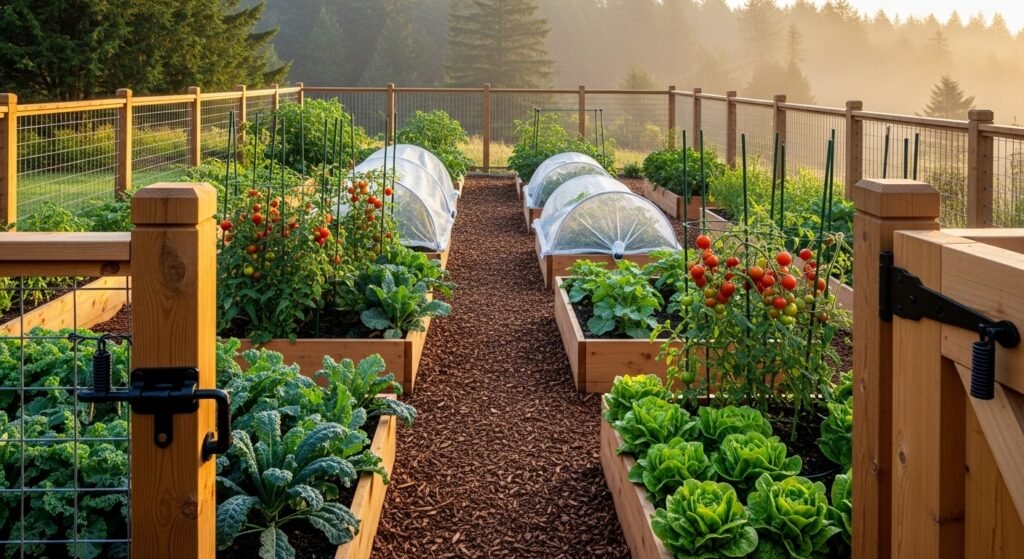
If deer are damaging the garden regularly, fencing is the method I would trust most.
A properly planned physical barrier prevents deer from reaching the plants in the first place.
How to Identify Deer Damage

Knowing what deer damage looks like can help you choose the right solution.
Look for:
- Ragged or torn leaf edges
- Broken stems
- Missing flower buds
- Browsed branch tips
- Plants stripped of tender growth
- Hoof prints
- Deer droppings
Deer browsing can leave rough, torn plant edges rather than the cleaner cuts you might see from pruning tools.
If you see damage but no deer, check the plant carefully for other signs before assuming deer are responsible.
What If Deer Eat Your Deer Resistant Plants?
It can happen.
A plant can have a strong deer-resistance rating and still be eaten in a garden with heavy deer pressure. Local deer numbers, weather, and food supply can all affect browsing.
If this happens, I would take these steps:
- Check whether the plant is correctly identified.
- Look at the amount of deer pressure in the area.
- Protect the plant with netting or a cage.
- Use a suitable deer repellent.
- Add fencing if browsing continues.
- Replace repeatedly damaged plants with less-palatable choices.
I would also look at the season. Deer may browse plants more heavily when other food sources are limited.
Deer Resistant Does Not Mean Rabbit Resistant
This is an easy point to miss.
A plant that deer avoid may still be eaten by rabbits, groundhogs, insects, or slugs.
So if you have several garden pests, I would identify the animal causing the damage before changing the entire plant list.
The right solution depends on the pest.
Final Thoughts
The best deer resistant plants are those deer tend to leave alone, not plants they can never eat.
I would start with lavender, catmint, yarrow, salvia, lamb’s ear, Russian sage, allium, daffodils, bee balm, and suitable ornamental grasses. Then I would match the plant to your light, soil, hardiness zone, and garden purpose.
If deer pressure is high, plant selection alone may not be enough. A combination of less-palatable plants, repellents, plant protection, and good fencing gives you a much better chance of keeping the garden intact.
FAQs
What are the most deer resistant plants?
Lavender, catmint, yarrow, allium, daffodils, lamb’s ear, and Russian sage are good choices.
Are any plants completely deer-proof?
No. Hungry deer may eat plants they normally avoid.
What flowers do deer usually avoid?
Fragrant flowers and plants with rough, fuzzy, or unpalatable foliage are often less attractive.
What shrubs are deer resistant?
Boxwood, juniper, beautyberry, lilac, spirea, and some Pieris are common choices.
Are deer resistant plants rabbit resistant?
No. Deer and rabbits can have different feeding preferences.
Do deer eat plants in winter?
Yes. Deer may browse more when other food is scarce.
What is the best way to protect plants from deer?
A properly planned physical fence provides the most dependable protection.