Skip to content

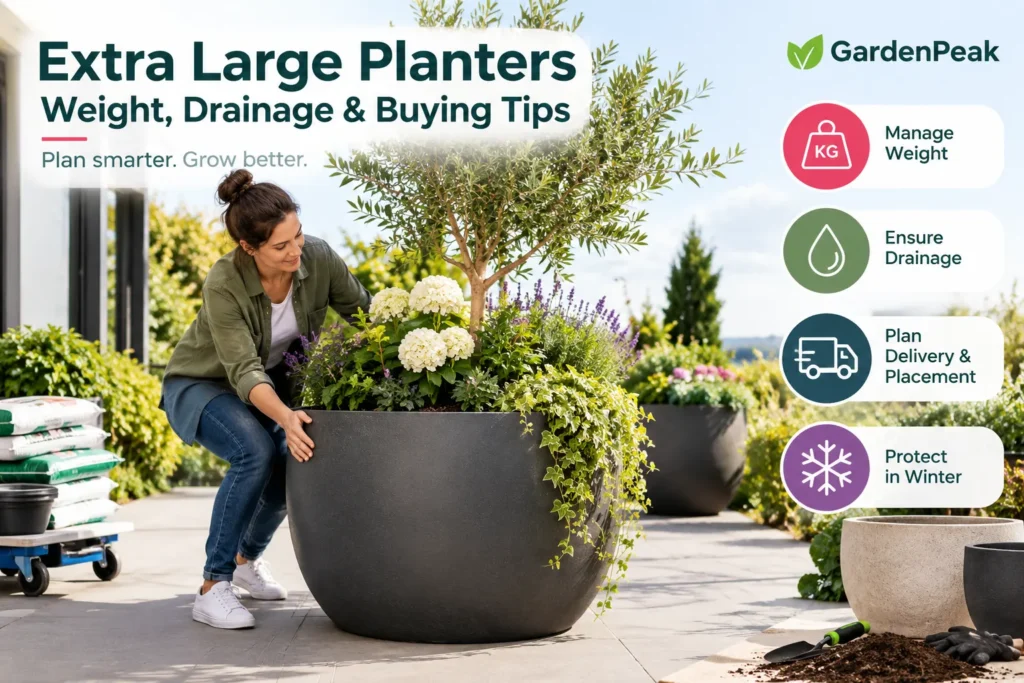
Most people discover the hard truth about extra large planters after the delivery truck leaves. The planter looks perfect online; in person, it weighs more than a refrigerator and won’t fit through the gate.
- Most people discover the hard truth about extra large planters after the delivery truck leaves. The planter looks perfect online; in person, it weighs more than a refrigerator and won’t fit through the gate.
- A 30-inch planter filled with damp potting mix can exceed 300 lbs, turning a style choice into a semi-permanent installation.
- The four problems to solve before picking plants: moving the planter, reducing soil weight, managing drainage holes, and winterizing.
- Nobody warns you that an extra-large container is a logistics problem before it is a gardening one. Extra large planter pots in lightweight composite solve half of that on arrival; the other half is planning, which we cover in the guide.
- Choosing large planters in lighter composite materials (like those from Solum Vitae) cuts empty weight, but once soil and water go in, planning still matters.
- This guide focuses on concrete numbers (weights, volumes, tools) rather than generic tips.
The Hidden Logistics of Extra Large Planters
Planters over 24 inches in diameter enhance outdoor design, but the real challenge is physical, not visual. In this article, “extra large” means containers 24 to 48 inches in diameter, holding 20 to over 100 gallons of soil. A single 30-inch round planter, 24 inches tall, holds roughly 5 to 7 cubic feet of mix. Saturated potting mix weighs approximately 40 to 60 lbs per cubic foot, so that one pot can reach 300 lbs of soil alone, plus the container and plant.
This guide covers moving and positioning large pots, filling strategies to cut extra weight, drainage holes and water control, structural load on decks and balconies, and overwintering. Lightweight composite designs from brands like Solum Vitae reduce starting weight, but everything becomes heavy once full of soil and water. Aesthetics and plant selection come later; the logistics come first.
Weight, Volume, and Where That Planter Can Actually Go
Fiberglass planters are 70 to 90 percent lighter than concrete. A 36-inch concrete planter can weigh 400 to 600 lbs empty; the same size in fiberglass might weigh 35 to 55 lbs. That gap closes once you add soil. Wet soil can weigh between 100 and 120 lbs per cubic foot if you mistakenly use garden topsoil instead of potting mix. Even with lighter soilless mix, a filled 30-inch planter can land between 250 and 400 lbs total.
Planters exceeding 300 lbs often require cranes or rigging for placement. On a residential deck rated for 40 psf live load, one 300-lb planter sitting on a 2-square-foot footprint generates 150 psf locally; that is triple the design load. Large planters also act like sails in high winds, posing a safety hazard on exposed rooftops or balconies. Plan the exact final position before filling; account for distance from your door, room for plant growth over 3 to 5 years, and proximity to a hose.

Getting It There: Moving, Unloading, and Positioning Large Pots
Picture a freight truck arriving with a 40-inch planter on a pallet. Your gate is 36 inches wide. Oversized planters cannot navigate standard doorways and tight hallways once assembled; measure every access point before ordering. “Curbside delivery” for LTL freight means the pallet sits at the end of your driveway, not in your yard.
Tools to have ready on delivery day:
| Tool | Purpose |
| Furniture dolly (400+ lb rated) | Rolling across patio or driveway |
| Lifting straps | Two-person carry up steps |
| Plywood sheets | Protecting soft lawn from wheel ruts |
| Felt sliders or thick mats | Protecting indoor floors |
Relocating filled planters requires emptying them completely; even a “lightweight” 28-inch composite pot becomes immovable once full. Position the empty planter in its final space before adding a single scoop of soil.
Filling Large Planters Without Creating an Anchor
Filling a massive container solely with premium potting mix creates unnecessary weight and cost. Use a soilless potting mix blended with compost for nutrients. Fill the bottom third of large planters with lightweight fillers: sealed plastic nursery pots, inverted buckets, or rigid foam blocks. Fillers can reduce weight in oversized planters and improve aeration, cutting total mass by 20 to 30 percent.
Separate fillers from the mix with a layer of landscape fabric. Fill large planters with lightweight materials only in zones where roots will never reach. For trees and shrubs, most of the planter should remain usable root zone; a 7-foot tree needs a planter 24 to 30 inches wide with full-depth soil. A 24-inch planter typically needs 3 to 4 bags of 1.5-cubic-foot potting mix. Avoid garden soil from the yard; it compacts, drains poorly, and adds extreme weight after rain.
Drainage Holes, Water Management, and Mess Control
Large planters require adequate drainage to prevent root rot, and planters should have drainage holes sized to the container. For pots over 36 inches, drill 4 to 6 holes of 1/2 to 1 inch diameter each. Drainage holes can become clogged over time, leading to moisture retention; cover them with mesh rather than gravel, which can create a perched water table. Deep soil profiles without proper drainage create a perched water table that can cause root rot. Saturation from overwatering can suffocate plant roots in large containers.
Drainage management is critical to prevent water from staining concrete patios or flooding near foundations. Elevation of planters on feet or risers is important for drainage and preventing moisture buildup underneath. Large planters should be positioned near a water source; hauling 3 to 5 gallons by hand every few days in July to a 30-inch pot on a far porch is not sustainable. Run a hose or install drip irrigation before the growing season starts.
Overwintering Extra Large Planters and What Happens in Year Three
The real test arrives in winter. Water in soil expands roughly 9 percent when it freezes, putting pressure on planter walls each cycle. Fiberglass withstands freeze-thaw cycles without cracking; similarly, plastic pots can survive Canadian winters without breaking. Concrete, terracotta, and stone containers are more vulnerable and may split after two or three seasons in USDA Zones 4 to 6.
Large pots retain extreme temperatures, leading to thermal stress on roots. In cold climates, roots in containers experience conditions 1 to 2 hardiness zones colder than in-ground plants, so a Zone 5 boxwood in a pot in a Zone 5 yard may not thrive. Extra large planters along driveways exposed to de-icing salt between December and February can lose both plants and finishes. Wrap containers with insulating material, elevate them on blocks, and avoid saucers that trap ice. Fiberglass planters maintain finish quality through UV exposure across seasons, making them a durable pick for multi-year use.
Plan for year three: roots circling inside the planter slow drainage and destabilize the plant in wind. Check trees and shrubs every 3 to 4 years and root-prune or repot in early spring. Tapered walls make sliding root balls out easier than straight-sided designs. Decide at planting time whether the tree will eventually go into the ground, stay containerized, or be replaced as part of your collection.
Choosing the Right Large Planter and Plants Once Logistics Are Solved
With moving, filling, drainage, and overwintering addressed, you can finally explore aesthetics. Large planters can elevate the visual appeal of gardens and create symmetry in monumental spaces when used in a pair flanking an entry or driveway. Choosing the right planter style complements garden aesthetics; match finishes (textured stone, matte metal, warm terracotta tones) to your existing hardscape rather than buying mismatched plastic pots.
A 24 to 30 inch planter suits small ornamental trees like Japanese maple, olive, or bay laurel. A 7-foot tree needs a planter 24 to 30 inches wide. For a front porch, a 28-inch pot with a 5 to 6 foot ‘Emerald Green’ arborvitae underplanted with hardy perennials works well at scale. The “thriller-filler-spiller” formula serves seasonal annuals; for long-term shrubs and trees, fewer large specimens look better and cost less to maintain. Choose plants that suit your climate and personal preferences, and always verify that your deck or patio structure can carry the final weight.
FAQ
These questions address practical concerns not fully covered in the sections above.
How can I add drainage holes to a large planter that arrived without them?
Use a masonry bit for concrete, a step bit for metal, or a paddle bit for resin and fiberglass. Start with a pilot hole and drill from the inside out. Space several holes near the center plus a few toward the edges, each 1/2 to 3/4 inch in diameter. Wear eye protection and secure the planter so it cannot tip while you drill.
What is the cheapest way to fill an extra large planter without compromising plant health?
Layer inert fillers (upturned nursery pots, sealed bottles) in the very bottom of deep planters, then add 12 to 18 inches of quality potting mix on top. Stretch your budget by mixing store-bought potting mix with screened homemade compost or coconut coir. Avoid construction debris or untreated lumber scraps, which create voids and can leach harmful substances.
Can I put large planters on an older wood deck safely?
Many decks built before the late 2000s were designed for a live load of about 40 psf. A single 300-lb planter on a small footprint can exceed that by a wide margin. Spread the load with wider bases or pads, limit the total number of heavy containers, and avoid clustering all the weight in one corner. Check for sagging boards, loose railings, and rot before adding any heavy pots.
How often do trees and shrubs in extra large containers need to be repotted?
Most small ornamental trees and shrubs in 24 to 32 inch planters should be checked every 3 to 4 years. Signs it is time: water runs straight down the inside walls, roots circle at the surface, or the plant becomes top-heavy and unstable in wind. Plan this work in early spring (March to April in most U.S. zones) for the least stress on both plant and gardener.
Are built-in wheels or plant caddies worth it for very large pots?
Heavy-duty plant caddies rated for 300 to 500 lbs make seasonal repositioning and cleaning much easier on smooth surfaces. Cheap built-in caster systems can seize or collapse under constant outdoor load, especially through freeze-thaw cycles. Pick low-profile caddies with rubber wheels for deck or tile surfaces, and check that the overall height does not make the planter unstable in wind.