Skip to content
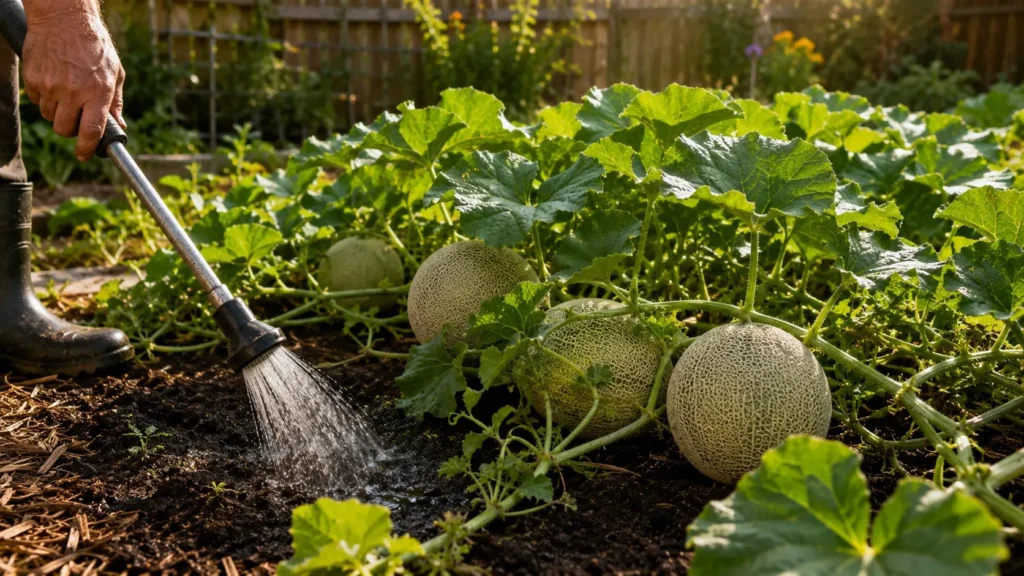
If you have ever looked at a seed packet and wondered whether cantaloupe and muskmelon are the same thing, you are not alone. Gardeners, growers, seed companies, and grocery stores often use these names in different ways.
Here is the simple answer: in the United States, cantaloupe is commonly used as a name for a type of muskmelon. Both belong to the species Cucumis melo. However, botanical classification can make the difference more specific. The familiar orange-fleshed, netted melon sold as cantaloupe in the U.S. is generally associated with the reticulatus group, while true cantaloupes are associated with the cantalupensis group.
I think this is where most of the confusion starts. The everyday gardening name and the botanical name do not always line up.
So, let’s look at what these terms really mean and what the difference means for a home gardener.
Are Cantaloupe and Muskmelon the Same Thing?
They can mean the same thing in everyday U.S. gardening, but the terms are not always identical in botanical classification.
Cantaloupe and muskmelon belong to the same species, Cucumis melo. This species contains many different melon types and cultivars. Oklahoma State University explains that the terms cantaloupe and muskmelon are often used loosely in the United States.
When an American gardener says they are growing cantaloupe, they usually mean the familiar melon with:
- A netted outer rind
- Orange flesh
- A sweet flavor
- A strong aroma
- A soft texture when ripe
That melon is generally classified within the reticulatus group of Cucumis melo.
The word muskmelon can be used more broadly for different types of Cucumis melo.
So I would not tell a gardener that cantaloupe and muskmelon are completely different plants. That would make the answer more confusing rather than less.
What Is a Muskmelon?
Muskmelon is a common name used for melons in the species Cucumis melo.
The species belongs to the cucumber family, Cucurbitaceae, along with cucumbers, pumpkins, squash, and other cucurbit crops.
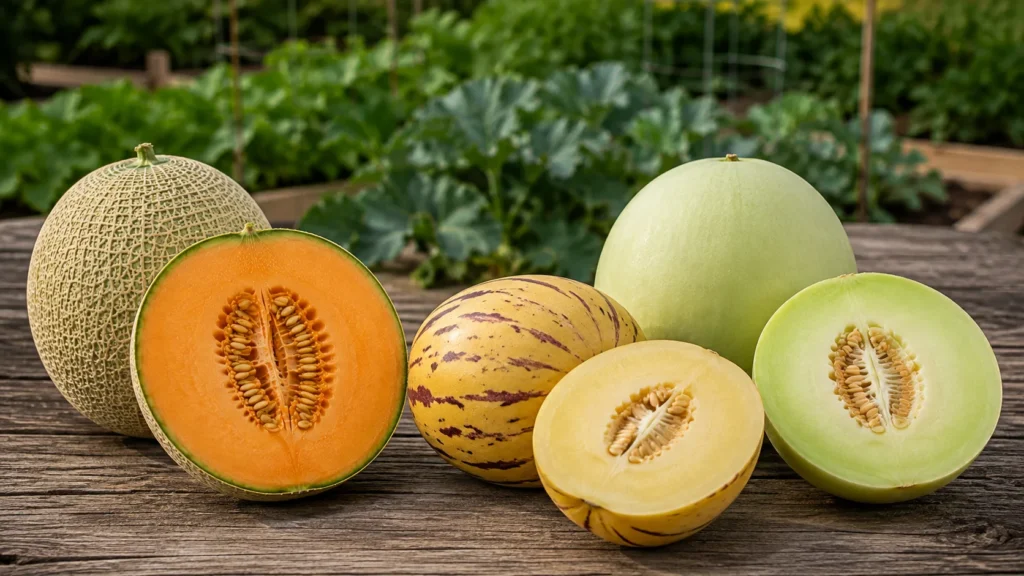
Cucumis melo contains many different melon types. Depending on the classification system and common usage, these include cantaloupe-style melons, honeydew, Casaba, Crenshaw, Canary, and other specialty melons.
This is why I prefer to think of muskmelon as a wider term when talking about the different Cucumis melo types.
The exact use of the word can still vary between seed companies, gardeners, growers, and botanical sources.
What Is a Cantaloupe?
In the United States, cantaloupe usually means the familiar orange-fleshed, netted melon found in grocery stores and home gardens.
It is an aromatic melon with a rough, net-like rind. The flesh is usually orange, sweet, and juicy when fully ripe.
Many resources commonly use cantaloupe and muskmelon together when discussing this crop. Iowa State University, for example, describes the common U.S. muskmelon as a sweet melon with orange flesh and a musky aroma.
The important point is that the word cantaloupe has both a common market meaning and a more specific botanical meaning.
That is the source of much of the confusion.
Why Are Cantaloupe and Muskmelon Names So Confusing?

The problem comes from the way common names and botanical classifications developed.
A gardener may call a melon cantaloupe.
A seed company may call the same general type a muskmelon.
A botanical source may place the melon into a specific Cucumis melo group.
All three can be talking about closely related melons.
Oklahoma State University explains that the term cantaloupe is used differently in the United States than in some botanical classifications. In U.S. markets, the familiar netted melon is commonly called cantaloupe, even though it is generally associated with the reticulatus group rather than the true cantalupensis group.
So if you find two sources using the names differently, that does not automatically mean one source is wrong.
They may simply be using different naming systems.
Cantaloupe vs Muskmelon: Key Differences

The easiest way to see the relationship is to compare the terms.
| Feature | Cantaloupe | Muskmelon |
| Scientific species | Cucumis melo | Cucumis melo |
| Common U.S. meaning | Usually the familiar orange-fleshed, netted melon | A broader or overlapping term for Cucumis melo melons |
| Rind | Usually netted in U.S. cantaloupe | Can be netted or smooth |
| Flesh | Commonly orange | Can be orange, green, yellow, or other colors |
| Aroma | Usually strong and sweet | Depends on the melon type |
| Fruit shape | Usually round to oval | Varies by cultivar |
| Botanical groups | Often associated with reticulatus in U.S. usage | Includes several groups and types |
| Growing needs | Warm-season crop | Depends on the specific cultivar |
| Ripening | Many common types show clear ripeness signs | Depends on the specific melon |
The table shows why the two terms cannot always be treated as exact synonyms.
Cantaloupe describes a particular common type of melon, while muskmelon can be used more broadly.
What Is a True Cantaloupe?

This is where botanical classification gets more specific.
The term true cantaloupe is commonly associated with the Cucumis melo cantalupensis group.
Oklahoma State University explains that relatively few true cantaloupes from this group are grown in the United States. The melons most Americans call cantaloupes are generally associated with the reticulatus group instead.
This does not mean that the cantaloupe you buy at a U.S. grocery store is fake.
It means the word cantaloupe is being used in a broader common sense than it is in some botanical classifications.
That distinction is worth knowing because it explains why you may see different answers when searching for the definition of a cantaloupe.
Is American Cantaloupe Actually a Muskmelon?
In botanical terms, the familiar American cantaloupe is generally considered a type of muskmelon within Cucumis melo.
The common U.S. cantaloupe is usually a netted, orange-fleshed melon associated with the reticulatus group.
So if you want the practical gardening answer, I would put it this way:
Most American cantaloupes are muskmelon-type melons, but not every muskmelon is what Americans call cantaloupe.
That is much more useful than saying the two names are either completely different or exactly the same.
What Does a Cantaloupe Look Like?
The typical American cantaloupe has a fairly easy-to-recognize appearance.
You will usually see:
- A round or oval fruit
- A tan or beige rind when ripe
- A raised netted pattern across the rind
- Orange flesh
- A central seed cavity
- Strong melon aroma
- Soft, juicy flesh when ripe
The netted rind is one of the easiest visual clues.
However, I would not use the rind alone to identify every melon as a cantaloupe. Different Cucumis melo types can have very different rind patterns and colors. University of Minnesota notes that cantaloupe-style melons commonly have netted rinds, but melon appearance can vary considerably among types.
What Does a Muskmelon Look Like?
There is no single appearance that covers every muskmelon.
A muskmelon can have:
- A netted rind
- A smooth rind
- Orange flesh
- Green flesh
- Yellow flesh
- White flesh
- Round fruit
- Oval fruit
- Elongated fruit
This is one reason the term can be confusing.
If someone shows you a melon with a smooth green rind and calls it a muskmelon, that does not automatically mean they are using the wrong name.
The specific cultivar matters.
Cantaloupe vs Muskmelon Taste
The flavor difference depends more on the specific cultivar than on the word printed on the seed packet.
Common cantaloupe-style melons usually have sweet orange flesh and a noticeable musky aroma. Other Cucumis melo types can have different levels of sweetness, aroma, texture, and flesh color.
I would also avoid assuming that a certain melon will taste sweet just because the variety has a good reputation.
Growing conditions matter.
University of Minnesota notes that temperature, sunlight, water, insects, diseases, nutrition, and other forms of plant stress can affect melon quality and sugar development.
So if two gardeners grow the same cultivar and get different results, the variety name may not tell the whole story.
Do Cantaloupe and Muskmelon Grow Differently?
Their basic growing needs are very similar because they belong to the same species, but individual cultivars can have different requirements.
Most cantaloupe and muskmelon types prefer:
- Full sun
- Warm soil
- Good drainage
- Regular moisture
- Fertile soil
- A long enough warm growing season
- Good pollination
Utah State University recommends warm conditions, full sun, and well-drained soil for cantaloupe production.
But I would not create a separate growing plan based only on whether the seed packet says cantaloupe or muskmelon.
Instead, look at the specific cultivar.
One variety may mature earlier than another. Another may produce much larger vines or fruit.
For the full planting and care process, see the Cantaloupe Plant: Complete Growing Guide rather than repeating all of those instructions here.
Do Cantaloupe and Muskmelon Have the Same Plant?
At the species level, many of the melons being discussed belong to Cucumis melo.
That means they are closely related.
But different cultivars and groups can have major differences in:
- Fruit shape
- Fruit size
- Rind
- Flesh color
- Flavor
- Aroma
- Maturity
- Ripening behavior
- Storage quality
University of Minnesota notes that Cucumis melo contains many different cultivars and melon types.
So I would think of them as different types within a related melon group rather than completely separate crops.
How Does Ripening Differ Between Cantaloupe and Other Melons?

Ripening is one of the most useful differences to understand as a gardener.
Common cantaloupe-style melons are generally climacteric, which means they can continue to ripen after harvest.
One useful harvest sign is full slip.
Full slip means the melon separates easily from the vine when it has reached the proper stage of maturity. University of Minnesota explains that cantaloupe-style melons have generally been bred to ripen after harvest and can reach full slip as a harvest stage.
Other Cucumis melo types do not all behave the same way.
Some honeydew-type melons, for example, have little or no useful ripening after harvest and need to reach an appropriate stage before they are picked.
That is why I would never use one harvest rule for every melon.
The cultivar and melon type matter.
What Does Full Slip Mean?
Full slip is a common harvest term for cantaloupe-style melons.
As the fruit reaches maturity, the stem attachment weakens.
With full slip, the melon can separate from the vine with little effort.
You may also notice:
- Stronger aroma
- A change in background color
- A more mature-looking rind
- A softer area near the blossom end
I would use the variety’s expected maturity time along with these physical signs.
Don’t rely on the number of days alone.
What Should Gardeners Look for When Buying Cantaloupe Seeds?

If you are standing in a garden store and see cantaloupe on one packet and muskmelon on another, I would not make the decision based on those two words.
Look at the actual cultivar information.
Check days to maturity
A shorter-season variety can be a better fit if your summer is limited.
Check fruit size
Large melons need more room and may not suit a small household.
Check vine size
A small fruit does not always mean a compact plant.
Check disease resistance
If powdery mildew or Fusarium wilt is a recurring problem in your area, look for documented resistance to the specific disease.
Check flesh color
Cantaloupe-style melons are commonly orange-fleshed, but other Cucumis melo types can have green, yellow, or other flesh colors.
Check regional performance
A variety that performs well in your region is often a better choice than one selected only because it looks good in a catalog.
For a more detailed comparison of cultivars, see the Best Cantaloupe Varieties for Home Gardens guide.
Can Cantaloupe and Muskmelon Cross-Pollinate?
Yes, different varieties of Cucumis melo can cross-pollinate.
This matters most if you save seeds for the following year.
Utah State University explains that different cantaloupe varieties can cross-pollinate and that this becomes important when saving seed.
If you buy fresh seed every season, cross-pollination usually has little effect on the fruit you harvest that year.
The bigger issue comes later.
If you save seed from a plant that crossed with another variety, the next generation may have characteristics that differ from the original plant.
Is Muskmelon Just Another Name for Cantaloupe?
Sometimes, but not always.
In everyday U.S. gardening, people often use muskmelon and cantaloupe as interchangeable names.
But muskmelon can also be used as a broader term for different Cucumis melo types.
So the safest answer is:
Cantaloupe is commonly treated as a type of muskmelon in the United States, but muskmelon can describe a wider group of melons.
Cantaloupe vs Muskmelon: Which One Should You Grow?
If you are choosing seeds, I would not worry too much about the naming difference.
Instead, choose the cultivar that fits your garden.
Look at:
- Days to maturity
- Local climate
- Fruit size
- Vine size
- Disease resistance
- Flesh color
- Flavor
- Harvest method
- Seed-saving plans
For most home gardeners, the cultivar matters much more than whether the packet uses the word cantaloupe or muskmelon.
If you want the familiar orange-fleshed melon sold in most U.S. grocery stores, look for a cantaloupe-style variety with a netted rind and orange flesh.
If you want to try something different, explore other Cucumis melo types and compare their fruit, maturity, and growing requirements.
Final Answer: Cantaloupe vs Muskmelon
So, cantaloupe and muskmelon are closely related terms, and in the United States they are often used for the same general type of melon.
The common American cantaloupe is usually a netted, orange-fleshed melon associated with the reticulatus group of Cucumis melo. The word muskmelon can be used more broadly for different types within the same species.
The term true cantaloupe adds another layer because it refers more specifically to the cantalupensis group.
For a home gardener, I would not get stuck on the names.
When choosing seeds, focus on the cultivar, maturity time, fruit size, vine habit, disease resistance, and local growing conditions. Those details will tell you far more about what you will grow than the word cantaloupe or muskmelon printed on the packet.
And that is the practical difference that matters most.
Cantaloupe vs Muskmelon FAQs
Is cantaloupe a type of muskmelon?
Yes, in common U.S. usage. The familiar American cantaloupe is generally associated with the reticulatus group of Cucumis melo, which is commonly treated as a muskmelon type.
Are cantaloupe and muskmelon the same plant?
They can refer to the same general crop in everyday U.S. gardening, but muskmelon can also refer to a wider range of Cucumis melo types.
What is the main difference between cantaloupe and muskmelon?
The main difference is how the names are used. Cantaloupe usually refers to the familiar netted, orange-fleshed melon in the U.S., while muskmelon can be a broader term for different Cucumis melo melons.
What is a true cantaloupe?
A true cantaloupe is generally associated with the cantalupensis group of Cucumis melo. This is more specific than the way Americans commonly use the word cantaloupe.
Is American cantaloupe a muskmelon?
Yes. The common American cantaloupe is generally classified with the reticulatus group of Cucumis melo and is commonly treated as a muskmelon type.
Why is cantaloupe called muskmelon?
The name muskmelon relates to the strong, musky aroma produced by many types of Cucumis melo. In U.S. gardening, the terms have become closely linked and are often used interchangeably.
Are all muskmelons cantaloupes?
No. Muskmelon can be used as a broader term, while cantaloupe generally refers to a more specific type in common U.S. use.
Are cantaloupe and honeydew the same?
No. They are different melon types, although both belong to Cucumis melo. Cantaloupe-style melons commonly have orange flesh and a netted rind, while honeydew is usually associated with smooth rind and pale green or similar flesh.
Do cantaloupes ripen after picking?
Common cantaloupe-style melons can continue to ripen after harvest. Full slip is one useful harvest stage. However, ripening behavior varies among Cucumis melo types.
Can cantaloupe and muskmelon cross-pollinate?
Different Cucumis melo varieties can cross-pollinate. This matters mainly if you plan to save seeds for the next growing season.