Skip to content
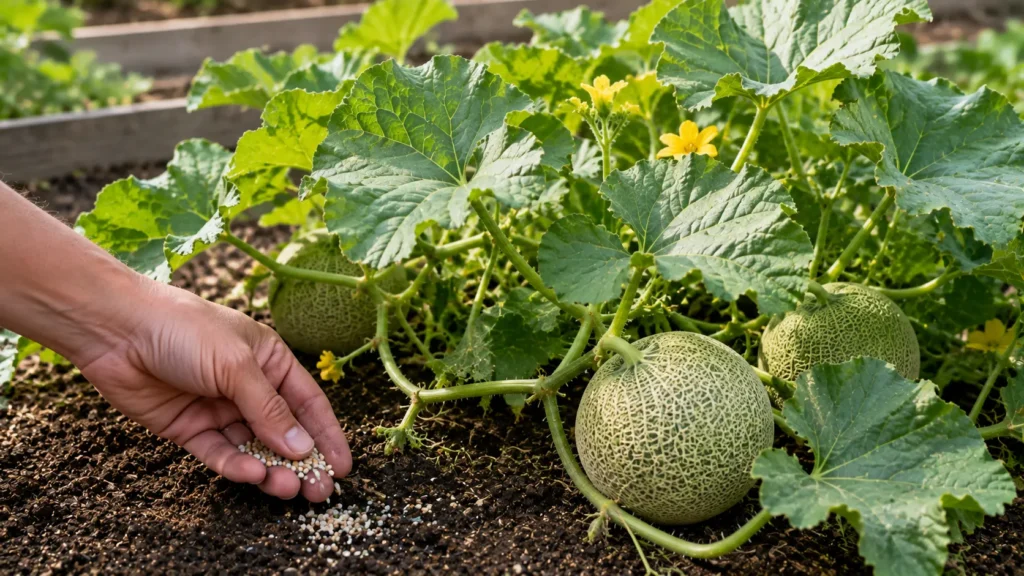
Growing a cantaloupe plant is easier than many new gardeners expect. The main things I focus on are warmth, full sun, good soil, steady moisture, and enough room for the vines to spread.
Cantaloupes are warm-season plants that grow from seeds into long vines. The vines produce yellow flowers, and after pollination, small melons begin to form. With good growing conditions, many varieties can produce ripe fruit within several weeks after flowering.
In this guide, I’ll walk through the whole process, from choosing the right spot and planting the seeds to caring for the vines, dealing with common problems, and knowing when the melons are ready to pick.
What Is a Cantaloupe Plant?
Cantaloupe is a warm-season melon from the species Cucumis melo. In the United States, people often use the names cantaloupe and muskmelon for these melons.
The plant belongs to the cucumber family, Cucurbitaceae. Like cucumbers and other melons, it grows as a vine rather than as a compact bush.
A cantaloupe plant can spread several feet across the ground, so I always recommend checking the available garden space before planting. A small seedling can turn into a surprisingly large plant once the weather gets warm.
The fruit usually has a rough, netted outer skin, although the exact appearance depends on the variety. Some produce small melons, while others produce larger fruit.
Quick Cantaloupe Plant Facts
| Feature | Details |
| Botanical name | Cucumis melo |
| Plant type | Warm-season annual |
| Growth habit | Trailing vine |
| Sun | Full sun |
| Soil | Fertile and well drained |
| Soil pH | Around 6.0–6.5 |
| Pollination | Mainly by insects |
| Growing method | Seeds or transplants |
| Fruit | Usually netted, depending on variety |
| Harvest | Often several weeks after flowering |
If you’re new to growing melons, don’t worry about memorizing all these details. The growing conditions matter much more than the botanical name.
What Does a Cantaloupe Plant Look Like?
A young cantaloupe plant starts with small leaves, but it quickly develops larger leaves and long vines.
As the plant grows, you’ll notice:
- Large green leaves
- Long trailing vines
- Curling tendrils
- Yellow flowers
- Male and female flowers
- Small developing melons
The flowers are especially useful because they help you see when the plant is moving from vine growth into fruit production.
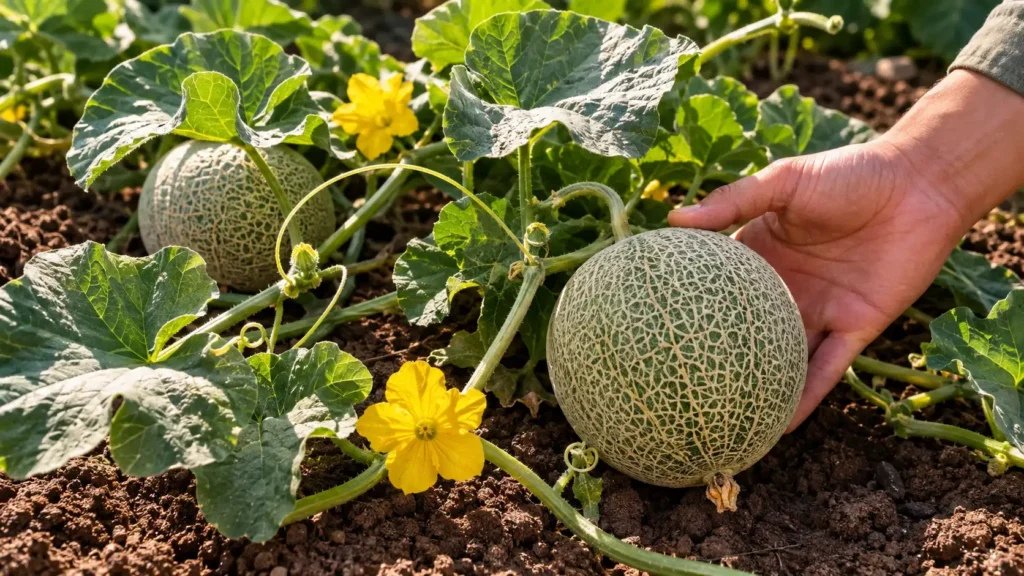
Male flowers usually appear first. Female flowers have a small swollen section behind the flower. That small swelling is the beginning of the melon.
If you see flowers but no fruit early in the season, I would not worry right away. Early male flowers are normal.
How Does a Cantaloupe Plant Grow?

I find it easiest to think of the cantaloupe plant’s growth as a simple sequence:
Seed → seedling → vine → flowers → pollination → fruit → ripening → harvest
The seed first develops roots and a small shoot. Once the plant has enough leaves, it starts putting more energy into vine growth.
When the plant reaches the flowering stage, male and female flowers appear. Bees and other insects can move pollen between them.
After a female flower is successfully pollinated, the small fruit behind the flower begins to enlarge.
The melon then grows over the following weeks. As it approaches maturity, the skin develops stronger netting and the fruit changes color. The stem also begins to separate from the melon.
Many cantaloupe varieties take around 35 to 45 days from flowering to maturity, but I would always use the variety’s expected maturity time as a guide rather than relying on one number.
Weather, soil, watering, and plant health can all change the timing.
What Does a Cantaloupe Plant Need to Grow?

I focus on four basic requirements:
- Plenty of sunlight
- Warm soil and air
- Fertile, well-drained soil
- Enough room for the vines
If these conditions are right, cantaloupe plants usually have a much easier time getting established.
Sunlight
Cantaloupes like plenty of sun.
I would choose the sunniest part of the garden rather than a spot that gets shade for much of the afternoon.
Good sunlight helps the plant produce energy for leaf growth, flowering, and fruit development.
If your garden receives only a few hours of direct sun, the plant may still grow, but you may see weaker growth and fewer or smaller fruits.
For the best results, give cantaloupes a location with several hours of direct sunlight each day.
Temperature
Cantaloupe is a warm-season plant, so cold weather can cause problems.
I would wait until the danger of frost has passed and the soil has warmed before planting outdoors. Seeds also germinate poorly in cold soil.
A soil temperature around 65°F is a useful target for planting.
This is one reason I don’t like rushing cantaloupes into the garden in early spring. A warm-looking day does not mean the soil is ready.
Young plants can struggle if cold weather returns after planting.
Soil
Cantaloupes grow best in fertile soil that drains well.
I would avoid a spot where water sits after rain. Poor drainage can create root problems and make it harder for the plant to stay healthy.
A slightly acidic to near-neutral soil works well. A pH around 6.0 to 6.5 is a good target.
If your soil is heavy or poor, adding suitable organic matter can improve its structure.
A soil test is also useful. Instead of guessing which nutrients your garden needs, you can use the test results to make better decisions about fertilizer.
Space
This is one point I would plan carefully.
A cantaloupe seedling looks tiny when you plant it, but the vines can spread several feet.
If you’re growing several plants on the ground, leave enough space for the vines to expand without covering every nearby crop.
The exact spacing depends on the variety and growing method, so check the seed packet before planting.
If space is limited, you can also train the vines on a strong trellis. I’ll cover that option later.
How to Plant Cantaloupe
You can plant cantaloupe directly in the garden or start the seeds indoors.
For most gardeners with a long, warm growing season, direct sowing is simple. Gardeners with shorter seasons may benefit from starting seeds indoors.
When to Plant Cantaloupe
I would plant cantaloupe only after the last frost risk has passed and the soil is warm.
A soil temperature of about 65°F gives seeds a much better start.
Don’t base planting time only on the calendar. Two gardens in different parts of the country can have very different soil temperatures on the same date.
If the soil is cold, waiting a little longer can save you from slow germination and weak seedlings.
Growing Cantaloupe From Seed

Direct sowing is an easy way to grow cantaloupes.
Plant the seeds about 1 to 2 inches deep, following the depth listed on your seed packet.
Once several seedlings emerge, thin them so the strongest plants have enough space.
I would rather keep fewer healthy plants with enough room than grow too many plants close together.
Crowded vines are harder to water, inspect, and manage later in the season.
Starting Cantaloupe Seeds Indoors
Starting seeds indoors can be useful if your growing season is short.
You can start them several weeks before the last expected frost, then move the young plants outside after the weather and soil have warmed.
The main thing I would watch is the roots. Cantaloupe seedlings don’t like rough transplanting.
Use containers that allow the young roots to develop without becoming badly root-bound, and handle the seedlings gently when moving them outside.
Before planting them permanently, gradually expose the young plants to outdoor conditions.
Spacing and Thinning
Spacing depends on the variety and whether you are growing the vines on the ground or vertically.
For ground growing, give the vines plenty of room.
After seedlings emerge, remove weaker plants if they are too close together.
I would also avoid pulling aggressively on the seedlings you want to keep. If possible, cut unwanted seedlings at soil level rather than disturbing nearby roots.
How to Care for Cantaloupe Plants
Once the plants are established, most of your work comes down to consistent care.
The main tasks are:
- Watering
- Feeding
- Weed control
- Mulching
- Checking for pests
- Watching for disease
- Managing the vines
Watering
Cantaloupe plants need regular moisture, especially while they are getting established and when fruit is developing.
I prefer deep watering rather than giving the plants a small amount every day.
The exact watering schedule depends on your soil, weather, temperature, and rainfall. Sandy soil may dry faster than heavier soil.
Try to keep moisture fairly consistent. Large swings between very dry soil and heavy watering can cause problems with fruit development and may contribute to splitting.
I also prefer watering near the base of the plant instead of regularly soaking the leaves.
Fertilizing
Cantaloupes need nutrients for healthy vine and fruit growth, but I would not automatically add large amounts of fertilizer.
Start with healthy soil and use a soil test when possible.
Too much nitrogen can encourage lots of leafy vine growth without giving you the fruit production you want.
If your soil needs fertilizer, use a product that fits the soil test and the growing stage of the plant.
For a detailed feeding plan, fertilizer types, and application timing, I would keep that information in a separate cantaloupe fertilizer guide.
Mulching
Mulch can make cantaloupe care much easier.
It can help:
- Hold moisture in the soil
- Reduce weeds
- Keep soil from splashing onto leaves
- Keep developing fruit cleaner
- Warm the soil when using suitable plastic mulch
I would wait until the soil is warm before adding thick organic mulch around young cantaloupe plants.
Mulch should help the plant, not keep cold, wet soil around its roots.
Weed Control
Keep weeds under control while the plants are young.
Young cantaloupe plants have to compete with weeds for water and nutrients.
Once the vines spread across the garden, weed control becomes harder.
I would remove weeds early and work carefully around the plant. Deep cultivation near the vines can damage shallow roots.
How Cantaloupe Flowers Become Fruit

This is the stage where many new gardeners start asking questions.
Why are there flowers but no melons?
Why are some flowers falling off?
Do I need another plant?
The answers become much easier once you know how the flowers work.
Male and Female Flowers
A cantaloupe plant produces both male and female flowers.
Male flowers usually appear first and produce pollen.
Female flowers have a small swollen area behind the flower. That swelling eventually becomes the melon if the flower is pollinated successfully.
Bees and other pollinating insects usually handle this job.
So, if your plant has plenty of male flowers early on, don’t assume you have a problem.
Do You Need Two Cantaloupe Plants to Get Fruit?

No.
One cantaloupe plant can produce both male and female flowers.
You don’t need a second plant simply because you think one plant cannot pollinate itself.
What you do need is successful pollen transfer. If pollinators are not visiting the flowers, fruit production can suffer.
I would focus on creating a garden that supports pollinators rather than adding extra cantaloupe plants just for this reason.
Why Are My Cantaloupe Flowers Not Producing Fruit?
If you have female flowers but no developing melons, pollination is one possible cause.
Other factors can also play a role, including:
- Low pollinator activity
- Very hot weather
- Water stress
- Poor plant health
- Pest damage
- Disease
First, check whether the flowers are actually female.
Then look at the overall condition of the plant.
A healthy plant with plenty of flowers but no fruit needs a different approach from a plant that is already struggling with yellow leaves, pests, or disease.
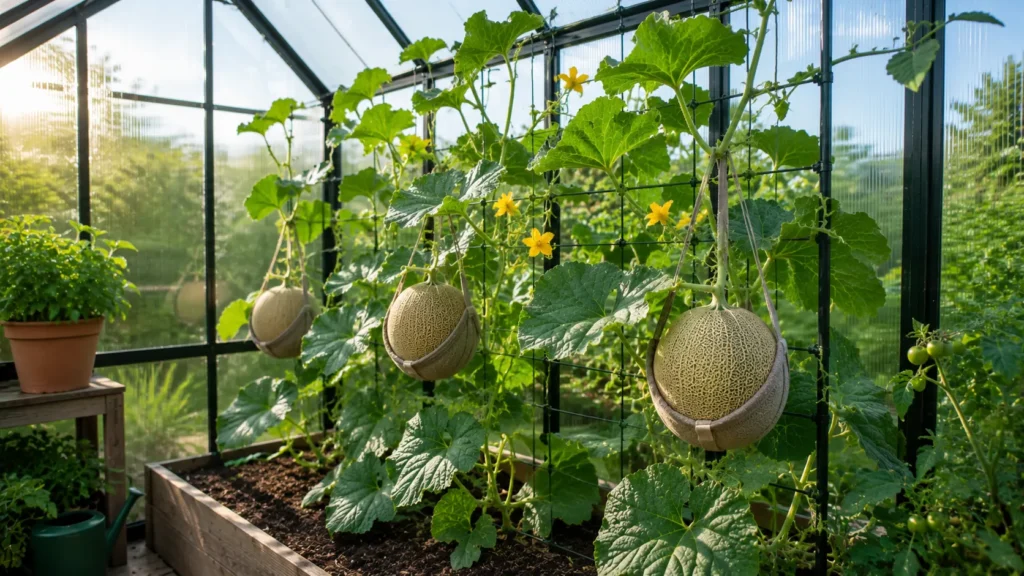
Do Cantaloupe Plants Need a Trellis?

No. Cantaloupes naturally grow along the ground.
But if your garden is short on space, vertical growing can be useful.
I would use a strong trellis and make sure it can handle the weight of developing melons.
As the fruit grows, support it with a soft sling or another suitable support. Don’t expect the vine alone to safely carry a heavy melon high above the ground.
Growing on a trellis can also make it easier to see the plant and inspect the leaves.
For larger vines and detailed training methods, a separate cantaloupe vine guide makes more sense than putting every technique into this article.
Common Cantaloupe Plant Pests and Diseases
A healthy cantaloupe plant can still attract pests or develop disease.
I recommend checking the leaves, stems, flowers, and developing fruit regularly.
Finding a problem early is usually much easier than trying to fix severe damage later.
Common Pests
Some pests that can affect cantaloupes include:
- Cucumber beetles
- Aphids
- Squash bugs
- Spider mites
- Whiteflies
- Thrips
- Cutworms
Cucumber beetles deserve special attention because they can damage leaves and flowers and may also spread plant diseases.
Aphids are small but can build up quickly on new growth and the underside of leaves.
If you notice insects, first identify what you’re dealing with. I would avoid spraying a random insecticide before knowing the pest.
Common Diseases
Cantaloupe plants can be affected by diseases such as:
- Powdery mildew
- Downy mildew
- Fusarium wilt
- Bacterial wilt
- Gummy stem blight
- Root diseases
- Viral diseases
Good airflow, proper watering, clean garden practices, and suitable varieties can all help reduce disease problems.
Don’t assume every yellow or wilted leaf means disease. Water stress, root problems, nutrient issues, insects, and weather can cause similar symptoms.
That’s why I prefer looking at the whole plant before deciding what is wrong.
Common Cantaloupe Plant Problems

Sometimes the plant looks unhealthy even though you can’t see an obvious pest.
Here’s a quick way to think about some common symptoms.
| Symptom | Possible causes |
| Yellow leaves | Water stress, nutrient problems, disease |
| Wilting | Dry soil, root problems, disease |
| Flowers but no fruit | Poor pollination, heat, plant stress |
| Small fruit | Poor pollination, water stress, plant health |
| Splitting fruit | Uneven or excessive moisture |
| Slow growth | Cold soil, poor roots, pests, disease |
| Curled leaves | Insects, disease, or environmental stress |
These are possible causes, not automatic diagnoses.
For example, if your cantaloupe leaves turn yellow, I would first check the soil moisture and inspect the leaves for pests. Then I’d look for disease symptoms before adding fertilizer.
This kind of simple checking can prevent you from treating the wrong problem.
When to Harvest Cantaloupe
Harvesting is where all the earlier work pays off.
The exact harvest date depends on the variety, but many cantaloupes mature roughly 35 to 45 days after flowering.
I would use the fruit itself as the final guide rather than trusting the calendar alone.
Signs of a Ripe Cantaloupe

Look for several signs together:
- Strong netting across the skin
- A change in background color
- A mature appearance for the variety
- A sweet melon smell near the blossom end
- The stem beginning to separate
- Easy separation from the vine at full slip
The exact appearance can vary between varieties.
Some gardeners rely heavily on the stem. That’s useful, but I would also look at the color and overall appearance of the fruit.
If the fruit pulls away easily from the vine at full slip, it is generally a strong sign that it has reached an appropriate harvest stage.
How Long After Flowering Is Cantaloupe Ready?
Many varieties need roughly 35 to 45 days after flowering to mature.
However, this is only a guide.
Warm weather can speed development, while cool conditions can slow it down.
The variety also matters, so check the seed packet or plant label for its expected maturity period.
How Many Cantaloupes Can One Plant Produce?
There is no universal number.
One plant might produce a different amount of fruit from another because of differences in:
- Variety
- Weather
- Soil
- Sunlight
- Water
- Pollination
- Plant spacing
- Pests
- Disease
- Length of the growing season
I would focus less on chasing a specific number of melons and more on creating conditions that allow the plant to grow well.
Good pollination and steady care usually matter more than trying to force the plant to produce more fruit than it can support.
Final Tips for Growing a Healthy Cantaloupe Plant
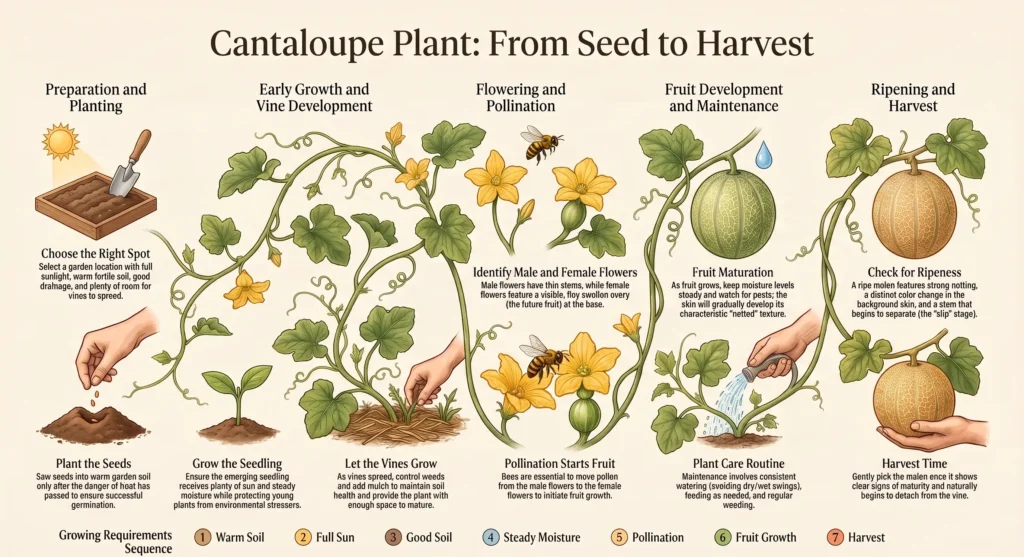
The basic formula is simple:
Warm soil + full sun + good drainage + steady moisture + enough space + good pollination = healthy cantaloupe plants.
If I were setting up a cantaloupe patch from scratch, I would focus on the basics before worrying about advanced techniques.
Choose a sunny location with fertile, well-drained soil. Wait until the soil is warm before planting, and give each plant enough room to spread.
Once the vines start growing, keep moisture steady and check the plants often. Look at the leaves for pests, watch the flowers for a successful fruit set, and don’t panic if the first flowers do not produce melons.
As the fruit develops, keep an eye on its size, color, netting, and stem. Those signs will tell you much more about harvest readiness than a calendar date alone.
The main lesson is simple: cantaloupe plants don’t need complicated care, but they do need the right conditions at the right time. Give them warmth, sunlight, good soil, water, space, and access to pollinators, and you’ll give the vines a strong chance to produce sweet, healthy melons.
Cantaloupe Plant FAQs
Do cantaloupes grow on vines?
Yes. Cantaloupes produce long trailing vines that can spread several feet. You can let them grow along the ground or train them vertically with proper support.
How much space does a cantaloupe plant need?
The answer depends on the variety and growing method. Ground-grown vines need several feet of room, while trellising can reduce the amount of ground space needed.
Do you need two cantaloupe plants to get fruit?
No. One plant can produce both male and female flowers. The key is successful pollination.
Why does my cantaloupe plant have flowers but no fruit?
Early male flowers are normal. If female flowers appear but fruit does not develop, poor pollination, heat, water stress, pests, or disease may be involved.
How long does a cantaloupe take to grow?
The full time from seed to harvest varies by variety and growing conditions. Many plants produce ripe fruit several weeks after flowering, often around 35 to 45 days.
Can cantaloupe grow in a small garden?
Yes. Choose a compact variety or train the vines vertically. The plant still needs enough room for healthy vine growth.
Can you grow cantaloupe vertically?
Yes. A strong trellis can support the vines, but developing melons should be supported as they become heavy.
Do cantaloupe plants come back every year?
No. Cantaloupe is an annual warm-season plant. You normally grow new plants each year.