Skip to content
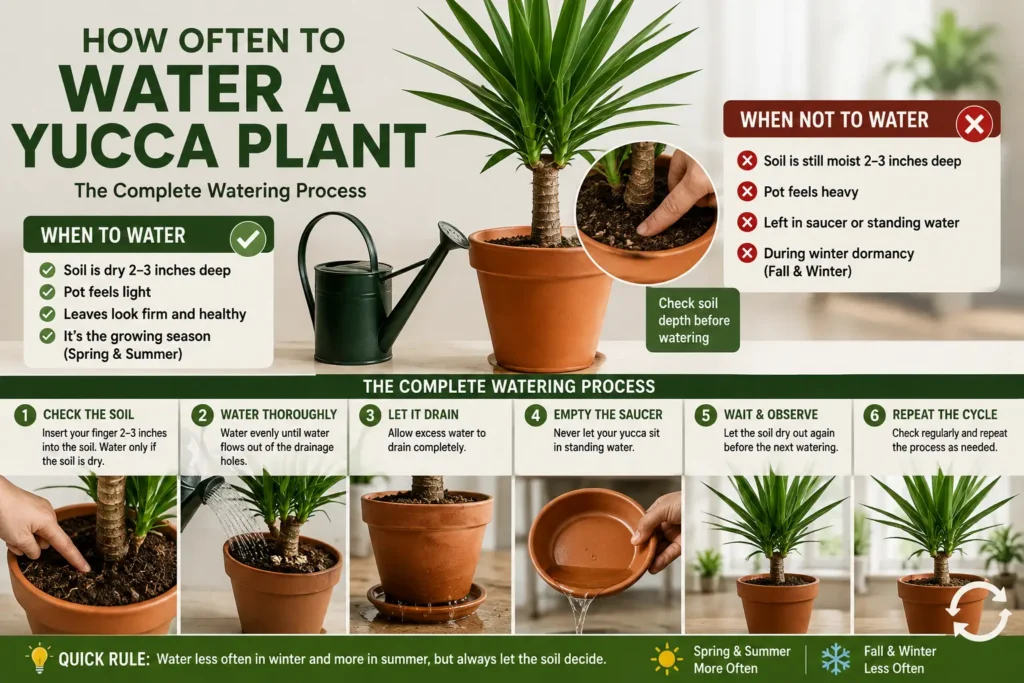
I do not recommend watering a yucca plant on a fixed seven-day schedule. Yuccas prefer to dry out between waterings, so I check the soil first and then decide whether the plant needs water.
For a potted yucca, a useful starting point is to check the soil about once a week during active growth. If the soil has dried enough, water thoroughly and let the excess drain away. During fall and winter, the plant usually needs much less water, and the gap between waterings can become several weeks depending on light, temperature, soil, and pot size.
The key is simple: water when the soil is dry enough, not just because a certain number of days have passed.
How Often Should You Water a Yucca Plant?

A yucca plant often needs water about every 1 to 2 weeks during active growth, but that is only a starting point. Some indoor yuccas may need water sooner, while others can go longer before the soil dries.
During winter, watering may drop to every 2 to 4 weeks or even less often. Outdoor yuccas growing in the ground can need much less supplemental water once established, especially if they receive regular rainfall.
I would use this table as a starting guide rather than a strict watering calendar:
| Yucca growing situation | Starting watering range | What to check |
| Indoor yucca in spring and summer | About every 1–2 weeks | Soil moisture |
| Indoor yucca in fall and winter | About every 2–4 weeks or longer | Soil and light |
| Outdoor yucca in a pot | About every 1–2 weeks during dry weather | Soil and weather |
| Newly planted outdoor yucca | More regular watering while establishing | Soil and rainfall |
| Established outdoor yucca | Infrequent deep watering | Soil depth and rainfall |
| Cool, low-light conditions | Much less often | Soil moisture |
The exact timing can change a lot. A yucca in a small terracotta pot near a sunny window may dry much faster than a larger plant in a cool room.
How to Tell When Your Yucca Needs Water

The easiest way to avoid overwatering is to check the soil before reaching for the watering can.
Check the Soil Moisture
Push your finger into the soil several inches deep. You want to check below the surface because the top layer can feel dry while the soil underneath remains damp.
If the soil is still noticeably moist, I would wait. If the appropriate depth has dried out, it is time to water.
For container yuccas, guidance commonly recommends allowing a significant portion of the soil to dry before watering again. The Royal Horticultural Society also recommends letting the surface of the compost dry between waterings and then watering thoroughly.
Check the Plant’s Growing Conditions
I also look at the conditions around the plant before deciding how often to water.
These factors can change how quickly the soil dries:
- Amount of sunlight
- Room temperature
- Humidity
- Pot size
- Pot material
- Soil type
- Drainage
- Air movement
- Plant size
- Season
- Outdoor rainfall
A yucca growing in bright light and warm conditions may use water faster than one sitting in a cool, darker room.
Don’t Rely on a Calendar Alone
A calendar can give you a reminder to check the plant, but it should not decide whether you water.
For example, if you watered seven days ago but the soil is still damp several inches down, adding more water can keep the roots wet for too long.
A better routine is:
- Check the soil.
- Decide whether it has dried enough.
- Water thoroughly if needed.
- Let excess water drain.
- Check the soil again before the next watering.
This simple routine is more reliable than following a fixed number of days.
How Much Water Does a Yucca Plant Need?
The amount of water and the frequency of watering are two different things.
When the soil has dried enough, I recommend watering thoroughly rather than giving the plant a small splash. For a potted yucca, apply water evenly until some excess begins to drain from the bottom of the container.
Then allow the pot to drain completely.
Do not leave the pot sitting in a saucer full of water. Yuccas are much more likely to suffer if their roots stay wet for too long.
A well-drained growing medium is especially important for container yuccas. The RHS recommends well-drained compost and thorough watering with excess water allowed to drain away.
How Often to Water an Indoor Yucca

Indoor yuccas are often watered more frequently during spring and summer and less often during fall and winter.
A practical starting point is to check the soil every 7 days during active growth. You may end up watering every 1–2 weeks, but your plant may need a different schedule.
Spring and Summer
As light and temperatures increase, an indoor yucca may use water faster.
Start by checking the soil once a week. If it has dried enough, give the plant a thorough watering.
If the soil is still damp, wait a few more days and check again.
Fall and Winter
Indoor yuccas usually need less water during the colder, darker part of the year.
Lower light and slower growth can mean the soil stays wet for longer. This is where I would be especially careful about following a summer watering routine.
Check the soil first and water only when it has dried sufficiently.
Potted Yucca Considerations
The container itself can change your watering schedule.
A small pot may dry quickly. A large pot can hold moisture for much longer.
Pot material also matters. A porous terracotta pot can lose moisture faster than a less porous container.
Drainage holes are essential. If water cannot escape, the soil can remain wet even when the surface looks dry.
How Often to Water an Outdoor Yucca

Outdoor yuccas need a different approach because rainfall, temperature, soil type, and exposure to the sun all affect the plant.
A yucca planted in well-drained ground may need very little additional water once established.
Newly Planted Yucca
A newly planted yucca needs more attention than an established plant.
Its roots have not yet spread through the surrounding soil, so I would check the soil more often during the first growing season.
Water when the surrounding soil begins to dry, especially during hot and dry weather.
As the plant becomes established, you can gradually reduce supplemental watering.
Established Yucca
An established outdoor yucca is much more tolerant of dry conditions.
If rainfall has already provided enough moisture, you may not need to water at all.
During prolonged dry weather, check the soil several inches below the surface rather than judging moisture from the top layer alone.
Hot, Dry Weather
Hot weather can dry soil much faster.
A yucca planted in full sun may need more frequent checks during a long period without rain.
Do not automatically water every day, though. Check the soil first.
A deep watering followed by a suitable drying period is generally better than giving small amounts of water every day.
Rainy Weather
Rain changes the schedule completely.
If your outdoor yucca has received enough rain, skip supplemental watering. Adding more water to already wet soil can create poor root conditions.
This is one reason outdoor yucca watering cannot follow the same schedule as an indoor plant.
How Often to Water Yucca in Summer
Summer is usually the period when yuccas need the most attention, but that does not mean they need frequent watering.
For a potted indoor yucca, about every 1–2 weeks can be a useful starting range if the soil is drying at that rate. Outdoor plants can vary much more because rainfall and local weather affect the soil.
The better method is:
Check the soil → assess the conditions → water deeply if needed → let it drain → check again.
Yuccas are drought-tolerant plants, so I would rather let the soil dry sufficiently than keep it constantly moist. (Almanac)
How Often to Water Yucca in Winter
Winter watering should usually be reduced.
An indoor yucca receiving less light may use water slowly, so the soil can stay damp for a long time.
Instead of continuing your summer schedule, check the soil before every watering. You may find that the plant needs water only every few weeks.
Outdoor yuccas in areas with regular winter rainfall may need little or no additional water. (Almanac)
Factors That Change How Often You Need to Water
There is no single watering schedule that works for every yucca.
Light
More light can increase water use.
A yucca near a bright window may dry faster than one in a darker room.
Temperature
Warm conditions can cause the soil to dry faster. Cool conditions can slow drying.
This is one reason your summer and winter watering schedules should not be identical.
Pot Size
Small pots contain less soil and can dry quickly.
Large pots hold more moisture and may take longer to dry.
If you move a yucca into a much larger pot, do not automatically keep the old watering routine.
Soil and Drainage
Yucca needs a well-draining growing medium.
Heavy soil that holds water for too long can create problems even if you are not watering very often.
A fast-draining mix allows excess water to move away from the roots.
Pot Material
Terracotta pots are porous and can lose moisture through the container walls.
Plastic and glazed ceramic pots generally retain moisture longer.
So two yuccas receiving the same amount of light may still need different watering schedules.
Rainfall
Outdoor yuccas receive water from the weather.
Always consider recent rainfall before adding more water.
Plant Size and Age
A small young plant and a large established yucca can have different water needs.
The size of the container and root system also affect how quickly the soil dries.
How to Water a Yucca Plant Correctly

Once the soil has dried enough, use this simple process.
Step 1: Check the Soil
Feel several inches below the surface.
Do not judge the entire root zone by the dry appearance of the topsoil.
Step 2: Water Thoroughly
Apply water evenly across the soil.
For a container plant, continue until some water begins to escape through the drainage holes.
Step 3: Let the Pot Drain
Give the excess water time to leave the container.
Never keep the pot sitting in standing water.
Step 4: Empty the Saucer
If water collects in the saucer beneath the pot, remove it.
This keeps the bottom of the root zone from staying saturated.
Step 5: Wait Before Watering Again
Do not add more water until the soil has dried enough again.
This is the part many new yucca owners get wrong. They water again because the plant has reached a certain day on the calendar instead of checking the soil.
Signs You Are Overwatering Your Yucca

Too much water is one of the main problems with yucca plants.
Yellow Leaves
Some older lower leaves naturally turn yellow as they age, so yellowing alone does not prove that you have overwatered.
Sudden yellowing combined with wet soil is more concerning.
Soft or Mushy Stem
A soft stem can indicate a serious moisture problem.
Check the soil and roots rather than simply adding more water.
Soil That Stays Wet
If the soil remains wet for a long time after watering, check:
- Drainage holes
- Pot size
- Soil type
- Saucer drainage
- Light levels
- Watering frequency
The problem may be the growing conditions rather than the amount of water you use at each watering.
Root Rot
Constantly wet conditions can damage roots and lead to root rot.
If the roots become dark, soft, or rotten, simply changing the watering day may not be enough. The plant may need attention to its root system and growing medium.
The RHS specifically links sudden yellowing and limp lower leaves with overwatering and recommends reducing water while allowing the plant to dry substantially.
Signs Your Yucca Is Too Dry

Underwatering can also cause visible changes.
Brown or Crispy Leaves
Dry conditions can cause leaves to become brown and crisp, particularly around the edges and tips.
However, brown tips can have other causes, so check the soil before assuming the plant needs more water.
Curling Leaves
Leaves may curl or look less firm when the plant is under water stress.
Check the soil first.
Drooping
Drooping does not always mean the plant is thirsty.
Low light, overwatering, and other problems can also cause drooping, so soil moisture is a useful first check.
Slow Growth
A plant that is not getting enough water may grow slowly, but slow growth can also result from low light or seasonal changes.
Look at the whole growing situation rather than changing the watering schedule based on one symptom.
What to Do If You Have Been Overwatering Your Yucca
If the soil stays wet and you suspect overwatering, stop adding more water.
Move through these checks:
- Confirm that the pot has drainage holes.
- Check whether the soil is still wet several inches down.
- Make sure excess water can leave the pot.
- Move the plant to a suitable bright location if light is poor.
- Allow the soil to dry before watering again.
- Check the roots if the plant shows serious signs of decline.
If you find badly damaged or rotting roots, the plant may need repotting into fresh, well-drained growing medium.
Do not respond to an overwatered yucca by simply adding fertilizer or more water.
Common Yucca Watering Mistakes

These are the mistakes I would avoid:
- Watering every seven days without checking the soil
- Giving a small splash of water each day
- Keeping the soil constantly damp
- Ignoring drainage holes
- Leaving water in the saucer
- Using the same schedule in summer and winter
- Treating indoor and outdoor yuccas the same
- Ignoring recent rainfall
- Watering a plant simply because its leaves look slightly droopy
- Increasing water without checking the soil first
- Using a heavy soil mix that stays wet
- Giving a newly planted yucca the same schedule as an established plant
The biggest mistake is treating watering frequency as a fixed number.
Your plant’s conditions matter more than the calendar.
Yucca Watering Schedule at a Glance
| Condition | What I would do |
| Soil still damp | Wait and check again later |
| Soil dry enough | Water thoroughly |
| Water drains from pot | Allow it to finish draining |
| Saucer contains water | Empty the saucer |
| Summer indoor yucca | Check about weekly |
| Winter indoor yucca | Check less often |
| Outdoor yucca after heavy rain | Usually skip watering |
| Newly planted yucca in dry weather | Check more often |
| Established outdoor yucca | Water less frequently |
| Soil stays wet for many days | Check drainage and soil |
The important point is that the table gives you a checking routine, not a rigid watering timetable.
Final Take
If you want one simple rule for yucca watering, use this:
Check the soil before you water.
For many indoor yuccas, that may mean checking weekly and watering every 1–2 weeks during active growth. In winter, the plant may go several weeks between waterings. Outdoor yuccas can need even less supplemental water once established.
I would focus less on counting days and more on three things: soil dryness, drainage, and the plant’s growing conditions. That approach gives you a watering routine that can adjust as the season, weather, and growing environment change.
Frequently Asked Questions
How often should I water a yucca plant?
A potted yucca often needs water about every 1–2 weeks during active growth, but the soil should decide the timing. Check the soil before watering and wait if it is still damp.
How often should I water an indoor yucca?
Start by checking the soil once a week during spring and summer. If the soil has dried enough, water thoroughly. During fall and winter, you may need to wait several weeks between waterings.
How often should I water an outdoor yucca?
It depends on rainfall, soil, temperature, and whether the plant is newly planted or established. Established outdoor yuccas can need much less supplemental water than potted plants.
How often should I water a yucca plant in winter?
Water much less often than during active growth. Check the soil before watering because lower light and slower growth can make the soil stay wet longer.
How often should I water a yucca plant in summer?
A potted yucca may need watering about every 1–2 weeks, but only if the soil has dried enough. Hot, bright conditions can shorten the gap, while cool or humid conditions can lengthen it.
How much water does a yucca plant need?
Water thoroughly when the soil is dry enough, allowing excess water to drain from the container. Avoid giving frequent small amounts that leave the root zone partly wet.
Can you overwater a yucca plant?
Yes. Constantly wet soil can lead to root problems. Yuccas generally handle dry periods better than soil that stays saturated for long periods.
How do I know if my yucca needs water?
Check the soil several inches below the surface. If it is still damp, wait. If it has dried sufficiently, water thoroughly.
Can a yucca plant go without water?
Yuccas are drought-tolerant and can handle dry periods, but that does not mean they should be left without water indefinitely. The goal is to allow the soil to dry between waterings while still giving the plant enough moisture to stay healthy.
Should I water my yucca after repotting?
Check the condition of the new growing medium and the plant’s roots before deciding. If the new soil is already moist, adding more water immediately may keep it too wet. Once watering is appropriate, allow excess moisture to drain fully.