 Skip to content
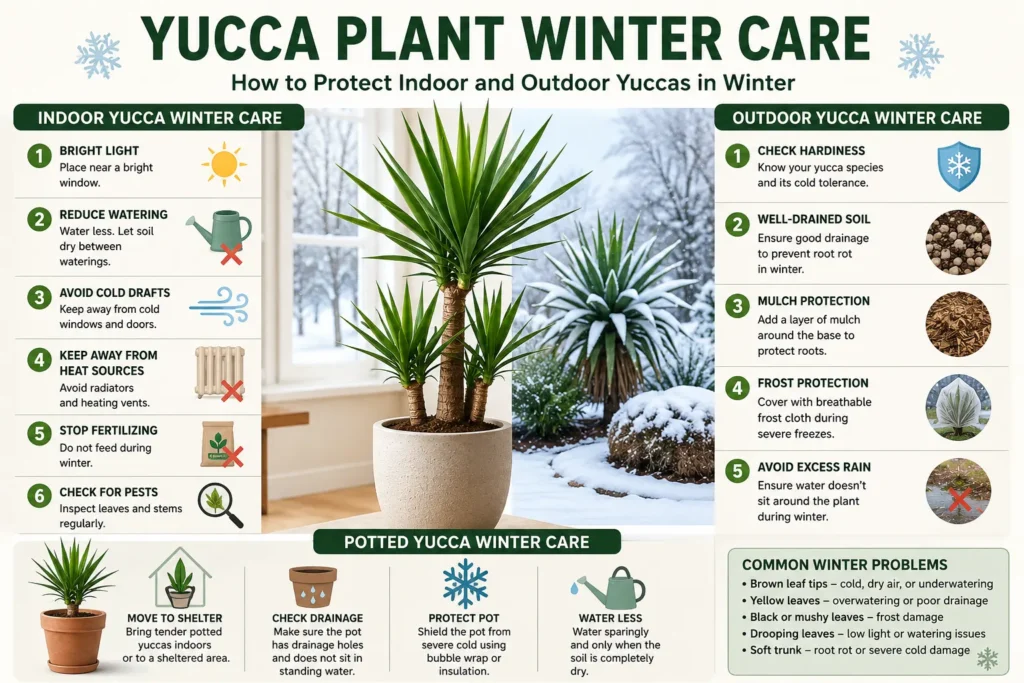
Winter changes how I care for a yucca plant. As light levels drop and growth slows, I usually pay more attention to watering, light, temperature, and drainage rather than trying to keep the plant growing at its summer rate.
The right winter care also depends on the type of yucca. Some species are cold hardy and can stay outside through winter, while tender types such as Yucca elephantipes are better suited to indoor growing in colder climates.
The biggest mistake I try to avoid is treating every yucca the same. An indoor yucca sitting beside a window has very different needs from a mature outdoor yucca planted in well-drained soil.
Quick Answer: How Do You Care for a Yucca Plant in Winter?
I reduce watering, stop routine fertilizing, keep indoor yuccas in a bright location, and protect tender plants from cold drafts and freezing temperatures. For outdoor yuccas, I pay close attention to the plant’s cold tolerance, soil drainage, winter rain, and frost risk. Container-grown yuccas need extra care because their roots have less protection from cold temperatures.
The main winter rule I follow is simple: give a yucca enough light, let the soil dry between waterings, and avoid keeping the roots cold and wet for long periods.
Does a Yucca Plant Need Winter Care?
Yes, but winter care is usually about making fewer changes rather than doing more work.
Yucca plants are adapted to dry conditions, and many species slow their growth during colder, darker months. That means they usually need less water and little or no fertilizer during winter.
I also avoid moving a plant from one extreme condition to another without a reason. A yucca that has been growing indoors should stay in a stable indoor spot rather than being exposed to sudden cold.
For outdoor yuccas, I first check the species and local winter conditions. Some are frost hardy, while others can suffer damage from freezing temperatures.
How Cold Can a Yucca Plant Tolerate?
There is no single temperature that works for every yucca.
Some outdoor species are quite cold hardy. Yucca filamentosa and Yucca gloriosa, for example, are commonly grown outdoors in colder areas. Tender types such as Yucca elephantipes need much more protection from cold.
This is why I would not use one temperature rule for the entire genus.
If I am growing a yucca indoors, I protect it from freezing temperatures, cold drafts, and sudden temperature changes. One extension source recommends keeping Yucca gigantea away from cold drafts and sudden changes and bringing it indoors when outdoor temperatures become too cold for that species.
For an outdoor plant, I check the specific species before deciding whether it needs winter protection.
Indoor Yucca Winter Care

Indoor yuccas usually have a simpler winter routine, but there are still a few things I pay close attention to.
Give Your Yucca Enough Light
Winter days are shorter, so a spot that worked well during summer may not provide enough light in winter.
I place an indoor yucca in the brightest suitable location available. A sunny window can work well for many indoor yuccas, provided the plant is not exposed to damaging temperature swings or harsh conditions.
If natural light is weak, a grow light can help maintain better growth.
I also watch the leaves. If they become weak, stretched, or unusually droopy, I check the light before assuming the problem is watering.
Reduce Watering
This is one of the biggest winter changes I make.
A yucca uses less water when growth slows. If the soil stays wet for too long, the roots can become stressed and root rot can develop.
I check the soil before watering rather than following a fixed calendar.
If the upper layer is still damp, I wait.
When the soil has dried sufficiently, I water thoroughly and allow excess water to drain from the pot.
Keep the Plant Away From Heating Vents
I avoid placing an indoor yucca directly beside a radiator, furnace vent, or other strong heat source.
Hot air can dry the foliage while the soil behaves differently, and sudden temperature changes can also stress the plant.
A bright location with fairly stable room conditions is a better choice.
Avoid Cold Drafts
I also avoid putting a tender yucca directly beside a cold window or drafty door during freezing weather.
Cold air can cause stress even when the rest of the room feels comfortable.
If the plant is near a window, I make sure it is not pressed against cold glass during severe weather.
Stop Fertilizing
I do not try to force new growth during winter.
Yucca generally needs feeding during its active growing period rather than while growth has slowed. Container-care guidance recommends no fertilizer during winter.
I resume normal feeding when active growth returns in spring.
Check for Pests
I also inspect the leaves and stems during winter.
Indoor yuccas can develop pest problems, and it is easier to deal with an infestation when I notice it early.
I look underneath leaves and around leaf joints for scale, mealybugs, or other signs of pests.
Outdoor Yucca Winter Care
Outdoor yucca winter care depends heavily on species and local climate.
A cold-hardy yucca planted in suitable soil may need very little help. A tender species growing in a cold climate may need to be moved indoors or given serious protection.
Check Your Yucca’s Cold Hardiness
Before adding winter protection, I identify the yucca if possible.
Yucca filamentosa and Yucca gloriosa are examples of hardy species, while Yucca elephantipes is much more suited to warm conditions and indoor growing.
This makes species identification useful before deciding whether a plant can remain outdoors.
Improve Drainage Before Winter
Good drainage becomes especially important during cold weather.
I do not want a yucca sitting in saturated soil during a cold spell. Cold, wet conditions can place extra stress on the roots, and excess moisture can contribute to root problems.
If water collects around the plant after rain, I treat that as a warning sign.
This is also where choosing the right soil for yucca makes a real difference.
Protect the Root Zone
For an outdoor yucca that needs some winter protection, I can use a suitable layer of mulch around the root area.
I keep the material from being packed tightly against the crown.
The goal is to protect the root zone without creating a constantly wet environment.
Protect Against Severe Frost
If a yucca is growing near the edge of its cold tolerance, temporary frost protection can help during a severe freeze.
I use breathable frost protection rather than wrapping the plant tightly in plastic.
I also remove temporary covering when the severe cold has passed so moisture does not remain trapped around the plant.
Avoid Excess Winter Rain
Cold temperatures are not always the only problem.
For some yuccas, prolonged winter wetness can be more damaging than a short cold spell. Good drainage is therefore one of the first things I check.
If an outdoor yucca repeatedly sits in wet soil, the problem is bigger than simply adding a winter cover.
Potted Yucca Winter Care

A potted yucca needs a little more attention because its roots are surrounded by a limited amount of soil.
The container can become colder than the ground around an established outdoor plant.
Move Tender Containers to Shelter
If I have a tender yucca in a container, I move it indoors or to a suitable sheltered area before serious cold arrives.
Tender varieties such as Yucca elephantipes are commonly grown indoors and need protection from freezing weather.
Keep Drainage Holes Clear
I make sure the pot has working drainage holes.
I also avoid leaving the container sitting in a tray of standing water.
Protect Outdoor Containers From Severe Cold
If a hardy yucca is staying outside in a container, I place it in a sheltered position when possible.
I also protect the pot from severe exposure to freezing conditions, especially when the plant is a borderline-hardy type.
Reduce Watering
Container yuccas still need less water during winter.
I check the soil before watering and allow it to dry sufficiently between waterings. Good drainage is more useful than trying to maintain constant moisture.
How Often Should You Water a Yucca in Winter?

I do not use one fixed number of days for every yucca.
Instead, I check the soil.
Winter watering depends on:
- Indoor temperature
- Light level
- Pot size
- Soil type
- Drainage
- Plant size
- Humidity
- Whether the plant is actively growing
A yucca growing in a cool room may need water much less often than one in a warm, bright room.
The RHS recommends watering container yuccas sparingly in winter and allowing the surface of the growing medium to dry before watering again.
This is also why I recommend checking my separate guide on how often to water a yucca plant for a more detailed watering routine.
How Much Light Does a Yucca Need in Winter?
A yucca still needs good light during winter.
I place an indoor plant near a bright window where it can receive plenty of natural light.
A south-facing window can be useful during winter for many indoor yuccas, while other bright windows can work depending on the room and climate.
If the plant receives very little natural light, a grow light can be useful.
I do not move a yucca into a dark corner simply because it is winter.
Slower growth does not mean the plant can manage without light.
What Temperature Is Too Cold for a Yucca?
This depends on the species.
Tender indoor yuccas should be protected from freezing conditions. For example, guidance for Yucca gigantea recommends bringing it indoors as temperatures fall and keeping it away from cold drafts.
Some hardier outdoor species can handle much colder weather.
So instead of asking for one universal minimum temperature, I ask:
Which yucca do I have, and what is its normal hardiness range?
That answer gives me a much better idea of whether the plant can stay outside.
How to Protect Yucca From Frost

If frost is expected, I first decide whether the plant is actually cold sensitive.
For a tender container plant, moving it indoors is usually much easier than trying to protect it outside.
For a borderline outdoor yucca, I can use temporary frost protection.
Before a Freeze
I:
- Check the weather forecast.
- Move tender containers to shelter.
- Prepare frost cloth if needed.
- Check that the soil drains properly.
- Avoid unnecessary watering.
During Severe Cold
I use breathable frost protection when the plant needs it.
I make sure the covering is secure but not crushing the leaves.
I avoid tightly wrapping the entire plant in plastic.
After the Freeze
I do not immediately cut every leaf that looks damaged.
Some damage becomes clearer after temperatures return to normal.
I give the plant time to show which tissue is actually dead before doing major pruning.
Yucca Winter Damage: What to Look For

Winter problems can look similar to watering problems, so I look at several signs rather than one symptom.
Brown Leaf Tips
Brown tips can come from several causes.
Cold exposure, dry indoor conditions, underwatering, low humidity, and root stress can all affect foliage.
I check the soil, light, temperature, and recent weather before deciding what caused the damage.
Black or Mushy Leaves
Blackened or mushy foliage after a freeze can indicate cold damage.
If the tissue becomes soft rather than simply dry, I pay closer attention to the crown and stem.
Yellow Leaves
Some lower-leaf yellowing can be normal as older leaves age.
Sudden yellowing combined with limp foliage is more concerning, especially when the soil stays wet. Overwatering can lead to root problems in yucca.
Drooping Leaves
If the leaves start drooping, I check:
- Soil moisture
- Light
- Temperature
- Root condition
- Recent cold exposure
Low light and watering problems can both cause drooping, so I do not assume one cause immediately.
Soft Trunk
A soft or collapsing trunk is more serious.
I check the roots and soil for signs of prolonged moisture and root or stem damage.
What to Do After Frost Damage
I avoid rushing into heavy pruning after a freeze.
First, I move tender indoor plants back into stable conditions if they were exposed to cold.
For outdoor plants, I wait until I can see which leaves and stems are actually damaged.
Clearly dead foliage can be removed later.
If the crown remains healthy, new growth may appear when conditions improve.
I also avoid compensating for cold damage by giving the plant lots of water. Cold-stressed roots can be especially vulnerable to excess moisture.
If the damage is severe or the plant’s crown and stem appear to be failing, I reassess the plant before doing more work.
Should You Fertilize a Yucca in Winter?
I generally do not fertilize a yucca during winter.
If the plant is growing very slowly because of lower light and cooler conditions, extra fertilizer does not solve the main issue.
I wait until active growth returns in spring before restarting a normal feeding routine.
This also keeps the winter routine simple.
Should You Repot a Yucca in Winter?
I prefer to repot a healthy yucca during its active growing period rather than making major root changes during winter.
If the plant has a serious root problem, a broken container, or another urgent issue, repotting may be necessary.
Otherwise, I wait until spring.
For the full repotting process, I would use my separate guide on how to repot a yucca plant.
Should You Prune a Yucca in Winter?
I do not prune a yucca heavily just because winter has arrived.
If a leaf is clearly dead or damaged, removing it may be appropriate.
But after frost, I prefer to wait until the extent of the damage is clear before making major cuts.
For detailed pruning steps, see my guide on how to prune yucca.
Winter Soil and Drainage
Soil is easy to overlook during winter, but I consider drainage one of the most important parts of yucca winter care.
Yucca prefers well-drained growing conditions. Container plants should have drainage holes, and the potting mix should allow excess water to leave the root zone.
I avoid:
- Heavy soil that stays wet
- Pots without drainage holes
- Standing water in saucers
- Waterlogged garden beds
- Excessive winter watering
If I am unsure about the growing medium, I use my separate guide on the best soil for yucca.
Common Yucca Winter Care Mistakes
Watering on a Fixed Schedule
I do not water simply because a certain number of days have passed.
I check the soil first.
Keeping the Plant in a Dark Corner
Winter light is already weaker, so moving the plant into a dark area can make the problem worse.
Placing the Yucca Beside a Heater
A radiator or heating vent can expose the plant to hot, dry air.
I prefer a bright location with stable conditions.
Leaving a Tender Potted Yucca Outdoors
I check the species before leaving a container outside during freezing weather.
Tender varieties may need to be moved indoors.
Keeping the Soil Wet
This is one of the mistakes I take most seriously.
Yucca is drought tolerant, but wet roots can create serious problems.
Fertilizing Heavily
I do not use fertilizer to force winter growth.
Covering an Outdoor Yucca for Too Long
Temporary frost protection can be useful, but I remove it when the severe weather passes.
Pruning Every Brown Leaf Immediately
Not every brown leaf means the plant is dead.
I first look at the cause and wait for frost damage to become clearer.
Indoor vs Outdoor Yucca Winter Care

| Care factor | Indoor yucca | Outdoor yucca |
| Main concern | Low light and excess water | Cold, frost and winter moisture |
| Watering | Reduce and check soil first | Usually much less during cold weather |
| Light | Brightest suitable location | Natural sunlight |
| Temperature | Avoid cold drafts and heating vents | Depends on species |
| Frost protection | Usually brought indoors if tender | May be needed for borderline types |
| Drainage | Essential | Especially important during winter rain |
| Fertilizer | Usually pause | Resume during active growth |
The biggest difference is that an indoor yucca is usually dealing with low light and indoor watering, while an outdoor yucca is more likely to face cold temperatures, frost, and winter moisture.
Final Take
For me, good yucca plant winter care comes down to four things: light, water, temperature, and drainage.
For an indoor yucca, I keep the plant bright, reduce watering, avoid heating vents and cold drafts, and stop routine fertilizer until active growth returns.
For an outdoor yucca, I first check whether the species is cold hardy enough for the local climate. Then I focus on well-drained soil, sensible root protection, and temporary frost protection when the plant actually needs it.
For a potted yucca, I pay extra attention to the roots because containers provide less protection from severe cold.
I also try not to overreact to winter changes. A few brown leaves do not always mean the plant is dying, and a yucca does not need the same amount of water or fertilizer in winter as it does during active growth.
The goal is simple: keep the roots from staying wet, give the plant enough light, protect tender types from severe cold, and let the yucca rest until spring growth begins.
Yucca Winter Care FAQs
Does a yucca plant need less water in winter?
Yes. Most yuccas need less water when growth slows during winter. I check the soil before watering instead of following a fixed schedule.
Should I stop watering my yucca in winter?
I do not automatically stop watering every indoor yucca. I reduce watering and let the soil dry between waterings. Outdoor plants may need very little additional water if winter rain is providing enough moisture.
Can yucca plants survive winter?
Some can survive cold winters outdoors, while tender species need protection. The species and growing conditions matter.
Can a yucca survive freezing temperatures?
Some hardy yucca species can tolerate freezing temperatures, but tender varieties can suffer damage. I check the specific species before leaving it exposed to a freeze.
Should I bring my yucca indoors for winter?
If I am growing a tender species in a climate with freezing weather, yes, I would move a container plant indoors before serious cold arrives.
Where should I put my indoor yucca in winter?
I choose a bright location away from cold drafts, very cold windows, and heating vents.
Can I keep my yucca near a radiator?
I would avoid placing it directly beside a radiator or heating vent. Stable room conditions are better than strong, direct heat.
Why is my yucca turning yellow in winter?
Overwatering is one possible cause, especially if the leaves are limp and the soil stays wet. Some yellowing of older lower leaves can also occur naturally.
Why are my yucca leaves turning brown in winter?
Brown tips can result from cold exposure, dry indoor air, underwatering, or other stress. I check the plant’s soil, light, temperature, and recent conditions before deciding what is wrong.
Should I cover my yucca during a freeze?
Only if the plant needs protection from temperatures beyond its normal tolerance. Hardy species may not need covering, while borderline or tender plants may benefit from temporary frost protection.
Should I mulch around a yucca in winter?
For an outdoor yucca that needs some root protection, a suitable mulch layer can help. I keep it from being packed directly against the crown and make sure the area still drains well.
Can yucca survive snow?
Some cold-hardy yuccas can tolerate snow and freezing weather. Tender species may not. I judge this by species and local conditions rather than assuming every yucca has the same tolerance.
Should I prune frost-damaged yucca leaves?
I do not rush to remove every damaged leaf immediately after a freeze. I wait until the damage is clearer, then remove tissue that is clearly dead.
Should I repot a yucca in winter?
I prefer to wait until spring for routine repotting. An urgent root or container problem is an exception.
Should I fertilize my yucca in winter?
I generally stop routine fertilizing during winter and resume when active growth returns.
Can outdoor yucca get root rot in winter?
Yes. Cold, wet soil can create poor conditions for the roots. Good drainage and careful winter watering are important.
Does a yucca go dormant in winter?
Many yuccas slow their growth during winter, especially when temperatures and light levels fall. The exact response varies by species and growing conditions.