Skip to content

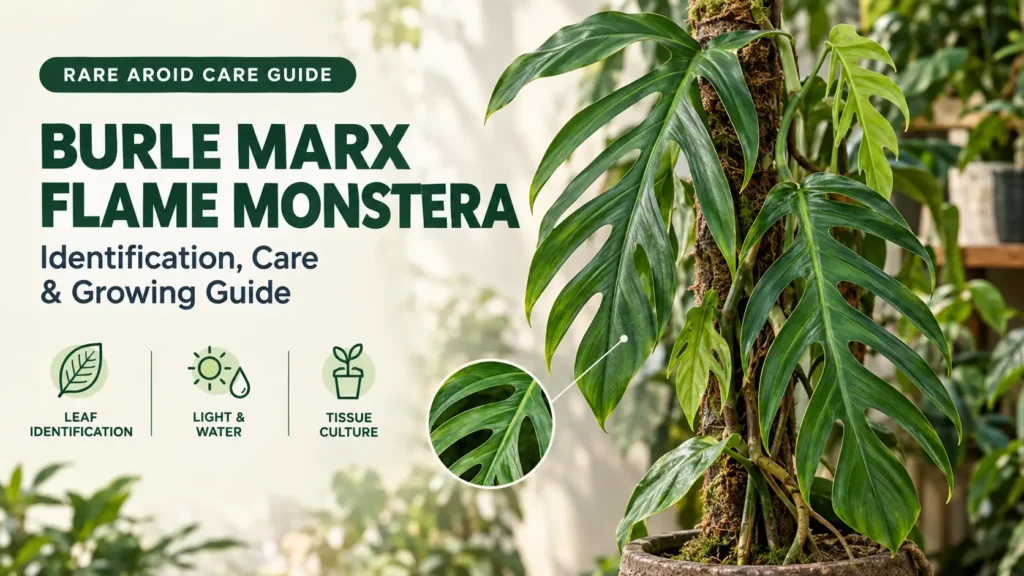
The Burle Marx Flame Monstera is a rare aroid known for its deeply divided leaves, climbing growth habit, and unusual foliage. Young plants may look very different from mature specimens, which can make identification difficult for new collectors.
If you want to grow a Burle Marx Flame Monstera, focus on three things: providing bright indirect light, keeping the roots in a well-draining mix, and giving the plant support as it grows. If you buy a tissue-culture plug, you will also need to help it adjust to normal indoor conditions.
This guide explains how to identify the plant, care for it, grow it from a young specimen, solve common problems, and check a plant before buying.
Quick Answer: What Is a Burle Marx Flame Monstera?
The Burle Marx Flame Monstera is a climbing aroid grown for its deeply divided leaves. It is commonly sold under the name Monstera ‘Burle Marx Flame’, although its botanical naming status is not fully settled.
The plant was found in the collection of Brazilian landscape artist Roberto Burle Marx in Rio de Janeiro. Its original wild source is unknown. Young leaves may be entire, while later leaves develop deep cuts that create the plant’s distinctive flame-like shape.
For healthy growth, provide bright indirect light, moderate watering, a chunky aroid potting mix, warm temperatures, and a support to climb. Growth and leaf shape depend on the plant’s age, health, and growing conditions.
What Is the Burle Marx Flame Monstera?
The Burle Marx Flame Monstera belongs to the aroid family, Araceae. It is a climbing plant that grows along support rather than staying compact like many small houseplants.
Collectors value it for its unusual leaf shape. As the plant develops, its leaves become deeply divided, with long sections separated by wide gaps. Mature leaves may also develop small holes near the base of some sections.
The common name refers to the leaf shape, which can resemble flames. However, not every leaf will have the same number or pattern of divisions. Leaf development changes as the plant matures.
Is the Burle Marx Flame Monstera a True Monstera Species?
The plant is commonly known as Monstera Burle Marx Flame, but its naming requires some care. The name Monstera sp. ‘Burle Marx’s Flame’ appears in specialist plant records, where it is accepted but not yet established as a formally published name.
This means you may see different labels from sellers and collectors. Some use “Monstera Burle Marx Flame,” while others use “Burle Marx’s Flame” or similar variations.
When buying one, look beyond the name on the label. Check the leaf shape, growth habit, plant photographs, and seller’s information. A name alone does not prove that a plant is correctly identified.
Where Did the Burle Marx Flame Monstera Come From?
The plant is linked to Roberto Burle Marx’s collection in Rio de Janeiro, Brazil. Its original location in the wild has not been confirmed.
This distinction matters because a plant’s collection history is not the same as a verified natural habitat. Be cautious of seller descriptions that give a precise wild origin without clear supporting evidence.
How to Identify a Burle Marx Flame Monstera

The leaf shape is the most useful feature to examine. However, young plants can look very different from mature ones, so you should consider the plant’s age and growth pattern before making an identification.
1. Look at the Leaf Shape
Young leaves may start out whole, with no deep cuts. As the plant grows, newer leaves can develop long, narrow sections separated by deep openings.
On mature plants, the divisions may extend far toward the midrib. Some leaves may also develop small perforations near the base of their sections.
The exact pattern varies. Do not expect every leaf to look identical or assume that one unusual leaf confirms the plant’s identity.
2. Compare Juvenile and Mature Leaves
Juvenile foliage is often less divided than mature foliage. This can make a small plant difficult to identify from a single photograph.
| Feature | Young plant | More mature plant |
| Leaf shape | Often whole or less divided | Deeply divided into narrow sections |
| Leaf size | Usually smaller | Can become larger under suitable conditions |
| Growth habit | May look compact at first | More clearly shows climbing growth |
| Aerial roots | May be small or not obvious | Often more noticeable along the stem |
| Leaf pattern | Less developed | More characteristic, though still variable |
These are general growth patterns, not guaranteed stages or fixed measurements. Light, support, root health, and overall growing conditions can affect development.
3. Check the Stem and Aerial Roots
The Burle Marx Flame Monstera is a climber. As it grows, it may produce aerial roots along the stem. These roots help the plant attach to a support and can take up moisture.
A plant growing upward on a moss pole or similar support may develop a different appearance from one left trailing or unsupported. However, aerial roots alone cannot confirm the plant’s identity because many aroids produce them.
4. Be Careful With Seller Photos
Some listings show only a mature leaf, while the plant being sold is a small tissue-culture plug or young seedling. These products can look very different in person.
Check whether the photographs show the exact plant, a representative mature specimen, or a stock image. If the seller only provides mature-leaf photographs, ask for a current picture of the plant’s actual size and condition.
Burle Marx Flame Monstera Care Guide

This plant benefits from stable indoor conditions and a root zone that stays lightly moist but does not remain waterlogged. You do not need a complicated setup, but you should pay attention to light, watering, drainage, and climbing support.
Light Requirements
Provide bright, indirect light for steady growth. An area near an east-facing window may work well, while a bright south- or west-facing window may need a sheer curtain or some distance from the glass.
Too little light can slow growth and reduce the quality of new leaves. Strong direct sunlight can scorch foliage, especially if the plant has not adjusted to it.
If your plant is growing slowly, check its light exposure before adding more fertilizer. Extra nutrients will not make up for a lack of suitable light.
Watering
Water when the upper layer of the potting mix has started to dry. You can check the mix with your finger or a wooden stick, and adjust your schedule based on how quickly the pot dries.
When watering, moisten the root ball thoroughly and let excess water drain from the pot. Empty any water collected in the saucer.
Avoid watering on a strict calendar. A plant in a warm, bright room may dry faster than one in a cool, dim space. Pot size, root growth, and the type of potting mix also affect watering needs.
Signs of watering problems:
- Yellowing leaves and persistently wet soil may point to excess water or poor drainage.
- Wilting with very dry soil may indicate that the plant needs water.
- Brown, crispy edges can result from inconsistent moisture, low humidity, salt buildup, or other stress.
Check the roots and potting mix before deciding what is causing a symptom. One sign alone rarely tells the whole story.
Soil and Potting Mix
Use a loose, airy aroid mix that drains well but still holds some moisture. A dense mix that stays wet for too long can reduce the oxygen available to the roots.
A suitable homemade mix may contain:
- Coco coir or a small amount of potting soil for moisture retention
- Orchid bark for structure and airflow
- Perlite or pumice to improve drainage
- A small amount of suitable organic material, if needed
Adjust the mix to your growing conditions. If your room is cool and the pot stays wet for days, use a more open mix. If the plant dries too quickly in a warm room, you may need slightly more moisture retention.
Always use a pot with drainage holes. A decorative outer pot is fine, but do not let water collect at the bottom around the nursery pot.
Temperature and Humidity
Warm indoor temperatures generally suit this tropical aroid. Avoid cold drafts, sudden temperature changes, and direct contact with cold window glass.
Moderate to higher humidity can support healthy leaf development, especially in a dry home. However, high humidity cannot replace good airflow or proper watering.
If you use a humidifier, keep air moving gently around the plant. Avoid leaving leaves wet for long periods, and do not place the pot in a stagnant, enclosed space where moisture stays trapped.
Fertilizer
Feed during active growth with a balanced houseplant fertilizer diluted according to its label. The right frequency depends on the product, light levels, temperature, and growth rate.
Start with a conservative feeding schedule rather than applying strong doses. Too much fertilizer can cause salt buildup and damage roots.
Reduce feeding when growth slows, such as during darker or cooler periods. If the plant is stressed or has recently arrived as a tissue-culture plug, let it settle before starting a regular feeding routine.
Climbing Support
A moss pole, coir pole, or sturdy plant support can help the Burle Marx Flame Monstera grow upright. Attach the main stem loosely so it can continue growing without being squeezed or damaged.
As the plant climbs, its leaves may develop differently from those on an unsupported plant. A support also helps keep the stems organized and reduces the chance of them bending under their own weight.
Aerial roots may attach to a suitable support, but they do not need to be forced into it. Guide the plant gently and avoid breaking roots or bending the stem sharply.
How to Grow a Burle Marx Flame Monstera From Tissue Culture

Tissue-culture plants are grown in controlled laboratory conditions and may be sold as small plugs or young plants. They can be a practical way to buy a rare aroid, but they need careful adjustment before they can grow well in a normal home.
A tissue-culture plug may have delicate roots and leaves that have developed under conditions very different from those in your room. A sudden change in humidity, light, or moisture can cause stress.
Step 1: Inspect the Plant on Arrival
Check the leaves, stem, roots, and growing medium. Healthy tissue should look firm, without widespread mushiness, a foul smell, or obvious rot.
If the plant arrives in a sealed container, follow the seller’s opening instructions where available. Do not leave it exposed to dry indoor air for a long period while you decide what to do.
If the plant looks badly damaged or rotten, take photographs before making major changes. This may also help if you need to contact the seller about a shipping issue.
Step 2: Acclimate It Gradually
If the plant arrives in a humidity dome or sealed growing cup, do not immediately move it into dry room conditions. Gradually increase its exposure to normal indoor air over several days, adjusting the pace to its condition and environment.
Keep it in bright, indirect light and away from direct sun, heaters, air-conditioning vents, and cold drafts. The goal is to reduce sudden changes while the plant adapts.
Do not assume every tissue-culture plant needs the same acclimation schedule. A well-rooted plug may adjust faster than a tiny plant with delicate leaves.
Step 3: Choose a Suitable Pot and Mix
Use a small pot that fits the root system. An oversized pot can hold excess moisture around a small root ball and increase the risk of root problems.
Choose an airy, lightly moist growing medium. If the plant already has a healthy plug with established roots, avoid pulling the root ball apart without a clear reason.
After potting, water carefully and let excess water drain. Keep the medium evenly lightly moist during early establishment, but never leave it saturated.
Step 4: Monitor New Growth
Some older leaves may yellow, wilt, or drop while the plant adjusts. A small amount of stress does not always mean the plant is dying, but ongoing decline deserves attention.
Watch for signs of recovery, such as firm stems, healthy roots, or a new leaf. Avoid changing the pot, soil, light, humidity, and fertilizer all at once unless there is an urgent problem.
If the roots are healthy and the plant is stable, give it time to adjust before making further changes.
How Fast Does the Burle Marx Flame Monstera Grow?
Growth speed varies with the plant’s starting size, root health, light, temperature, watering, and support. A small tissue-culture plant may need time to establish its roots before it produces steady new growth.
A larger, healthy plant may grow more quickly in suitable conditions, but there is no reliable timeline that applies to every specimen. Be cautious of listings that promise a particular mature size or leaf shape by a fixed date.
Why Are the Leaves Not Splitting?
Young leaves may be whole or only lightly divided. This can be normal, especially in a small plant.
If an established plant keeps producing leaves with less division than expected, review its growing conditions:
- Light: Is the plant receiving enough bright, indirect light?
- Support: Does the stem have a stable structure to climb?
- Root health: Is the potting mix draining well, with no signs of root rot?
- General care: Is the plant getting suitable water and warmth?
- Plant identity: Are the seller’s identification and photographs reliable?
Do not use leaf division as the only measure of plant health. A plant can produce healthy new growth without every leaf matching a mature reference photograph.
How to Propagate a Burle Marx Flame Monstera
Propagation is usually done with a stem cutting that contains at least one healthy node. A node is the point on the stem where a leaf, bud, or aerial root can develop.
Propagation by Stem Cutting
- Choose a healthy stem section with at least one visible node.
- Use a clean, sharp cutting tool.
- Make the cut so the node remains on the section you intend to root.
- Place the node in a suitable rooting medium, such as moist sphagnum moss or an airy propagation mix.
- Keep the medium lightly moist and provide bright, indirect light.
- Check for root development and new growth before moving the cutting into a regular potting mix.
Do not submerge a leaf alone and expect it to grow into a new plant. A cutting without a viable node generally cannot produce a new growing stem.
When Should You Pot Up a Cutting?
Wait until the cutting has developed a healthy root system rather than moving it at the first sign of a tiny root. The exact timing depends on the propagation method and growing conditions.
When potting, choose a container that fits the roots and use a well-draining aroid mix. Keep the plant stable and avoid heavy fertilizer until it begins growing well.
Propagation success is not guaranteed. Some cuttings fail because of rot, dehydration, damage to the node, or unsuitable conditions.
Common Burle Marx Flame Monstera Problems

Most growing problems come from root stress, unsuitable light, inconsistent moisture, or pests. Check the whole plant and its growing conditions before treating a single symptom.
| Problem | Possible cause | What to check |
| Yellow leaves | Overwatering, root stress, or natural aging | Soil moisture, drainage, and root condition |
| Brown, crispy edges | Dry air, inconsistent watering, salt buildup, or sun damage | Humidity, watering habits, fertilizer use, and light |
| Soft or black roots | Root rot linked to excessive moisture | Remove the plant carefully and inspect the roots |
| Slow growth | Low light, recent shipping stress, or poor root health | Light exposure, temperature, and root development |
| Wilting leaves | Dry soil, damaged roots, or sudden environmental changes | Check soil moisture before watering |
| Pale or scorched patches | Excess direct sunlight or other stress | Move the plant to suitable indirect light and monitor new growth |
| Small insects or sticky leaves | Possible pest activity | Inspect leaf undersides, stems, and new growth |
What to Do About Yellow Leaves
Start by checking the potting mix. If it remains wet for a long time, inspect drainage and consider whether the pot is too large or the mix too dense.
If the mix is very dry, water the plant thoroughly and allow the excess to drain. Do not respond to every yellow leaf by adding fertilizer, because extra nutrients will not fix root damage or poor watering.
An older leaf may also yellow as the plant grows. Look for a wider pattern of decline before deciding that the plant has a serious problem.
How to Prevent Root Rot
Use a pot with drainage holes and a mix that allows air to reach the roots. Water according to the condition of the soil rather than following a fixed weekly schedule.
If you suspect root rot, inspect the roots. Healthy roots are generally firm, while rotten roots may be soft, dark, or unpleasant-smelling.
Remove clearly rotten sections with a clean tool and repot the plant in fresh, suitable mix. Avoid moving it into a much larger pot, and allow the new medium to drain well.
Which Pests Should You Check For?
Inspect the plant regularly for spider mites, thrips, mealybugs, and scale insects. Pay special attention to new leaves, stem joints, and the undersides of foliage.
If you find pests, separate the plant from other houseplants where possible. Identify the pest before choosing a treatment, and follow the product label if you use an insecticidal soap or other suitable houseplant treatment.
Buying a Burle Marx Flame Monstera: What to Check

Rare aroids can be sold in several forms, from small tissue-culture plugs to rooted plants and larger specimens. The best choice depends on your budget, growing experience, and how much time you want to spend establishing the plant.
Tissue-Culture Plug vs. Rooted Plant
| Plant type | What to expect | Best suited for |
| Tissue-culture plug | Small plant that may need careful acclimation | Growers comfortable with early plant care |
| Young rooted plant | Established roots and visible foliage | Buyers who want a head start |
| Larger potted plant | More developed stem and leaves | Buyers who want a more established specimen |
A larger plant is not automatically a better purchase. Check its root health, stem condition, leaf quality, and growing medium. A small, healthy plant can be a better choice than a larger plant with hidden root problems.
Questions to Ask the Seller
Before buying a Burle Marx Flame Monstera, ask:
- Are the photographs of the actual plant or representative examples?
- What size is the plant, and does that measurement include the pot?
- Is it a tissue-culture plug, a rooted seedling, or an established potted plant?
- Has the plant been acclimated to normal indoor conditions?
- Are the roots established and healthy?
- What growing medium is it currently in?
- How will the plant be packed and shipped?
- What happens if the plant arrives damaged or in poor condition?
- What evidence supports the plant’s identification?
If the plant is being shipped internationally, check the import rules that apply to your location. Live plants may require permits, phytosanitary documents, or other checks, depending on the countries involved.
How to Judge Whether a Plant Is Correctly Identified
No single leaf or seller label can prove a plant’s identity with complete certainty. Compare the seller’s photographs with reliable descriptions of the leaf shape and climbing habit, and look for clear photographs of the actual specimen.
Be cautious of listings that rely only on claims of rarity or high future value. A clear description, healthy plant, accurate photographs, and reasonable shipping terms are more useful than promotional claims.
Is the Burle Marx Flame Monstera Safe for Pets?
Like many Monstera plants, this plant should be treated as toxic if chewed by cats or dogs. Monstera foliage contains insoluble calcium oxalate crystals, which can irritate the mouth and digestive tract.
Keep the plant out of reach of pets and children. If a pet chews the plant and develops signs of irritation or illness, contact a veterinarian for advice.
Final Takeaway
The Burle Marx Flame Monstera stands out for its deeply divided leaves and climbing growth habit. Its young foliage may look very different from its mature form, so give the plant time to grow before judging its leaf shape.
For the best chance of success, provide bright indirect light, an airy potting mix, careful watering, and suitable support. If you start with a tissue-culture plug, focus on gradual acclimation and healthy root development.
When buying one, check the actual plant, its roots, its growing history, and the evidence behind its identification. These details matter more than a label or a promise of fast growth.
Frequently Asked Questions
Is the Burle Marx Flame Monstera rare?
It is generally sold as a rare collector aroid. Availability can vary by country, seller, and plant size, so rarity and price are not fixed.
Is the Burle Marx Flame Monstera difficult to grow?
It can grow well indoors if you provide suitable light, good drainage, careful watering, and climbing support. Small tissue-culture plugs usually need more attention during acclimation than established plants.
Why does my Burle Marx Flame Monstera have whole leaves?
Whole leaves can be normal on young plants. As the plant develops, newer leaves may become more deeply divided. If an established plant shows little change, review its light, support, root health, and identification.
Can I grow a Burle Marx Flame Monstera in water?
A stem cutting with a viable node may develop roots in water. However, long-term growth in water requires suitable conditions and regular monitoring. A well-draining aroid mix is a practical choice for growing an established plant in a pot.
Does the Burle Marx Flame Monstera need a moss pole?
A moss pole is not essential for survival, but a climbing support can help the plant grow upright and keep its stems organized. Choose a sturdy support that suits the plant’s size.
How often should I water a Burle Marx Flame Monstera?
There is no single schedule that suits every home. Check the top layer of the mix and water when it begins to dry, then allow excess water to drain. Adjust based on the season, light, temperature, and potting mix.
Can I propagate it from a leaf?
A leaf without a viable node generally cannot grow into a complete new plant. Use a healthy stem cutting with at least one node for propagation.
Does the Burle Marx Flame Monstera have a confirmed botanical name?
The plant is commonly sold under the name Monstera Burle Marx Flame. The name Monstera sp. ‘Burle Marx’s Flame’ is recorded as accepted but not yet established through formal publication, so naming can vary between sellers.