Skip to content
Kalanchoe is loved for its thick green leaves and bright clusters of flowers. But after the first flowers fade, many people find that the plant keeps growing leaves without producing new blooms.
The good news is that a healthy Kalanchoe can bloom again. The key is giving it bright light during the day and a long, uninterrupted dark period at night. I prefer to treat reblooming as a simple routine rather than changing several things at once.
Quick Answer: How Do You Make Kalanchoe Bloom Again?
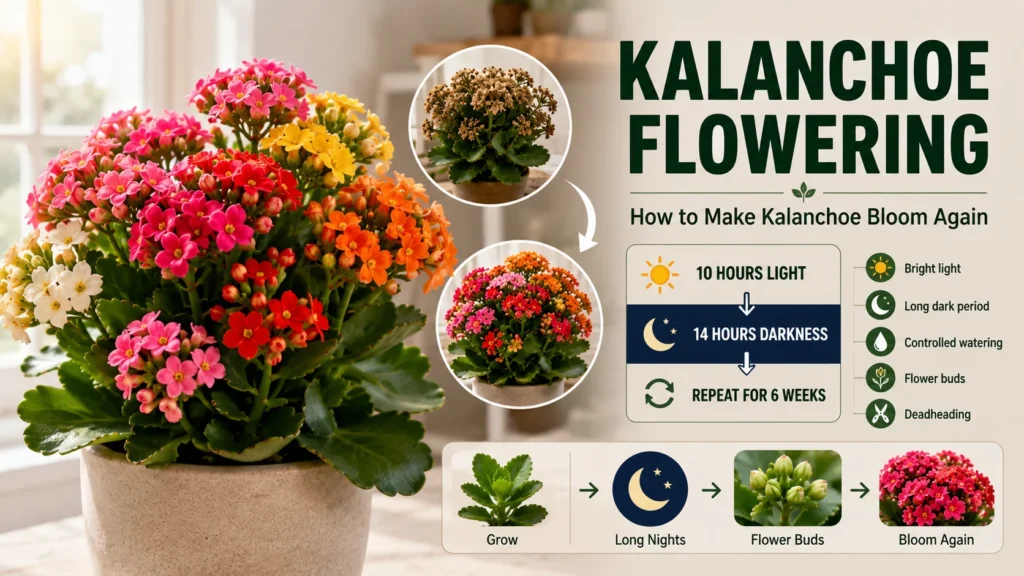
To make a Kalanchoe bloom again, keep it healthy, give it bright light during the day, and provide about 14 hours of complete darkness each night for around six weeks. Kalanchoe blossfeldiana is a short-day plant, so the long night helps trigger flower bud formation.
After flower buds become easy to see, you can return the plant to normal light. Keep watering controlled, avoid soggy soil, and remove spent flowers to keep the plant looking neat.
Why Is My Kalanchoe Not Flowering?
A Kalanchoe may stop flowering even when it looks healthy. This often happens because the plant receives too much light at night or does not get a long enough dark period.
Kalanchoe blossfeldiana needs a change in day length before it starts forming new flower buds. Indoor plants can struggle with this because lamps, room lights, and long evenings can interrupt the natural dark period.
Other problems can also affect flowering, including:
- Too little bright light during the day
- Too much water
- Poor drainage
- Very warm conditions
- Weak or stressed growth
- Too much nitrogen fertilizer
- An inconsistent dark period
- Pruning at the wrong time
I would first check the plant’s light routine before adding more fertilizer. A Kalanchoe with healthy green leaves does not always need more food. It may simply need the right flowering signal.
When Does Kalanchoe Flower?

Kalanchoe blossfeldiana is often sold as a flowering houseplant during the cooler months. Its natural flowering cycle is linked to shorter days and longer nights.
The exact bloom time can vary based on the cultivar, growing conditions, and when the plant receives its long-night treatment.
With the right conditions, Kalanchoe flowers can last for several weeks. Flower clusters may contain many small blooms in colors such as red, pink, orange, yellow, salmon, and white.
Florist Kalanchoe and many Calandiva plants are grown mainly for their long-lasting flowers.
How to Make Kalanchoe Bloom Again

If your plant has finished flowering, do not throw it away. A healthy Kalanchoe can be kept as a foliage plant and prepared for another flowering cycle.
I would use the following process.
Step 1: Start With a Healthy Plant
Before trying to trigger a Kalanchoe rebloom, make sure the plant is growing well.
Look for:
- Firm green leaves
- Healthy stems
- No signs of root rot
- No major pest problem
- Good new growth
- Well-draining soil
A weak plant may struggle to flower even if you give it the correct dark period.
If the plant has serious root or watering problems, fix those first.
Step 2: Remove Spent Flowers
Once the flowers fade, cut off the old flower clusters.
You can cut the flower stems back to just above a healthy set of leaves. This keeps the plant tidy and encourages it to put its energy into new growth.
Removing spent flowers is also useful during the flowering period. I like to remove old blooms before they become dry and messy.
Step 3: Give It Bright Daytime Light
Kalanchoe needs good light to stay healthy and support flowering.
Place it in a bright location during the daytime. A bright window works well, but protect the plant from intense heat and harsh afternoon sun if the leaves begin to scorch.
For indoor plants, bright indirect light is often a good choice. The plant should receive several hours of good light during the day before the dark period begins.
Do not assume that more light at all hours is better. Kalanchoe needs both a suitable daytime period and a long night to start the flowering cycle.
Step 4: Give It About 14 Hours of Complete Darkness
This is the part many people miss.
Kalanchoe is a short-day plant. In simple terms, it needs a long night before it starts forming flower buds.
Give the plant about:
10 hours of light + 14 hours of complete darkness
Repeat this schedule each day for around six weeks.
You can place the plant in a dark closet in the evening and return it to its bright location in the morning.
A dark room can also work if you know that no lights will come on during the night.
Step 5: Keep the Schedule Consistent
Consistency matters.
Do not give the plant 14 hours of darkness one night and then leave it under room lights until midnight the next night. Try to keep the same schedule every day.
A simple routine can work:
7:00 AM: Put Kalanchoe in bright light
5:00 PM: Move it to complete darkness
7:00 AM next day: Return it to bright light
The exact clock time does not matter as much as keeping the light and dark periods consistent.
Step 6: Continue for About Six Weeks
Keep the long-night routine for around six weeks.
Some plants may show signs of budding sooner, while others may take longer. Plant condition, cultivar, temperature, and previous growing conditions can affect the timing.
Do not give up after one or two weeks.
Flowering is a process, and the plant needs repeated short-day conditions before flower buds develop.
Step 7: Watch for Flower Buds
Eventually, you should see small flower buds developing above the foliage.
Once the flower buds become clearly visible, the strict dark treatment is no longer as important. You can move the plant back to a normal bright location.
This is also a good time to avoid major changes. Keep the plant in a stable location and continue normal care.
What Does Complete Darkness Mean for Kalanchoe?

Complete darkness means just that: no light reaching the plant during the required night period.
A dim room may not be dark enough if lights are switched on during the night.
Good options include:
- A dark closet
- A dark spare room
- An opaque plant cover
- A box that blocks light completely
If you use a box, make sure the plant still gets fresh air and is not trapped in excessive heat.
I prefer a dark closet because it makes the routine simple. I can move the plant in at the same time each evening and bring it back into the light each morning.
Do not place the plant in darkness during the daytime. It still needs bright light during its light period.
Kalanchoe Rebloom Schedule

A simple schedule makes the process much easier to follow.
| Stage | What to Do |
| After flowering | Remove spent flowers |
| Active growth | Give bright light and normal care |
| Start rebloom treatment | Give about 14 hours of darkness each night |
| Weeks 1–6 | Repeat the same light and dark routine |
| Buds appear | Stop the strict darkness routine |
| After buds form | Return to normal bright-light care |
| Full bloom | Protect flowers and remove spent blooms |
The exact calendar date is less important than giving the plant a consistent long-night period.
How to Care for Kalanchoe While It Is Reblooming
The darkness treatment gets most of the attention, but basic Kalanchoe care still matters.
Light
Give Kalanchoe bright light during its daytime period.
Good light helps the plant stay compact and healthy. Too little light can lead to weak, stretched growth.
During the dark period, keep the plant away from lamps and other indoor lights.
Water
Kalanchoe is a succulent, so it stores water in its thick leaves.
Let the soil dry somewhat before watering again. When you water, water thoroughly and let excess water drain away.
Do not leave the pot sitting in water.
Overwatering can lead to root problems, and a damaged root system can make flowering much harder.
During the flower-induction period, avoid keeping the soil constantly wet.
Soil
Use a fast-draining potting mix made for succulents or other plants that dislike wet roots.
A container with drainage holes is also important.
If water stays around the roots for too long, the plant can become stressed or develop root rot.
Temperature
Kalanchoe generally prefers moderate indoor temperatures.
Cooler nights can help flowers last longer, while excessive heat can interfere with flower development.
During the long-night treatment, avoid placing the plant in a very hot room.
Also keep it away from cold drafts and frost.
Fertilizer
Kalanchoe does not need heavy feeding.
During active growth, a balanced houseplant fertilizer can support healthy foliage and new growth when used according to its label.
I would avoid trying to force flowers with extra fertilizer. Too much fertilizer can encourage leafy growth and may create other problems.
The light cycle plays a much bigger role in triggering the flowering process.
How to Tell Kalanchoe Flower Buds From New Leaves

Early flower buds can be easy to miss.
New leaves usually look like small versions of the normal foliage. They tend to develop along the stems and gradually expand into leaves.
Flower buds form in clusters near the ends of flowering stems. They often appear as small rounded structures that become more obvious as they grow.
As the buds develop, you should start to see the shape of the future flower cluster.
Once you can clearly see flower buds above the foliage, you can stop worrying about keeping the plant in complete darkness every night.
How to Keep Kalanchoe Flowers Longer
Once your Kalanchoe starts flowering, the goal changes.
You no longer need to focus on forcing buds. Instead, keep the plant stable and protect the flowers.
Give It Good Light
Keep the flowering Kalanchoe in a bright location.
Good light helps the plant maintain healthy growth and supports the flowers.
Avoid Overwatering
Let the soil dry somewhat before watering.
Do not water simply because the flowers look slightly different from one day to the next. Check the soil and the plant first.
Keep Temperatures Moderate
Very warm conditions can shorten the life of flowers.
A comfortable indoor location away from heaters, radiators, and hot drafts is usually better.
Remove Spent Flowers
As individual flowers fade, remove the old flower clusters.
This keeps the plant looking fresh and encourages new flowers in some cultivars.
Why Does Kalanchoe Have Leaves but No Flowers?
This is one of the most common problems with Kalanchoe.
If the plant looks healthy but only produces leaves, check the nighttime light first.
A Kalanchoe sitting in a bright room where lights stay on late may never receive the long, dark period it needs for flower-bud formation.
Also check:
- Is the plant getting enough daytime light?
- Has it received a consistent dark period?
- Has the plant been treated for long enough?
- Is the soil staying wet?
- Is the plant too warm?
- Is the plant weak or stressed?
- Has it received too much fertilizer?
If the basic care looks good, start the six-week long-night routine.
Common Kalanchoe Reblooming Problems
My Kalanchoe Gets Light at Night
Move it to a room that stays dark or use a light-blocking cover.
Even small amounts of nighttime light can interfere with the flowering signal.
My Kalanchoe Has Been in Darkness for Six Weeks but Has No Buds
Check the entire routine.
Make sure the plant received enough bright light during the day and complete darkness at night.
Also check its general health, watering, temperature, and soil drainage.
A stressed plant may not respond well to a flowering schedule.
My Kalanchoe Is Leggy
Leggy growth usually points to poor light during the active growth period.
Move the plant to a brighter location and trim excessively long growth after flowering.
Avoid trying to solve leggy growth by adding more water.
My Kalanchoe Is Losing Leaves
Check the soil first.
If it stays wet for long periods, overwatering may be the problem. If the plant is very dry for too long, watering may also need attention.
Look at the roots and stems if leaf loss continues.
My Kalanchoe Has Buds but They Are Not Opening
Keep conditions stable.
Avoid moving the plant between very different locations, overwatering, or exposing it to extreme temperatures.
Flower buds need time to develop before they open.
Can Kalanchoe Bloom More Than Once?
Yes, a healthy Kalanchoe can flower again after its first display fades.
The process takes some planning because Kalanchoe needs the right combination of healthy growth, suitable light, and long nights.
Florist Kalanchoe varieties are especially popular for this reason. With good care, you can keep the plant after the first flowering cycle instead of treating it as a one-time flowering plant.
Some cultivars may rebloom more easily than others, so results can vary.
How Often Does Kalanchoe Bloom?
Kalanchoe does not usually stay in bloom all year without a break.
Its flowering depends on the cultivar and growing conditions. A healthy plant can produce another round of flowers when it receives the right short-day conditions.
If you want repeated flowering, think of Kalanchoe as having a cycle:
Grow → Rest → Long Nights → Buds → Flowers → Repeat
This approach makes the plant’s behavior much easier to manage.
How Long Do Kalanchoe Flowers Last?
Kalanchoe flowers can remain attractive for several weeks when the plant has suitable light, temperature, and watering.
Individual flowers fade at different times, so the entire flower cluster can remain colorful for quite a while.
Removing old flowers can also keep the plant looking better during the flowering period.
Can Kalanchoe Bloom Without a Darkness Treatment?
It can.
In the right season, natural shorter days and longer nights may provide the conditions needed for flower-bud formation.
The problem is that indoor lighting can change the natural light cycle.
If your plant refuses to bloom outside its normal season, a controlled darkness routine can help create the long nights it needs.
Should I Cut Off Dead Kalanchoe Flowers?
Yes.
Remove spent flower clusters once they fade. Cut the old flower stem back to a healthy point on the plant.
Deadheading keeps the plant neat and can help encourage continued flowering in plants that are already in bloom.
How Long Does It Take Kalanchoe to Rebloom?
The dark treatment usually needs about six weeks to encourage flower-bud formation.
After that, the plant still needs time for the buds to develop and open.
So do not expect flowers immediately after the six-week period ends. The full process can take longer depending on the plant and growing conditions.
Final Thoughts
Getting a Kalanchoe flower to appear again is mostly about giving the plant the right light cycle.
I would focus on three things first: healthy growth, bright daytime light, and about 14 hours of complete darkness each night for around six weeks. Once flower buds appear, return to normal bright-light care and keep watering under control.
If your Kalanchoe is healthy but refuses to bloom, check its nighttime light before changing everything else. That small detail is often the missing part of the Kalanchoe rebloom process.
Kalanchoe Flowering FAQs
How do I make Kalanchoe bloom again?
Give it bright daytime light and about 14 hours of darkness each night for six weeks.
How long does Kalanchoe take to rebloom?
The dark treatment usually takes about six weeks before buds develop.
Does Kalanchoe need darkness to bloom?
Yes, long uninterrupted nights help trigger flowering.
Why does my Kalanchoe have leaves but no flowers?
Too much nighttime light is a common reason.
Should I remove dead Kalanchoe flowers?
Yes, remove spent flower clusters to keep the plant tidy.
Can Kalanchoe bloom more than once?
Yes, a healthy plant can rebloom with suitable care.
How long do Kalanchoe flowers last?
The flowers can stay attractive for several weeks.
Does Kalanchoe need bright light to flower?
Yes, bright daytime light supports healthy growth and flowering.