Skip to content
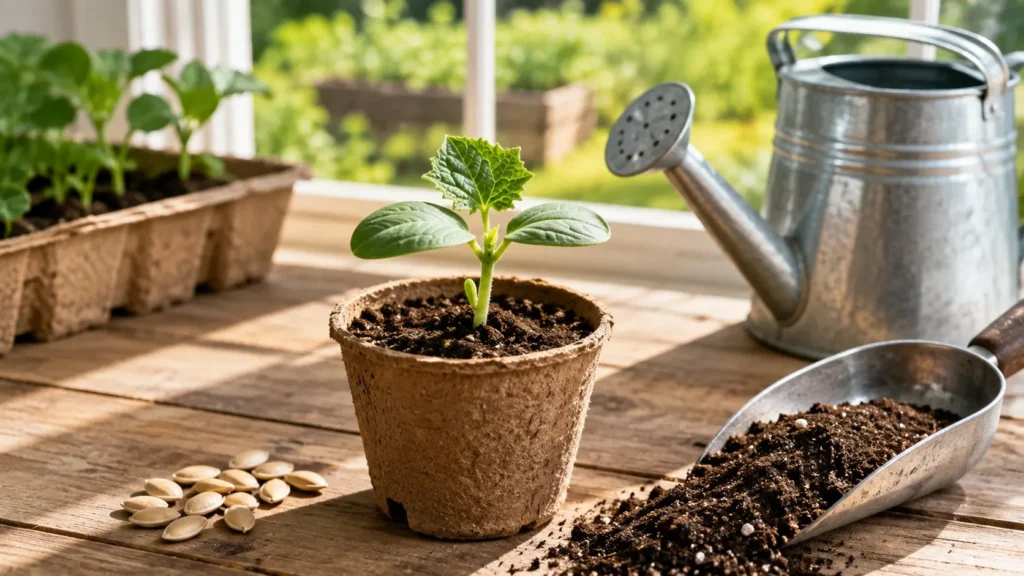
Starting cantaloupe seeds indoors can give your plants a useful head start, especially if spring arrives slowly or your growing season is short. The key is to avoid starting them too early.
I recommend starting cantaloupe seeds about 3 to 4 weeks before you expect to transplant them outside. Cantaloupes grow quickly, and keeping them indoors for too long can make transplanting harder.
The good news is that the process is simple. You need a warm growing space, seed-starting mix, suitable containers, enough light, and careful watering.
In this guide, I’ll show you how to start cantaloupe seeds indoors, care for the seedlings, harden them off, and move them into the garden with as little root disturbance as possible.
Should You Start Cantaloupe Seeds Indoors?
You do not always need to start cantaloupe seeds indoors.
If you live in an area with a long, warm growing season, direct sowing can be easier. You can plant the seeds straight into warm garden soil after the risk of frost has passed.
I would start seeds indoors when:
- Spring stays cool for a long time.
- Your growing season is short.
- You want to give the plants an early start.
- Your chosen cantaloupe variety needs a longer growing period.
- Outdoor soil is not warm enough yet.
Starting indoors can help you get healthy young plants ready for the garden sooner.
However, cantaloupe does not like its roots disturbed. That is why I would not start the seeds months before outdoor planting. Iowa State University recommends starting melon seeds about 3 to 4 weeks before the expected outdoor planting date.
When Should You Start Cantaloupe Seeds Indoors?
Start cantaloupe seeds roughly 3 to 4 weeks before you plan to transplant the seedlings outside.
Some resources guidance gives a range of about 3 to 5 weeks, depending on local conditions and the plant’s development.
I would not pick a date based only on the calendar.
Instead, work backward from the time when:
- Frost danger has passed.
- Outdoor soil has warmed.
- The weather is suitable for a warm-season crop.
- Your seedlings will be young and healthy enough to transplant.
Why shouldn’t you start them too early?
Cantaloupe seedlings grow quickly.
If you start them too soon, they may become large and crowded indoors before the garden is ready. Their roots can also become more difficult to move without damage.
The goal is not to grow a large cantaloupe vine inside.
The goal is to produce a strong young seedling that is ready to move outside.
What You Need to Start Cantaloupe Seeds Indoors
You do not need a large indoor setup.
For a basic seed-starting project, I would use:
- Cantaloupe seeds
- Seed-starting mix
- Individual pots or plantable containers
- A tray to catch excess water
- A small watering can or spray bottle
- Plant labels
- A bright window or grow light
- A heat mat if your growing area is too cool
I prefer individual containers because they reduce the need to move young cantaloupe plants from one pot to another.
Iowa State recommends plantable containers for melons because they can help reduce root disturbance during transplanting.
Choosing a Cantaloupe Variety for Indoor Starting
You do not need a special cantaloupe variety just because you are starting seeds indoors. The bigger issue is choosing a variety that fits your growing season and available space.
If your growing season is short, I would favor an early-maturing variety. Check the seed packet for its days to maturity and compare that with the length of your local growing season.
I would also consider the plant’s growth habit. Cantaloupes with long, spreading vines can take up a lot of garden space, while more compact types may work better in smaller gardens.
Starting seeds indoors gives the plant a head start, but it does not remove the need for a suitable variety. For specific cultivar recommendations, fruit size, maturity times, and other differences, see our guide to Best Cantaloupe Varieties for Home Gardens.
How to Start Cantaloupe Seeds Indoors Step by Step

Step 1: Choose a suitable container
Choose a clean container with drainage holes.
A small individual pot works well because you can keep each seedling separate.
Biodegradable or plantable pots can also be useful. The main goal is to avoid having to pull a young cantaloupe plant from a tight root ball later.
I would avoid using a container with no drainage holes. Excess water can leave the seed-starting mix wet for too long and increase the risk of seedling problems.
Step 2: Fill the container with seed-starting mix
Use a light seed-starting mix rather than heavy garden soil.
Fill the container without packing the mix down too hard.
Then moisten the mix before planting.
You want the mix to be evenly moist but not soaked.
Step 3: Plant the cantaloupe seeds
Plant the seeds about 1 inch deep, unless your seed packet gives different instructions.
Iowa State recommends sowing several seeds in each container and thinning after they emerge.
If you are using a larger container, spacing the seeds apart can make thinning easier.
Cover the seeds lightly with the growing mix.
Step 4: Label the container
This step seems small, but I recommend doing it.
Write down:
- Cantaloupe variety
- Planting date
If you grow several varieties, labels will save you from guessing later.
Step 5: Keep the seeds warm
Cantaloupe is a warm-season crop, so cold seed-starting conditions can slow germination.
Keep the containers in a warm location and follow the temperature guidance on your seed packet.
A heat mat can help if your indoor growing area stays cool, but you do not need one if the seed-starting area already provides suitable warmth.
Step 6: Keep the growing mix moist
Check the containers regularly.
The growing mix should stay moist enough for the seeds to germinate, but it should not remain waterlogged.
I prefer gentle watering at this stage so the seeds are not washed deeper into the container.
How Long Do Cantaloupe Seeds Take to Germinate?
Germination time depends on seed quality, temperature, moisture, and growing conditions.
Warm conditions usually support faster and more even germination than cold soil or seed-starting mix.
Do not assume the seeds have failed simply because they do not emerge immediately.
Check the growing conditions first.
Is the mix too cold?
Is it too dry?
Is it staying soaked?
Have the seeds been planted too deeply?
These are better questions to ask before planting another batch.
What Do Cantaloupe Seedlings Look Like?

The first leaves that appear are called cotyledons.
They are different from the later true leaves.
As the plant grows, it develops its first true leaves. These look more like the leaves you will see on a mature cantaloupe plant.
This difference matters because true leaves can help you judge when the seedling is developing well enough for the next stage.
Iowa State recommends transplanting melon seedlings when they have about 1 to 2 true leaves.
How to Care for Cantaloupe Seedlings Indoors

Once the seeds germinate, the care routine changes.
The seedlings now need good light, proper moisture, airflow, and enough room to grow.
Give the seedlings plenty of light
A bright window may work if it receives strong direct sunlight.
If the seedlings stretch toward the window, they may not be getting enough light.
A grow light can give you more consistent results.
The goal is to produce short, healthy seedlings rather than tall, weak stems.
Keep the light at the distance recommended by the light manufacturer.
Water carefully
Young cantaloupe seedlings have small root systems, so they can dry out faster than established plants.
At the same time, overwatering can cause problems.
I recommend checking the growing mix regularly rather than watering on a fixed schedule.
Water when the mix begins to dry, and make sure excess water can drain away.
Give seedlings good airflow
Gentle airflow helps prevent the indoor growing area from becoming stagnant.
It can also help keep foliage dry.
You do not need strong wind. A small fan on a low setting can provide gentle air movement if your growing area needs it.
Do Cantaloupe Seeds Need Light to Germinate?
The main concern during germination is providing suitable warmth and moisture.
Once the seedlings emerge, light becomes very important.
I would move newly emerged seedlings into a bright location as soon as possible.
If they remain in a dim area after germination, they can become tall and weak.
Do Cantaloupe Seeds Need a Heat Mat?
Not always.
A heat mat can help if your seed-starting area is cool and you are struggling to keep the growing mix warm.
But I would not buy one automatically.
If your indoor growing area already provides suitable warmth, focus first on good seed-starting mix, moisture, light, and drainage.
How Many Cantaloupe Seeds Should You Plant Per Pot?
There is no need to fill a pot with seeds.
My recommendations commonly suggest sowing several seeds and then thinning the seedlings after emergence. Iowa State recommends about 3 to 4 seeds per container before thinning.
Your seed packet may give different instructions, so use those as your first guide.
If several seeds germinate, keep the healthiest seedling or seedlings and remove the weaker ones.
When Should You Thin Cantaloupe Seedlings?
Thin the seedlings after they emerge and you can clearly see which plants are healthy.
If several seedlings are growing close together, keeping all of them in one small container can lead to crowding.
I would remove the weaker plants and keep the strongest one.
Instead of pulling hard on a seedling, cut the unwanted plant at soil level. This reduces the chance of disturbing the roots of the seedling you want to keep.
How Much Water Do Cantaloupe Seedlings Need?
There is no useful fixed amount for every indoor setup.
The container size, seed-starting mix, room temperature, airflow, and light all affect how quickly the mix dries.
Check the growing mix with your finger.
If the surface is starting to dry, check below the surface before watering.
The target is even moisture without saturated soil.
Avoid leaving containers sitting in water.
Do Cantaloupe Seedlings Need Fertilizer?
Usually, very young seedlings need little fertilizer.
Many seed-starting mixes contain enough nutrients for the early stages.
I would not give a young seedling a strong fertilizer dose simply because you want it to grow faster.
If the seedlings need feeding later, use a fertilizer suitable for young plants and follow the product label.
Good light and healthy roots matter more than heavy feeding at this stage.
Why Are My Cantaloupe Seedlings Leggy?

Leggy seedlings usually have stretched, weak growth.
The first thing I would check is light.
A seedling that grows toward a window may be trying to reach more light.
Other possible factors include:
- Too much heat
- Crowding
- Poor light placement
- Weak growing conditions
Move the seedlings to a brighter location and make sure they have enough room.
A grow light can help if natural light is weak.
Why Are My Cantaloupe Seedlings Wilting?
Wilting can happen for several reasons.
Check:
- Soil moisture
- Root condition
- Temperature
- Light
- Airflow
- Container drainage
If the mix is dry, the seedling may need water.
If the mix is constantly wet, the roots may be struggling.
After transplanting, temporary wilting can also happen because the plant is adjusting to its new environment.
What Is Damping-Off in Cantaloupe Seedlings?
Damping-off is a seedling disease that can cause young plants to collapse and die.
It becomes more likely when conditions are too wet and airflow is poor.
To reduce the risk, I would:
- Use clean containers.
- Use fresh seed-starting mix.
- Avoid overwatering.
- Make sure containers drain well.
- Give seedlings enough light.
- Provide gentle airflow.
- Remove badly affected seedlings.
Purdue lists damping-off as an important problem in indoor seed starting.
If several seedlings suddenly collapse near the soil line, review your watering and growing conditions before starting more seeds.
When Are Cantaloupe Seedlings Ready to Transplant?
This is one of the most important parts of indoor seed starting.
I look for a young, healthy seedling, not the biggest plant possible.
Useful signs include:
- Healthy green leaves
- A firm stem
- Developing true leaves
- A healthy root system
- No major signs of disease
- Outdoor weather that is suitable for planting
Iowa State recommends transplanting when seedlings have about 1–2 true leaves, while other guidance uses a slightly more developed plant with several mature leaves and a good root system.
The exact size can vary, so I would avoid waiting for a large indoor plant.
How to Harden Off Cantaloupe Seedlings

Do not take a tender indoor seedling and put it straight into full outdoor sun.
It needs time to adjust.
This process is called hardening off.
I recommend starting in a protected, shaded location and gradually increasing the amount of outdoor exposure.
A simple hardening process
Day 1:
Put the seedlings outside in a sheltered, shaded location for a short period.
Following days:
Gradually increase the time they spend outside.
Next stage:
Introduce more direct sunlight.
Final stage:
Allow the seedlings to spend most of the day outside once they have adjusted.
Iowa State specifically recommends beginning in a shady, protected location and gradually increasing exposure to direct sunlight.
Do not rush this stage.
Wind, direct sun, and changing temperatures can be much stronger outdoors than they are indoors.
When Should You Transplant Cantaloupe Seedlings Outside?
Transplant when the outdoor conditions are warm enough for cantaloupe and frost danger has passed.
The soil should also be warm.
Do not use the seedling’s age alone as your planting signal.
The plant and the garden both need to be ready.
Before transplanting, check:
- Local frost dates
- Soil temperature
- Weather forecast
- Seed packet instructions
- Seedling development
If cold weather is still likely, I would wait.
How to Transplant Cantaloupe Seedlings

Once the seedlings are hardened off and outdoor conditions are suitable, transplant them carefully.
Step 1: Prepare the planting site
Choose a sunny location with well-drained soil.
Prepare the planting hole before removing the seedling from its container.
Step 2: Water the seedling
Water the seedling before transplanting.
A hydrated root ball is easier to handle and less likely to dry out during the move.
Resources guidance also recommends watering before transplanting and providing water around the planting hole.
Step 3: Handle the roots gently
Do not pull the plant out by its stem.
Support the container and root ball instead.
Cantaloupe does not respond well to heavy root disturbance, which is why plantable containers can be useful.
Step 4: Place the seedling in the hole
Set the plant at the appropriate depth.
Do not bury the stem deeply unless your specific growing guidance says otherwise.
Step 5: Fill the hole
Gently fill around the root ball.
Do not pack the soil down hard.
Step 6: Water after planting
Water the plant after transplanting so the soil settles around the roots.
Keep the root area evenly moist while the plant adjusts.
Can You Transplant Cantaloupe Without Killing It?
Yes, but the roots need careful handling.
The biggest issue is unnecessary root disturbance.
I would use individual containers from the start, water the seedlings before moving them, and transplant them while they are still young.
This is one reason I prefer a short indoor seed-starting period rather than keeping cantaloupe plants indoors for a long time.
What If My Cantaloupe Seedling Wilts After Transplanting?
Some wilting can happen after transplanting because the plant is adjusting to a new environment.
First, check the soil.
If it is dry, water the plant.
If it is already wet, do not keep adding water.
Protect a newly transplanted seedling from harsh conditions while it adjusts. Gradual hardening before planting can reduce this stress.
If the plant continues to wilt badly, check the roots, drainage, soil moisture, and weather.
Should You Start Cantaloupe Indoors or Direct Sow?
Both methods can work.
| Method | Best for | Main benefit | Main concern |
| Indoor starting | Short or cool growing seasons | Gives plants an early head start | Transplanting can disturb roots |
| Direct sowing | Long, warm growing seasons | No transplant stress | Requires warm outdoor soil |
If I had a long, warm growing season, I would seriously consider direct sowing.
If my spring was short or cool, I would start seeds indoors for a short head start.
Common Mistakes When Starting Cantaloupe Seeds Indoors
Starting seeds too early
This is one of the easiest mistakes to make.
Starting months before outdoor planting can leave you with large, crowded plants that are difficult to transplant.
Using heavy garden soil
Garden soil can drain poorly in small containers.
Use a suitable seed-starting mix instead.
Overwatering
Constantly wet growing mix can cause root and seedling problems.
Keep it moist, not soaked.
Giving seedlings too little light
Weak light can produce tall, thin seedlings.
Give them strong light after emergence.
Skipping hardening off
A plant that has lived indoors needs time to adjust to outdoor sun and wind.
Do not skip this step.
Keeping seedlings indoors too long
The goal is a young transplant.
Once the plant is ready and outdoor conditions are suitable, move it outside.
Damaging the roots
Avoid pulling seedlings from their containers by the stem.
Handle the root ball carefully.
Final Tips for Starting Cantaloupe Seeds Indoors

Starting cantaloupe seeds indoors is mainly about timing and gentle handling.
I would start about 3–4 weeks before the planned outdoor transplant date, use individual containers, keep the growing mix evenly moist, provide strong light after germination, and avoid keeping the plants indoors longer than needed.
The final step matters just as much as the first one.
Harden the seedlings gradually before putting them in the garden. Once they are ready, transplant them carefully without disturbing the roots.
Frequently Asked Questions
How early can you start cantaloupe seeds indoors?
A good general starting point is about 3–4 weeks before the expected outdoor transplant date. Some resources guidance gives a range of about 3–5 weeks depending on conditions.
How deep should I plant cantaloupe seeds indoors?
About 1 inch deep is a common recommendation. Always check the instructions on your seed packet because planting depth can vary.
How long does it take cantaloupe seeds to germinate?
Germination time depends on warmth, moisture, seed quality, and other growing conditions. Warm soil or seed-starting mix generally supports better germination than cold conditions.
Can I start cantaloupe seeds in a seed tray?
Yes, but I prefer individual containers because cantaloupe roots can be sensitive to disturbance. A plantable pot can make the final transplant easier.
Do cantaloupe seeds need a heat mat?
No. A heat mat can help if your growing area is cool, but it is not required when the seeds already have suitable warmth.
How many cantaloupe seeds should I plant per pot?
Sow a few seeds per container and thin after germination. Iowa State recommends about 3–4 seeds per container.
When should I transplant cantaloupe seedlings?
Transplant after frost danger has passed, outdoor conditions are warm, and the seedlings have developed healthy true leaves. Iowa State recommends about 1–2 true leaves as a transplanting stage.
Do cantaloupe seedlings need full sun indoors?
They need strong light after they emerge. A bright sunny window can work, but a grow light may give more consistent results.
Why are my cantaloupe seedlings growing tall and thin?
Insufficient light is one of the first things I would check. Move the seedlings to a brighter location or use a suitable grow light.
Can I transplant cantaloupe seedlings?
Yes, but transplant them while they are young and handle the roots gently. Cantaloupes can be sensitive to root disturbance, so avoid repeatedly moving them between containers.