Skip to content
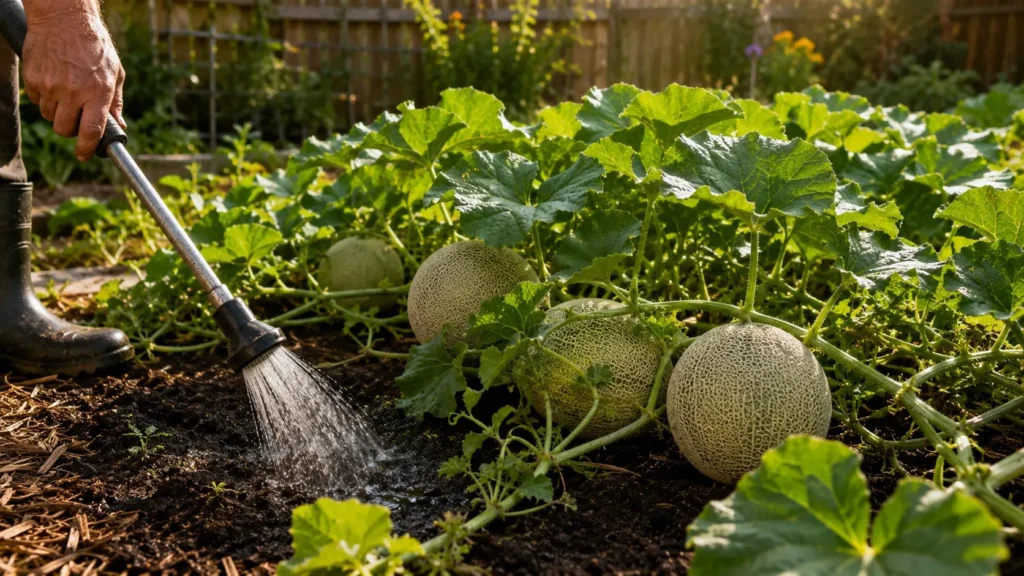
Watering cantaloupe sounds simple, but getting the amount and timing right can make a big difference in plant growth and fruit quality.
The common advice is that cantaloupes need about 1 to 2 inches of water per week. That is a useful starting point, but it does not mean you should water every seven days on a fixed schedule. Soil type, rain, heat, wind, plant size, and growth stage all affect how often a cantaloupe plant needs water.
I prefer to check the soil and recent weather before I water. This gives me a much better idea of what the plant actually needs than following the same schedule all season.
Cantaloupe plants need steady moisture while they grow, flower, and develop fruit. At the same time, constantly wet soil can cause root problems and other issues.
In this guide, I’ll explain how much water cantaloupe needs, how often to water it, the best watering methods, signs of overwatering and underwatering, and how watering should change as the plant matures.
How Much Water Does Cantaloupe Need?
Cantaloupe plants generally need about 1 to 2 inches of water per week from rainfall and irrigation combined. Utah State University gives this range as a general guideline for cantaloupes grown in the garden.
Think of this as a weekly water target rather than a fixed watering schedule.
For example, if your garden receives 1 inch of useful rainfall, you may need much less irrigation that week. If the weather is hot and dry, the soil may lose moisture faster and require more frequent watering.
Several factors affect cantaloupe watering needs:
- Soil type
- Temperature
- Wind
- Rainfall
- Plant size
- Mulch
- Drainage
- Growth stage
- Container or garden-bed growing
A cantaloupe growing in sandy soil during a hot, dry week may need water more often than a plant growing in moisture-retentive soil during cool weather.
Does 1 to 2 inches mean watering once a week?
No.
This is one of the most common points I would clarify for a home gardener.
1 to 2 inches is an approximate water requirement, not a rule that says to water once a week.
You might provide that water through several irrigation sessions, depending on your soil and weather.
The better approach is to check the soil and adjust your watering based on actual conditions.
How Often Should You Water Cantaloupe?
There is no single watering schedule that works for every cantaloupe garden.
I would not tell every gardener to water twice a week or every other day. Instead, check the soil moisture in the root zone and consider recent rainfall.
UC IPM recommends watering after soil moisture becomes depleted and applying enough water to wet the soil deeply.
Your watering frequency may change because of:
- Hot weather
- Dry wind
- Sandy soil
- Heavy rainfall
- Poor drainage
- Large mature vines
- Small young plants
- Mulch
- Container growing
Should you water cantaloupe every day?
Usually, daily watering is not the goal for an established plant.
Frequent shallow watering can encourage a shallow root system and may keep the soil surface constantly wet.
Instead, I prefer deep watering followed by enough time for the soil to lose some moisture before watering again.
Young seedlings are different. They have small root systems and may need closer attention to moisture while they become established.
How to Check if Cantaloupe Needs Water

Don’t rely on the surface of the soil alone.
The top layer can look dry while deeper soil still contains enough moisture for the roots.
I would check the soil around the root zone before adding water.
Look for:
- Dry soil below the surface
- Recent rainfall
- Wilting during cooler parts of the day
- Very hot or windy weather
- Plant growth stage
- Soil drainage
A simple soil check can help you avoid both underwatering and overwatering.
A moisture meter can also be useful, but you don’t need one for every garden. Your finger or a small hand tool can often give you enough information to make a reasonable watering decision.
How Deep Should You Water Cantaloupe?

Cantaloupe plants benefit from deep watering that reaches the main root zone.
UC IPM recommends irrigating deeply enough to reach about 1 foot of soil depth.
The exact amount of water needed to reach that depth depends on your soil.
Sandy soil allows water to move through quickly, while clay soil holds water longer.
The goal is to wet the root zone without leaving the soil saturated for long periods.
Deep watering vs shallow watering
Shallow watering gives the plant a small amount of moisture near the surface.
Deep watering puts moisture farther into the root zone.
For established cantaloupe plants, I would rather give a thorough irrigation when the soil needs it than lightly sprinkle the surface every day.
Watering Cantaloupe at Different Growth Stages

Cantaloupe water needs change as the plant grows.
The watering approach that works for a small seedling may not be enough for a mature vine carrying developing fruit.
Watering cantaloupe seeds and seedlings
During germination, the seed needs adequate moisture to begin growing.
UC IPM recommends thoroughly wetting the planting area during direct seeding and then watering as soil moisture becomes depleted after seedlings emerge.
At this stage, don’t allow the seed-starting soil to become completely dry.
Young roots are small, so check the growing medium more often than you would with a mature plant.
At the same time, avoid leaving seedlings sitting in saturated soil.
Watering young cantaloupe plants
Once the seedlings become established, focus on building a deeper root system.
Water the root zone thoroughly when it begins to dry rather than keeping only the surface damp.
This is also a good time to establish a consistent irrigation routine based on your garden’s soil and weather.
Watering during vine growth
As the cantaloupe vine grows, its water demand increases.
The plant is producing more leaves and stems, so it has a larger root system and greater water use.
At this stage, I would focus on deep watering and checking the soil rather than watering on a fixed calendar.
Watering during flowering
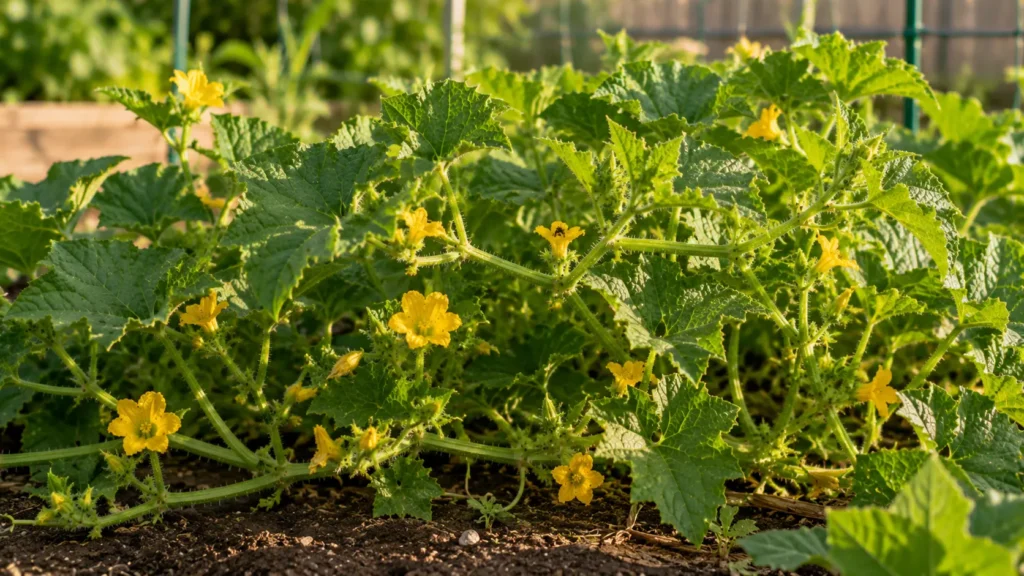
Flowering is an important stage for cantaloupe plants.
The plant needs enough moisture to support healthy growth and fruit set.
Utah State University notes that cantaloupes need more water as they begin flowering and setting fruit.
Avoid allowing the plant to become severely dry during this period.
Water stress during fruit set can result in small or deformed fruit, according to UC IPM.
Watering during fruit development
Once small melons begin developing, keep soil moisture reasonably steady.
This does not mean keeping the soil wet all the time.
Instead, avoid large swings between very dry soil and heavy irrigation.
During fruit development, I would check the soil more often during hot weather because a large vine can use water quickly.
Watering cantaloupe before harvest
As the fruit approaches maturity, the watering strategy changes.
Utah State University recommends reducing the amount of water as cantaloupes ripen to improve flavor.
This does not mean allowing the plant to become severely wilted.
The goal is to avoid unnecessary heavy irrigation while the fruit is finishing its development.
What Is the Best Way to Water Cantaloupe?

The best watering method is one that delivers moisture to the root zone while limiting unnecessary wetting of the leaves.
Drip irrigation
For a home garden, drip irrigation is one of my preferred options.
It delivers water close to the plant’s root zone and keeps much of the foliage dry.
Both Utah State University and UC IPM recommend drip or similar soil-level irrigation for cantaloupes.
Drip irrigation can also make it easier to provide steady moisture without soaking the entire garden bed.
Soaker hose
A soaker hose is another good option.
It allows water to move into the soil along the length of the hose rather than spraying the plant from above.
This can work well when several cantaloupe vines are growing in one bed.
Hand watering
You can also water cantaloupes by hand.
Use a gentle flow and apply the water near the soil around the root zone.
Don’t blast the soil with a strong stream because this can disturb roots and wash soil around the plant.
Overhead watering
Overhead watering can work, but it is not my first choice.
UC IPM recommends avoiding wetting the foliage and fruit when irrigating cantaloupes.
Wet leaves can create conditions that favor some plant diseases.
If overhead watering is your only option, watering earlier in the day gives foliage more time to dry.
Watering Cantaloupe in Different Soil Types
Soil type can change how often you need to irrigate.
Cantaloupe watering in sandy soil
Sandy soil drains quickly and usually holds less water than heavier soil.
This can mean more frequent irrigation during hot, dry periods.
However, don’t assume the plant needs water simply because the surface looks dry. Check the root zone first.
Cantaloupe watering in clay soil
Clay soil can hold water for a long time.
Frequent watering can leave the root zone too wet, especially if drainage is poor.
If the soil remains wet for long periods, improve drainage rather than simply adding more water.
Cantaloupe watering in loamy soil
Loamy soil often provides a useful balance between water retention and drainage.
Even so, the exact watering needs depend on the weather and the condition of your garden.
The main lesson is simple:
Don’t copy another gardener’s watering schedule without considering your soil.
How Does Rain Affect Cantaloupe Watering?
Rain counts toward the plant’s water supply.
If your garden receives enough rainfall to wet the root zone, you may not need to irrigate.
I like the idea of using a simple rain gauge because it gives you a better estimate of how much water your garden actually received.
Burpee also recommends using a rain gauge to help determine whether additional watering is needed.
After rain, check:
- How much rain fell?
- Did the water reach the root zone?
- Is the soil still moist?
- Is more hot weather expected?
- Is the soil draining properly?
Don’t automatically water just because it is your normal watering day.
Watering Cantaloupe During Hot Weather
Hot weather can increase water loss from the soil and plant.
You may need to check your cantaloupe plants more often during:
- Heat waves
- Dry weather
- Strong winds
- Long periods without rain
- Very low humidity
But I would not respond to every hot day by automatically watering every day.
Instead, check the soil more often.
If the root zone is still moist, additional water may not be needed.
If the soil is drying quickly, adjust the irrigation frequency.
Should You Water Cantaloupe in the Morning or Evening?
Morning is generally a good time to water garden plants.
It gives the plant access to moisture during the warmer part of the day and gives leaves time to dry if they become wet.
I would avoid making late-night overhead watering a routine because foliage can remain wet for longer.
With drip irrigation or a soaker hose, the concern about wet leaves is much smaller because water is applied directly to the soil.
Signs of an Underwatered Cantaloupe Plant

A cantaloupe plant that does not receive enough water can show signs of stress.
Possible signs include:
- Wilting leaves
- Dry soil
- Slow growth
- Drooping foliage
- Poor fruit development
- Small or deformed fruit
UC IPM notes that inadequate irrigation can cause wilting and discoloration, while water stress during fruit set can contribute to small or deformed melons.
Why is my cantaloupe plant wilting?
Wilting does not always mean the plant needs water.
Heat can cause temporary daytime wilting even when soil moisture is adequate.
I would check the soil before watering.
If the soil is dry, irrigation may solve the problem.
If the soil is already wet and the plant remains wilted, look for other causes such as root damage, disease, or pests.
Signs of an Overwatered Cantaloupe Plant
Overwatering is just as important to avoid as underwatering.
Possible signs include:
- Soil that stays wet for long periods
- Yellowing leaves
- Weak growth
- Poor root health
- Wilting despite wet soil
- Increased disease problems
UC IPM explains that excessive water can damage roots and contribute to plant problems.
One confusing sign is wilting.
A plant can wilt when it is too dry, but it can also wilt when roots are damaged by excessive moisture.
That is why I always check the soil before adding more water.
Can You Overwater Cantaloupe?
Yes.
Cantaloupes need moisture, but they do not need constantly saturated soil.
Too much water can reduce the amount of oxygen available around the roots and contribute to root problems.
Excess irrigation can also contribute to fruit splitting. UC IPM specifically lists excessive water as a cause of split cantaloupe fruit.
If your soil stays wet for days, the solution may be better drainage rather than less time between watering sessions alone.
Can Underwatering Affect Cantaloupe Fruit?
Yes.
Water stress during important growth stages can affect fruit development.
UC IPM notes that inadequate water during fruit set can lead to small or deformed melons.
This is why I pay particular attention to moisture when the plant is flowering and beginning to set fruit.
The goal is not to keep the soil soaked. It is to avoid severe moisture stress.
Can Too Much Water Make Cantaloupes Split?
Yes.
Excess water can contribute to fruit splitting, particularly as the melon develops.
UC IPM identifies excessive water as one cause of cantaloupe fruit splitting.
A sudden increase in water after a dry period can also create large changes in fruit growth.
The better approach is to keep moisture more consistent throughout the growing season.
Does Watering Affect Cantaloupe Sweetness?

Watering can affect fruit quality.
Utah State University recommends reducing water as fruits ripen to improve flavor.
However, I would avoid the advice that you should completely stop watering for a fixed number of days before harvest.
There is no single schedule that fits every garden.
Instead, reduce unnecessary irrigation as the fruit approaches maturity while avoiding severe plant stress.
Can Mulch Help With Cantaloupe Watering?
Yes.
Mulch can slow moisture loss from the soil and reduce competition from weeds.
Organic mulch can also help reduce soil splash onto the plant.
Utah State University recommends mulch as part of cantaloupe production and notes its role in moisture conservation.
I would keep mulch slightly away from the plant’s main stem.
A mulch layer should help manage moisture, not create a constantly wet area around the stem.
Common Cantaloupe Watering Mistakes
1. Following a fixed watering calendar
Watering every Tuesday and Saturday may sound simple, but rainfall and weather can change the plant’s needs.
Check the soil instead.
2. Watering a little every day
Frequent shallow watering is usually less useful for an established plant than deep irrigation when the root zone needs moisture.
3. Ignoring rainfall
If the garden received significant rain, you may not need to irrigate.
4. Watering wet soil
More water is not better when the soil is already saturated.
5. Letting the plant become severely dry
Water stress can affect growth and fruit development.
6. Flooding the plant after drought
A very dry plant should not be treated as if it needs unlimited water.
Restore moisture gradually and maintain a more stable watering routine afterward.
7. Wetting the leaves every time you water
Watering at soil level is usually a better choice for cantaloupes.
8. Using the same schedule for every soil type
Sandy and clay soils behave very differently.
9. Giving too much water near maturity
Excess water late in the season can contribute to fruit splitting, while reducing water as the fruit ripens can improve flavor.
Cantaloupe Watering Checklist
Use this quick checklist when deciding whether your plant needs water:
- Check the soil around the root zone.
- Check recent rainfall.
- Look at the weather forecast.
- Consider your soil type.
- Check whether the plant is flowering or fruiting.
- Water deeply when the soil needs it.
- Keep moisture reasonably consistent.
- Use drip irrigation or a soaker hose when possible.
- Avoid keeping the soil saturated.
- Avoid unnecessary overhead watering.
- Check plants more often during hot, dry weather.
- Reduce excessive irrigation as fruit approaches maturity.
Final Thoughts
Good cantaloupe watering is less about following a strict calendar and more about reading the soil and the plant.
As a general starting point, aim for around 1 to 2 inches of water per week from rain and irrigation combined. Give young plants enough moisture to establish, pay close attention during flowering and fruit set, keep moisture steady while the melons develop, and reduce unnecessary watering as the fruit approaches maturity.
I would also make one habit part of every watering routine: check before you water.
Look at the soil, recent rainfall, weather, and growth stage. If the root zone is already moist, adding more water may create a problem instead of solving one.
That simple approach gives cantaloupe plants the moisture they need without keeping the soil constantly wet.
Frequently Asked Questions About Watering Cantaloupe
How often should I water cantaloupe?
There is no universal schedule. Cantaloupes generally need about 1 to 2 inches of water per week, including rainfall, but the actual irrigation frequency depends on soil, weather, plant size, and growth stage.
How much water does a cantaloupe plant need per week?
A general guideline is about 1 to 2 inches per week from rainfall and irrigation combined. Cantaloupes may need more water as they flower and set fruit.
Should I water cantaloupe every day?
Not usually for an established plant. Deep watering when the root zone begins to lose moisture is generally more useful than shallow daily watering.
Should cantaloupes be watered during flowering?
Yes. Water is important during flowering and fruit set. Avoid severe moisture stress during this stage because inadequate water can affect fruit development.
Should I reduce watering before harvesting cantaloupe?
Yes, excessive irrigation should be reduced as the fruit approaches maturity. Utah State University recommends reducing water as fruits ripen to improve flavor.
Can you overwater cantaloupe?
Yes. Constantly wet soil can cause root problems and other plant issues. Excess water can also contribute to fruit splitting.
What is the best way to water cantaloupe?
Drip irrigation and soaker hoses are good choices because they apply water close to the root zone while limiting wet foliage.
Why are my cantaloupe leaves wilting even though I water them?
Check the soil before adding more water. Wilting can result from both dry soil and root problems caused by excessive moisture. Heat, disease, and pests can also cause wilting.
Can too much water cause cantaloupe fruit to split?
Yes. UC IPM lists excessive water as one cause of split cantaloupe fruit.
Does rain count when watering cantaloupe?
Yes. Rain contributes to the plant’s weekly water supply. A rain gauge can help you estimate how much water your garden received.