Skip to content
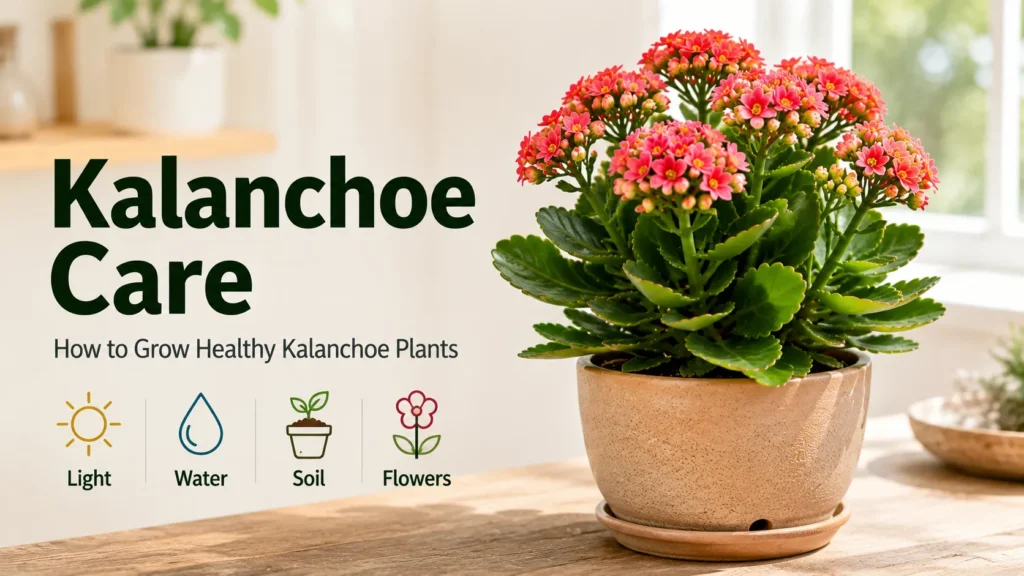
Kalanchoe is a flowering succulent that can stay healthy for years with the right care. I find that the biggest mistakes are usually too much water, poor light, and the wrong soil. Once you get these basics right, kalanchoe plant care becomes quite simple.
If you also want your plant to flower again, there is one extra step to learn: Kalanchoe needs long, dark nights to form new flower buds.
Quick Answer
For good kalanchoe care, give the plant bright light, fast-draining soil, and a pot with a drainage hole. Let the soil dry between waterings, then water well and let the excess drain away. Feed lightly during active growth, remove old flowers, and protect the plant from frost. For reblooming, it needs several weeks of long, uninterrupted nights.
What Does Kalanchoe Need to Grow Well?
Kalanchoe is a succulent, so it stores water in its thick, fleshy leaves. This means it can handle dry soil better than many common houseplants.
I prefer to keep Kalanchoe care simple. Give it plenty of light, avoid keeping the roots wet, and use a soil mix that drains quickly.
| Care need | What Kalanchoe prefers |
| Light | Bright light |
| Water | Let soil dry between watering |
| Soil | Fast-draining succulent mix |
| Pot | Drainage hole |
| Temperature | Warm, frost-free conditions |
| Humidity | Normal indoor humidity |
| Fertilizer | Light feeding during active growth |
| Pruning | Remove dead flowers and weak growth |
The plant you often see sold as a flowering houseplant is Kalanchoe blossfeldiana, also called florist Kalanchoe or Flaming Katy. Other Kalanchoe species have different leaf shapes and growth habits, so the exact care can vary a little.
For this guide, I am focusing mainly on the common flowering Kalanchoe grown indoors.
How Much Light Does Kalanchoe Need?

Kalanchoe needs bright light to grow well and produce flowers. A bright east-, south-, or west-facing window can work well, depending on the strength of the sunlight in your home.
I would place the plant close to a bright window rather than in a dark corner. Strong light helps the plant stay compact and supports better flowering.
Signs Your Kalanchoe Needs More Light
Your plant may need more light if you notice:
- Long, weak stems
- Large gaps between leaves
- Growth leaning toward a window
- Pale new growth
- Few or no flowers
- Uneven growth
This stretched growth is often called leggy growth. It happens when the plant does not get enough light.
Move the plant closer to a bright window and give it time to adjust.
Can Kalanchoe Handle Direct Sun?
Yes, but strong direct sun can be too much if the plant has been growing in lower light.
If you move an indoor Kalanchoe into strong outdoor sun, do it slowly. Sudden exposure can cause leaf scorch.
A few hours of gentle direct sun can be useful, while very harsh midday sun may damage the leaves.
How Often Should You Water Kalanchoe?

Watering is one of the most important parts of kalanchoe plant care.
I do not recommend watering on a fixed schedule. Instead, check the soil first. Let the soil dry between waterings, but do not leave the plant wilted for long periods.
When the soil has dried enough, water thoroughly until some water comes out of the drainage hole. Then empty any water sitting in the saucer.
How to Check if Kalanchoe Needs Water
Push your finger into the soil.
If the soil still feels damp below the surface, wait.
If the soil has dried and the pot feels much lighter, it is usually time to water.
The exact time between watering can change based on:
- Room temperature
- Light level
- Pot size
- Soil mix
- Humidity
- Season
- Plant size
That is why a fixed rule such as watering every seven days can cause problems.
Signs of Underwatering
A thirsty Kalanchoe may show:
- Wrinkled leaves
- Drooping leaves
- Dry soil
- Slow growth
- Leaves becoming less firm
If the soil is very dry, give the plant a thorough watering and allow the excess water to drain.
Signs of Overwatering
Too much water is a bigger risk for many Kalanchoe plants.
Watch for:
- Yellow leaves
- Soft leaves
- Mushy stems
- Soil that stays wet for a long time
- Bad smell from the soil
- Root rot
If the soil stays wet for many days, check the pot, drainage, and soil mix before adding more water.
A Kalanchoe can recover from dry soil more easily than from badly damaged roots.
What Is the Best Soil for Kalanchoe?

Kalanchoe needs soil that drains well.
I prefer a cactus or succulent potting mix because it allows excess water to move away from the roots. A regular potting mix can also work if it drains well and is mixed with material such as perlite to improve drainage.
The goal is simple:
Water should move through the soil instead of staying around the roots.
Avoid heavy soil that remains wet for long periods.
Why Drainage Matters
Kalanchoe has fleshy leaves that store water. Its roots do not need constantly wet soil.
Poor drainage can leave the roots sitting in moisture and increase the risk of root problems. Good drainage gives the plant a better balance between water and air around the roots.
What Type of Pot Is Best for Kalanchoe?
Choose a pot with at least one drainage hole.
The material matters less than good drainage, but terracotta can be useful because it allows moisture to leave the soil more easily.
Do not place a small Kalanchoe in a very large pot. A large amount of unused soil can hold moisture for too long.
When repotting, choose a pot only slightly larger than the current root ball.
What Temperature and Humidity Does Kalanchoe Need?
Kalanchoe prefers warm indoor conditions and does not handle frost well.
Normal indoor temperatures are usually suitable. Cooler nights can also help flowers last longer.
Keep the plant away from:
- Frost
- Very cold windows
- Cold outdoor air
- Strong heating vents
- Sudden temperature changes
Kalanchoe does not need very high humidity. Normal indoor humidity is usually enough.
I would also avoid frequent misting. Good soil drainage and proper watering matter much more for this plant.
Does Kalanchoe Need Fertilizer?
Kalanchoe can benefit from fertilizer while it is actively growing.
A balanced houseplant fertilizer used according to its label is usually enough. Monthly feeding during active growth is a common approach.
I prefer light feeding rather than giving the plant too much fertilizer. Excess fertilizer can build up in the soil and may damage the roots.
Do not treat fertilizer as a replacement for good light, proper watering, or healthy soil.
Those basics matter more.
How to Prune and Deadhead Kalanchoe

Pruning helps keep Kalanchoe neat and can remove weak or unwanted growth.
Deadheading is even simpler. Once flowers fade, remove the old flower clusters.
How to Deadhead Kalanchoe
- Wait until the flowers have faded.
- Use clean, sharp scissors or pruning shears.
- Cut the old flower stem back to a healthy section.
- Remove any dead or damaged leaves.
- Keep the plant in bright light.
Removing spent flowers also makes the plant look cleaner.
How to Prune Leggy Kalanchoe
If your Kalanchoe has long, weak stems, cut back the stretched growth above a healthy leaf section.
But pruning alone will not solve the problem.
If the plant became leggy because of low light, move it to a brighter location too.
When Should You Repot Kalanchoe?
Kalanchoe does not need frequent repotting.
I would consider repotting when:
- Roots are filling the pot
- Water runs through the pot very quickly
- The plant becomes unstable
- The soil has broken down
- The pot has become too small
Choose fresh, fast-draining soil and a pot only a little larger than the old one.
After repotting, avoid keeping the soil constantly wet. The roots need time to settle into their new pot.
Kalanchoe Care by Season

Your plant’s needs can change during the year.
| Season | Main care |
| Spring | Bright light, new growth, light feeding |
| Summer | Bright light, careful watering, outdoor care if suitable |
| Fall | Prepare for flowering and longer nights |
| Winter | Bright light, careful watering, frost protection |
Spring Kalanchoe Care
Spring is a good time to check the plant for weak growth and old soil.
Give it bright light and start regular feeding if it is actively growing.
This is also a good time to prune leggy stems or take cuttings.
Summer Kalanchoe Care
Kalanchoe can grow well during warm summer weather.
If you move it outside, introduce it to stronger light slowly. Keep it protected from very harsh sun and heavy rain.
Check the soil before watering because outdoor plants can dry at a different rate than indoor plants.
Fall Kalanchoe Care
Fall is useful for preparing Kalanchoe for another flowering cycle.
As the natural days become shorter, the plant receives the longer nights it needs to start forming flower buds.
If you want to control reblooming indoors, this is the time to pay close attention to its light and dark periods.
Winter Kalanchoe Care
Keep the plant in a bright location and protect it from cold temperatures.
Because indoor growth can slow during cooler months, check the soil before watering rather than following your summer routine.
How Do You Get Kalanchoe to Bloom Again?

Getting a Kalanchoe to rebloom is one of the most useful parts of kalanchoe care.
Kalanchoe blossfeldiana is a short-day plant. This means it needs long, uninterrupted nights to start forming flower buds.
The plant can stay healthy without this treatment, but it may keep producing leaves without producing new flowers.
A Simple Reblooming Routine
After the plant finishes flowering:
- Remove the old flowers.
- Keep the plant healthy in bright light.
- Continue normal care while it grows.
- In fall, give it long, uninterrupted nights.
- Keep the dark period consistent for several weeks.
- Return it to normal bright-light care after flower buds appear.
A common approach is about 14 hours of darkness each night for around six weeks. During this period, even artificial light at night can interfere with the dark period.
The plant still needs good light during the daytime. The goal is not to keep it in darkness all day.
Why Is My Kalanchoe Not Flowering?
If your plant looks healthy but produces leaves without flowers, check the light cycle.
Possible causes include:
- Not enough bright daytime light
- Too much light during the required dark period
- An inconsistent dark period
- Poor overall plant health
- Excessive feeding
- Recent pruning or stress
I would check the basic care first. A weak plant is less likely to produce good flowers.
Common Kalanchoe Problems and How to Fix Them

A symptom-based approach makes kalanchoe plant care much easier.
| Problem | Likely cause | What to check |
| Yellow leaves | Too much water or poor growing conditions | Soil moisture and drainage |
| Soft leaves | Excess moisture | Soil and roots |
| Leggy growth | Low light | Window position |
| Brown leaf patches | Too much harsh sun or other stress | Light exposure |
| Drooping | Water or root problem | Soil moisture and roots |
| No flowers | Poor light or wrong dark cycle | Light and nighttime conditions |
| Mushy stem | Serious moisture problem | Roots and stem |
Why Are My Kalanchoe Leaves Turning Yellow?
Yellow leaves can have several causes, but too much moisture is one of the first things I would check.
Feel the soil.
If it has stayed wet for a long time, reduce watering and check that the pot drains properly.
Also check the light. A plant kept in a dark location may struggle even if your watering routine is good.
Why Are Kalanchoe Leaves Soft or Mushy?
Soft or mushy leaves can point to excess moisture.
Check the soil and the base of the plant. If the roots or stem have started to rot, simply adding more water will make the problem worse.
Move the plant away from wet conditions and assess the roots if the problem is severe.
Why Is My Kalanchoe Getting Leggy?
Low light is a common reason for leggy Kalanchoe growth.
The plant stretches toward the available light, creating long stems and larger gaps between leaves.
Move it to a brighter location and prune the weakest stretched growth.
Why Are My Kalanchoe Leaves Turning Brown?
Brown areas can appear for several reasons.
Check whether the plant sits in strong, hot direct sun. Also look at the watering routine and the roots if the leaves are soft as well as brown.
Do not assume every brown leaf means the plant needs more water.
Why Is My Kalanchoe Drooping?
First, check the soil.
If it is very dry, the plant may need water. If the soil is wet and the plant is still drooping, look for root problems instead.
This simple check can prevent you from adding water to an already overwatered plant.
Does Kalanchoe Get Pests?
Kalanchoe can attract common houseplant pests such as mealybugs, scale, and spider mites.
Check the leaves, stems, and areas where leaves join the stem.
If you spot pests early, remove affected growth where suitable and treat the plant with a method made for the pest.
Can Kalanchoe Grow Indoors?
Yes. Kalanchoe is well suited to indoor growing.
I would place it near a bright window where it receives plenty of natural light.
For good indoor kalanchoe care:
- Use a pot with drainage.
- Choose fast-draining soil.
- Let the soil dry before watering.
- Keep it warm.
- Give it plenty of light.
- Remove faded flowers.
- Watch for pests.
The main challenge indoors is often light rather than temperature.
A plant may survive in a dim room but become stretched and produce fewer flowers.
Can Kalanchoe Grow Outdoors?
Kalanchoe can grow outdoors in warm, frost-free conditions.
If your area gets cold weather or frost, keep the plant indoors or bring it inside before temperatures become too low.
When moving an indoor Kalanchoe outside, do not place it immediately in harsh full sun. Give it time to adjust to stronger outdoor light.
A bright, lightly shaded outdoor spot can work well during hot weather.
How Do You Propagate Kalanchoe?
Kalanchoe can be propagated from cuttings, depending on the type.
Stem cuttings are a simple option for many flowering Kalanchoe plants.
Basic Stem Cutting Method
- Choose a healthy stem.
- Cut a section with clean scissors.
- Let the cut end dry for a short time.
- Place it in a suitable, well-draining growing mix.
- Keep the mix lightly managed rather than constantly wet.
- Give the cutting bright, indirect light while it develops roots.
Some Kalanchoe species can also produce plantlets along their leaf edges. Those species have a different propagation method.
I would keep propagation separate from the main care routine because it can become a full topic on its own.
Final Thoughts on Kalanchoe Care
Good kalanchoe care comes down to a few simple habits: give the plant plenty of light, let the soil dry between waterings, use fast-draining soil, and protect it from cold.
I would pay special attention to the plant’s leaves and soil. They often tell you what needs to change before a small care mistake becomes a serious problem.
If your goal is repeat flowers, remember the extra step: healthy growth during the year followed by long, uninterrupted nights can help Kalanchoe form new flower buds.
Kalanchoe Care FAQs
Can Kalanchoe live in low light?
It may survive, but low light can lead to weak, stretched growth and fewer flowers. A bright location is a better choice for healthy growth and flowering.
Should I mist my Kalanchoe?
Usually, there is no need to mist it. Good light, proper watering, and fast-draining soil matter more.
Can I leave Kalanchoe outside in winter?
Only if your local conditions stay warm and frost-free. Kalanchoe can suffer from cold damage, so bring it inside before frost.
How do I know if my Kalanchoe has root rot?
Look for a combination of wet soil, soft or yellow leaves, a mushy stem, and unhealthy roots. If the soil stays wet for long periods, check the drainage and roots.
Should I cut off dead Kalanchoe flowers?
Yes. Removing spent flower clusters keeps the plant neat and helps it put its energy into new growth.