Skip to content

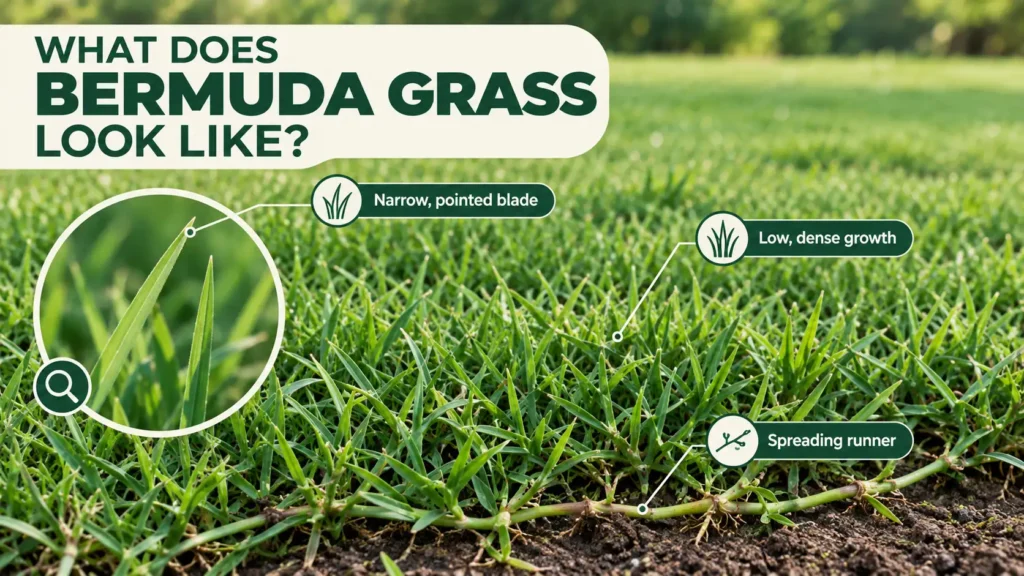
Bermuda grass has fine, narrow blades, pointed tips, and a low, spreading growth habit. When it is actively growing, the lawn is usually green to blue-green and can form a dense turf.
The easiest way to identify Bermuda grass is to look at several features together. Check the blade shape, color, runners, growth pattern, and seed heads rather than relying on color alone.
Quick Answer: What Does Bermuda Grass Look Like?
Bermuda grass (Cynodon dactylon) is a warm-season perennial grass with fine to medium-textured blades. The blades are narrow and pointed, while the plant spreads through above-ground stolons and underground rhizomes. Mature Bermuda can form a dense, low-growing lawn, especially in warm, sunny conditions.
Here are the main Bermuda grass identification clues:
- Fine to narrow leaf blades
- Pointed blade tips
- Green to blue-green color during active growth
- Low, dense growth
- Above-ground runners called stolons
- Underground stems called rhizomes
- Finger-like seed heads
- Brown or tan color during cold-season dormancy
No single feature proves that a grass is Bermuda. A combination of these traits gives you a much better match.
How to Identify Bermuda Grass at a Glance
If you are standing in your yard and trying to identify a grass, start with the plant itself rather than the whole lawn.
1. Check the Blade Width
Bermuda grass usually has narrow blades. Many identification guides place typical blade width around 1.5 to 3 mm, although appearance can vary by cultivar and growing conditions.
The blades can look fine and wiry when the lawn is closely mowed. Letting the grass grow taller can make the plant look different from a freshly cut lawn.
2. Look at the Blade Tip
Bermuda grass leaves taper to a pointed tip. The blade itself is generally flat and can feel soft, while the edges may feel slightly rough when you run your fingers along them.
A pointed tip is useful, but it is not enough by itself. Several grasses can have pointed leaves.
3. Check the Color
Healthy, actively growing Bermuda grass can range from light green to a deeper green or blue-green.
Color changes with the cultivar, mowing, sunlight, moisture, temperature, and overall lawn condition. For that reason, color should be treated as one clue rather than the main identification test.
4. Look at the Growth Pattern
Bermuda is a spreading grass. Instead of growing only as individual upright clumps, it sends stems outward across the soil surface.
These stems are called stolons. Bermuda also produces underground stems called rhizomes. Both help the grass spread and fill open areas.
5. Look for Runners
If you gently move the grass aside, you may see thin stems running across the soil.
These above-ground runners are stolons. They can root at their nodes and produce new shoots, helping Bermuda create a connected mat.
6. Check for Seed Heads
When Bermuda produces flowers, its seed head has several thin spikes that spread from one point at the top of a stem. It often looks a little like a small bird’s foot or several fingers extending from one point.
This can be one of the easiest features to spot when the grass is allowed to grow.
What Does Bermuda Grass Look Like Up Close?

Up close, Bermuda grass has a fine, narrow-bladed appearance. The blades are generally flat, pointed, and green to blue-green during active growth.
The exact look can change between common Bermuda and improved or hybrid cultivars. Mowing also changes how the lawn appears. A closely cut Bermuda lawn can look like a smooth, fine-textured carpet, while unmowed plants reveal longer leaves and upright stems.
The most useful close-up features are:
| Feature | What to Look For |
| Blade | Narrow and fine to medium textured |
| Tip | Pointed |
| Color | Green to blue-green |
| Growth | Low and spreading |
| Stolons | Above-ground creeping stems |
| Rhizomes | Underground spreading stems |
| Seed head | Several finger-like spikes |
| Collar | Short fringe of hairs |
Bermuda’s narrow blades and spreading stems are especially useful when comparing it with other warm-season grasses.
What Do Bermuda Grass Runners Look Like?

Bermuda grass has two important types of spreading stems: stolons and rhizomes.
Stolons
Stolons grow above the soil surface. They look like thin, creeping runners moving sideways from the main plant.
At the nodes, stolons can produce roots and new shoots. This lets Bermuda spread outward and occupy bare spaces.
Rhizomes
Rhizomes grow below the soil surface.
They are usually thicker and less visible than stolons. Rhizomes allow Bermuda to spread underground and help the plant survive periods when the visible lawn is not actively growing.
This combination is a major clue. Bermuda is a stoloniferous and rhizomatous grass, meaning it can spread both above and below ground.
What Do Bermuda Grass Seed Heads Look Like?
Bermuda grass seed heads are easy to recognize once you know what to look for.
Several narrow, finger-like spikes extend from the same point at the top of a flowering stem. Depending on the plant and growing conditions, the number of spikes can vary.
The seed head can resemble a small hand or bird’s foot.
This is also where Bermuda can be confused with crabgrass. Both can produce finger-like seed heads, so look at the leaves and growth habit as well.
What Does Bermuda Grass Look Like in Different Seasons?

Bermuda grass does not look the same throughout the year.
Its appearance changes with temperature and active growth. That can make identification harder if you are looking at the lawn during the dormant season.
Spring
As temperatures rise, dormant Bermuda begins to wake up and produce new green growth.
Early in the season, the lawn may look thin or uneven because not all areas green up at the same time.
Summer
Summer is when Bermuda usually shows its strongest growth.
With enough sunlight and suitable growing conditions, it can form a dense green lawn with active lateral growth. The stolons become easier to notice when the grass grows beyond the mowing height.
Fall
Growth begins to slow as temperatures drop.
The lawn may gradually lose its strong summer color before entering dormancy.
Winter
In areas where Bermuda goes dormant, the grass can turn brown, tan, or straw-colored.
This does not automatically mean the grass is dead. Bermuda is a warm-season grass, so cold temperatures can stop visible growth for a period.
What Does Dormant Bermuda Grass Look Like?
Dormant Bermuda grass can look very different from its summer appearance.
Instead of a green lawn, you may see:
- Tan or brown grass
- Reduced growth
- A dry-looking surface
- Less visible spreading
- Little or no new green leaf growth
This is one reason people sometimes mistake dormant Bermuda for dead grass.
The key is to consider the season. If the lawn was green and actively growing during warm weather but turns tan as temperatures fall, seasonal dormancy is a likely explanation.
Do not use color alone to identify the grass.
What Does Young Bermuda Grass Look Like?
Young Bermuda grass can be harder to identify because the mature growth pattern has not fully developed.
New plants may have small, narrow leaves and a lighter green color. As the grass establishes, it begins producing more lateral stems and develops the spreading growth habit that makes mature Bermuda easier to recognize.
If you are identifying newly established Bermuda, look at the blade shape and growth pattern together rather than expecting it to already look like a mature lawn.
What Does Bermuda Grass Look Like in Shade?
Bermuda grass generally performs best with plenty of sunlight. In poor light, it can become thin, weak, or patchy rather than forming the dense turf seen in full sun.
A shaded Bermuda lawn may show:
- Longer or more stretched growth
- Reduced density
- Thin patches
- Less vigorous spreading
- A different shade of green
This can make identification harder.
If you think you have Bermuda but the grass looks unusually thin, consider how much direct sunlight reaches that area before assuming you have a different grass.
Common vs. Hybrid Bermuda Grass: Do They Look Different?
Yes, Bermuda grass does not have one fixed appearance.
Common Bermuda and improved or hybrid types can differ in texture, density, color, and overall turf quality. Cultivar differences can also affect blade appearance.
Common Bermuda
Common Bermuda is widely used as turf and can have a more open appearance when compared with dense improved cultivars.
Its appearance still varies with mowing, sunlight, water, soil, and general lawn conditions.
Hybrid or Improved Bermuda
Improved Bermuda cultivars are often selected for turf performance and can produce a finer or denser lawn.
The exact appearance depends on the cultivar, so you should not expect every Bermuda lawn to look identical.
The important point is that Bermuda grass identification should focus on several plant features rather than one exact shade of green or blade shape.
Bermuda Grass vs. Look-Alike Grasses

If your grass has narrow blades and spreads across the lawn, Bermuda is one possibility. But several other grasses can look similar.
Bermuda Grass vs. Crabgrass
Crabgrass causes one of the most common identification problems because its seed heads can also have finger-like branches.
Look at the whole plant.
Bermuda is a perennial grass that spreads with both stolons and rhizomes. Crabgrass is an annual grass and has a different overall growth habit.
Bermuda Grass vs. Zoysia
Zoysia can also form dense turf and spread through creeping stems.
The texture can help. Zoysia often feels stiffer and can have a different blade appearance. Growth rate is also a useful clue because zoysia generally spreads more slowly than Bermuda.
Bermuda Grass vs. St. Augustine Grass
St. Augustine grass usually has much broader blades than Bermuda.
If the leaves in your lawn look wide, coarse, and flat compared with the fine texture of Bermuda, St. Augustine is a different possibility.
Bermuda Grass vs. Centipedegrass
Centipedegrass has a different blade texture and growth habit.
Its leaf tips tend to appear more blunt or rounded compared with the pointed tips commonly seen on Bermuda.
Simple Bermuda Grass Identification Chart
| Grass | Blade Appearance | Growth Habit | Useful Clue |
| Bermuda | Fine, narrow, pointed | Stolons + rhizomes | Spreading runners |
| Crabgrass | Wider, coarser | Spreading annual | Similar seed head |
| Zoysia | Fine to medium, stiffer | Spreading | Slower growth |
| St. Augustine | Broad and coarse | Stolons | Much wider blades |
| Centipedegrass | Medium texture | Spreading | More rounded tip |
Use several characteristics before deciding what grass you have. A single blade can be misleading, especially when the lawn contains more than one grass type.
Is Bermuda Grass a Grass or a Weed?
Bermuda grass is a legitimate turfgrass, but it can also behave like a weed.
The difference usually comes down to where it is growing.
In a Bermuda lawn, its spreading habit is useful because it helps create and maintain turf. In a garden bed or another lawn where Bermuda is unwanted, those same stolons and rhizomes can make it difficult to contain.
This is why you may see Bermuda described both as a desirable lawn grass and as an invasive or troublesome grass in certain settings.
Why Does My Bermuda Grass Look Thin or Patchy?
Bermuda grass can look thin for several reasons, and not every thin patch means the grass has been misidentified.
Common causes include:
Too Much Shade
Bermuda prefers strong sunlight. Areas with limited light can become thinner and less dense.
Cold Weather
Dormant or partially dormant Bermuda can look sparse and brown compared with its summer appearance.
New Establishment
Young Bermuda may take time to develop a dense turf surface.
Lawn Stress
Heavy use, poor growing conditions, or uneven lawn conditions can affect density.
Different Grass Mixed In
A lawn may contain more than one grass species. If one area looks very different from another, compare the blades and growth habits rather than judging by color.
How to Identify Bermuda Grass Step by Step

If you want a simple process, use this checklist.
Step 1: Find a Healthy Section
Look for an area with enough grass to examine several blades and stems.
Step 2: Examine the Blades
Check whether the blades are narrow, fine to medium textured, and pointed.
Step 3: Check the Color
Look for green to blue-green color during active growth. Remember that color changes with season and lawn conditions.
Step 4: Look for Stolons
Move the grass aside and look for creeping stems running across the soil surface.
Step 5: Check for Rhizomes
If you can safely examine the root zone, look for underground spreading stems.
Step 6: Look for Seed Heads
If the grass is flowering, check for several finger-like spikes coming from one point.
Step 7: Consider the Season
A brown lawn in winter may still be Bermuda if it normally greens up during warm weather.
Step 8: Compare the Look-Alikes
If you are still unsure, compare your grass with crabgrass, zoysia, St. Augustine, and centipedegrass.
The more of these traits that match, the stronger your identification becomes.
Bermuda Grass Identification Chart
Use this quick reference when inspecting your lawn:
| Feature | Bermuda Grass |
| Grass type | Warm-season perennial |
| Blade texture | Fine to medium |
| Blade width | Usually narrow |
| Blade tip | Pointed |
| Color during active growth | Green to blue-green |
| Growth | Low and spreading |
| Stolons | Present |
| Rhizomes | Present |
| Seed head | Finger-like spikes |
| Cold-season appearance | Often brown or tan when dormant |
| Sun preference | Performs best with strong sunlight |
Bermuda’s combination of narrow pointed blades, spreading stolons, rhizomes, and distinctive seed heads makes it easier to separate from many other lawn grasses.
Final Takeaway
The easiest way to recognize Bermuda grass is to look beyond its color.
Start with the narrow, pointed blades, then check for low spreading growth, stolons, rhizomes, and finger-like seed heads. If the grass turns brown during cold weather, consider seasonal dormancy before assuming it has died.
When several of these features match, you have a much stronger Bermuda grass identification than you would get from looking at color alone.
Frequently Asked Questions
What does Bermuda grass look like?
Bermuda grass usually has narrow, pointed blades and a fine to medium texture. During active growth, it can form dense green or blue-green turf and spreads through above-ground stolons and underground rhizomes.
What color is Bermuda grass?
Active Bermuda grass can range from light green to deeper green or blue-green. Color varies with cultivar, mowing, sunlight, moisture, and growing conditions.
How do I identify Bermuda grass?
Look for several traits together: narrow pointed blades, low spreading growth, stolons, rhizomes, and finger-like seed heads. Seasonal color can also help.
What does dormant Bermuda grass look like?
Dormant Bermuda usually turns brown, tan, or straw-colored during colder weather. The lack of green growth does not automatically mean the lawn is dead.
Does Bermuda grass have runners?
Yes. Bermuda grass produces above-ground stolons that creep across the soil and can root at nodes. It also produces underground rhizomes.
How can I tell Bermuda grass from crabgrass?
Look at the entire plant rather than just the seed head. Both can have finger-like seed heads, but Bermuda is a perennial that spreads through stolons and rhizomes, while crabgrass has a different annual growth cycle.
Is Bermuda grass a weed?
Bermuda grass can be a useful turfgrass in the right location. It can also be unwanted when it spreads into gardens, flower beds, or another type of lawn.
Why does my Bermuda grass turn brown?
Cold temperatures can cause Bermuda to enter dormancy, during which the visible grass becomes brown or tan. Seasonal dormancy is normal for Bermuda in areas where winter temperatures stop active growth.