Skip to content
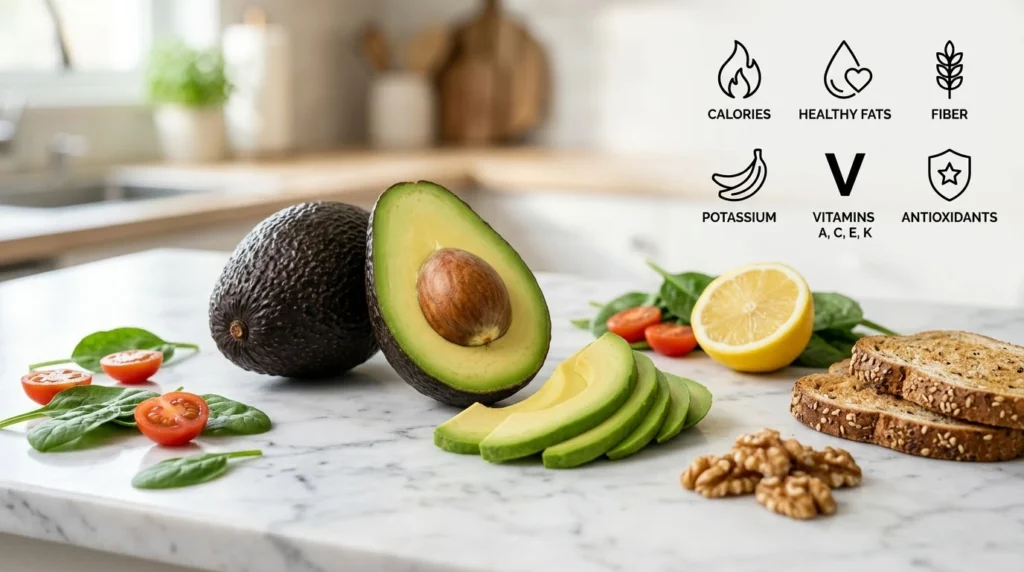
Avocados are one of the most nutritious fruits you can add to your diet. Unlike most fruits, they are naturally rich in healthy fats, fiber, vitamins, and minerals while remaining low in sugar. Whether you’re trying to eat healthier, manage your weight, or simply learn more about what you’re eating, knowing the nutrition facts of avocado can help you make smarter food choices.
This guide explains the nutrients found in avocados using information from trusted sources, including the USDA FoodData Central and other recognized nutrition authorities.
Quick Answer
A 100-gram serving of raw avocado contains about:
| Nutrient | Amount |
| Calories | 160 |
| Total Fat | 14.7 g |
| Carbohydrates | 8.5 g |
| Dietary Fiber | 6.7 g |
| Net Carbs | 1.8 g |
| Protein | 2 g |
| Potassium | 485 mg |
| Folate | 81 mcg |
| Vitamin K | 21 mcg |
| Vitamin E | 2.1 mg |
The healthy fats and fiber found in avocado make it filling, while its vitamins and minerals support many important functions throughout the body.
Avocado Nutrition Facts per 100 Grams

Nutrition labels can look confusing at first, but they become much easier to understand once you know what each number represents.
The table below shows the average nutrition values for 100 grams of raw avocado.
| Nutrient | Amount |
| Calories | 160 kcal |
| Protein | 2 g |
| Total Fat | 14.7 g |
| Saturated Fat | 2.1 g |
| Carbohydrates | 8.5 g |
| Fiber | 6.7 g |
| Sugars | 0.7 g |
| Potassium | 485 mg |
| Magnesium | 29 mg |
| Vitamin C | 10 mg |
| Vitamin E | 2.1 mg |
| Vitamin K | 21 mcg |
| Folate | 81 mcg |
Although avocados contain more calories than many fruits, they also provide far more nutrients than most fruits in the same serving size.
Nutrition by Common Serving Size
Most people don’t weigh their avocado before eating it. These estimates make it easier to understand how much nutrition you’re getting.
| Serving | Calories | Fat | Fiber | Net Carbs |
| 30 g | 48 | 4.4 g | 2 g | 0.6 g |
| 50 g | 80 | 7.4 g | 3.4 g | 0.9 g |
| 100 g | 160 | 14.7 g | 6.7 g | 1.8 g |
| Half medium avocado | 109 | 10 g | 4.6 g | 1.2 g |
| One medium avocado | 218 | 20 g | 9.1 g | 2.5 g |
These values are averages and may vary slightly depending on the size and variety of the avocado.
Calories in Avocado
One of the first questions many people ask is whether avocados are high in calories.
Compared with apples, oranges, or berries, the answer is yes. However, those calories come mainly from healthy unsaturated fats instead of added sugars.
For example:
- One medium avocado contains about 218 calories.
- Half an avocado provides about 109 calories.
- A 30-gram serving contains fewer than 50 calories.
This makes avocado a satisfying ingredient that works well in balanced meals. Instead of focusing only on calories, it’s helpful to consider everything else the fruit provides, including fiber, vitamins, minerals, and beneficial fats.
Carbohydrates, Fiber, and Net Carbs
Avocados are unusual because they contain relatively few digestible carbohydrates.
A 100-gram serving has 8.5 grams of total carbohydrates, but most of those carbohydrates come from dietary fiber.
Why Fiber Matters
Fiber supports several important functions in the body. It can help:
- Support healthy digestion.
- Promote regular bowel movements.
- Increase feelings of fullness.
- Support healthy cholesterol levels as part of a balanced diet.
- Feed beneficial bacteria in the gut.
Many adults do not eat enough fiber, so adding avocado to meals is an easy way to increase daily intake.
Understanding Net Carbs
People following keto or low-carb diets often focus on net carbs instead of total carbohydrates.
The calculation is simple:
Net Carbs = Total Carbohydrates − Fiber
For avocado:
- Total carbohydrates: 8.5 g
- Dietary fiber: 6.7 g
- Net carbs: 1.8 g
This is one reason avocado is considered one of the most low-carb fruits.
Is Avocado a Good Source of Protein?
Avocados contain more protein than many fruits, but they should not be considered a high-protein food.
A 100-gram serving provides about 2 grams of protein.
While this amount contributes to your daily intake, foods such as eggs, beans, lentils, fish, dairy products, and tofu provide much more protein per serving.
A simple way to build a balanced meal is to combine avocado with another protein source. Some easy examples include:
- Avocado and scrambled eggs.
- Grilled chicken with avocado salad.
- Black bean tacos topped with avocado.
- Greek yogurt with avocado blended into a smoothie.
Healthy Fats: The Main Reason Avocados Stand Out
Most fruits contain very little fat, but avocado is different.
Nearly all of its calories come from healthy unsaturated fats.
A typical 100-gram serving contains:
| Fat Type | Amount |
| Monounsaturated Fat | 9.8 g |
| Polyunsaturated Fat | 1.8 g |
| Saturated Fat | 2.1 g |
The largest portion is monounsaturated fat, especially oleic acid, which is also found in olive oil.
According to the American Heart Association, replacing foods high in saturated fat with foods rich in unsaturated fats can support heart health when included in an overall healthy eating pattern.
Important Vitamins in Avocado
Avocados supply several vitamins that your body needs every day.
Vitamin K
Vitamin K helps support normal blood clotting and healthy bones.
Folate
Folate is important for making new cells and supporting healthy growth during pregnancy.
Vitamin E
Vitamin E acts as an antioxidant that helps protect cells from oxidative stress.
Vitamin C
Vitamin C supports collagen production, immune function, and wound healing.
Vitamin B6
Vitamin B6 helps your body use protein and supports normal brain and nervous system function.
Together, these vitamins make avocado a nutrient-rich choice that fits into many healthy eating patterns.
Key Minerals
Avocados also provide several important minerals.
Potassium
Potassium supports healthy muscle function, nerve signaling, and normal blood pressure. A serving of avocado contains more potassium per 100 grams than a banana.
Magnesium
Magnesium helps with muscle movement, energy production, and bone health.
Copper
Copper supports red blood cell production and helps the body use iron effectively.
Smaller Amounts of Other Minerals
Avocados also contain calcium, iron, zinc, and phosphorus, which contribute to overall nutrition.
Why Avocado Is Considered a Nutrient-Dense Food
Many foods provide calories without offering many nutrients.
Avocado is different.
Each serving delivers:
- Healthy monounsaturated fats.
- Dietary fiber.
- Potassium.
- Folate.
- Vitamins K, E, C, and B6.
- Magnesium and copper.
- Naturally low sugar.
- Very low net carbohydrates.
This combination is one reason avocados are often included in healthy eating plans such as the Mediterranean diet, low-carb diets, and plant-based diets.
Health Benefits of Avocado

Avocados are packed with nutrients, but the real value comes from how those nutrients work together. Healthy fats, fiber, vitamins, minerals, and plant compounds all contribute to a balanced diet.
No single food can prevent disease, but research shows that eating nutrient-dense foods like avocado as part of an overall healthy eating pattern can support long-term health.
Supports Heart Health
Avocados are rich in monounsaturated fat, especially oleic acid. This is the same type of fat found in olive oil.
The American Heart Association recommends replacing foods high in saturated fat with foods that contain more unsaturated fats. Making this swap may help support healthy cholesterol levels and overall heart health.
Avocados also provide potassium, which helps maintain normal blood pressure, along with fiber that supports cardiovascular health.
Helps You Feel Full
Although avocados contain more calories than many fruits, they can still fit into a healthy eating plan.
The combination of healthy fats and dietary fiber slows digestion and helps you stay satisfied for longer after meals. This may reduce the urge to snack between meals and make portion control easier.
Supports Digestive Health
Fiber plays an important role in keeping the digestive system working well.
One serving of avocado contributes a significant amount of your daily fiber needs.
Getting enough fiber may help:
- Support regular bowel movements.
- Feed beneficial gut bacteria.
- Improve overall digestive health.
- Increase fullness after eating.
Helps Maintain Healthy Blood Sugar
Avocados naturally contain very little sugar.
Their high fiber content and healthy fats slow the digestion of carbohydrates eaten during a meal.
They also have:
- A very low Glycemic Index (GI).
- A very low Glycemic Load (GL).
Because of this, avocado can be included in many diabetes-friendly eating patterns. However, it should always be part of a balanced diet rather than viewed as a treatment for diabetes.
Supports Eye Health
Avocados contain two important carotenoids:
- Lutein
- Zeaxanthin
These natural antioxidants are found in the retina of the eye and help protect eye tissues from oxidative stress.
Eating a variety of fruits and vegetables that contain these compounds supports long-term eye health.
Is Avocado Good for Different Diets?
One reason avocado is so popular is its flexibility.
It fits naturally into many healthy eating styles.
Keto Diet
Yes.
Because avocado contains very few net carbs and plenty of healthy fats, it is one of the most common fruits included in ketogenic meal plans.
Mediterranean Diet
The Mediterranean diet focuses on whole foods, vegetables, fruits, legumes, healthy fats, fish, and whole grains.
Avocado fits well because it provides heart-friendly unsaturated fats along with fiber and several essential nutrients.
Vegan and Vegetarian Diets
Avocados provide healthy fats that are sometimes harder to obtain from plant foods.
They also supply fiber, folate, potassium, vitamin E, and several B vitamins.
Pair avocado with foods such as beans, lentils, tofu, or whole grains for balanced meals.
Low-Carb Eating Plans
Since avocado contains only about 1.8 grams of net carbs per 100 grams, it works well in low-carb meal plans.
It pairs easily with foods like eggs, grilled chicken, seafood, and leafy greens.
Hass Avocado vs. Florida Avocado
The two varieties most commonly available in the United States are Hass and Florida avocados.
While both are nutritious, there are some differences.
| Feature | Hass | Florida |
| Texture | Creamy | Firmer |
| Calories | Higher | Lower |
| Healthy Fat | More | Less |
| Water Content | Lower | Higher |
| Flavor | Rich | Mild |
If you’re following a keto or Mediterranean diet, you may prefer Hass because it contains more healthy fat.
If you want a lighter option with fewer calories, Florida avocado is another nutritious choice.
Avocado Compared with Other Fruits
Unlike most fruits, avocado gets most of its calories from healthy fat rather than carbohydrates.
| Fruit | Calories | Fiber | Sugar |
| Avocado | 160 | 6.7 g | 0.7 g |
| Banana | 89 | 2.6 g | 12 g |
| Apple | 52 | 2.4 g | 10 g |
| Orange | 47 | 2.4 g | 9 g |
Compared with these fruits, avocado contains:
- More fiber.
- Much less sugar.
- More healthy fats.
- More potassium than many popular fruits.
Buying and Storing Avocados

Choosing a good avocado starts at the grocery store.
A ripe avocado should feel slightly soft when gently squeezed but should not feel mushy.
If it is still firm, leave it at room temperature for several days until it ripens naturally.
Once ripe, store it in the refrigerator to slow further ripening.
Preventing Browning
After cutting an avocado, the flesh begins to brown because it reacts with oxygen.
To slow this process:
- Sprinkle lemon or lime juice over the cut surface.
- Wrap it tightly or store it in an airtight container.
- Refrigerate immediately.
The brown color does not mean all of the nutrients are gone, but fresh avocado has the best flavor and appearance.
Simple Ways to Enjoy Avocado
Avocados are easy to include in everyday meals.
Try them:
- On whole-grain toast.
- Sliced into salads.
- Blended into smoothies.
- Mashed into homemade guacamole.
- Added to grain bowls.
- Served with grilled fish or chicken.
- Mixed into wraps and sandwiches.
- Diced over tacos.
Pairing avocado with vegetables may also help your body absorb fat-soluble vitamins found in those foods.
Common Myths About Avocados
Myth: Avocados Are Unhealthy Because They Are High in Fat
Fact: Most of the fat in avocado is unsaturated fat, which is encouraged in healthy eating patterns.
Myth: Avocados Cause Weight Gain
Fact: Eating too many calories from any food may lead to weight gain. Avocados can fit into a weight-management plan when eaten in appropriate portions.
Myth: People with Diabetes Should Avoid Avocados
Fact: Avocados are naturally low in sugar and have a low glycemic impact, making them suitable for many balanced meal plans.
Myth: Avocado Is a High-Protein Food
Fact: Avocados contain some protein but are better known for their healthy fats and fiber. Pair them with protein-rich foods for a balanced meal.
Final Thoughts
Avocados are much more than a trendy food. It is a nutrient-dense fruit that delivers healthy monounsaturated fats, dietary fiber, potassium, folate, vitamins K, E, C, and several other important nutrients in every serving.
Whether you follow a Mediterranean, keto, vegetarian, vegan, low-carb, or balanced eating plan, avocado can be a valuable addition to your meals. The key is enjoying it in portions that match your nutrition goals while combining it with a variety of other whole foods.
Frequently Asked Questions
Can I eat avocado every day?
For most healthy adults, yes. Moderate portions can be part of a balanced diet.
How much avocado should I eat?
Many people enjoy one-half of a medium avocado as a serving, although your ideal portion depends on your calorie needs and eating pattern.
Is avocado better than banana?
They offer different nutrients. Bananas provide more natural carbohydrates, while avocados contain more healthy fats, fiber, and potassium per 100 grams.
Does cooking change avocado nutrition?
Gentle cooking keeps most healthy fats and minerals intact, although some vitamin C may be lost with heat.
Is avocado good for weight loss?
It can be. The fiber and healthy fats help increase fullness, which may make it easier to manage hunger as part of a calorie-controlled diet.
How This Article Was Created
This article was written after reviewing leading pages ranking for “Avocado Nutrition Facts” in the United States. The content was reorganized and rewritten to provide a unique reading experience while addressing the same search intent. Nutrition data and health guidance were verified using authoritative sources, including the USDA, FDA, NIH, Harvard T.H. Chan School of Public Health, the American Heart Association, and the Academy of Nutrition and Dietetics. The article follows Google’s Helpful Content principles and E-E-A-T best practices by focusing on evidence-based information, practical advice, and complete topic coverage.
References
Information in this article is based on guidance and nutrition data from trusted organizations, including:
- USDA FoodData Central
- U.S. Food and Drug Administration (FDA)
- National Institutes of Health (NIH)
- Harvard T.H. Chan School of Public Health
- American Heart Association
- Academy of Nutrition and Dietetics
- Dietary Guidelines for Americans