Skip to content
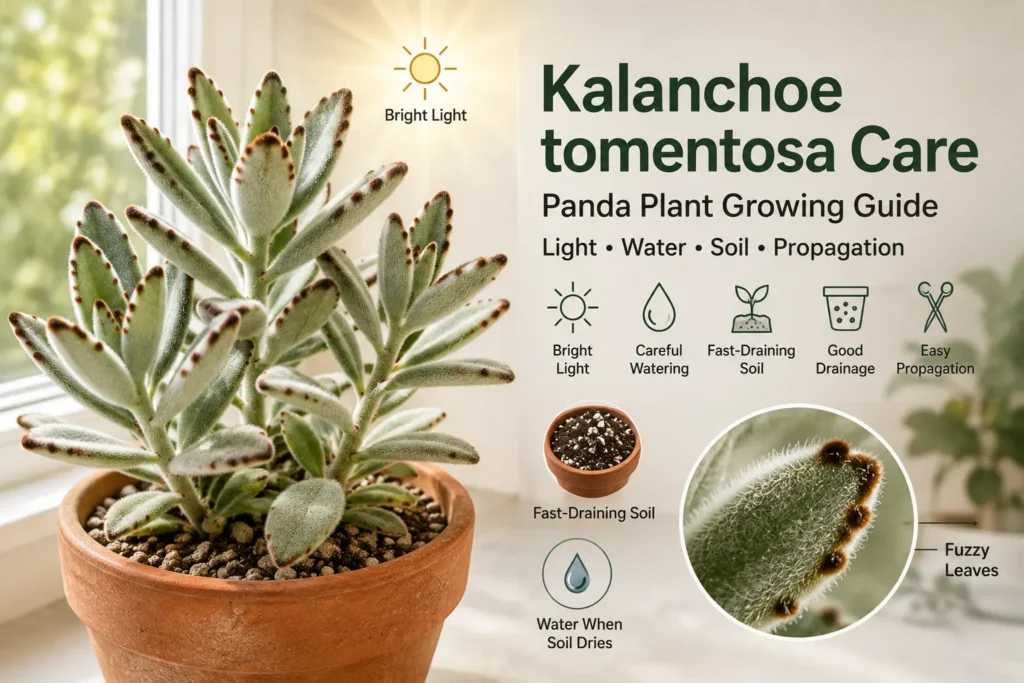
Kalanchoe tomentosa is a small succulent known for its soft, fuzzy leaves and dark brown leaf edges. You may also know it as Panda Plant, Pussy Ears, Chocolate Soldier, or Plush Plant.
I recommend treating it like a typical dry-loving succulent: give it bright light, fast-draining soil, and plenty of time to dry between waterings. With the right setup, this plant can stay compact and healthy for years.
Quick Answer: How Do You Care for Kalanchoe tomentosa?
Kalanchoe tomentosa needs bright light, well-draining succulent soil, and careful watering. Let the soil dry fully before watering again, and use a pot with a drainage hole. Keep it warm, protect it from frost, and avoid high moisture around its fuzzy leaves. You can grow new plants from leaf or stem cuttings.
What Is Kalanchoe tomentosa?
Kalanchoe tomentosa is a succulent from Madagascar and belongs to the Crassulaceae family. It is grown mainly for its unusual foliage rather than its flowers.
The plant has thick, oval leaves covered with fine hairs. These hairs give the leaves a soft, silvery or gray-green look. The leaf tips and edges often have dark brown markings.
The species name tomentosa refers to the plant’s woolly or hairy surface. This fuzzy coating is one of the easiest ways to recognize the plant.
You may see Kalanchoe tomentosa sold under several common names, including:
- Panda Plant
- Panda Bear Plant
- Pussy Ears
- Plush Plant
- Velvet Leaf Kalanchoe
- Cocoon Plant
- Chocolate Soldier
The name Chocolate Soldier is also used for a popular cultivated form of Kalanchoe tomentosa.
How to Identify a Panda Plant

Kalanchoe tomentosa is easy to spot once you know its main features.
Look for:
- Thick, fleshy leaves
- Silvery-green or gray-green foliage
- Fine hairs covering the leaves
- Dark brown markings around the leaf edges and tips
- Upright stems
- Slow to moderate growth
- A bushy shape as the plant matures
Young leaves can look more upright and pale. Older leaves may become greener and spread out more.
The fuzzy leaves are more than a visual feature. The fine hairs are called trichomes and help reduce moisture loss from the leaf surface.
Kalanchoe tomentosa Care Requirements
Good Panda Plant care is fairly simple. The main thing is to avoid treating it like a plant that needs frequent watering.
Here are the main conditions I recommend:
| Care need | What Kalanchoe tomentosa prefers |
| Light | Bright light with some gentle direct sun |
| Water | Let soil dry fully before watering |
| Soil | Fast-draining cactus or succulent mix |
| Pot | Container with a drainage hole |
| Temperature | Warm, stable conditions |
| Humidity | Normal indoor humidity |
| Fertilizer | Light feeding during active growth |
| Growth | Slow to moderate |
| Propagation | Leaf or stem cuttings |
Light

Bright light is one of the most important parts of Kalanchoe tomentosa care.
A bright window is a good choice indoors. An east- or south-facing window can work well, while a west-facing window may also provide enough light.
Some gentle direct sun can help the plant stay compact and maintain its strong leaf color. If the plant has been growing in lower light, introduce stronger sunlight slowly.
Too little light can cause:
- Long, weak stems
- Large gaps between leaves
- Leaning toward the window
- Less compact growth
- Faded leaf markings
Too much intense sun can cause pale or brown scorched areas, especially when a plant moves suddenly from indoor light to strong outdoor sun.
If I notice a Panda Plant becoming tall and stretched, I would check its light before changing its watering routine.
Watering

Watering is where many Panda Plants run into trouble.
Kalanchoe tomentosa stores water in its thick leaves, so it can handle dry periods better than constantly wet soil. I recommend checking the soil before watering instead of following a fixed calendar.
Let the soil dry fully before giving the plant another thorough drink.
When you water:
- Pour water evenly over the soil.
- Keep water away from the fuzzy leaves when possible.
- Continue until water runs from the drainage hole.
- Let the pot drain fully.
- Empty any water sitting in the saucer.
Then wait until the soil dries again.
The exact time between waterings can change based on light, temperature, pot size, soil, and season. A plant in bright light may dry much faster than one in a cool room.
During winter, growth often slows, so the plant usually needs less water.
Soil
Use a fast-draining mix made for succulents or cacti.
A good soil mix should allow water to move through the pot instead of staying around the roots for long periods.
You can use:
- Cactus soil
- Succulent soil
- A gritty potting mix
- Succulent soil mixed with perlite or pumice
Avoid heavy garden soil for indoor containers. Dense soil can stay wet for too long and increase the risk of root problems.
Pot and Drainage

Always choose a pot with a drainage hole.
I prefer a container that is only slightly larger than the root system. A very large pot can hold more wet soil than the plant needs.
Terracotta can also work well because it allows moisture to leave the soil through the sides of the pot.
When repotting, move the plant into a container only a little larger than the old one.
Temperature and Humidity
Kalanchoe tomentosa likes warm conditions and does not tolerate frost.
Keep the plant away from:
- Freezing temperatures
- Cold drafts
- Very cold windows
- Sudden temperature changes
Normal indoor humidity is usually enough. You do not need to create a humid environment for this succulent.
In fact, I would avoid misting the fuzzy leaves. Moisture can remain around the hairs and may increase the chance of leaf problems when airflow is poor.
Fertilizer
Panda Plant is a light feeder.
During active growth, you can use a balanced liquid fertilizer at a diluted strength. A fertilizer made for cactus and succulent plants can also work.
Avoid heavy feeding. Too much fertilizer can lead to weak growth and may damage the roots.
I would reduce feeding during winter when the plant’s growth slows.
Repotting
Kalanchoe tomentosa does not need frequent repotting.
Consider repotting when:
- Roots fill the container
- Water drains very slowly
- The soil has broken down
- The plant has outgrown its pot
- The container no longer stays stable
Spring is a good time for repotting because the plant can settle into fresh soil during active growth.
Handle the leaves gently. The fine hairs can become damaged if you squeeze or rub them.
After repotting, give the plant some time to settle before returning to your normal watering routine.
Pruning
Regular pruning is not required, but it can help if the plant becomes too tall or uneven.
You can remove:
- Dead leaves
- Damaged stems
- Very long growth
- Weak sections
If the plant becomes leggy, cutting back healthy stems can encourage new growth lower on the plant.
Healthy cuttings can also be used for propagation.
Kalanchoe tomentosa Varieties

Several forms of Panda Plant are available to growers.
Standard Kalanchoe tomentosa
The standard plant has fuzzy silvery-green leaves with dark brown markings around the tips and edges.
This is the form most people mean when they use the name Panda Plant.
Kalanchoe tomentosa ‘Chocolate Soldier’
Chocolate Soldier is a popular form with noticeable dark brown markings on the leaf tips and edges.
The fuzzy leaf texture remains one of its main features.
Kalanchoe tomentosa ‘Golden Girl’
Golden Girl is another cultivated form associated with Kalanchoe tomentosa. Its foliage can have warmer yellow-green tones while keeping the characteristic fuzzy texture.
You do not need separate care for each of these forms. Their basic growing needs remain similar.
How to Propagate Kalanchoe tomentosa

Kalanchoe tomentosa can be propagated from leaf and stem cuttings.
For a beginner, I would use a healthy stem cutting if the goal is to get a larger new plant sooner. Leaf propagation can also work, but it requires more patience.
Propagating From Stem Cuttings
Follow these steps:
- Choose a healthy stem.
- Cut a section with clean, sharp scissors.
- Remove the lower leaves if needed.
- Leave the cut end in a dry, airy spot.
- Wait for the cut surface to form a callus.
- Place the cutting in fast-draining succulent soil.
- Keep it in bright, indirect light.
- Water carefully while roots develop.
Do not keep the soil constantly wet while the cutting is trying to root.
Once roots form and new growth appears, you can treat the young plant like an established Kalanchoe tomentosa.
Propagating From a Leaf
Leaf propagation takes more patience.
Choose a healthy leaf and remove it carefully so the base stays intact.
Let the cut end dry and callus before placing the leaf on top of gritty succulent soil. Do not bury the whole leaf.
Keep the setup warm and bright, but protect it from harsh direct sun.
With time, roots and new growth may develop from the base of the leaf. Not every leaf will produce a new plant, so I recommend starting with several healthy leaves if you want better odds.
When Is the Best Time to Propagate?
Late spring and summer are generally good times because the plant is more active and warm conditions support root growth.
Avoid starting many cuttings during cold, dark periods when the plant is barely growing.
Does Kalanchoe tomentosa Flower?
Yes, Kalanchoe tomentosa can produce flowers, although indoor plants may not flower often.
The flowers are small and tubular, with yellow-green to pale green tones. They can appear on taller flowering stems.
The plant is mainly grown for its fuzzy leaves, so I would not worry if a healthy indoor Panda Plant does not bloom.
Good light, healthy growth, and suitable conditions give the plant a better chance of flowering.
If your main goal is flowers, Kalanchoe blossfeldiana and Calandiva are better choices because they are widely grown for their showy blooms.
Common Kalanchoe tomentosa Problems

Most Panda Plant problems come from too much water, poor light, or sudden changes in growing conditions.
Yellow Leaves
Yellow leaves can have several causes, but overwatering is one of the first things I would check.
Look at the soil and the roots. If the soil stays wet for a long time, improve drainage and reduce watering.
An occasional yellow lower leaf can also be part of normal aging.
Wrinkled Leaves
Wrinkled or thin leaves often mean the plant needs water.
Check the soil first. If it is completely dry, give the plant a thorough watering and let excess water drain away.
If the leaves remain wrinkled after watering, check the roots and growing conditions.
Mushy Leaves
Mushy leaves are a warning sign.
They can result from too much moisture, especially when the soil stays wet for long periods.
Check the pot, drainage hole, soil, and roots. Remove badly damaged tissue and consider taking healthy stem cuttings if the main plant has serious rot.
Leggy Growth
A leggy Panda Plant usually needs more light.
If the stems become long and the leaves have large gaps between them, move the plant to a brighter location.
Old stretched growth will not become compact again, but you can prune it and allow new growth to develop in better light.
Brown or Scorched Leaves
Brown, dry patches can appear after strong sun exposure.
This is more likely when a plant moves suddenly from a low-light indoor location to intense outdoor sunlight.
Move it to a brighter location gradually rather than making a sudden change.
Root Rot
Root rot often starts when soil stays wet for too long.
Common warning signs include:
- Yellowing leaves
- Mushy leaves
- Soft stems
- Dark roots
- A bad smell from the soil
- Slow or stopped growth
The best prevention is simple: use fast-draining soil, provide a drainage hole, and allow the soil to dry before watering again.
Mealybugs and Aphids
Mealybugs can look like small white cottony spots on stems or around leaf joints.
Aphids may gather around fresh growth.
Check the plant regularly, especially around new leaves and stems. If you find pests, isolate the plant from nearby houseplants and treat the affected areas with a suitable method for succulent plants.
Growing Kalanchoe tomentosa Indoors

Kalanchoe tomentosa works well as a houseplant because it stays relatively compact and does not need frequent watering.
I would place it near a bright window where it gets plenty of light without exposing it suddenly to harsh midday sun.
A simple indoor setup can include:
- A bright window
- A terracotta or well-draining pot
- Cactus or succulent soil
- Good airflow
- Careful watering
- Warm room temperatures
Avoid placing the plant in a dark corner just because it is labeled an easy-care succulent. Easy care does not mean low light.
Growing Kalanchoe tomentosa Outdoors
You can grow Panda Plant outdoors in warm areas where frost is not a concern.
A container is useful because it makes it easier to move the plant when conditions change.
Outdoor plants need:
- Bright light
- Good drainage
- Protection from frost
- Protection from extreme heat
- Air movement
- Careful watering
If you move an indoor plant outside, give it time to adjust to stronger light. A sudden change can scorch the leaves.
In cold climates, bring the plant indoors before freezing weather arrives.
Is Kalanchoe tomentosa Toxic?
Kalanchoe plants can pose a risk if eaten, so I recommend keeping Kalanchoe tomentosa away from pets and children who may chew the leaves.
Do not allow pets or children to eat the plant. If you suspect ingestion, contact a suitable medical or veterinary service for advice.
Final Thoughts
Kalanchoe tomentosa is a good succulent for anyone who wants an unusual houseplant without a complicated care routine.
I would focus on three things first: bright light, fast-draining soil, and careful watering. Once those are right, the Panda Plant can maintain its fuzzy leaves and compact shape with very little extra work.
Kalanchoe tomentosa Care FAQs
Is Kalanchoe tomentosa easy to grow?
Yes. It is a good choice for beginners who can provide bright light and avoid overwatering.
How often should I water Kalanchoe tomentosa?
Water when the soil has dried fully. The timing changes with light, temperature, pot size, and season.
Does Kalanchoe tomentosa need direct sunlight?
It can handle some gentle direct sun, but introduce stronger sunlight gradually to avoid leaf scorch.
Why is my Panda Plant getting leggy?
Low light is the most common reason. Move it to a brighter location and prune stretched growth if needed.
Can Kalanchoe tomentosa grow indoors?
Yes. It makes a good indoor succulent when placed near a bright window.
Can I grow Kalanchoe tomentosa from a leaf?
Yes. Leaf propagation can work, although it requires patience and not every leaf will produce a new plant.
Does Panda Plant need high humidity?
No. Normal indoor humidity is usually enough.
Why are my Panda Plant leaves turning yellow?
Overwatering is one common cause. Check the soil moisture and drainage first.
Does Kalanchoe tomentosa flower indoors?
It can, but indoor flowering may be uncommon. The plant is mainly grown for its fuzzy foliage.