Skip to content
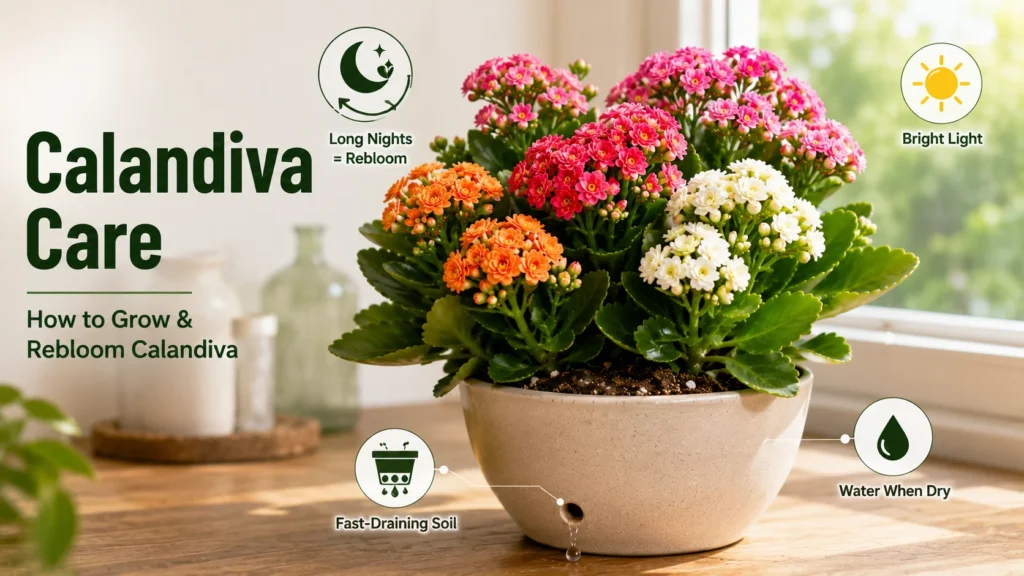
Calandiva is a flowering succulent that can stay healthy for years with the right care. The main things I focus on are bright light, careful watering, fast-draining soil, and good drainage. If you also want your Calandiva to flower again, light control after the first bloom matters just as much.
Quick Answer
For good Calandiva care, place the plant in bright light, use fast-draining succulent soil, and let the soil dry before watering again. Remove faded flowers and keep the plant healthy after blooming. To encourage reblooming, give Calandiva long, uninterrupted nights for several weeks before returning it to its normal light routine.
What Is a Calandiva Plant?
Calandiva is a flowering cultivar of Kalanchoe blossfeldiana. It is a succulent with thick green leaves and clusters of full, double flowers that look a little like small roses.
You may see Calandiva flowers in pink, red, orange, yellow, white, and other shades. The plant is popular as an indoor flowering plant because it stays fairly compact and can bloom for several weeks.
I treat Calandiva as a flowering succulent rather than a typical tropical houseplant. That one detail makes many care decisions easier. It stores water in its fleshy leaves, so it does not need constantly wet soil.
Calandiva is also closely related to the florist Kalanchoe plants sold in stores. The main visual difference is its fuller double flowers.
Calandiva Care at a Glance
| Care need | What Calandiva needs |
| Light | Bright natural light, with protection from harsh hot sun |
| Water | Water when the soil has dried |
| Soil | Fast-draining succulent or cactus mix |
| Pot | A pot with a drainage hole |
| Temperature | Warm indoor temperatures |
| Humidity | Normal indoor humidity is usually fine |
| Fertilizer | Light feeding during active growth |
| Pruning | Remove faded flowers and weak growth |
| Repotting | Only when the plant needs more room or the soil breaks down |
| Reblooming | Long, uninterrupted dark nights for several weeks |
How to Care for Calandiva
Give Calandiva Bright Light

Light is one of the biggest factors in healthy Calandiva growth and flowering.
I recommend placing the plant near a bright window where it gets plenty of natural light. An east-facing window can work well because it gives gentle morning sun. A bright south or west window may also work, but strong afternoon sun through glass can scorch the leaves.
Look at the plant if you are unsure about its light.
Signs of good light include:
- Compact growth
- Healthy green leaves
- Strong flower stems
- New growth that does not look stretched
Signs of low light include:
- Long gaps between leaves
- Thin or weak stems
- Pale growth
- Few flowers
- A plant leaning toward the window
If the plant becomes leggy, I would move it closer to a bright window or use a suitable grow light.
At the same time, do not assume more sun is always better. Calandiva is a succulent, but intense hot sunlight can still damage its leaves.
How Often Should You Water Calandiva?

Calandiva does not need frequent watering.
Instead of following a fixed schedule, I recommend checking the soil first. Let the soil dry well before watering again, then water thoroughly until some water comes out of the drainage hole.
After watering, empty any water sitting in the saucer or decorative container.
The time between waterings can change based on the season, pot size, soil, temperature, and light. A plant in a warm bright room may dry much faster than one in a cool room with less light.
During cooler months, Calandiva often grows more slowly and may need less water.
What Happens If You Overwater Calandiva?
Too much water can cause root problems.
The leaves may become:
- Soft
- Yellow
- Mushy
- Dark around the base
- Easy to drop
If the soil stays wet for a long time, check the drainage before simply reducing the amount of water.
A pot without a drainage hole can make Calandiva care much harder because excess water has nowhere to go.
What If the Leaves Are Wrinkled?
Wrinkled or slightly soft leaves can be a sign that the plant needs water, but I would check the soil before watering.
If the soil is dry, give the plant a thorough drink and let excess water drain away.
If the soil is already wet, do not add more water. Wrinkled leaves can also appear when roots have been damaged by too much moisture.
Use Fast-Draining Soil

Calandiva grows best in soil that drains well.
I prefer a succulent or cactus potting mix for this type of plant. You can also improve a regular potting mix by adding a material such as perlite to help excess water move through the soil.
The goal is simple:
The soil should hold enough moisture for the roots but should not stay wet for long periods.
Avoid heavy garden soil in an indoor pot. It can stay wet around the roots and increase the risk of root problems.
Choose a Pot With Drainage
A drainage hole is one of the easiest ways to improve Calandiva plant care.
The pot should allow extra water to escape after you water. If you place the plant inside a decorative cover pot, check that water is not collecting at the bottom.
You also do not need a very large pot.
A pot that is much larger than the root system can hold extra wet soil around the roots. When repotting, I prefer moving the plant into a slightly larger container rather than making a big jump in pot size.
What Temperature Does Calandiva Need?
Calandiva prefers warm indoor conditions.
A comfortable indoor range is usually suitable, but protect the plant from cold drafts, frost, and sudden temperature drops.
Keep it away from:
- Open windows during cold weather
- Air-conditioning vents
- Strong heaters
- Very hot radiators
- Areas with large temperature changes
Cold stress can slow growth and affect flowering.
Does Calandiva Need High Humidity?
No. Calandiva usually does well with normal indoor humidity.
I would not treat it like a tropical plant that needs constant misting.
Good airflow is more useful than keeping the leaves constantly damp. Avoid frequent misting if it leaves water sitting on the foliage.
How to Fertilize Calandiva
Calandiva does not need heavy feeding.
During active growth, a balanced houseplant fertilizer diluted according to the product directions can support healthy growth. I prefer light feeding rather than giving a strong dose.
Do not fertilize a plant that is already stressed from root problems, severe dehydration, or other damage.
Also avoid using large amounts of fertilizer in the hope of producing more flowers. Too much fertilizer can cause excessive leafy growth and create other problems.
How to Prune and Deadhead Calandiva

Pruning helps keep Calandiva neat and compact.
Remove Spent Flowers
When a flower cluster fades, remove the spent flower stem with clean, sharp scissors or pruning snips.
Cut the stem back to a healthy section of the plant rather than leaving a long dead stalk.
Regular deadheading keeps the plant looking tidy and removes old flower heads.
Prune Leggy Growth
Calandiva can become stretched if it does not get enough light.
If you see long bare stems, trim them back above a healthy set of leaves. Then improve the plant’s light so new growth has a better chance of staying compact.
I would avoid cutting large amounts of healthy growth at once unless the plant needs a major reset.
Calandiva Flowers: How Long Do They Last?
One reason people like Calandiva is its long-lasting flower display.
A healthy plant can keep its flowers for several weeks, although the exact bloom time depends on growing conditions.
Bright light, suitable temperatures, careful watering, and removal of faded flowers can help keep the plant looking good during its flowering period.
As flowers age, they naturally fade and dry. This does not mean the whole plant is dying.
Once most of the flower clusters have finished, move your attention from flower care to post-bloom care.
How to Get Calandiva to Rebloom

Getting Calandiva to flower again is usually the part that takes the most patience.
Calandiva responds to the length of the light and dark periods. After the first bloom, the plant needs healthy growth and a long, uninterrupted period of darkness each night to help set new flower buds.
Step 1: Let the First Bloom Finish
Allow the current flowers to finish their bloom period.
Remove faded flower heads as they age. Once the main flowering period ends, you can prune the spent flower stems and tidy the plant.
Do not throw the plant away just because it has stopped flowering.
Step 2: Keep the Plant Healthy
Before trying to trigger another bloom, make sure the plant has healthy leaves and a good root system.
Continue giving it suitable light and avoid both drought stress and constant wet soil.
A weak plant may struggle to produce new flowers even if you give it the correct dark period.
Step 3: Give It Bright Light During the Day
During the reblooming process, give Calandiva a consistent daily light period.
A bright window can work well. If natural light is not enough, a suitable grow light can help.
The plant needs a clear difference between its light period and its dark period.
Step 4: Give It About 12–14 Hours of Complete Darkness

This is the key part of Calandiva reblooming.
Give the plant a long period of uninterrupted darkness each night for several weeks. Many growers use about 12–14 hours of darkness each night for around 5–6 weeks.
You can use:
- A dark closet
- A room that stays dark at night
- A suitable light-blocking cover
- Another location where artificial light cannot reach the plant
The exact schedule matters less than consistency.
For example, you could give the plant bright light during the day and place it in complete darkness each evening at the same time.
Why Does Darkness Matter?
Calandiva responds to day length as part of its flowering cycle.
A plant that receives light late at night from room lamps, televisions, or other sources may not get the long dark period it needs for flower bud formation.
That is why a Calandiva can look healthy but still refuse to flower again.
Step 5: Keep the Schedule Consistent
Try to keep the light and dark periods at roughly the same times each day.
Do not move the plant into darkness one night and leave it under room lights the next.
Consistency gives the plant a clearer signal.
You also do not need to keep the soil constantly wet during this period. Continue checking the soil and water only when the plant needs it.
Step 6: Watch for New Flower Buds
After several weeks of the correct light and dark cycle, look closely at the growing tips.
Small flower buds may begin forming.
Once you see clear signs of new buds, you can return the plant to its normal bright-light location and continue regular Calandiva care.
Why Is My Calandiva Not Blooming?
If your Calandiva grows leaves but produces no flowers, check the conditions before assuming the plant is unhealthy.
Too Little Light
Low light can lead to weak, stretched growth and fewer flowers.
Move the plant closer to a bright window if the current location is too dim.
Light at Night
Artificial light can interfere with the long-dark period needed for reblooming.
If you are using a closet or dark room, check for light coming under doors or through nearby windows.
No Consistent Dark Period
Moving the plant in and out of darkness at random times can make reblooming less reliable.
Try to keep the same schedule each day for several weeks.
Overwatering
Wet soil can damage the roots and weaken the whole plant.
Check the soil before watering and make sure the pot drains freely.
The Plant Needs Time
A Calandiva does not produce flowers immediately after the old blooms fade.
Give the plant time to recover, grow healthy foliage, and respond to the new light cycle.
Common Calandiva Problems

Yellow Leaves
A few older yellow leaves can occur naturally, but widespread yellowing can point to a care problem.
Check the soil first.
If it stays wet for a long time, improve drainage and reduce watering. If the plant is very dry, it may need a thorough watering.
Soft or Mushy Leaves
Soft, mushy leaves often point to excess moisture.
Check the roots and soil if the problem continues. Make sure the pot has a drainage hole and that water does not collect around the roots.
Wrinkled Leaves
Wrinkled leaves can happen when the plant lacks water.
Check the soil. If it is dry, water thoroughly and allow the excess to drain.
If the soil is wet, do not keep adding water. Poor root health can prevent the plant from taking up water properly.
Leggy Growth
Long spaces between leaves usually suggest that the plant needs more light.
Move it to a brighter location and prune stretched stems if needed.
Avoid putting a low-light Calandiva straight into intense afternoon sun. Increase light gradually if the plant has been in a dim location.
Brown or Scorched Leaves
Brown patches can result from strong direct sunlight, especially through hot glass.
Move the plant slightly farther from the window or give it bright filtered light.
Flower Buds Falling Off
Bud drop can have several causes.
Check:
- Light
- Watering
- Temperature
- Sudden location changes
- Plant stress
- Pest problems
Try to keep conditions stable while the plant is forming and opening buds.
Root Rot
Root rot is more likely when the soil stays wet for too long.
If the plant shows soft leaves while the soil remains wet, check the roots. Healthy roots should not have a strong rotten smell or a soft, decaying appearance.
Remove damaged roots with clean tools, place the plant in fresh fast-draining soil, and correct the watering problem.
Mealybugs and Aphids
Check the stems, leaf joints, and new growth from time to time.
Small insects, sticky residue, or white cotton-like spots can indicate pests.
Remove visible pests and treat the plant with a suitable houseplant pest treatment. Keep badly affected plants away from other houseplants until the problem is under control.
How to Propagate Calandiva
Calandiva can be propagated from stem cuttings.
Choose a healthy stem that is free from pests or damage.
Simple Stem Cutting Method
- Cut a healthy stem with clean, sharp scissors.
- Remove the lower leaves.
- Let the cut end dry for a short time.
- Place the cutting in a fast-draining growing mix.
- Keep the mix lightly moist rather than soaking wet.
- Give the cutting bright, indirect light.
- Watch for new growth as roots develop.
I prefer stem cuttings because they are simple and easy to monitor.
Avoid keeping a new cutting in constantly wet soil. It has less protection against rot than a mature plant.
Can Calandiva Grow Outdoors?
Calandiva can grow outdoors in suitable warm conditions.
If you move an indoor plant outside, do not place it immediately in harsh midday sun. Give it a bright, protected location first and let it adjust.
Outdoor Calandiva needs:
- Bright light
- Protection from extreme heat
- Fast-draining soil
- Good drainage
- Protection from frost
- Careful watering during wet weather
If your area gets cold or freezing weather, bring the plant indoors before temperatures become unsafe.
Is Calandiva Safe Around Pets?
Calandiva and other Kalanchoe plants can be harmful if eaten by pets.
I recommend keeping the plant away from cats, dogs, and children who may chew on the leaves or flowers.
If a pet or child eats part of the plant, seek suitable professional advice rather than trying to treat the problem at home.
Final Calandiva Care Tips
Calandiva is easier to care for once you treat it like a flowering succulent. I would focus on four things first: bright light, dry periods between watering, fast-draining soil, and a pot with good drainage.
If your goal is more flowers, give the plant extra attention after the first bloom. Remove spent flowers, keep the plant healthy, and use a consistent long-dark period to encourage reblooming. With steady care, you do not have to treat a finished Calandiva as a disposable flowering plant.
Calandiva Care FAQs
How long does a Calandiva plant live?
A Calandiva can live for years with good care. Its first flowering period may be the easiest to enjoy, but healthy plants can continue growing after the flowers fade.
Can Calandiva bloom more than once?
Yes. Calandiva can rebloom when it stays healthy and receives the right light and dark cycle.
Can Calandiva grow in low light?
It may survive in lower light, but growth can become weak and flowering may decrease. I recommend bright natural light for better growth and flowers.
How long does it take Calandiva to rebloom?
The timing varies, but expect the process to take several weeks. The plant first needs a consistent long-dark period, followed by time for new buds to develop.
Should I cut off dead Calandiva flowers?
Yes. Remove faded flower clusters and their stems with clean scissors. This keeps the plant tidy and helps prepare it for its next growth cycle.
Can I leave Calandiva outside in summer?
Yes, if the weather is warm and the plant is protected from extreme heat, harsh sun, heavy rain, and sudden temperature changes.