Skip to content
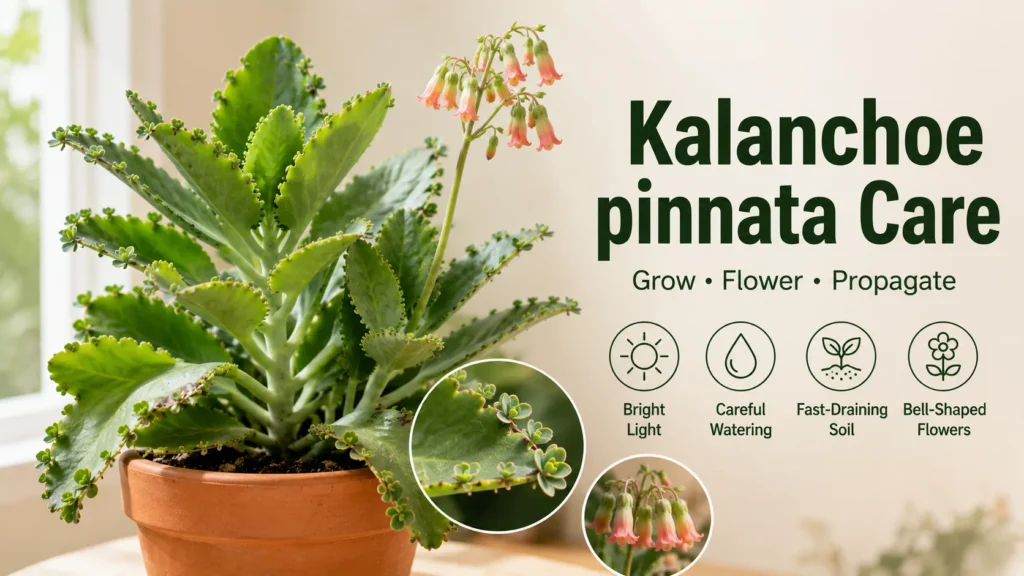
Kalanchoe pinnata is an easy succulent with thick leaves, unusual plantlets, and hanging bell-shaped flowers. I like this species because it gives you more than attractive foliage. It can also produce new plants from its leaves, making propagation simple.
With bright light, fast-draining soil, and careful watering, Kalanchoe pinnata can grow well indoors. In warm, frost-free areas, it can also grow outside, but its easy spread means container growing may be the better choice.
Quick Answer
Kalanchoe pinnata grows best in bright light, well-draining succulent soil, and warm conditions. Let the soil dry before watering again, and use a pot with drainage holes. You can propagate it from stem cuttings, leaves, or the small plantlets that form along leaf edges.
What Is Kalanchoe pinnata?
Kalanchoe pinnata is a succulent plant from Madagascar. Its botanical name is also commonly listed as Bryophyllum pinnatum.
You may see it sold under several common names, including:
- Cathedral Bells
- Life Plant
- Miracle Leaf
- Air Plant
- Goethe Plant
- Chandelier Plant
The name Cathedral Bells comes from its hanging, bell-shaped flowers.
The plant has thick, fleshy leaves that store water. Mature plants can develop taller stems, while the leaves may produce small plantlets along their edges.
That ability to produce new plants is one of the most interesting features of Kalanchoe pinnata.
How to Identify Kalanchoe pinnata

Kalanchoe pinnata can look different as it matures, so the leaves are one of the best ways to identify it.
Look for:
- Thick, fleshy leaves
- Smooth green leaf surfaces
- Scalloped or toothed leaf edges
- Long leaf stalks
- Upright stems
- Small plantlets that can form along leaf edges
- Tall flower stalks with hanging flowers
Young plants may have simpler leaves. Older plants can develop more divided or compound foliage.
The plantlets are a useful clue, but they are not the only feature to check.
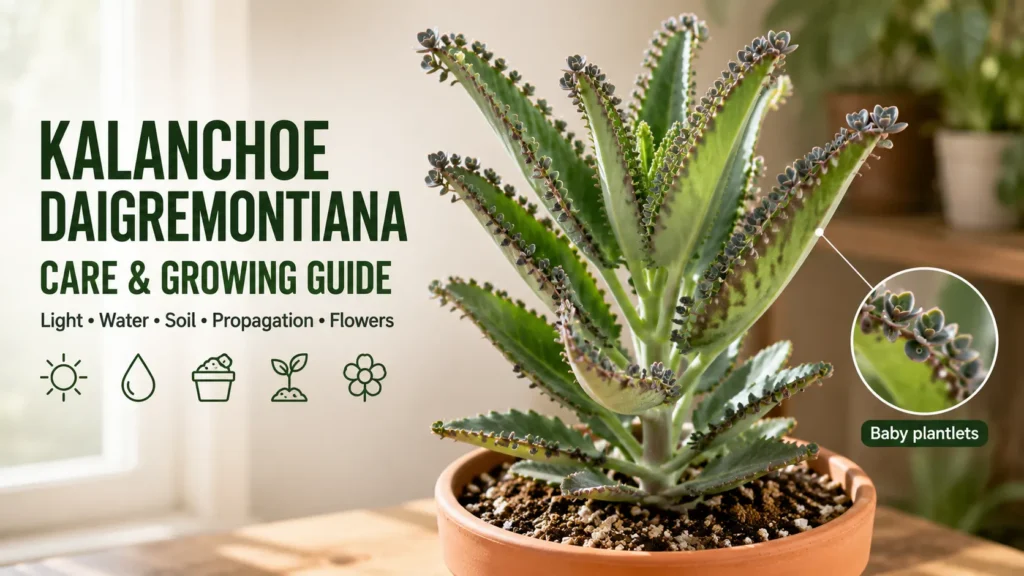
Kalanchoe pinnata vs Kalanchoe daigremontiana
These two plants are easy to mix up because both can produce plantlets along their leaf margins.
| Feature | Kalanchoe pinnata | Kalanchoe daigremontiana |
| Common name | Cathedral Bells, Life Plant | Mother of Thousands |
| Leaves | Rounded to oval and often scalloped | Long and triangular |
| Leaflets | Mature leaves can become divided | Leaves stay strongly triangular |
| Plantlets | Can form along leaf edges | Common along leaf edges |
| Flowers | Hanging bell-shaped flowers | Hanging bell-shaped flowers |
| Growth | Upright succulent | Upright succulent |
If you have the second plant, see my guide to Kalanchoe daigremontiana care for its specific needs.
Kalanchoe pinnata Care Requirements
Kalanchoe pinnata is fairly easy to grow, but it still needs the right balance of light and water.
I focus on five basic things:
- Bright light
- Fast-draining soil
- Careful watering
- Warm temperatures
- Good drainage
The biggest mistake is usually keeping the roots wet for too long.
Give Kalanchoe pinnata Bright Light
Kalanchoe pinnata grows best in a bright spot.
Indoors, place it near a bright window where it gets plenty of natural light. A spot with gentle morning sun can work well.
Strong afternoon sun through glass can be harsh, especially when the plant has been growing in lower light. If the leaves start showing signs of sun stress, move the plant a little farther from the window.
Signs of low light
Your plant may need more light if you notice:
- Long, weak stems
- Large gaps between leaves
- Pale growth
- Slow growth
- A plant that leans toward the window
- Poor flowering
I would move a leggy plant closer to a bright window rather than trying to fix the problem with more water or fertilizer.
How to Water Kalanchoe pinnata

Kalanchoe pinnata stores water in its leaves, so it does not need frequent watering.
I recommend checking the soil before watering instead of following a fixed schedule.
When the soil has dried well, water thoroughly until excess water comes from the drainage hole. Then let the pot drain fully before putting it back in its usual spot.
Avoid giving small amounts of water every few days. This can leave part of the root zone damp for too long.
Signs of underwatering
A thirsty Kalanchoe pinnata may develop:
- Wrinkled leaves
- Thin-looking leaves
- Drooping growth
- Dry soil
- Loss of the normal firmness in its leaves
Signs of overwatering
Too much water can cause:
- Yellow leaves
- Soft leaves
- Mushy stems
- Wet soil that stays wet
- Root problems
If the soil stays wet for a long time, I would check the pot and soil before watering again.
Choose Fast-Draining Soil
Kalanchoe pinnata needs soil that drains quickly.
A cactus or succulent potting mix is a good starting point. If the mix holds too much water, adding a material such as perlite can improve drainage.
The goal is simple: water should move through the soil instead of sitting around the roots.
Avoid heavy garden soil in an indoor pot. It can stay wet for too long and increase the risk of root rot.
Use a Pot With Drainage

A drainage hole is very useful for Kalanchoe pinnata.
Choose a pot that fits the root system without being much larger than the plant. A very large pot can hold more wet soil around the roots than the plant needs.
Terracotta can also work well because it allows the soil to dry more quickly.
I would always check the drainage hole before planting. A pot without drainage can make watering much harder.
Temperature and Humidity
Kalanchoe pinnata prefers warm conditions.
Keep it away from frost, freezing temperatures, and cold drafts. If you grow it outdoors in a warm area, bring it inside before cold weather arrives if your area can experience frost.
Normal indoor humidity is usually fine.
You do not need to mist the leaves. Good airflow and proper watering matter more than adding extra humidity.
Should You Fertilize Kalanchoe pinnata?
Kalanchoe pinnata does not need heavy feeding.
During active growth, you can use a balanced fertilizer made for houseplants or succulents at a reduced strength.
I prefer light feeding rather than frequent heavy applications. Too much fertilizer can lead to weak, soft growth.
Avoid feeding a stressed plant until you fix the main problem, such as poor light, dry roots, or wet soil.
How to Prune Kalanchoe pinnata
Pruning helps keep the plant compact and removes damaged or unwanted growth.
You can remove:
- Dead leaves
- Damaged stems
- Weak growth
- Overly long stems
- Old flower stalks
Use clean, sharp scissors or pruners.
If you remove a healthy stem, you can also use the cutting for propagation.
When Should You Repot Kalanchoe pinnata?
Repot Kalanchoe pinnata when the plant has outgrown its container or the soil has become compacted and drains poorly.
Signs that it may need a new pot include:
- Roots coming through the drainage hole
- The plant becoming unstable
- Soil drying unusually fast
- Very compact soil
- A root system filling most of the container
Move it into a pot only slightly larger than the old one.
After repotting, avoid keeping the new soil constantly wet. Good drainage still matters more than the size of the pot.
How to Propagate Kalanchoe pinnata
Kalanchoe pinnata is easy to propagate.
You can use:
- Stem cuttings
- Leaves
- Leaf-edge plantlets
The plantlets are the most interesting method because they can appear naturally along the leaf margins.
Propagating From Stem Cuttings
Choose a healthy stem and cut a section with several leaves.
Let the cut end dry for a short time before placing it into a fast-draining growing mix. Keep the cutting in bright, indirect light while it develops roots.
Do not keep the soil soaked.
Once the cutting develops roots and starts producing new growth, treat it like a young Kalanchoe pinnata.
Propagating From Leaves
A healthy leaf can also produce new growth.
Place a healthy leaf on top of a suitable succulent growing mix. Keep the setup warm and bright without harsh direct sun.
The important thing is to avoid keeping the leaf constantly wet. Excess moisture can cause the leaf to rot before new growth develops.
What Are the Baby Plantlets on Kalanchoe pinnata Leaves?
The tiny plants along the leaf edges are plantlets.
They are a form of vegetative reproduction. Instead of starting from a seed, a new plant develops from the parent plant’s leaf tissue.
When the plantlets become large enough, they can detach and root in suitable soil.
This is why a single Kalanchoe pinnata can produce many new plants.
I would remove unwanted plantlets before they fall into nearby pots if you want to keep your plant collection under control.
How to Grow Kalanchoe pinnata From Plantlets

Wait until a plantlet is large enough to handle.
Then:
- Gently remove the plantlet from the leaf.
- Prepare a small pot with fast-draining soil.
- Place the plantlet on or slightly into the growing mix.
- Keep it in bright, indirect light.
- Avoid keeping the soil constantly wet.
- Give it time to establish roots and new growth.
You do not need a large pot for a young plant.
Kalanchoe pinnata Flowers

Kalanchoe pinnata is also grown for its unusual flowers.
The plant can produce tall flower stalks carrying groups of hanging, bell-shaped flowers. The flowers may show green, pink, red, orange, or mixed tones depending on the plant and growing conditions.
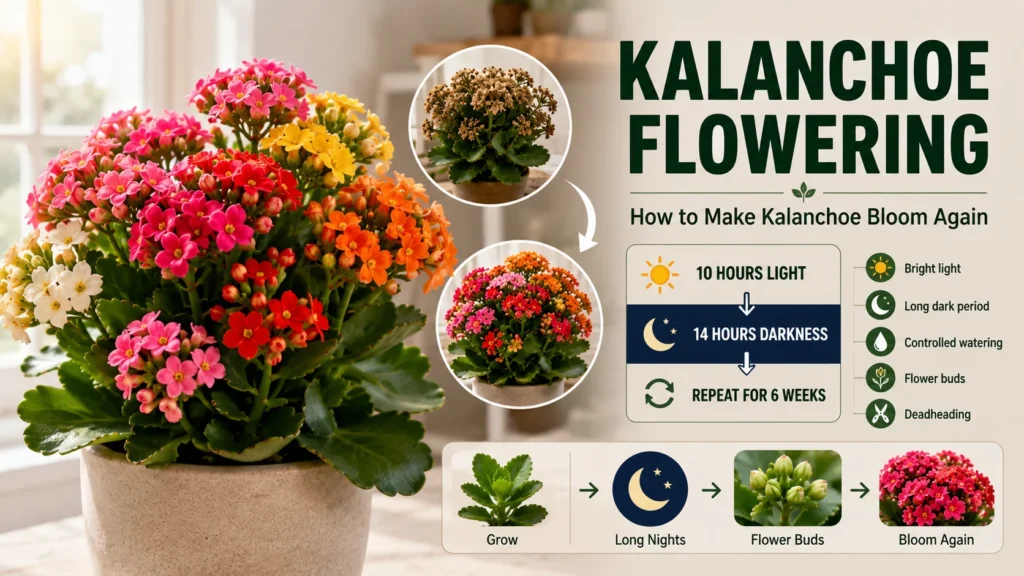
The flowers are quite different from the compact flower clusters seen on florist Kalanchoe.
This is another reason I would not treat every Kalanchoe species in exactly the same way. Their growth habits and flowers can differ a lot.
How to Encourage Kalanchoe pinnata to Flower
A healthy plant with enough light has a better chance of flowering.
Focus on:
- Bright light
- Healthy growth
- Good drainage
- Correct watering
- Warm conditions
- Avoiding excessive fertilizer
Do not expect a young cutting to flower quickly. Give it time to build a strong root system and mature.
If your plant produces plenty of leaves but no flowers, check its light first. Poor light can lead to weak growth and limited flowering.
What to Do After Flowering
Once flowering ends, remove old flower stalks if they look dry or unattractive.
You can also trim weak or overly long growth at this time.
Keep caring for the plant as usual. It needs healthy leaves and roots to continue growing and prepare for future flowering.
Common Kalanchoe pinnata Problems

Most problems come from a small number of causes.
Yellow Leaves
Yellow leaves can result from too much water, poor drainage, or natural aging of older leaves.
Check the soil before watering again.
If the soil stays wet for many days, inspect the pot, drainage hole, and growing mix.
Wrinkled Leaves
Wrinkled leaves often mean the plant needs water.
Check the soil first. If it is very dry, give the plant a thorough watering and allow the excess water to drain away.
If the soil is wet but the leaves remain wrinkled, the issue may be with the roots rather than a lack of water.
Leggy Growth
Long stems with wide gaps between leaves usually point to low light.
Move the plant to a brighter location.
You can also prune long, weak stems and use healthy cuttings to make new plants.
Root Rot
Root rot becomes a risk when the roots stay wet for too long.
Common warning signs include:
- Soft stems
- Yellow leaves
- A plant that wilts even though the soil is wet
- Dark or damaged roots
- A bad smell from the soil
Remove the plant from the pot if you suspect serious root problems. Check the roots and remove badly damaged areas with clean tools.
Repot healthy remaining roots into fresh, fast-draining soil.
Why Is My Kalanchoe pinnata Not Flowering?
Poor light is one of the first things I would check.
Other possible causes include:
- The plant is still young
- Weak overall growth
- Too much fertilizer
- Poor growing conditions
- Seasonal changes
Give the plant enough bright light and keep its basic care consistent.
Pests
Kalanchoe pinnata can attract common houseplant pests such as:
- Aphids
- Mealybugs
- Spider mites
Check the leaves, stems, and leaf joints when watering or pruning.
If you spot a small pest problem early, remove affected growth and clean the plant carefully. Keep a badly affected plant away from other houseplants while you deal with the problem.
Powdery Mildew
White powdery patches on leaves can sometimes appear when conditions stay humid with poor airflow.
Avoid keeping the foliage constantly wet and give the plant enough space for air to move around it.
Growing Kalanchoe pinnata Indoors
Kalanchoe pinnata can make a good indoor succulent when you give it enough light.
A bright window is usually the best starting point.
Keep the plant away from:
- Dark corners
- Cold drafts
- Constantly wet areas
- Very humid spaces
- Heat sources that dry or scorch the foliage
Indoor plants can also produce plantlets. If you do not want new plants appearing around the house, remove loose plantlets before they root in nearby pots.
Growing Kalanchoe pinnata Outdoors

Kalanchoe pinnata can grow outdoors in warm, frost-free areas.
Give it:
- Bright light
- Fast-draining soil
- Good airflow
- Protection from frost
- Controlled watering
There is one issue to keep in mind: this plant can spread very easily.
Leaves and plantlets can produce new plants, so an outdoor plant may spread beyond the area where you planted it. In warm climates, I would check local plant guidance before putting it directly into the ground.
Growing it in a container gives you much better control.
If you live in an area with cold winters, grow it in a pot so you can move it indoors before frost.
Is Kalanchoe pinnata Toxic?
Kalanchoe plants contain compounds that can be harmful if eaten, and some animals can become seriously ill after consuming them.
I recommend keeping Kalanchoe pinnata away from pets and young children who may chew the leaves or flowers.
Do not assume that traditional uses of the plant make it safe to eat. Its use as a traditional plant is a separate subject from safe houseplant care.
Final Thoughts
Kalanchoe pinnata is a simple plant to care for once you get its basic needs right. Give it bright light, fast-draining soil, and water only after the soil has dried well.
I especially recommend keeping an eye on its plantlets. They make propagation easy, but they can also spread into nearby pots. If you give the plant enough light and keep excess moisture away from the roots, you can enjoy its unusual foliage and Cathedral Bells flowers for years.
Kalanchoe pinnata Care FAQs
Is Kalanchoe pinnata easy to grow?
Yes. It is a fairly easy succulent when you provide good light, dry-down periods, and fast-draining soil.
How often should I water Kalanchoe pinnata?
Water when the soil has dried well. Do not follow a fixed schedule because indoor conditions change.
Does Kalanchoe pinnata need full sun?
It can grow in full sun in suitable conditions, but indoor plants often do well with very bright light and some gentle direct sun.
Why is my Kalanchoe pinnata not flowering?
Low light, young age, or weak growth can limit flowering. Start by checking the plant’s light.
How do I propagate Kalanchoe pinnata?
You can use stem cuttings, leaves, or the small plantlets that form along leaf edges.
What are the little plants growing on the leaves?
They are plantlets. They can develop into new Kalanchoe pinnata plants.
Can Kalanchoe pinnata grow indoors?
Yes. A bright window, good drainage, and careful watering make it well suited to indoor growing.
Can Kalanchoe pinnata grow outside?
Yes, in warm areas without frost. Container growing gives you better control over its spread.
Is Kalanchoe pinnata the same as Mother of Thousands?
No. Kalanchoe pinnata and Kalanchoe daigremontiana are different species, although both can produce leaf-edge plantlets.