Skip to content
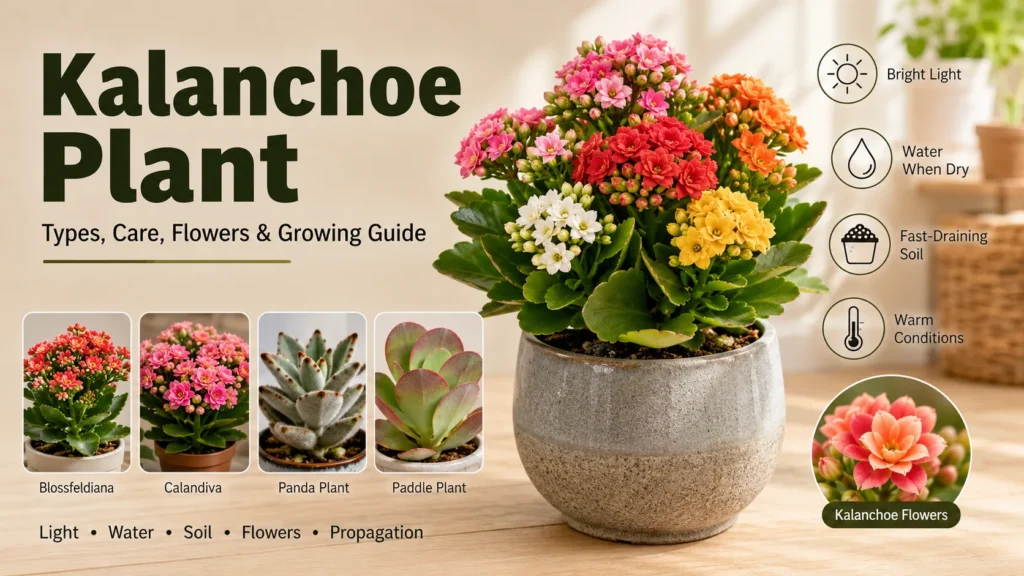
Kalanchoe is a popular succulent known for thick leaves, easy care, and colorful flowers. But Kalanchoe is actually a large plant group, so different types can look very different.
I like Kalanchoe as a houseplant because it does not need constant watering and can give you weeks of flowers. In this guide, I’ll cover the main Kalanchoe types, basic care, flowers, indoor and outdoor growing, propagation, common problems, and how to choose the right type for your home.
Quick Answer
Kalanchoe is a genus of succulent plants known for fleshy leaves and, in many types, colorful flowers. The most common flowering type is Kalanchoe blossfeldiana, while Calandiva is a double-flowered form of it. Kalanchoe grows best with bright light, well-draining soil, and careful watering. It can grow indoors or outdoors in warm, frost-free areas.
What Is a Kalanchoe Plant?

Kalanchoe is a genus of succulent plants in the Crassulaceae family. Many Kalanchoe species have thick, fleshy leaves that store water, which helps them handle dry conditions.
The plants come in many shapes and sizes. Some are grown mainly for their flowers, while others are grown for unusual leaves and growth habits.
The Kalanchoe most often sold as a flowering houseplant is Kalanchoe blossfeldiana, also called florist Kalanchoe or Flaming Katy. It has thick green leaves and clusters of small flowers in colors such as red, pink, orange, yellow, and white.
This difference is worth knowing because Kalanchoe is the genus, while Kalanchoe blossfeldiana is one species within the genus.
Calandiva is also related to this flowering Kalanchoe. It is a double-flowered cultivar group of Kalanchoe blossfeldiana, known for flowers that look fuller and more rose-like.
What Does Kalanchoe Look Like?
There is no single look for every Kalanchoe plant.
Many types have thick leaves and a compact growth habit, but the leaf shape, color, size, and flowers can vary a lot.
The common florist Kalanchoe has:
- Thick, fleshy green leaves
- Scalloped leaf edges
- Upright, branching stems
- Small flowers grouped into large clusters
- Red, pink, orange, yellow, salmon, or white flowers
- Single or double flowers, depending on the cultivar
Kalanchoe blossfeldiana usually stays fairly compact when grown as a houseplant. Some plants grow around 6 to 18 inches tall, although size can vary with the cultivar and growing conditions.
Other Kalanchoe species look very different. For example, Kalanchoe tomentosa has fuzzy leaves, while Kalanchoe luciae has broad paddle-shaped leaves.
That is why I would not judge a Kalanchoe only by its flowers. The leaves can tell you a lot about which type you have.
Popular Types of Kalanchoe

There are many Kalanchoe species and cultivars, but you do not need to know every one to grow these plants successfully.
Here are some of the most useful types to know.
| Kalanchoe type | Common name | Main feature |
| Kalanchoe blossfeldiana | Florist Kalanchoe, Flaming Katy | Colorful flower clusters |
| Calandiva | Double-flowered Kalanchoe | Full, rose-like flowers |
| Kalanchoe tomentosa | Panda Plant | Fuzzy leaves with darker edges |
| Kalanchoe luciae | Paddle Plant | Broad leaves with colored edges |
| Kalanchoe daigremontiana | Mother of Thousands | Plantlets along leaf edges |
| Kalanchoe pinnata | Life Plant | Leaf plantlets and hanging flowers |
| Kalanchoe beharensis | Felt Bush | Large, fuzzy leaves |
Kalanchoe blossfeldiana
Kalanchoe blossfeldiana is the classic flowering Kalanchoe plant sold in nurseries, garden centers, grocery stores, and florist sections.
It has dark green, fleshy leaves and clusters of small flowers above the foliage. Modern cultivars come in many flower colors, and both single and double flowers are available.
If someone gives you a flowering Kalanchoe as a gift, there is a good chance it is this species or a cultivar related to it.
Calandiva
Calandiva is a popular double-flowered cultivar group of Kalanchoe blossfeldiana.
The main difference is the flowers. Instead of the simpler four-petal flowers found on many older forms, Calandiva produces fuller blooms with many layers of petals.
If you have a Calandiva, you can follow the basic Kalanchoe care rules, but a dedicated Calandiva care guide can cover its flowering, pruning, watering, and reblooming in more detail.
Kalanchoe tomentosa
Kalanchoe tomentosa is commonly called the Panda Plant.
Its leaves have a soft, fuzzy surface and darker markings around the edges. It is grown mainly for its foliage rather than the large colorful flower clusters seen on florist Kalanchoe.
Kalanchoe luciae
Kalanchoe luciae is often called the Paddle Plant because of its broad, flat leaves.
Strong light can bring out red or pink tones along the leaf edges. This makes it a good choice if you want a Kalanchoe with interesting foliage rather than showy flowers.
Kalanchoe daigremontiana
Kalanchoe daigremontiana is commonly called Mother of Thousands.
It is easy to recognize because small plantlets can develop along the edges of its leaves. These young plants can eventually fall and grow nearby.
Kalanchoe pinnata
Kalanchoe pinnata is another species known for producing plantlets from its leaves.
It can also produce hanging or bell-shaped flowers, making it quite different from the common florist Kalanchoe.
Kalanchoe beharensis
Kalanchoe beharensis is known for its large, unusual leaves.
The leaves can have a fuzzy or felt-like texture, and the plant can become much larger than the compact flowering types commonly kept indoors.
How to Care for a Kalanchoe Plant

Kalanchoe plant care is fairly simple if you get three things right: light, water, and drainage.
I prefer to think of Kalanchoe as a succulent first. That helps prevent one of the most common mistakes, which is watering it too often.
Different species have different needs, but these basic rules work well for many Kalanchoe grown as houseplants.
Give Kalanchoe Plenty of Light
Kalanchoe likes bright light.
A bright window can work well indoors. Some flowering types can handle direct sunlight, but strong afternoon sun through glass can scorch the leaves, especially if the plant is not used to it.
If the plant gets too little light, you may notice:
- Long, weak stems
- Wide gaps between leaves
- Slower growth
- Fewer flowers
- A plant that leans toward the window
For flowering Kalanchoe, good light also helps support future blooms.
Water Kalanchoe Carefully

Kalanchoe stores water in its leaves, so it does not need frequent watering.
I would rather check the soil than follow a fixed watering schedule. Let the soil dry between waterings, then water thoroughly and allow excess water to drain from the pot.
Avoid leaving the pot sitting in water.
Too much moisture can lead to root or stem rot. Yellowing or soft leaves can also be signs that the plant is staying too wet.
Use Fast-Draining Soil
Kalanchoe needs soil that drains well.
A cactus or succulent potting mix can be a good choice for many indoor plants. The pot should also have a drainage hole so extra water can escape.
I would avoid heavy garden soil in a small indoor pot because it can hold too much moisture around the roots.
Keep Temperatures Warm
Kalanchoe does best in warm conditions and does not tolerate frost.
If you grow it outside, bring it indoors before freezing weather arrives. Florist Kalanchoe is generally suited to warm outdoor climates, while colder areas are better for container growing where you can move the plant indoors.
What About Humidity?
Kalanchoe does not need high humidity to grow well.
Good airflow and dry periods between watering are more useful than trying to keep the air very moist.
This also helps reduce problems linked to excess moisture.
Fertilize During Active Growth
Kalanchoe does not need heavy feeding.
A balanced houseplant fertilizer can be used during active growth according to the product instructions. I would avoid adding more fertilizer simply because the plant is not flowering, since poor light or the wrong day length can also affect flowering.
Does Kalanchoe Have Flowers?

Yes. Many Kalanchoe plants produce flowers, but the flowers can look very different from one species to another.
Kalanchoe blossfeldiana is the best-known flowering type. Its small flowers appear in dense clusters above the foliage and may be red, pink, orange, yellow, salmon, or white.
Some cultivars have single flowers, while others have double flowers.
Calandiva is a good example of the double-flowered form. Its blooms have many layers of petals, giving them a fuller appearance.
How Long Do Kalanchoe Flowers Last?
The exact bloom time depends on the type and growing conditions.
Flowering Kalanchoe can stay in bloom for several weeks, and some well-cared-for plants can hold flowers for six weeks or longer.
This long flowering period is one reason florist Kalanchoe is so popular as a houseplant and gift plant.
Once flowers fade, remove the old flower clusters. This keeps the plant looking tidy and can help direct its energy into new growth.
How Do You Get Kalanchoe to Bloom Again?

Getting a flowering Kalanchoe to bloom again can take more work than keeping it alive.
Kalanchoe blossfeldiana is a short-day plant. In simple terms, it needs long, uninterrupted periods of darkness to start forming flower buds.
A common reason a healthy Kalanchoe produces leaves but no flowers is that it does not receive the right dark period.
For reblooming, the plant needs strong daytime light and a long, uninterrupted night for several weeks. Even artificial light in the evening can affect this process.
I would treat reblooming as a separate project rather than changing the plant’s basic watering routine.
Can Kalanchoe Grow Indoors?
Yes. Kalanchoe is well suited to indoor growing.
A bright room with good natural light can work well. Place the plant near a bright window, but watch the leaves if strong direct afternoon sun hits the glass.
For indoor Kalanchoe, I would focus on:
- Bright light
- A pot with drainage
- Fast-draining soil
- Careful watering
- Good airflow
- Warm temperatures
- Enough space for the plant to grow
A Kalanchoe can stay attractive indoors for years if you give it the right conditions.
Can Kalanchoe Grow Outdoors?

Kalanchoe can grow outdoors in warm climates, but frost is a problem.
In cooler areas, I prefer growing it in a container. That makes it easier to move indoors when temperatures drop.
Outdoor plants may also receive much stronger light than indoor plants. If you move a Kalanchoe from a dim room into strong outdoor sun, do it gradually. A sudden change can damage the leaves.
How Do You Propagate Kalanchoe?
Many Kalanchoe plants can be propagated from stem or leaf cuttings.
Some species also produce small plantlets along their leaf edges, which makes propagation especially easy. Kalanchoe daigremontiana is a well-known example.
For most home growers, stem cuttings are a simple starting point.
The detailed propagation process deserves its own guide because different Kalanchoe types can respond differently to leaf cuttings, stem cuttings, and plantlets.
Common Kalanchoe Problems

Even though Kalanchoe is easy to grow, a few problems show up often.
Yellow Leaves
Yellow leaves can have several causes, but too much water is one of the first things I would check.
Look at the soil before watering again. If it stays wet for a long time, check the drainage and the condition of the roots.
Soft or Mushy Leaves
Soft leaves often point to excess moisture.
Check the soil, drainage hole, pot, and watering habits. A Kalanchoe should not sit in water for long periods.
Leggy Growth
A Kalanchoe may become tall and stretched when it does not get enough light.
Move it to a brighter spot and trim weak or overly long growth if needed.
Brown or Scorched Leaves
Strong direct sunlight can scorch leaves, especially after a plant has been grown in lower light.
Move it to bright light with some protection from harsh afternoon sun and give it time to adjust.
Kalanchoe Is Not Flowering
If the plant looks healthy but does not produce flowers, check its light and dark period.
For Kalanchoe blossfeldiana, flowering depends on the right day-length conditions.
Pests such as mealybugs, aphids, and spider mites can also affect Kalanchoe, while excess moisture can contribute to root and stem problems.
Is Kalanchoe Toxic to Cats and Dogs?
Yes. Kalanchoe can be harmful if pets eat it.
I would keep Kalanchoe plants out of reach of cats, dogs, and other pets that may chew on houseplants. This is especially important if you have a curious pet that likes to bite leaves.
If you think a pet has eaten part of the plant, contact a veterinarian for advice.
Which Kalanchoe Is Best for You?

The best type depends on what you want from the plant.
| If you want… | A good choice |
| Bright, long-lasting flowers | Kalanchoe blossfeldiana |
| Full, rose-like flowers | Calandiva |
| Fuzzy leaves | Kalanchoe tomentosa |
| Colorful paddle-shaped leaves | Kalanchoe luciae |
| Plantlets along leaf edges | Kalanchoe daigremontiana |
| Another plantlet-producing species | Kalanchoe pinnata |
| Large, unusual foliage | Kalanchoe beharensis |
If flowers are your main goal, I would start with Kalanchoe blossfeldiana or Calandiva.
If you care more about unusual foliage, Kalanchoe tomentosa or Kalanchoe luciae may be a better fit.
Final Thoughts
Kalanchoe is a much bigger plant group than the small flowering plant you often see in a store.
For a beginner, Kalanchoe blossfeldiana and Calandiva are great choices if flowers are the main goal. For foliage, types such as Kalanchoe tomentosa and Kalanchoe luciae offer a very different look.
My main advice is simple: give Kalanchoe plenty of light, use fast-draining soil, and do not water it too often. Once those basics are right, this succulent can stay healthy and give you attractive foliage and, for flowering types, weeks of colorful blooms.
Kalanchoe FAQs
Is Kalanchoe a succulent?
Yes. Many Kalanchoe species are succulent plants with fleshy leaves or stems that store water.
Is Kalanchoe easy to grow?
Yes. Most common houseplant Kalanchoe are fairly easy to grow if you provide bright light, well-draining soil, and careful watering.
Is Kalanchoe the same as Kalanchoe blossfeldiana?
No. Kalanchoe is the genus, while Kalanchoe blossfeldiana is one species in that genus. The common florist Kalanchoe sold as a flowering houseplant is usually Kalanchoe blossfeldiana or one of its cultivars.
Is Calandiva a Kalanchoe?
Yes. Calandiva is a double-flowered cultivar group of Kalanchoe blossfeldiana.
Does Kalanchoe need full sun?
Kalanchoe generally likes bright light, but the amount of direct sun it can handle depends on the species and growing conditions. Strong afternoon sun can scorch some indoor plants, so bright filtered or indirect light can be safer.
How often should I water Kalanchoe?
Do not water Kalanchoe on a strict calendar. Check the soil and allow it to dry between waterings. Then water well and let the excess drain away.
Can Kalanchoe grow outside?
Yes, in warm climates without frost. In colder areas, grow it in a container and bring it indoors before freezing temperatures.
Why is my Kalanchoe not flowering?
Poor light and the lack of a long, uninterrupted dark period can stop a flowering Kalanchoe from producing new buds. Healthy growth alone does not always mean the plant will flower.